中国临床药理学与治疗学 ›› 2026, Vol. 31 ›› Issue (2): 223-239.doi: 10.12092/j.issn.1009-2501.2026.02.010
戚大可( ), 车津晶()
收稿日期:2025-03-20
修回日期:2025-07-29
出版日期:2026-02-26
发布日期:2026-03-17
通讯作者:
车津晶
E-mail:miaomiaomiao10086@126.com;chejinjing80@126.com
作者简介:戚大可,男,博士研究生,研究方向:生物技术药物药代动力学及定量药理。E-mail: 基金资助:
Dake QI(), Jinjing CHE()
Received:2025-03-20
Revised:2025-07-29
Online:2026-02-26
Published:2026-03-17
Contact:
Jinjing CHE
E-mail:miaomiaomiao10086@126.com;chejinjing80@126.com
摘要:
透皮贴剂作为应用广泛但开发复杂的仿制药剂型,其临床生物等效性试验开展难度较高,针对此,监管机构鼓励采用生理药代动力学 (physiologically based pharmacokinetic,PBPK)模型引导研发,以降低成本并提升成功率。透皮贴剂的PBPK建模关键影响因素包括药物特性、制剂系统与机体差异。药物因素方面,定量结构-性质关系(quantitative structure-property relationship,QSPR)模型基于相对分子质量、脂水分配系数(LogP)等参数预测分配与扩散系数;机制模型通过解析多层皮肤结构阐明渗透动力学过程。制剂系统中,骨架型与储库型贴剂的释放差异可通过多相多层皮肤吸收机制(multiphase multilayered mechanistic dermal absorption,MPML MechDermA)模型模拟,涵盖溶出、沉淀及载体蒸发等关键过程。机体差异上,皮肤厚度、pH值、附属器密度及病理状态等显著影响渗透效率,模型需结合年龄、性别、种族等变量校准。模型整合基于菲克定律构建隔室间药物转运方程,支持体外-体内外推(in vitro to in vivo extrapolation,IVIVE)。本文系统综述透皮贴剂开发的PBPK建模方法及其影响因素,有望减少动物实验并加速临床转化。
中图分类号:
戚大可, 车津晶. 透皮贴剂经皮递送PBPK模型建模方法概述[J]. 中国临床药理学与治疗学, 2026, 31(2): 223-239.
Dake QI, Jinjing CHE. Overview of PBPK modeling method for transdermal patch delivery[J]. Chinese Journal of Clinical Pharmacology and Therapeutics, 2026, 31(2): 223-239.
| Parameter | Formula | Remark | Reference |
| Partition Coefficient | |||
| KSC:w | Value of ρpro, ρlip and ρw are 1.37 g/cm3, 0.9 g/cm3 and 1 g/cm3.The volume fractions of protein, lipid and water phase are denoted as fpro, flip and fw respectively, fpro = | [ | |
| [ | |||
| [ | |||
| Fully hydrated SC At the pH value designated for SC, the parameter | [ | ||
| Partially hydrated SC | [ | ||
| KVE:w | The fraction of solute that is non-ionized in the aqueous phase is denoted as fnon, while fu represents the fraction of solute that is unbound (to albumin). | [ | |
| Diffusion coefficient | |||
| DSC (cm2/h) | r is the radius of the solute molecule.hSC is the SC thickness, hSC =14 μm | [ | |
| DVE (cm2/h) | [ | ||
| Dsb (cm2/h) | [ |
表 1
Table 1 Drug transdermal parameters predicted based on QSPR
| Parameter | Formula | Remark | Reference |
| Partition Coefficient | |||
| KSC:w | Value of ρpro, ρlip and ρw are 1.37 g/cm3, 0.9 g/cm3 and 1 g/cm3.The volume fractions of protein, lipid and water phase are denoted as fpro, flip and fw respectively, fpro = | [ | |
| [ | |||
| [ | |||
| Fully hydrated SC At the pH value designated for SC, the parameter | [ | ||
| Partially hydrated SC | [ | ||
| KVE:w | The fraction of solute that is non-ionized in the aqueous phase is denoted as fnon, while fu represents the fraction of solute that is unbound (to albumin). | [ | |
| Diffusion coefficient | |||
| DSC (cm2/h) | r is the radius of the solute molecule.hSC is the SC thickness, hSC =14 μm | [ | |
| DVE (cm2/h) | [ | ||
| Dsb (cm2/h) | [ |
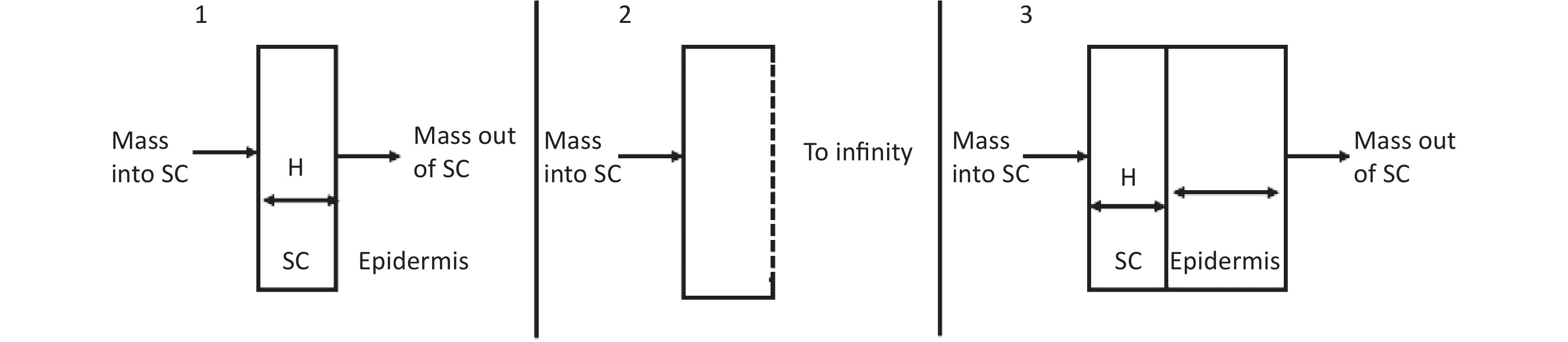
图 1
Fig.1 Schematic diagram of drug transdermal model based on mechanism [18]

图 2
Fig.2 The skin structure [28]

图 3
Fig.3 Schematic diagram of brick-andmortar structure [7]
| Influencing Factors | Skin Parameters | |||||||||||
| pH | TEWL | Skin Thickness | Skin Lipids | Skin Moisture | Melanin | Sweat Glands | Hair Follicles | Keratinocytes | Skin Microbiota | Skin Metabolism | Skin Blood Flow | |
| Age | ||||||||||||
| Newborns | The skin pH of newborns within 15 days after birth is significantly higher than that of adults, approximately 6.0. It then gradually decreases, stabilizing at around 5.1 at 2 months, and remains approximately the same at 4 - 5 years old[ | Compared with adults, the TEWL of newborns is significantly lower on the forehead, palms, and soles, higher on the forearm, and has no difference on the abdomen and back[ | Thinner than adults / no difference[ | Lower content than adults[ | Higher content than adults[ | Lower content than adults[ | Lower sweating volume than adults[ | - | - | - | - | - |
| Children | - | - | Thinner than adults before 6 years old [ | Denser than adults before 6 years old[ | - | Less than adults, increasing with age[ | - | - | Smaller than adults before 6 years old[ | Predominated by Firmicutes on the forearm[ | - | - |
| Elderly | Slightly increased on the volar forearm, temple, forehead, back, and neck; the pH reaches its maximum value in the 50 - 60 - year - old age group, and the skin pH of the elderly over 70 years old decreases comprehensively[ | - | Becomes thinner after 65 years old[ | Content decreases after 65 years old[ | Content decreases after 65 years old[ | - | - | - | - | - | Decreases after 65 years old[ | Decreases / remains unchanged after 65 years old[ |
| Gender | In areas such as the forehead, inner forearm, outer forearm, and face, the pH value of men is lower than that of women. The average pH value on the surface of men's forehead is 4.5, while that of women is 5[ | - | - | - | - | - | - | The distribution and number of men are usually more than those of women, but the impact on the barrier function may have little difference[ | - | - | May be different between men and women[ | - |
| Race | - | Higher in black people than in white people. Black people have a high spontaneous desquamation rate and a high incidence of clinical xerosis[ | Thinner epidermis in Asians[ | - | Higher content in Asians than in Caucasians[ | Faster skin aging in Caucasians[ | More in Asians[ | - | - | Higher density of Propionibacterium on the skin of African - Americans[ | - | - |
| Special Populations | ||||||||||||
| Pregnant Women | - | - | Decreases[ | - | Content increases[ | - | - | - | - | - | - | Increases[ |
| Obese | - | - | - | - | - | - | - | - | - | - | Altered[ | Accelerated[ |
| Skin Injuries | ||||||||||||
| Mechanical Injury | - | Increases[ | - | - | - | - | - | - | - | - | - | - |
| Frostbite | - | Unchanged[ | - | - | - | - | - | Lipid bilayer structure altered[ | - | - | - | - |
| Burn | - | The water evaporation from the exposed burn wound is approximately 1/3 higher than that of normal skin[ | - | - | - | - | - | - | - | - | - | - |
| Inflammatory Skin Diseases | - | Increases, desquamation rate increases[ | - | - | - | - | - | - | - | - | - | - |
| Essential Fatty Acid Deficiency | - | - | - | - | - | - | - | Epidermal hyperplasia with acanthosis and hyperkeratosis[ | - | - | - | - |
| Psoriasis | - | Increases[ | - | - | - | - | - | - | - | - | -- | - |
| Atopic Dermatitis | - | Increases[ | - | - | - | - | - | - | - | - | - | - |
| Exfoliative Dermatitis | - | Increases[ | - | - | - | - | - | - | - | - | - | - |
| Eczema | - | - | - | - | - | - | - | - | Altered[ | - | - | |
| Fungal Infections | - | - | - | - | - | - | - | Parakeratosis, intercellular / intracellular edema[ | - | - | - | Vasodilation[ |
| Keratosis Diseases (Ichthyosis) | - | - | - | - | - | - | - | - | Related to disease classification, different classifications have different permeabilities[ | - | - | - |
| Basal Cell Carcinoma | - | - | - | - | - | - | - | - | - | - | - | Blood perfusion in the basal cell carcinoma area is 2.5 times higher than that in the healthy area[ |
| Administration Sites | ||||||||||||
| Scalp | - | - | Thicker[ | - | - | - | Abundant[ | Abundant[ | - | - | - | - |
| Face | - | - | Thinner[ | - | - | - | - | - | - | - | - | Abundant[ |
| Trunk | - | - | Uneven[ | - | - | - | - | - | - | - | - | Abundant[ |
| Arm | - | - | Medium[ | - | - | - | Medium [ | Medium [ | - | - | - | Medium [ |
| Thigh | - | - | Thicker[ | - | - | - | Abundant[ | Abundant[ | - | - | - | Abundant[ |
| Forehead | - | - | Thinner[ | - | - | - | - | - | - | - | - | - |
表 2
Table 2 Influencing factors of skin differences
| Influencing Factors | Skin Parameters | |||||||||||
| pH | TEWL | Skin Thickness | Skin Lipids | Skin Moisture | Melanin | Sweat Glands | Hair Follicles | Keratinocytes | Skin Microbiota | Skin Metabolism | Skin Blood Flow | |
| Age | ||||||||||||
| Newborns | The skin pH of newborns within 15 days after birth is significantly higher than that of adults, approximately 6.0. It then gradually decreases, stabilizing at around 5.1 at 2 months, and remains approximately the same at 4 - 5 years old[ | Compared with adults, the TEWL of newborns is significantly lower on the forehead, palms, and soles, higher on the forearm, and has no difference on the abdomen and back[ | Thinner than adults / no difference[ | Lower content than adults[ | Higher content than adults[ | Lower content than adults[ | Lower sweating volume than adults[ | - | - | - | - | - |
| Children | - | - | Thinner than adults before 6 years old [ | Denser than adults before 6 years old[ | - | Less than adults, increasing with age[ | - | - | Smaller than adults before 6 years old[ | Predominated by Firmicutes on the forearm[ | - | - |
| Elderly | Slightly increased on the volar forearm, temple, forehead, back, and neck; the pH reaches its maximum value in the 50 - 60 - year - old age group, and the skin pH of the elderly over 70 years old decreases comprehensively[ | - | Becomes thinner after 65 years old[ | Content decreases after 65 years old[ | Content decreases after 65 years old[ | - | - | - | - | - | Decreases after 65 years old[ | Decreases / remains unchanged after 65 years old[ |
| Gender | In areas such as the forehead, inner forearm, outer forearm, and face, the pH value of men is lower than that of women. The average pH value on the surface of men's forehead is 4.5, while that of women is 5[ | - | - | - | - | - | - | The distribution and number of men are usually more than those of women, but the impact on the barrier function may have little difference[ | - | - | May be different between men and women[ | - |
| Race | - | Higher in black people than in white people. Black people have a high spontaneous desquamation rate and a high incidence of clinical xerosis[ | Thinner epidermis in Asians[ | - | Higher content in Asians than in Caucasians[ | Faster skin aging in Caucasians[ | More in Asians[ | - | - | Higher density of Propionibacterium on the skin of African - Americans[ | - | - |
| Special Populations | ||||||||||||
| Pregnant Women | - | - | Decreases[ | - | Content increases[ | - | - | - | - | - | - | Increases[ |
| Obese | - | - | - | - | - | - | - | - | - | - | Altered[ | Accelerated[ |
| Skin Injuries | ||||||||||||
| Mechanical Injury | - | Increases[ | - | - | - | - | - | - | - | - | - | - |
| Frostbite | - | Unchanged[ | - | - | - | - | - | Lipid bilayer structure altered[ | - | - | - | - |
| Burn | - | The water evaporation from the exposed burn wound is approximately 1/3 higher than that of normal skin[ | - | - | - | - | - | - | - | - | - | - |
| Inflammatory Skin Diseases | - | Increases, desquamation rate increases[ | - | - | - | - | - | - | - | - | - | - |
| Essential Fatty Acid Deficiency | - | - | - | - | - | - | - | Epidermal hyperplasia with acanthosis and hyperkeratosis[ | - | - | - | - |
| Psoriasis | - | Increases[ | - | - | - | - | - | - | - | - | -- | - |
| Atopic Dermatitis | - | Increases[ | - | - | - | - | - | - | - | - | - | - |
| Exfoliative Dermatitis | - | Increases[ | - | - | - | - | - | - | - | - | - | - |
| Eczema | - | - | - | - | - | - | - | - | Altered[ | - | - | |
| Fungal Infections | - | - | - | - | - | - | - | Parakeratosis, intercellular / intracellular edema[ | - | - | - | Vasodilation[ |
| Keratosis Diseases (Ichthyosis) | - | - | - | - | - | - | - | - | Related to disease classification, different classifications have different permeabilities[ | - | - | - |
| Basal Cell Carcinoma | - | - | - | - | - | - | - | - | - | - | - | Blood perfusion in the basal cell carcinoma area is 2.5 times higher than that in the healthy area[ |
| Administration Sites | ||||||||||||
| Scalp | - | - | Thicker[ | - | - | - | Abundant[ | Abundant[ | - | - | - | - |
| Face | - | - | Thinner[ | - | - | - | - | - | - | - | - | Abundant[ |
| Trunk | - | - | Uneven[ | - | - | - | - | - | - | - | - | Abundant[ |
| Arm | - | - | Medium[ | - | - | - | Medium [ | Medium [ | - | - | - | Medium [ |
| Thigh | - | - | Thicker[ | - | - | - | Abundant[ | Abundant[ | - | - | - | Abundant[ |
| Forehead | - | - | Thinner[ | - | - | - | - | - | - | - | - | - |
| 1 |
Dumitriu Buzia O, Păduraru AM, Stefan CS, et al. Strategies for improving transdermal administration: New approaches to controlled drug release[J]. Pharmaceutics, 2023, 15 (4): 1183.
doi: 10.3390/pharmaceutics15041183 |
| 2 | 胡晓, 苗贝贝, 王建雄, 等. PBPK模型及其在生物等效性研究中的应用进展[J]. 中国临床药理学与治疗学, 2025, 30 (2): 244- 250. |
| 3 |
Yang C, Wang W, Xue L, et al. Current status and prospects of nanosuspension for improved transdermal targeted drug delivery[J]. J Drug Deliv Sci Technol, 2024, 97, 105751.
doi: 10.1016/j.jddst.2024.105751 |
| 4 | Brain KR, Chilcott RP. Physicochemical factors affecting skin absorption[J]. Principles Pract Skin Toxicol, 2008, 83- 92. |
| 5 |
Djuris J, Cvijic S, Djekic L. Model-informed drug development: In silico assessment of drug bioperformance following oral and percutaneous administration[J]. Pharmaceuticals, 2024, 17 (2): 177.
doi: 10.3390/ph17020177 |
| 6 |
Martinez-Mayorga K, Rosas-Jimenez JG, Gonzalez-Ponce K, et al. The pursuit of accurate predictive models of the bioactivity of small molecules[J]. Chem Sci, 2024, 15 (6): 1938- 1952.
doi: 10.1039/D3SC05534E |
| 7 |
Patel N, Clarke JF, Salem F, et al. Multi‐phase multi‐layer mechanistic dermal absorption (MPML MechDermA) model to predict local and systemic exposure of drug products applied on skin[J]. CPT: Pharmacometrics Syst Pharmacol, 2022, 11 (8): 1060- 1084.
doi: 10.1002/psp4.12814 |
| 8 |
Hu Y, Ha T, Kang Y, et al. Stratified quantification of targets in skin by three-dimensional Raman spectroscopic imaging[J]. Anal Sci, 2025, 41 (6): 803- 812.
doi: 10.1007/s44211-025-00738-4 |
| 9 |
Kattou P, Lian G, Glavin S, et al. Development of a two-dimensional model for predicting transdermal permeation with the follicular pathway: demonstration with a caffeine study[J]. Pharm Res, 2017, 34 (10): 2036- 2048.
doi: 10.1007/s11095-017-2209-0 |
| 10 |
Nitsche JM, Wang TF, Kasting GB. A two-phase analysis of solute partitioning into the stratum corneum[J]. J Pharm Sci, 2006, 95 (3): 649- 666.
doi: 10.1002/jps.20549 |
| 11 |
Wang L, Chen L, Lian G, et al. Determination of partition and binding properties of solutes to stratum corneum[J]. Int J Pharmaceutics, 2010, 398 (1/2): 114- 122.
doi: 10.1016/j.ijpharm.2010.07.035 |
| 12 |
Kasting GB, Miller MA, LaCount TD, et al. A composite model for the transport of hydrophilic and lipophilic compounds across the skin: steady-state behavior[J]. J Pharm Sci, 2019, 108 (1): 337- 349.
doi: 10.1016/j.xphs.2018.09.007 |
| 13 |
Kretsos K, Miller MA, Zamora-Estrada G, et al. Partitioning, diffusivity and clearance of skin permeants in mammalian dermis[J]. Int J Pharmaceutics, 2008, 346 (1/2): 64- 79.
doi: 10.1016/j.ijpharm.2007.06.020 |
| 14 |
Sebastia-Saez D, Lian G, Chen T. In silico study on the contribution of the follicular route to dermal permeability of small molecules[J]. Pharm Res, 2024, 41 (3): 567- 576.
doi: 10.1007/s11095-024-03660-y |
| 15 |
Chen L, Han L, Saib O, et al. In silico prediction of percutaneous absorption and disposition kinetics of chemicals[J]. Pharm Res, 2015, 32 (9): 1779- 1793.
doi: 10.1007/s11095-014-1575-0 |
| 16 |
Yang S, Li L, Lu M, et al. Determination of solute diffusion properties in artificial sebum[J]. J Pharm Sci, 2019, 108 (9): 3003- 3010.
doi: 10.1016/j.xphs.2019.04.027 |
| 17 | Sim YS, Wong LC, Yeoh SC, et al. Skin penetration enhancers: Mechanistic understanding and their selection for formulation and design[J]. Drug Deliv Transl Res, 2025, 15, 1- 35. |
| 18 |
Cleek RL, Bunge AL. A new method for estimating dermal absorption from chemical exposure. 1. General approach[J]. Pharm Res, 1993, 10 (4): 497- 506.
doi: 10.1023/A:1018981515480 |
| 19 |
Bunge AL, Cleek RL. A new method for estimating dermal absorption from chemical exposure: 2. Effect of molecular weight and octanol-water partitioning[J]. Pharm Res, 1995, 12 (1): 88- 95.
doi: 10.1023/A:1016242821610 |
| 20 |
Ghaferi M, Alavi SE, Phan K, et al. Transdermal Drug Delivery Systems (TDDS): recent advances and failure modes[J]. Mol Pharmaceutics, 2024, 21 (11): 5373- 5391.
doi: 10.1021/acs.molpharmaceut.4c00211 |
| 21 |
Saeed S, Barkat K, Ashraf MU, et al. Flexible topical hydrogel patch loaded with antimicrobial drug for accelerated wound healing[J]. Gels, 2023, 9 (7): 567.
doi: 10.3390/gels9070567 |
| 22 | Dhiman S, Singh TG, Rehni AK. Transdermal patches: a recent approach to new drug delivery system[J]. Int J Pharm Pharm Sci, 2011, 3 (5): 26- 34. |
| 23 |
Tsakalozou E, Mohamed M-EF, Polak S, et al. pplications of modeling and simulation approaches in support of drug product development of oral dosage forms and locally acting drug products: a symposium summary[J]. AAPS J, 2023, 25 (6): 96.
doi: 10.1208/s12248-023-00862-x |
| 24 |
Tsakalozou E, Alam K, Babiskin A, et al. Physiologically‐based pharmacokinetic modeling to support determination of bioequivalence for dermatological drug products: scientific and regulatory considerations[J]. Clin Pharmacol Ther, 2022, 111 (5): 1036- 1049.
doi: 10.1002/cpt.2356 |
| 25 |
Mackie C, Arora S, Seo P, et al. Physiologically based biopharmaceutics modeling (PBBM): best practices for drug product quality, regulatory and industry perspectives: 2023 workshop summary report[J]. Mol Pharmaceutics, 2024, 21 (5): 2065- 2080.
doi: 10.1021/acs.molpharmaceut.4c00202 |
| 26 |
Pastore MN, Kalia YN, Horstmann M, et al. Transdermal patches: history, development and pharmacology[J]. Br J Pharmacol, 2015, 172 (9): 2179- 2209.
doi: 10.1111/bph.13059 |
| 27 |
Hofmann E, Schwarz A, Fink J, et al. Modelling the complexity of human skin in vitro[J]. Biomedicines, 2023, 11 (3): 794.
doi: 10.3390/biomedicines11030794 |
| 28 |
Kabashima K, Honda T, Ginhoux F, et al. The immunological anatomy of the skin[J]. Nat Rev Immunol, 2019, 19 (1): 19- 30.
doi: 10.1038/s41577-018-0084-5 |
| 29 |
Chen Q, Wang T, Wu X, et al. The role of the cytochrome P450 superfamily in the skin[J]. Expert Rev Mol Med, 2024, 26, e15.
doi: 10.1017/erm.2024.5 |
| 30 | Ananthapadmanabhan K. Interactions of cosmetic ingredients with human stratum corneum[J]. J Cosmet Sci, 2024, 75 (5): 1- 12. |
| 31 |
Rajkumar J, Chandan N, Lio P, et al. The skin barrier and moisturization: function, disruption, and mechanisms of repair[J]. Skin Pharmacol Physiol, 2023, 36 (4): 174- 185.
doi: 10.1159/000534136 |
| 32 |
Lotfollahi Z. The anatomy, physiology and function of all skin layers and the impact of ageing on the skin[J]. Wound Pract Res, 2024, 32 (1): 6- 10.
doi: 10.33235/wpr.32.1.6-10 |
| 33 |
Carvalho LN, Peres LC, Alonso-Goulart V, et al. Recent advances in the 3D skin bioprinting for regenerative medicine: Cells, biomaterials, and methods[J]. J Biomater Appl, 2024, 39 (5): 421- 438.
doi: 10.1177/08853282241276799 |
| 34 |
Mauroux A, Joncour P, Brassard-Jollive N, et al. Papillary and reticular fibroblasts generate distinct microenvironments that differentially impact angiogenesis[J]. Acta Biomater, 2023, 168, 210- 222.
doi: 10.1016/j.actbio.2023.06.040 |
| 35 |
Hellström M, Hellström S, Engström-Laurent A, et al. The structure of the basement membrane zone differs between keloids, hypertrophic scars and normal skin: a possible background to an impaired function[J]. J Plast Reconstr Aesthet Surg, 2014, 67 (11): 1564- 1572.
doi: 10.1016/j.bjps.2014.06.014 |
| 36 |
Naylor EC, Watson RE, Sherratt MJ. Molecular aspects of skin ageing[J]. Maturitas, 2011, 69 (3): 249- 256.
doi: 10.1016/j.maturitas.2011.04.011 |
| 37 |
Sato F, Oku T, Nishigaki Y, et al. Microfibril-Associated Protein 5 Contributes to the Elastic Fiber Abnormalities in Aged Skin[J]. Biol Pharm Bull, 2025, 48 (4): 450- 456.
doi: 10.1248/bpb.b24-00828 |
| 38 |
Stienstra R, Dijk W, van Beek L, et al. Mannose-binding lectin is required for the effective clearance of apoptotic cells by adipose tissue macrophages during obesity[J]. Diabetes, 2014, 63 (12): 4143- 4153.
doi: 10.2337/db14-0256 |
| 39 |
Nguyen KD, Qiu Y, Cui X, et al. Alternatively activated macrophages produce catecholamines to sustain adaptive thermogenesis[J]. Nature, 2011, 480 (7375): 104- 108.
doi: 10.1038/nature10653 |
| 40 |
Dong H, Qin M, Wang P, et al. Regulatory effects and mechanisms of exercise on activation of brown adipose tissue (BAT) and browning of white adipose tissue (WAT)[J]. Adipocyte, 2023, 12 (1): 2266147.
doi: 10.1080/21623945.2023.2266147 |
| 41 |
Ziadlou R, Pandian GN, Hafner J, et al. Subcutaneous adipose tissue: Implications in dermatological diseases and beyond[J]. Allergy, 2024, 79 (12): 3310- 3325.
doi: 10.1111/all.16295 |
| 42 |
Rose EH, Vistnes LM, Ksander GA. A microarchitectural model of regional variations in hypodermal mobility in porcine and human skin[J]. Ann Plast Surg, 1978, 1 (3): 252- 266.
doi: 10.1097/00006534-197912000-00111 |
| 43 |
Umur E, Bayrak E, Arslan F, et al. Advances in three dimensional bioprinting for wound healing: a comprehensive review[J]. Appl Sci, 2023, 13 (18): 10269.
doi: 10.3390/app131810269 |
| 44 |
Madden J, Webb S, Enoch S, et al. In silico prediction of skin metabolism and its implication in toxicity assessment[J]. Comput Toxicol, 2017, 3, 44- 57.
doi: 10.1016/j.comtox.2017.07.001 |
| 45 |
Sharma AM, Uetrecht J. Bioactivation of drugs in the skin: relationship to cutaneous adverse drug reactions[J]. Drug Metab Rev, 2014, 46 (1): 1- 18.
doi: 10.3109/03602532.2013.848214 |
| 46 |
Melnyk N, Popowski D, Strawa JW, et al. Skin microbiota metabolism of natural products from comfrey root (Symphytum officinale L. )[J]. J Ethnopharmacol, 2024, 318, 116968.
doi: 10.1016/j.jep.2023.116968 |
| 47 |
Mim MF, Sikder MH, Chowdhury MZH, et al. The dynamic relationship between skin microbiomes and personal care products: A comprehensive review[J]. Heliyon, 2024, 10 (14): e33961.
doi: 10.1016/j.heliyon.2024.e34549 |
| 48 |
Zhou J, Mehling A, Wang Q, et al. Age‐related changes in the bacterial composition of healthy female facial skin in Beijing area[J]. Int J Cosmet Sci, 2024, 46 (6): 982- 994.
doi: 10.1111/ics.12997 |
| 49 |
Geng W, Zhang Y, Cao Y. Bacteriostasis and Anti-Inflammation of Staphylococcus epidermidis Fermentation Broth to Propionibacterium acnes[J]. Cosmetics, 2025, 12 (2): 33.
doi: 10.3390/cosmetics12020033 |
| 50 |
Kreouzi M, Theodorakis N, Nikolaou M, et al. Skin microbiota: mediator of interactions between metabolic disorders and cutaneous health and disease[J]. Microorganisms, 2025, 13 (1): 161.
doi: 10.3390/microorganisms13010161 |
| 51 | Sowada J, Schmalenberger A, Ebner I, et al. Degradation of benzo [a] pyrene by bacterial isolates from human skin[J]. FEMS Microbiol Ecol, 2014, 88 (1): 129- 139. |
| 52 | Jaiswal SK, Agarwal SM, Thodum P, et al. SkinBug: an artificial intelligence approach to predict human skin microbiome-mediated metabolism of biotics and xenobiotics[J]. iScience, 2021, 24 (1): 102005. |
| 53 |
Stamatas GN, Roux PF, Boireau‐Adamezyk E, et al. Skin maturation from birth to 10 years of age: Structure, function, composition and microbiome[J]. Exp Dermatol, 2023, 32 (9): 1420- 1429.
doi: 10.1111/exd.14843 |
| 54 |
Rawlings AV. Ethnic skin types: are there differences in skin structure and function?[J]. Int J Cosmet Sci, 2006, 28 (2): 79- 93.
doi: 10.1111/j.1467-2494.2006.00302.x |
| 55 |
Montagna W, Carlisle K. The architecture of black and white facial skin[J]. J Am Acad Dermatol, 1991, 24 (6): 929- 937.
doi: 10.1016/0190-9622(91)70148-U |
| 56 |
Li J, Hu P, Zhou L, et al. Population pharmacokinetic analysis of transdermal granisetron in healthy Chinese and Caucasian volunteers[J]. Front Pharmacol, 2023, 14, 1154026.
doi: 10.3389/fphar.2023.1154026 |
| 57 |
Sharma RP, Schuhmacher M, Kumar V. The development of a pregnancy PBPK Model for Bisphenol A and its evaluation with the available biomonitoring data[J]. Sci Total Environ, 2018, 624, 55- 68.
doi: 10.1016/j.scitotenv.2017.12.023 |
| 58 |
Mattison DR. Transdermal drug absorption during pregnancy[J]. Clin Obstet Gynecol, 1990, 33 (4): 718- 727.
doi: 10.1097/00003081-199012000-00005 |
| 59 |
Shen J, Moore KT, Shukla S, et al. Inclusion of obese participants in drug development: reflections on the current landscape and a call for action[J]. J Clin Pharmacol, 2024, 64 (1): 13- 18.
doi: 10.1002/jcph.2377 |
| 60 | Yeni T. Importance of maintaining skin integrity in the Intensive Care Unit[J]. Wounds, 2025, 16 (2): 16- 22. |
| 61 |
Xu Y, Wu X, Zhang Y, et al. Engineered artificial skins: current construction strategies and applications[J]. Eng Regen, 2023, 4 (4): 438- 450.
doi: 10.1016/j.engreg.2023.09.001 |
| 62 |
Wang W, Liu P, Zhu W, et al. Skin organoid transplantation promotes tissue repair with scarless in frostbite[J]. Protein Cell, 2025, 16 (4): 240- 259.
doi: 10.1093/procel/pwae055 |
| 63 |
Chu DK, Koplin JJ, Ahmed T, et al. How to prevent atopic dermatitis (eczema) in 2024: theory and evidence[J]. J Allergy Clin Immunol Pract, 2024, 12 (7): 1695- 1704.
doi: 10.1016/j.jaip.2024.04.048 |
| 64 |
Mijaljica D, Townley JP, Klionsky DJ, et al. The origin, intricate nature, and role of the skin surface ph (phss) in barrier integrity, eczema, and psoriasis[J]. Cosmetics, 2025, 12 (1): 24.
doi: 10.3390/cosmetics12010024 |
| 65 |
Kim MJ, Chung HS, Han YJ, et al. Anti-inflammatory and skin barrier regulation of cyanin chloride in TNF-α/IL-17A/IFN-γ-induced HaCaT psoriasis model[J]. Biotechnol Bioproc Eng, 2024, 29 (6): 1048- 1060.
doi: 10.1007/s12257-024-00134-1 |
| 66 |
Gluud M, Pallesen EM, Buus TB, et al. Malignant T cells induce skin barrier defects through cytokine-mediated JAK/STAT signaling in cutaneous T-cell lymphoma[J]. Blood, 2023, 141 (2): 180- 193.
doi: 10.1182/blood.2022016690 |
| 67 |
Kim J, Kim BE, Berdyshev E, et al. Staphylococcus aureus causes aberrant epidermal lipid composition and skin barrier dysfunction[J]. Allergy, 2023, 78 (5): 1292- 1306.
doi: 10.1111/all.15640 |
| 68 |
Gutiérrez-Cerrajero C, Sprecher E, Paller AS, et al. Ichthyosis[J]. Nat Rev Dis Primers, 2023, 9 (1): 2.
doi: 10.1038/s41572-022-00412-3 |
| 69 |
Chiang A, Tudela E, Maibach HI. Percutaneous absorption in diseased skin: an overview[J]. J Appl Toxicol, 2012, 32 (8): 537- 563.
doi: 10.1002/jat.1773 |
| 70 | Taïeb A. Skin barrier in the neonate[J]. Pediatr Dermatol, 2018, 35 (S1): s5- s9. |
| 71 |
Yosipovitch G, Maayan-Metzger A, Merlob P, et al. Skin barrier properties in different body areas in neonates[J]. Pediatrics, 2000, 106 (1): 105- 108.
doi: 10.1542/peds.106.1.105 |
| 72 |
Sharma M, Pickhardt AJ, McClanahan M, et al. Objective assessment and quantification of skin color and melanin in neonates and infants: A state‐of‐the‐art review[J]. Pediatr Dermatol, 2025, 42 (3): 447- 456.
doi: 10.1111/pde.15902 |
| 73 |
Chen JY, Li S, Silva GL, et al. Sweat induction using Pilocarpine microneedle patches for sweat testing in healthy adults[J]. J Cyst Fibros, 2024, 23 (1): 112- 119.
doi: 10.1016/j.jcf.2023.04.014 |
| 74 |
Schreml S, Zeller V, Meier RJ, et al. Impact of age and body site on adult female skin surface pH[J]. Dermatology, 2012, 224 (1): 66- 71.
doi: 10.1159/000337029 |
| 75 |
Escoffier C, de Rigal J, Rochefort A, et al. Age-related mechanical properties of human skin: an in vivo study[J]. J Invest Dermatol, 1989, 93 (3): 353- 357.
doi: 10.1016/0022-202X(89)90058-4 |
| 76 |
Tur E. Physiology of the skin-differences between women and men[J]. Clin Dermatol, 1997, 15 (1): 5- 16.
doi: 10.1016/S0738-081X(96)00105-8 |
| 77 |
Lagacé F, D’Aguanno K, Prosty C, et al. The role of sex and gender in dermatology-from pathogenesis to clinical implications[J]. J Cutan Med Surg, 2023, 27 (4): NP1- NP36.
doi: 10.1177/12034754231177582 |
| 78 |
Wesley NO, Maibach HI. Racial (ethnic) differences in skin properties: the objective data[J]. Am J Clin Dermatol, 2003, 4 (12): 843- 860.
doi: 10.2165/00128071-200304120-00004 |
| 79 |
Corcuff P, Lotte C, Rougier A, et al. Racial differences in corneocytes. A comparison between black, white and oriental skin[J]. Acta Derm Venereol, 1991, 71 (2): 146- 148.
doi: 10.2340/0001555571146148 |
| 80 |
Ali A, Colombe L, Mélanie P, et al. Comparison of facial skin ageing in healthy Asian and Caucasian females quantified by in vivo line‐field confocal optical coherence tomography 3D imaging[J]. Skin Res Technol, 2024, 30 (9): e13643.
doi: 10.1111/srt.13643 |
| 81 | Rebora A, Guarrera M. Racial differences in experimental skin infection with Candida albicans[J]. Acta Derm Venereol, 1988, 68 (2): 165- 168. |
| 82 |
Thépaut E, Brochot C, Chardon K, et al. Pregnancy-PBPK models: how are biochemical and physiological processes integrated?[J]. Comput Toxicol, 2023, 27, 100282.
doi: 10.1016/j.comtox.2023.100282 |
| 83 | Chen J, Han CM, Su GL. The absorption rate of new dressings and their effect on the evaporation of burn wounds[J]. Chin Med J (Engl), 2007, 120 (20): 1788- 1791. |
| 84 |
Yong TL, Zaman R, Rehman N, et al. Ceramides and skin health: new insights[J]. Exp Dermatol, 2025, 34 (2): e70042.
doi: 10.1111/exd.70042 |
| 85 | Shiana, Parmar S, Guleria P, et al. A comprehensive review of acanthosis nigricans: pathogenesis, clinical manifestation and management[J]. Recent Adv Inflamm Allergy Drug Discov, 2024, 18 (1): 2- 13. |
| 86 |
Lee YJ, Yassa C, Park SH, et al. Interactions between malassezia and new therapeutic agents in atopic dermatitis affecting skin barrier and inflammation in recombinant human epidermis model[J]. Int J Mol Sci, 2023, 24 (7): 6171.
doi: 10.3390/ijms24076171 |
| 87 |
Christabella N, Adjie SP, Rusetiyanti N, et al. Clinical improvement of patients with complications of exfoliativa dermatitis: a case report[J]. J Health Sains, 2024, 5 (10): 759- 766.
doi: 10.46799/jhs.v5i10.1384 |
| 88 |
Baek EJ, Jung DY, Seung NR, et al. Immunohistochemical differentiation of keratins and involucrin between palmar psoriasis, chronic hand eczema and hyperkeratotic hand eczema[J]. Contact Dermatitis, 2024, 90 (4): 385- 393.
doi: 10.1111/cod.14499 |
| 89 | Zackheim HS, Feldmann RJ, Lindsay C, et al. Percutaneous absorption of I,3‐bis (2‐chloroethyl)‐I‐nitrosourea (BCNU, carmustine) in mycosis fungoides[J]. Br J Dermatol, 1977, 97 (1): 65- 67. |
| 90 |
Lavrijsen A, Oestmann E, Hermans J, et al. Barrier function parameters in various keratinization disorders: transepidermal water loss and vascular response to hexyl nicotinate[J]. Br J Dermatol, 1993, 129 (5): 547- 554.
doi: 10.1111/j.1365-2133.1993.tb00482.x |
| 91 |
Wennberg AM, Larkö O, Lönnroth P, et al. Delta‐aminolevulinic acid in superficial basal cell carcinomas and normal skin—a microdialysis and perfusion study[J]. Clin Exp Dermatol, 2000, 25 (4): 317- 322.
doi: 10.1046/j.1365-2230.2000.00652.x |
| 92 |
Jeong KM, Seo JY, Kim A, et al. Ultrasonographic analysis of facial skin thickness in relation to age, site, sex, and body mass index[J]. Skin Res Technol, 2023, 29 (8): e13426.
doi: 10.1111/srt.13426 |
| 93 |
Levitt DG. Physiologically based pharmacokinetic modeling of arterial–antecubital vein concentration difference[J]. BMC Clin Pharmacol, 2004, 4, 1- 23.
doi: 10.1186/1472-6904-4-2 |
| 94 |
Webb SW, Pruess K. The use of fick's law for modeling trace gas diffusion in porous media[J]. Transp Porous Media, 2003, 51 (3): 327- 341.
doi: 10.1023/A:1022379016613 |
| 95 |
Shatkin JA, Brown HS. Pharmacokinetics of the dermal route of exposure to volatile organic chemicals in water: a computer simulation model[J]. Environ Res, 1991, 56 (1): 90- 108.
doi: 10.1016/S0013-9351(05)80112-4 |
| 96 |
Arora S, Clarke J, Tsakalozou E, et al. Mechanistic modeling of in vitro skin permeation and extrapolation to in vivo for topically applied metronidazole drug products using a physiologically based pharmacokinetic model[J]. Mol Pharmaceutics, 2022, 19 (9): 3139- 3152.
doi: 10.1021/acs.molpharmaceut.2c00229 |
| 97 |
Mendes-Bastos P, Martorell A, Bettoli V, et al. The use of ultrasound and magnetic resonance imaging in the management of hidradenitis suppurativa: a narrative review[J]. Br J Dermatol, 2023, 188 (5): 591- 600.
doi: 10.1093/bjd/ljad028 |
| 98 |
Zemtsov A. Skin ultrasonography and magnetic resonance; new clinical applications and instrumentation[J]. Skin Res Technol, 2024, 30 (3): e13633.
doi: 10.1111/srt.13633 |
| 99 |
Liu M, Drexler W. Optical coherence tomography angiography and photoacoustic imaging in dermatology[J]. Photochem Photobiol Sci, 2019, 18 (5): 945- 962.
doi: 10.1039/c8pp00471d |
| 100 |
Ying Y, Zhang H, Lin L. Photoacoustic imaging of human skin for accurate diagnosis and treatment guidance[J]. Optics, 2024, 5 (1): 133- 150.
doi: 10.3390/opt5010010 |
| 101 |
Maiti R, Duan M, Danby SG, et al. Morphological parametric mapping of 21 skin sites throughout the body using optical coherence tomography[J]. J Mech Behav Biomed Mater, 2020, 102, 103501.
doi: 10.1016/j.jmbbm.2019.103501 |
| 102 |
Silver FH, Shah R. "Virtual biopsies" of normal skin and thermal and chemical burn wounds[J]. Adv Skin Wound Care, 2020, 33 (6): 307- 312.
doi: 10.1097/01.ASW.0000655480.87532.27 |
| 103 |
Cinotti E, Bovi C, Tonini G, et al. Structural skin changes in elderly people investigated by reflectance confocal microscopy[J]. J Eur Acad Dermatol Venereol, 2020, 34 (11): 2652- 2658.
doi: 10.1111/jdv.16466 |
| 104 |
Chen KJ, Wang ZY, Han Y, et al. In vivo detection of healthy skin: Comparison of multiphoton microscopy and reflectance confocal microscopy[J]. Skin Res Technol, 2023, 29 (5): e13340.
doi: 10.1111/srt.13340 |
| 105 |
Jin FQ, Knight AE, Cardones AR, et al. Semi-automated weak annotation for deep neural network skin thickness measurement[J]. Ultrason Imaging, 2021, 43 (4): 167- 174.
doi: 10.1177/01617346211014138 |
| 106 |
Zhong F, Lu H, Meng R, et al. Effect of penetration enhancer on the structure of stratum corneum: On-site study by confocal polarized Raman imaging[J]. Mol Pharmaceutics, 2024, 21 (3): 1300- 1308.
doi: 10.1021/acs.molpharmaceut.3c00978 |
| 107 |
Shigeno A, Miyao D, Futagami H, et al. Phenol burns treated with conservative therapy: a case report[J]. Burns Open, 2024, 8 (2): 115- 119.
doi: 10.1016/j.burnso.2024.02.005 |
| 108 |
Cheruvu HS, Liu X, Grice JE, et al. Modeling percutaneous absorption for successful drug discovery and development[J]. Expert Opin Drug Discov, 2020, 15 (10): 1181- 1198.
doi: 10.1080/17460441.2020.1781085 |
| [1] | 周晗, 刘晓东. 生理药代动力学模型在创新药物评价中应用及其若干问题的思考[J]. 中国临床药理学与治疗学, 2021, 26(8): 889-913. |
| [2] | 陈文君,阮邹荣,相小强. 生理药代动力学模型的发展应用动态及其与其他建模方法的融合[J]. 中国临床药理学与治疗学, 2020, 25(3): 299-305. |
| 阅读次数 | ||||||
|
全文 |
|
|||||
|
摘要 |
|
|||||