中国临床药理学与治疗学 ›› 2026, Vol. 31 ›› Issue (7): 937-947.doi: 10.12092/j.issn.1009-2501.2026.07.010
刘威( ), 张伟()
收稿日期:2025-07-23
修回日期:2025-10-06
出版日期:2026-07-26
发布日期:2026-08-04
通讯作者:
张伟
E-mail:3309791181@qq.com;yjsd2003@163.com
作者简介:刘威,男,研究方向:药物基因组学。E-mail:基金资助:
Wei LIU(), Wei ZHANG()
Received:2025-07-23
Revised:2025-10-06
Online:2026-07-26
Published:2026-08-04
Contact:
Wei ZHANG
E-mail:3309791181@qq.com;yjsd2003@163.com
摘要:
结直肠癌(colorectal cancer,CRC)是世界上最常见的癌症之一,近年来其发病率呈不断上升的趋势。对CRC开展的临床研究和在动物模型得到的实验证据将肠道菌群与CRC联系起来,肠道菌群作为CRC发生发展的关键调节因子,主要通过塑造局部免疫与炎症微环境、产生具有抑癌或促癌活性的代谢物,以及分泌基因毒性物质等多种机制,驱动CRC的发生发展。与此同时,肠道菌群也可通过多重机制影响CRC对化疗和免疫治疗的敏感性。本文旨在探讨与CRC发生发展以及治疗密切相关的特定菌群,重点介绍肠道菌群介导的CRC的发病机制以及目前有效的治疗手段,以期推动对肠道菌群与CRC更深层次关系的研究,并为提升CRC的疗效提供新的研究策略。
中图分类号:
刘威, 张伟. 肠道菌群与结直肠癌:从发病机制到治疗干预的研究进展[J]. 中国临床药理学与治疗学, 2026, 31(7): 937-947.
Wei LIU, Wei ZHANG. Gut microbiota and colorectal cancer: advances from pathogenic mechanisms to therapeutic interventions[J]. Chinese Journal of Clinical Pharmacology and Therapeutics, 2026, 31(7): 937-947.

图 1
Fig.1 Mechanisms of gut microbiota-mediated influence on tumorigenesis and development
| Gut microbiota | Treatment | Mechanisms | References |
| F. nucleatum | Promote chemoresistance | F. nucleatum targets the TLR4-MyD88 signaling pathway to modulate autophagy. | [ |
| B. fragilis | Promote chemoresistance | SusD/RagB, the surface protein of B. fragilis activates the Notch1 signaling pathway, suppressing chemotherapy-induced apoptosis. | [ |
| Gut microbiota | Potentiate drug toxicity | Gut microbiota secrete β-glucuronidase to decouple SN-38G, leading to intestinal toxicity. | [ |
| L. johnsonii | Promote anti-PD-1 efficacy | IPA produced in cooperation with C. sporogenes regulates the stemness program in CD8+T cells, potentiating Tpex generation. | [ |
| R. intestinalis | Promote anti-PD-1 efficacy | Butyrates produced by R. intestinalis activate the NF-κB signaling pathway to enhance T cell function. | [ |
| F. nucleatum | Promote anti-PD-1 efficacy | Butyric acid produced by F. nucleatum suppresses PD-1 gene transcription, ameliorating CD8+T cell exhaustion. | [ |
| F. nucleatum | Promote anti-PD-L1 efficacy | F. nucleatum induces PD-L1 expression by activating STING signaling and increased the accumulation of (IFN-γ)+ CD8+ TILs. | [ |
| F. nucleatum | Reduce anti-PD-1 efficacy | Succinate produced by F. nucleatum suppresses the cGAS-(IFN-β) pathway, limiting CD8+T cell infiltration in TME. | [ |
| P. anaerobius | Reduce anti-PD-1 efficacy | P. anaerobius activates the NF-κB signaling to induce CXCL1 secretion, promoting MDSCs migration into tumors. | [ |
| L. gallinarum | Promote anti-PD-1 efficacy | ICA derived from L. gallinarum targets the IDO1-Kyn-AHR axis, suppressing CD4+ Treg differentiation while enhancing CD8+T cell function. | [ |
| L. rhamnosus GG | Promote anti-PD-1 efficacy | LGG triggers type I interferon production in DCs, enhancing the cross-priming of antitumour CD8+T cells | [ |
| B. pseudolongum | Promote anti- CTLA-4 efficacy | L-arginine signaling through SLC7A1 reprograms CD8+T cells toward tissue-resident memory fate. | [ |
表 1
Table 1 Relationship between gut microbiota and CRC treatment
| Gut microbiota | Treatment | Mechanisms | References |
| F. nucleatum | Promote chemoresistance | F. nucleatum targets the TLR4-MyD88 signaling pathway to modulate autophagy. | [ |
| B. fragilis | Promote chemoresistance | SusD/RagB, the surface protein of B. fragilis activates the Notch1 signaling pathway, suppressing chemotherapy-induced apoptosis. | [ |
| Gut microbiota | Potentiate drug toxicity | Gut microbiota secrete β-glucuronidase to decouple SN-38G, leading to intestinal toxicity. | [ |
| L. johnsonii | Promote anti-PD-1 efficacy | IPA produced in cooperation with C. sporogenes regulates the stemness program in CD8+T cells, potentiating Tpex generation. | [ |
| R. intestinalis | Promote anti-PD-1 efficacy | Butyrates produced by R. intestinalis activate the NF-κB signaling pathway to enhance T cell function. | [ |
| F. nucleatum | Promote anti-PD-1 efficacy | Butyric acid produced by F. nucleatum suppresses PD-1 gene transcription, ameliorating CD8+T cell exhaustion. | [ |
| F. nucleatum | Promote anti-PD-L1 efficacy | F. nucleatum induces PD-L1 expression by activating STING signaling and increased the accumulation of (IFN-γ)+ CD8+ TILs. | [ |
| F. nucleatum | Reduce anti-PD-1 efficacy | Succinate produced by F. nucleatum suppresses the cGAS-(IFN-β) pathway, limiting CD8+T cell infiltration in TME. | [ |
| P. anaerobius | Reduce anti-PD-1 efficacy | P. anaerobius activates the NF-κB signaling to induce CXCL1 secretion, promoting MDSCs migration into tumors. | [ |
| L. gallinarum | Promote anti-PD-1 efficacy | ICA derived from L. gallinarum targets the IDO1-Kyn-AHR axis, suppressing CD4+ Treg differentiation while enhancing CD8+T cell function. | [ |
| L. rhamnosus GG | Promote anti-PD-1 efficacy | LGG triggers type I interferon production in DCs, enhancing the cross-priming of antitumour CD8+T cells | [ |
| B. pseudolongum | Promote anti- CTLA-4 efficacy | L-arginine signaling through SLC7A1 reprograms CD8+T cells toward tissue-resident memory fate. | [ |
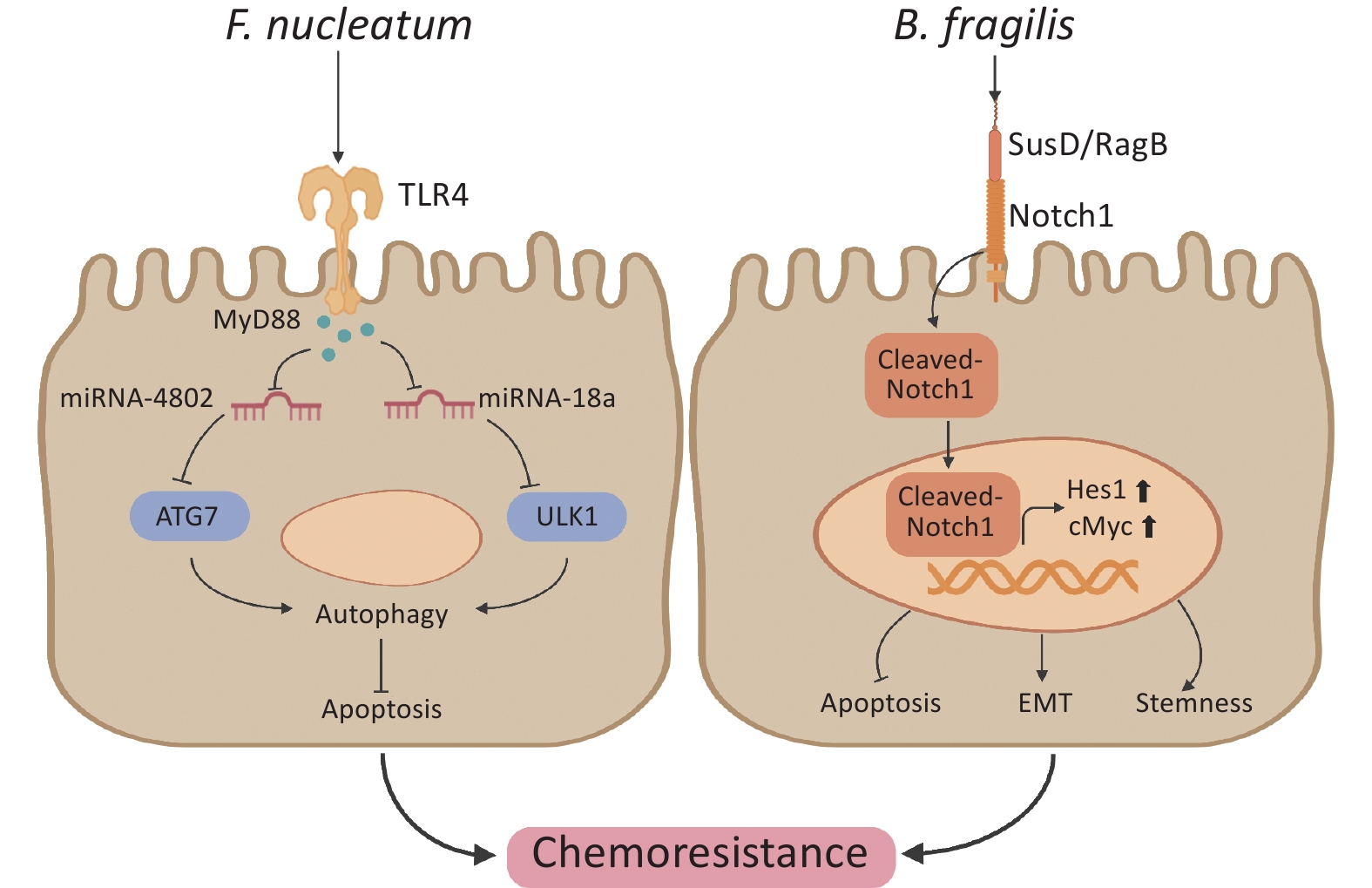
图 2
Fig.2 Mechanisms of gut microbiota-mediated influence on chemotherapy
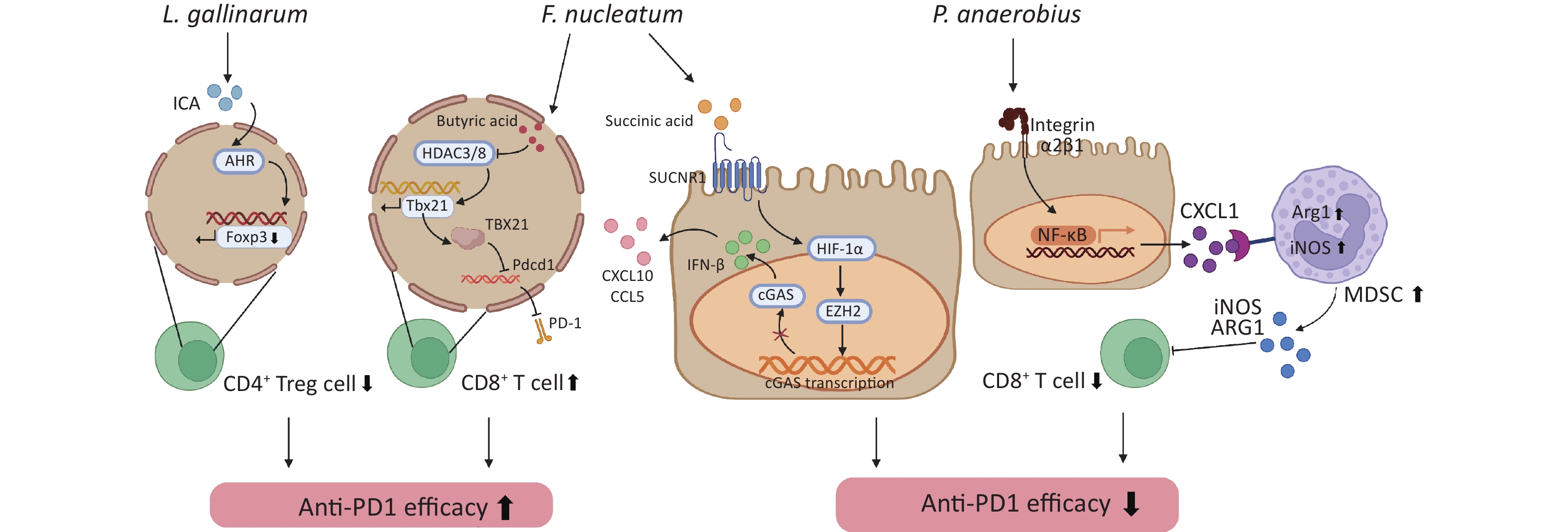
图 3
Fig.3 Mechanisms of gut microbiota-mediated influence on immunotherapy
| 1 |
Dekker E, Tanis PJ, Vleugels JLA, et al. Colorectal cancer[J]. Lancet, 2019, 394 (10207): 1467- 1480.
doi: 10.1016/S0140-6736(19)32319-0 |
| 2 |
Bray F, Laversanne M, Sung H, et al. Global cancer statistics 2022: GLOBOCAN estimates of incidence and mortality worldwide for 36 cancers in 185 countries[J]. CA Cancer J Clin, 2024, 74 (3): 229- 263.
doi: 10.3410/f.739487650.793592245 |
| 3 |
Wong CC, Yu J. Gut microbiota in colorectal cancer development and therapy[J]. Nat Rev Clin Oncol, 2023, 20 (7): 429- 452.
doi: 10.1038/s41571-023-00766-x |
| 4 |
Si H, Yang Q, Hu H, et al. Colorectal cancer occurrence and treatment based on changes in intestinal flora[J]. Semin Cancer Biol, 2021, 70, 3- 10.
doi: 10.1016/j.semcancer.2020.05.004 |
| 5 |
Guinane CM, Cotter PD. Role of the gut microbiota in health and chronic gastrointestinal disease: understanding a hidden metabolic organ[J]. Therap Adv Gastroenterol, 2013, 6 (4): 295- 308.
doi: 10.1177/1756283X13482996 |
| 6 |
Tong G, Shen Y, Li H, et al. NLRC4, inflammation and colorectal cancer (Review)[J]. Int J Oncol, 2024, 65 (4): 99.
doi: 10.3892/ijo.2024.5687 |
| 7 |
Wang N, Fang JY. Fusobacterium nucleatum, a key pathogenic factor and microbial biomarker for colorectal cancer[J]. Trends Microbiol, 2023, 31 (2): 159- 172.
doi: 10.1016/j.tim.2022.08.010 |
| 8 |
Guo P, Tian Z, Kong X, et al. FadA promotes DNA damage and progression of Fusobacterium nucleatum-induced colorectal cancer through up-regulation of chk2[J]. J Exp Clin Cancer Res, 2020, 39 (1): 202.
doi: 10.1186/s13046-020-01677-w |
| 9 |
Zhang L, Leng XX, Qi J, et al. The adhesin RadD enhances Fusobacterium nucleatum tumour colonization and colorectal carcinogenesis[J]. Nat Microbiol, 2024, 9 (9): 2292- 2307.
doi: 10.1038/s41564-024-01784-w |
| 10 |
Casasanta MA, Yoo CC, Udayasuryan B, et al. Fusobacterium nucleatum host-cell binding and invasion induces IL-8 and CXCL1 secretion that drives colorectal cancer cell migration[J]. Sci Signal, 2020, 13 (641): eaba9157.
doi: 10.1126/scisignal.aba9157 |
| 11 |
Peng C, Ouyang Y, Lu N, et al. The NF-κB signaling pathway, the microbiota, and gastrointestinal tumorigenesis: recent advances[J]. Front Immunol, 2020, 11, 1387.
doi: 10.3389/fimmu.2020.01387 |
| 12 |
Hibino S, Kawazoe T, Kasahara H, et al. Inflammation-induced tumorigenesis and metastasis[J]. Int J Mol Sci, 2021, 22 (11): 5421.
doi: 10.3390/ijms22115421 |
| 13 |
Chung L, Orberg ET, Geis AL, et al. Bacteroides fragilis toxin coordinates a pro-carcinogenic inflammatory cascade via targeting of colonic epithelial cells[J]. Cell Host Microbe, 2018, 23 (3): 421.
doi: 10.2139/ssrn.3155839 |
| 14 | Huang P, Ji F, Ho-Kwan Cheung A, et al. Peptostreptococcus stomatis promotes colonic tumorigenesis and receptor tyrosine kinase inhibitor resistance by activating ERBB2-MAPK[J]. Cell Host Microbe, 2025, 33 (5): 759- 760. |
| 15 |
Zhao L, Zhang X, Zhou Y, et al. Parvimonas micra promotes colorectal tumorigenesis and is associated with prognosis of colorectal cancer patients[J]. Oncogene, 2022, 41 (36): 4200- 4210.
doi: 10.1038/s41388-022-02395-7 |
| 16 |
Wang X, Huycke MM. Colorectal cancer: role of commensal bacteria and bystander effects[J]. Gut Microbes, 2015, 6 (6): 370- 376.
doi: 10.1080/19490976.2015.1103426 |
| 17 |
Wang Y, Zhang Y, Wang Z, et al. A clinical nomogram incorporating salivary Desulfovibrio desulfuricans level and oral hygiene index for predicting colorectal cancer[J]. Ann Transl Med, 2021, 9 (9): 754.
doi: 10.21037/atm-20-8168 |
| 18 |
He Z, Wu J, Gong J, et al. Microbiota in mesenteric adipose tissue from Crohn's disease promote colitis in mice[J]. Microbiome, 2021, 9 (1): 228.
doi: 10.1186/s40168-021-01178-8 |
| 19 |
Tomkovich S, Yang Y, Winglee K, et al. Locoregional effects of microbiota in a preclinical model of colon carcinogenesis[J]. Cancer Res, 2017, 77 (10): 2620- 2632.
doi: 10.1158/0008-5472.CAN-16-3472 |
| 20 | Zhang X, Yu D, Wu D, et al. Tissue-resident Lachnospiraceae family bacteria protect against colorectal carcinogenesis by promoting tumor immune surveillance [J]. Cell Host Microbe, 2023, 31(3): 418-432. e418. |
| 21 |
Ternes D, Tsenkova M, Pozdeev VI, et al. Author correction: the gut microbial metabolite formate exacerbates colorectal cancer progression[J]. Nat Metab, 2023, 5 (9): 1638.
doi: 10.1038/s42255-023-00898-5 |
| 22 |
Okumura S, Konishi Y, Narukawa M, et al. Gut bacteria identified in colorectal cancer patients promote tumourigenesis via butyrate secretion[J]. Nat Commun, 2021, 12 (1): 5674.
doi: 10.1038/s41467-021-25965-x |
| 23 | He Y, Fu L, Li Y, et al. Gut microbial metabolites facilitate anticancer therapy efficacy by modulating cytotoxic CD8(+) T cell immunity [J]. Cell Metab, 2021, 33(5): 988-1000. e1007. |
| 24 |
Bultman SJ, Jobin C. Microbial-derived butyrate: an oncometabolite or tumor-suppressive metabolite ?[J]. Cell Host Microbe, 2014, 16 (2): 143- 145.
doi: 10.1016/j.chom.2014.07.011 |
| 25 |
Ocvirk S, O'keefe SJD. Dietary fat, bile acid metabolism and colorectal cancer[J]. Semin Cancer Biol, 2021, 73, 347- 355.
doi: 10.1016/j.semcancer.2020.10.003 |
| 26 | Cong J, Liu P, Han Z, et al. Bile acids modified by the intestinal microbiota promote colorectal cancer growth by suppressing CD8(+) T cell effector functions [J]. Immunity, 2024, 57(4): 876-889. e811. |
| 27 |
Rivas-Domínguez A, Pastor N, Martínez-López L, et al. The role of DNA damage response in dysbiosis-induced colorectal cancer[J]. Cells, 2021, 10 (8): 1934.
doi: 10.3390/cells10081934 |
| 28 |
Zhang W, Qin X, Zhang K, et al. Correction to: microbial metabolite trimethylamine-N-oxide induces intestinal carcinogenesis through inhibiting farnesoid X receptor signaling[J]. Cell Oncol (Dordr), 2024, 47 (4): 1201- 1204.
doi: 10.1016/s0016-5085(22)60061-1 |
| 29 | Ren YM, Zhuang ZY, Xie YH, et al. BCAA-producing clostridium symbiosum promotes colorectal tumorigenesis through the modulation of host cholesterol metabolism [J]. Cell Host Microbe, 2024, 32(9): 1519-1535. e1517. |
| 30 |
Cui W, Guo M, Liu D, et al. Gut microbial metabolite facilitates colorectal cancer development via ferroptosis inhibition[J]. Nat Cell Biol, 2024, 26 (1): 124- 137.
doi: 10.1038/s41556-023-01314-6 |
| 31 | Zhang Q, Zhao Q, Li T, et al. Lactobacillus plantarum-derived indole-3-lactic acid ameliorates colorectal tumorigenesis via epigenetic regulation of CD8(+) T cell immunity [J]. Cell Metab, 2023, 35(6): 943-960. e949. |
| 32 |
Su ACY, Ding X, Lau HCH, et al. Lactococcus lactis HkyuLL 10 suppresses colorectal tumourigenesis and restores gut microbiota through its generated alpha-mannosidase[J]. Gut, 2024, 73 (9): 1478- 1488.
doi: 10.1136/gutjnl-2023-330835 |
| 33 |
Yu J, Feng L, Luo Z, et al. Interleukin-10 deficiency suppresses colorectal cancer metastasis by enriching gut Parabacteroides distasonis[J]. J Adv Res, 2024, 58, 229- 242.
doi: 10.1016/j.jare.2024.11.024 |
| 34 |
Hu M, Xu Y, Wang Y, et al. Gut microbial-derived N-acetylmuramic acid alleviates colorectal cancer via the AKT1 pathway[J]. Gut, 2025, 74 (8): 1230- 1245.
doi: 10.1136/gutjnl-2024-332891 |
| 35 |
Chen Y, Fang H, Chen H, et al. Bifidobacterium inhibits the progression of colorectal tumorigenesis in mice through fatty acid isomerization and gut microbiota modulation[J]. Gut Microbes, 2025, 17 (1): 2464945.
doi: 10.1080/19490976.2025.2464945 |
| 36 | Qu R, Zhang Y, Kim B, et al. Microbial riboflavin inhibits ceramide synthase 3 to lower ceramide (d18: 1/26: 0) and delay colorectal cancer progression [J]. Cell Metab, 2025, 33(7): 1187–1202. e5. |
| 37 | Li Q, Chan H, Liu W X, et al. Carnobacterium maltaromaticum boosts intestinal vitamin D production to suppress colorectal cancer in female mice [J]. Cancer Cell, 2023, 41(8): 1450-1465. e1458. |
| 38 |
Wolf PG, Cowley ES, Breister A, et al. Diversity and distribution of sulfur metabolic genes in the human gut microbiome and their association with colorectal cancer[J]. Microbiome, 2022, 10 (1): 64.
doi: 10.1186/s40168-022-01242-x |
| 39 |
Clay SL, Fonseca-Pereira D, Garrett WS. Colorectal cancer: the facts in the case of the microbiota[J]. J Clin Invest, 2022, 132 (4): 5867.
doi: 10.1172/jci155101 |
| 40 |
Cao Y, Oh J, Xue M, et al. Commensal microbiota from patients with inflammatory bowel disease produce genotoxic metabolites[J]. Science, 2022, 378 (6618): eabm3233.
doi: 10.1126/science.abm3233 |
| 41 |
Mirzarazi M, Bashiri S, Hashemi A, et al. The OmpA of commensal Escherichia coli of CRC patients affects apoptosis of the HCT116 colon cancer cell line[J]. BMC Microbiol, 2022, 22 (1): 139.
doi: 10.1186/s12866-022-02540-y |
| 42 |
Mezerová K, Starý L, Zbořil P, et al. Cyclomodulins and hemolysis in E. coli as potential low-cost non-invasive biomarkers for colorectal cancer screening[J]. Life (Basel), 2021, 11 (11): 1165.
doi: 10.3390/life11111165 |
| 43 | Yang Y, Weng W, Peng J, et al. Fusobacterium nucleatum increases proliferation of colorectal cancer cells and tumor development in mice by activating Toll-like receptor 4 signaling to nuclear factor-κB, and up-regulating expression of microRNA-21 [J]. Gastroenterol, 2017, 152(4): 851-866. e824. |
| 44 |
Chen S, Zhang L, Li M, et al. Fusobacterium nucleatum reduces METTL3-mediated m(6)A modification and contributes to colorectal cancer metastasis[J]. Nat Commun, 2022, 13 (1): 1248.
doi: 10.1038/s41467-022-28913-5 |
| 45 |
Sougiannis AT, Vanderveen BN, Enos RT, et al. Impact of 5 fluorouracil chemotherapy on gut inflammation, functional parameters, and gut microbiota[J]. Brain Behav Immun, 2019, 80, 44- 55.
doi: 10.1016/j.bbi.2019.02.020 |
| 46 |
Yuan X, Xue J, Tan Y, et al. Albuca bracteate polysaccharides synergistically enhance the anti-tumor efficacy of 5-fluorouracil against colorectal cancer by modulating β-Catenin signaling and intestinal flora[J]. Front Pharmacol, 2021, 12, 736627.
doi: 10.3389/fphar.2021.736627 |
| 47 | Yu T, Guo F, Yu Y, et al. Fusobacterium nucleatum promotes chemoresistance to colorectal cancer by modulating autophagy [J]. Cell, 2017, 170(3): 548-563. e516. |
| 48 | Ding X, Ting NL, Wong CC, et al. Bacteroides fragilis promotes chemoresistance in colorectal cancer, and its elimination by phage VA7 restores chemosensitivity [J]. Cell Host Microbe, 2025, 33(6): 941-956. e910. |
| 49 |
Kalasabail S, Engelman J, Zhang LY, et al. A perspective on the role of microbiome for colorectal cancer treatment[J]. Cancers (Basel), 2021, 13 (18): 4623.
doi: 10.3390/cancers13184623 |
| 50 |
Nakao T, Kurita N, Komatsu M, et al. Irinotecan injures tight junction and causes bacterial translocation in rat[J]. J Surg Res, 2012, 173 (2): 341- 347.
doi: 10.1016/j.jss.2010.10.003 |
| 51 | Palko-Łabuz A, Maksymowicz J, Sobieszczańska B, et al. Newly obtained apple pectin as an adjunct to irinotecan therapy of colorectal cancer reducing E. coli adherence and β-glucuronidase activity[J]. Cancers (Basel), 2021, 13 (12): 3014. |
| 52 |
Vétizou M, Pitt JM, Daillère R, et al. Anticancer immunotherapy by CTLA-4 blockade relies on the gut microbiota[J]. Science, 2015, 350 (6264): 1079- 1084.
doi: 10.1126/science.aad1329 |
| 53 | Jia D, Wang Q, Qi Y, et al. Microbial metabolite enhances immunotherapy efficacy by modulating T cell stemness in pan-cancer [J]. Cell, 2024, 187(7): 1651-1665. e1621. |
| 54 |
Kang X, Liu C, Ding Y, et al. Roseburia intestinalis generated butyrate boosts anti-PD-1 efficacy in colorectal cancer by activating cytotoxic CD8(+) T cells[J]. Gut, 2023, 72 (11): 2112- 2122.
doi: 10.1136/gutjnl-2023-330291 |
| 55 |
Wang X, Fang Y, Liang W, et al. Fusobacterium nucleatum facilitates anti-PD-1 therapy in microsatellite stable colorectal cancer[J]. Cancer Cell, 2025, 43 (3): 564- 574.
doi: 10.1016/s0016-5085(24)00878-3 |
| 56 |
Gao Y, Bi D, Xie R, et al. Correction to: fusobacterium nucleatum enhances the efficacy of PD-L1 blockade in colorectal cancer[J]. Signal Transduct Target Ther, 2021, 6 (1): 434.
doi: 10.1038/s41392-021-00840-9 |
| 57 | Jiang SS, Xie YL, Xiao XY, et al. Fusobacterium nucleatum-derived succinic acid induces tumor resistance to immunotherapy in colorectal cancer [J]. Cell Host Microbe, 2023, 31(5): 781-797. e789. |
| 58 |
Liu Y, Wong CC, Ding Y, et al. Peptostreptococcus anaerobius mediates anti-PD1 therapy resistance and exacerbates colorectal cancer via myeloid-derived suppressor cells in mice[J]. Nat Microbiol, 2024, 9 (6): 1467- 1482.
doi: 10.1038/s41564-024-01695-w |
| 59 |
Andrews MC, Duong CPM, Gopalakrishnan V, et al. Gut microbiota signatures are associated with toxicity to combined CTLA-4 and PD-1 blockade[J]. Nat Med, 2021, 27 (8): 1432- 1441.
doi: 10.1038/s41591-021-01406-6 |
| 60 |
Derosa L, Hellmann MD, Spaziano M, et al. Negative association of antibiotics on clinical activity of immune checkpoint inhibitors in patients with advanced renal cell and non-small-cell lung cancer[J]. Ann Oncol, 2018, 29 (6): 1437- 1444.
doi: 10.1093/annonc/mdy103 |
| 61 |
Bakuradze N, Merabishvili M, Makalatia K, et al. In vitro evaluation of the therapeutic potential of phage VA7 against enterotoxigenic bacteroides fragilis infection[J]. Viruses, 2021, 13 (10): 2044.
doi: 10.3390/v13102044 |
| 62 |
Lin Y, Xie M, Lau HC, et al. Effects of gut microbiota on immune checkpoint inhibitors in multi-cancer and as microbial biomarkers for predicting therapeutic response[J]. Med, 2025, 6 (3): 100530.
doi: 10.1016/j.medj.2024.10.007 |
| 63 |
Sugimura N, Li Q, Chu ESH, et al. Lactobacillus gallinarum modulates the gut microbiota and produces anti-cancer metabolites to protect against colorectal tumourigenesis[J]. Gut, 2021, 71 (10): 2011- 2021.
doi: 10.1136/gutjnl-2020-323951 |
| 64 |
Fong W, Li Q, Ji F, et al. Lactobacillus gallinarum-derived metabolites boost anti-PD1 efficacy in colorectal cancer by inhibiting regulatory T cells through modulating IDO1/Kyn/AHR axis[J]. Gut, 2023, 72 (12): 2272- 2285.
doi: 10.1136/gutjnl-2023-329543 |
| 65 |
Sun Y, Wang Q, Jiang Y, et al. Lactobacillus intestinalis facilitates tumor-derived CCL5 to recruit dendritic cell and suppress colorectal tumorigenesis[J]. Gut Microbes, 2025, 17 (1): 2449111.
doi: 10.1080/19490976.2024.2449111 |
| 66 |
Si W, Liang H, Bugno J, et al. Lactobacillus rhamnosus GG induces cGAS/STING- dependent type I interferon and improves response to immune checkpoint blockade[J]. Gut, 2022, 71 (3): 521- 533.
doi: 10.1136/gutjnl-2020-323426 |
| 67 |
Zhao W, Lei J, Ke S, et al. Fecal microbiota transplantation plus tislelizumab and fruquintinib in refractory microsatellite stable metastatic colorectal cancer: an open-label, single-arm, phase II trial (RENMIN-215)[J]. EClinicalMedicine, 2023, 66, 102315.
doi: 10.1016/j.eclinm.2023.102315 |
| 68 |
Davar D, Dzutsev AK, Mcculloch JA, et al. Fecal microbiota transplant overcomes resistance to anti-PD-1 therapy in melanoma patients[J]. Science, 2021, 371 (6529): 595- 602.
doi: 10.1126/science.abf3363 |
| 69 |
Nan K, Zhong Z, Yue Y, et al. Fasting-mimicking diet-enriched Bifidobacterium pseudolongum suppresses colorectal cancer by inducing memory CD8(+) T cells[J]. Gut, 2025, 74 (5): 775- 786.
doi: 10.1136/gutjnl-2024-333020 |
| [1] | 曹荣香, 李勇. 云芝多糖对急性肺损伤小鼠的保护作用及对肠道菌群的影响[J]. 中国临床药理学与治疗学, 2026, 31(5): 607-616. |
| [2] | 孙立亚, 李嘉鑫, 孙贵炎, 陈志超, 王庆峰, 杨宇峰, 石岩. 基于肠道菌群和支链氨基酸探讨中医药防治糖尿病肾病的研究进展[J]. 中国临床药理学与治疗学, 2026, 31(4): 527-535. |
| [3] | 张钰, 徐文斌, 王月琴. N6-甲基腺苷修饰调控肿瘤免疫微环境的研究进展[J]. 中国临床药理学与治疗学, 2026, 31(4): 543-550. |
| [4] | 文一如, 杨金拉姆, 美嘎, 李娜, 录亚鹏, 张琰, 刘婕婷. 巨噬细胞极化与肠道菌群及其代谢产物在器官损伤中相关研究进展[J]. 中国临床药理学与治疗学, 2026, 31(1): 125-132. |
| [5] | 姜建湘, 杜珮琰, 刘玉荣, 吕海宏. 三甲胺N-氧化物与桥本甲状腺炎的相关性研究[J]. 中国临床药理学与治疗学, 2025, 30(9): 1208-1214. |
| [6] | 耿彪, 孙珍贵, 赵春阳, 陈兴无. 髓系来源抑制性细胞对非小细胞肺癌患者接受PD-1抑制剂联合化疗疗效与预后的影响[J]. 中国临床药理学与治疗学, 2025, 30(8): 1076-1083. |
| [7] | 邢英, 郑嵘炅, 姜春晖, 玛依拉·卡哈尔, 木胡牙提·乌拉斯汉. 利拉鲁肽治疗后2型糖尿病合并冠心病患者肠道菌群变化及其与糖、脂代谢指标相关性[J]. 中国临床药理学与治疗学, 2025, 30(8): 1084-1091. |
| [8] | 杨永婷, 韩舒欣, 康晓静. 可切除性高危恶性黑素瘤的(新)辅助治疗研究进展[J]. 中国临床药理学与治疗学, 2025, 30(6): 849-857. |
| [9] | 郎旭, 刘博宇. TACE联合仑伐替尼及PD-1抑制剂治疗伴门静脉癌栓的肝细胞癌患者的疗效及安全性[J]. 中国临床药理学与治疗学, 2025, 30(5): 648-656. |
| [10] | 吴娟, 黄曦, 李佳嘉, 魏雨晴, 张丽琴, 俞咏梅, 陆志伟, 张鹤. SMARCA4缺失型非小细胞肺癌的SPP1表达及其与PD-L1的关系[J]. 中国临床药理学与治疗学, 2025, 30(4): 477-486. |
| [11] | 刘叶元, 祁亚锋, 张茂福, 李欣钰, 沈雁云, 刘瑜, 张尚祖, 李洋洋, 张利英, 张志明. 中药干预化疗肾损伤研究进展[J]. 中国临床药理学与治疗学, 2025, 30(4): 556-569. |
| [12] | 王龙, 王宇辰, 郭奕霖, 吴锦慧. 工程菌调控肿瘤相关巨噬细胞增强免疫治疗[J]. 中国临床药理学与治疗学, 2025, 30(3): 297-312. |
| [13] | 陈虹丹, 黄银德, 李翀. 难治性甲状腺癌药物治疗新技术和新方法的研究进展[J]. 中国临床药理学与治疗学, 2025, 30(3): 325-331. |
| [14] | 吴园园, 李晨露, 陈燕, 曹梦妲, 邵华. 替雷利珠联合仑伐替尼治疗中晚期肝癌的临床疗效分析[J]. 中国临床药理学与治疗学, 2025, 30(3): 392-397. |
| [15] | 陈祯美, 陈进宏. 胆管癌精准诊疗进展及前沿[J]. 中国临床药理学与治疗学, 2025, 30(2): 159-170. |
| 阅读次数 | ||||||
|
全文 |
|
|||||
|
摘要 |
|
|||||