Loading...
Welcome to Chinese Journal of Clinical Pharmacology and Therapeutics,Today is Chinese

Table of Content

    Volume 30 Issue 12
    26 December 2025
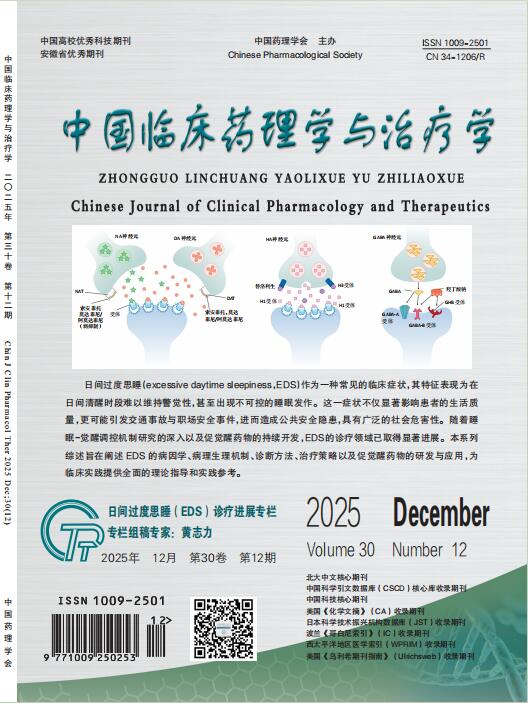
    Etiology, diagnosis, and current treatment of excessive daytime sleepiness
    LI Qingyun, HUANG Ke
    2025, 30(12):  1587-1595.  doi:10.12092/j.issn.1009-2501.2025.12.001
    Asbtract ( 16 )   PDF (735KB) ( 11 )  
    Related Articles | Metrics
    Excessive daytime sleepiness (EDS) is a clinical condition characterized by an inability to maintain alertness and wakefulness during the daytime, leading to diminished vigilance, impaired daytime functioning, and increased risks of traffic or occupational accidents. The core pathophysiology involves disrupted sleep architecture and dysfunction of brain arousalpromoting systems, which can stem from diverse etiologies including sleep disorders, systemic diseases, psychiatric disorders, and medication/substance use. Clinically, high-risk populations for EDS include occupational drivers and transportation workers, shift workers, individuals with chronic systemic diseases or psychiatric disorders, and users of sedative substances. Diagnosis of EDS relies on a detailed medical history and sleep/wake cycle assessment, supplemented by subjec‐tive scales (e.g., Epworth sleepiness scale) and ob‐jective tests such as polysomnography (PSG) and the multiple sleep latency test (MSLT). It is crucial to differentiate EDS from fatigue. Currently, there is no universally standardized treatment protocol for EDS. Management focuses on addressing underlying causes and alleviating symptoms, often combined with wake-promoting agents (WPAs) for sufficient therapeutic effect. This article summarizes the etiology, pathophysiological mechanisms, high-risk populations, diagnostic approaches, and current treatment strategies for EDS. It also proposes future research directions to advance standardized clinical management and promote precision medicine in EDS diagnosis and therapy.
    Frontier explorations: New progress in wakefulness regulation mechanisms and its implications for new drug development
    WANG Zan, WANG Ruiqi, ZHANG Yanan, CAI Lijia, SUN Qingqing
    2025, 30(12):  1596-1605.  doi:10.12092/j.issn.1009-2501.2025.12.002
    Asbtract ( 7 )   PDF (1414KB) ( 12 )  
    Related Articles | Metrics
    Sleep-wake regulation is a core physiological process dominated by widely distributed neural circuits in the brain. In recent years, with the development of optogenetics and chemogenetics technologies, researchers have not only improved their understanding of the functions of multiple classic regulatory brain regions (such as the reticular activating system, thalamus, hypothalamus, and basal forebrain) but also successively identified and verified a series of novel sleep-wake regulatory nuclei. These studies have simultaneously revealed the regulatory roles of various neurotransmitters, including histamine (HA), dopamine (DA), orexin, γ-aminobutyric acid (GABA), and norepinephrine (NE), in the sleep-wake process, laying a theoretical foundation for deciphering the mechanisms of sleep-wake-related neural circuits. This article systematically reviews the research progress on the neural mechanisms of sleep-wake regulation, explores its intervention targets, and provides a theoretical basis for the development of novel wake-promoting drugs. Regarding therapeutic targets, drugs such as histamine H3 receptor antagonists (e.g., pitolisant), dopaminergic modulators (e.g., modafinil, solriamfetol), orexin type 2 receptor agonists (e.g., TAK-861), GABA B receptor agonists (e.g., sodium oxybate), and NE reuptake inhibitors (e.g., AXS-12) have shown broad clinical application prospects in promoting wakefulness. Although the development of wake-promoting drugs still faces challenges such as hepatotoxicity, significant individual differences in efficacy, and lack of long-term safety data, with the deepening understanding of the mechanisms of sleep-wake-related circuits, precise intervention strategies targeting specific neurotransmitter systems are expected to open up new avenues for the treatment of sleep-wake disorders.
    The development of wake-promoting agents: past, present and future
    WU Huijuan, ZHAO Zhongxin
    2025, 30(12):  1606-1614.  doi:10.12092/j.issn.1009-2501.2025.12.003
    Asbtract ( 5 )   PDF (908KB) ( 9 )  
    Related Articles | Metrics
    Wake-promoting agents (WPAs) are a class of drugs that primarily excite the cerebral cortex, with effects including promoting wakefulness, increasing alertness, enhancing attention, improving cognitive function, and reducing fatigue. The use of WPAs can be traced back hundreds of years, with traditional commonly used WPAs including caffeine and amphetamine stimulants. However, the contradictions between their efficacy and tolerability (such as drug dependence and cardiovascular side effects), as well as the clinical limitations of insufficient efficacy for excessive daytime sleepiness (EDS) in specific etiologies (such as narcolepsy), have driven the development of novel WPAs. Compared to traditional drugs, novel WPAs such as modafinil, solriamfetol, and pitolisant have become important breakthroughs in this field due to their safety advantages. The discovery of orexin receptor agonists has also opened new directions for WPA development. This article reviews the past, present, and future of WPA development, aiming to provide a reference basis for formulating individualized treatment plans in clinical practice.
    Research advances in wake-promoting drugs for the treatment of narcolepsy
    ZHAN Shuqin, ZHANG Huimin, ZHANG Yimeng
    2025, 30(12):  1615-1624.  doi:10.12092/j.issn.1009-2501.2025.12.004
    Asbtract ( 10 )   PDF (851KB) ( 8 )  
    Related Articles | Metrics
    Narcolepsy (NT) is a rare central disorder of hypersomnolence, categorized as type 1 or type 2 depending on whether there is loss of hypothalamic orexinergic neurons. Its core clinical features—excessive daytime sleepiness (EDS) and abnormalities in REM sleep—significantly interfere with patients' educational attainment, work productivity, and activities of daily living. Currently, wake-promoting agents (WPAs) remain the cornerstone of EDS symptom management. This article provides a systematic review of advances over the past decade in the treatment of NT-related EDS with WPAs. Traditional central nervous system stimulants—amphetamine , methyphenidate, modafinil and armodafinil—have the longest history of use, yet research progress on their pharmacological mechanisms and therapeutic optimization has been limited in recent years. Novel WPAs, such as the dopamine and norepinephrine reuptake inhibitor solriamfetol and the histamine H3 receptor antagonist/inverse agonist pitolisant, significantly improve both subjective and objective assessment indices of NT-related EDS by modulating monoaminergic and histaminergic wake-promoting pathways. The gamma-hydroxybutyrate (GHB) prodrug sodium oxybate, which consolidates nocturnal sleep and regulates cataplexy by activating gama-aminobutyric acid_B (GABA_B) receptors and modulating noradrenergic and dopaminergic neuronal activity, has demonstrated equivalent efficacy to conventional formulations while reducing dosing frequency and cardiometabolic burden through its controlled-release and low-sodium formulations. Network meta-analyses indicate that the aforementioned WPAs exhibit favorable therapeutic efficacy in narcolepsy, and all three are recommended as first-line agents for NT-related EDS by domestic and international guideline consensus. Notably, orexin type 2 receptor agonists—the first etiology-targeted therapy—have completed Phase III clinical trials, demonstrating sustained wake-promoting effects and favorable safety profiles in patients with NT1, heralding a breakthrough in pathogenesis-oriented treatment.
    Advances in wake-promoting agents for residual excessive daytime sleepiness in obstructive sleep apnea
    OU Qiong, ZHOU Ruohan, CAI Weidan
    2025, 30(12):  1625-1631.  doi:10.12092/j.issn.1009-2501.2025.12.005
    Asbtract ( 9 )   PDF (836KB) ( 9 )  
    Related Articles | Metrics
    Obstructive sleep apnea (OSA) is a common sleep-related breathing disorder, and excessive daytime sleepiness (EDS) is one of its hallmark clinical manifestations, impairing quality of life and increasing public-safety risks such as road traffic accidents. A considerable proportion of patients continue to experience residual EDS despite adequate treatment with continuous positive airway pressure (CPAP). This review summarizes research over the past decade on wake-promoting agents for OSA-related EDS, synthesizing clinical evidence for modafinil, armodafinil, solriamfetol, and pitolisant. Across randomized controlled trials and observational studies, wake-promoting agents improve subjective sleepiness (Epworth Sleepiness Scale, ESS) and objective wakefulness (Maintenance of Wakefulness Test, MWT); recently approved agents agents such as solriamfetol and pitolisant demonstrate overall favorable efficacy and safety profiles compared with traditional options. Subgroup analyses indicate that benefits can be observed irrespective of adherence to primary OSA therapy. Importantly, wake-promoting agents are adjunctive, symptomatic treatments for EDS and do not replace CPAP or other etiologic therapies; evaluation should exclude alternative causes of sleepiness prior to initiation, and patients should continue standard OSA management throughout treatment. 
    Research progress on dopamine and norepinephrine reuptake inhibitors for the treatment of excessive daytime sleepiness
    ZHANG Bin, XIN Qianqian, HUANG Haokang
    2025, 30(12):  1632-1639.  doi:10.12092/j.issn.1009-2501.2025.12.006
    Asbtract ( 9 )   PDF (1305KB) ( 10 )  
    Related Articles | Metrics
    Excessive daytime sleepiness (EDS) is characterized by failure to maintain wakefulness and alertness, with a compelling need to sleep and may even fall asleep involuntarily. It is often accompanied by deficits in attention and memory, impairs daily functioning, and poses safety risks. Dysregulation of monoaminergic arousal pathways-particularly noradrenergic and dopaminergic systems—is closely implicated. Although several commonly used agents act via monoamine reuptake inhibition, only solriamfetol, a selective dopamine-norepinephrine reuptake inhibitor (DNRI), currently has clear evidence supporting efficacy for EDS associated with narcolepsy and obstructive sleep apnea (OSA). As a selective dopamine and norepinephrine reuptake inhibitor (DNRI), solriamfetol exerts its wake-promoting effects by blocking the corresponding transporters, thereby increasing monoamine levels in the synaptic cleft. Results from multiple clinical trials indicate that solriamfetol significantly improves patients' subjective sleepiness scores and objective ability to maintain wakefulness, with an overall favorable safety profile and no observed rebound sleepiness or withdrawal reactions. Real-world studies further confirm the feasibility of its long-term use. Against the backdrop of the mechanism of action and clinical application of monoamine reuptake inhibitors, this article focuses on reviewing the pharmacological characteristics of solriamfetol and its clinical research progress in both approved and investigational indications, aiming to provide evidence-based references for personalized wake-promoting treatment strategies in patients with EDS as a core phenotype.
    Mg2+/quercetin-loaded alginate hydrogel exerts immunomodulatory effects by suppressing neutrophil inflammation and oxidative stress
    YANG Fan, JIN Liang, CHEN Luyang, LI Lan, ZHOU Haifeng, WU Jing
    2025, 30(12):  1640-1647.  doi:10.12092/j.issn.1009-2501.2025.12.007
    Asbtract ( 8 )   PDF (2097KB) ( 8 )  
    Related Articles | Metrics
    AIM: To overcome the limitations of sodium alginate hydrogel (SAH), including its slow degradation and limited bioactivity in wound healing applications, we developed a functionalized hydrogel (SAQM) incorporating Mg2? and quercetin (Que). We further conducted a systematic evaluation of its roles and underlying molecular mechanisms in modulating neutrophil-mediated inflammatory responses and oxidative stress. METHODS: SAH and SAQM were prepared via ionic crosslinking induced by CaCl2. Morphology was characterized by SEM, mechanical properties were analyzed via rheometry, and component release was quantified using ICP-AES/UV spectrophotometry. In vitro evaluation employed a dHL60 neutrophil model stimulated with LPS. Inflammatory markers and NF-kB pathway activation were assessed by RT-qPCR and Western blot, while ROS generation was measured via flow cytometry. RESULTS: In vitro experiments demonstrated sustained release of Mg2+ and Que from SAQM. SEM and rheological analyses revealed comparable gelation and microstructure between SAQM and SAH, but SAQM showed significantly reduced swelling and enhanced degradation rates. Biocompatibility studies confirmed negligible cytotoxicity toward neutrophils. In LPS-induced inflammation, SAQM markedly suppressed pro-inflammatory cytokine expression and ROS production. Compositional analysis indicated Mg2+ primarily mediated anti-inflammatory effects, while Que contributed to antioxidant activity. Notably, SAQM treatment inhibited LPS-induced activation of the canonical NF-kB pathway, suggesting its anti-inflammatory mechanism involves NF-kB suppression. CONCLUSION: SAQM combines improved degradability with dual anti-inflammatory and antioxidant properties, representing a promising immunomodulatory hydrogel dressing for clinical applications.
    Protective mechanism of Guomin decoction against atopic dermatitis in mice based on TLR4/MyD88/NF-κB signaling pathway
    XU Linlin, ZHANG Dou, DING Pengtao, XI Xiaoxia, YANG Pengfei, ZHANG Xiaoya, LI Tingbao
    2025, 30(12):  1648-1657.  doi:10.12092/j.issn.1009-2501.2025.12.008
    Asbtract ( 6 )   PDF (2441KB) ( 6 )  
    Related Articles | Metrics
    AIM: To investigate the protective effect and mechanism of Guomin decoction on 1-chloro-2, 4-dinitrochlorobenzene (DNCB) induced atopic dermatitis (AD) in mice. METHODS: Fifty mice were induced by DNCB to establish atopic dermatitis model, and were randomly divided into model group, Cetirizine hydrochloride group (1.3 mg/kg), Guomin decoction low, medium and high-dose groups (3.25, 6.5, 13 g/kg), and blank group 10 mice, 60 mice in total. Each group of mice was given the corresponding test drug according to the set dose by intragastric administration for 14 consecutive days. The skin lesions were observed and the severity of skin lesions were scored. The organ index was calculated after treatment. Hematoxylin-eosin (HE) staining was used to observe the pathological changes of skin lesions. Serum immunoglobulin E (Ig-E), interleukin-6 (IL-6), IL-1β, tumor necrosis factor alpha (TNF-ɑ), interferon gamma (IFN-γ) and transforming growth factor β (TGF-β) were detected by enzyme-linked immunosorbent assay (ELISA). Real-time fluorescence quantitative polymerase chain reaction (Real-Time) the gene expression of toll-like receptor 4 (TLR4), myeloid differentiation factor 88 (MyD88), nuclear transcription factor κB (NF-κB), NF-κB inhibitory protein α (IκB-α) were detected by PCR. The expression levels of TLR4, MyD88, NF-κBp65 and p-NF-κBp65 in skin lesions were detected by Western Blot. RESULTS: Compared with blank group, the lesion score of mice in model group was increased (P<0.01). The epidermis was hyperkeratosis, the spinous layer was hypertrophic, and eosinophils and other inflammatory cells infiltrated the dermis. Spleen index and serum IgE, IL-6, IL-1β, TNF-alpha and IFN-γ were increased (P<0.01), while TGF-β1 was decreased (P<0.01). The expressions of TLR4, MyD88, NF-κB, NF-κBp65 and P-NF-κBP65 were increased, while the expressions of IκB-α were decreased, with statistical significance (P<0.01). Compared with the model group, the skin area of mice in the allergic decoction group was reduced and the score was decreased (P<0.01). The epidermal hyperkeratosis was alleviated, the spinous layer was slightly hypertrophic, and there was a small amount of inflammatory cell infiltration in the dermis. Spleen index and serum IgE, IL-6, IL-1β, TNF-alpha and IFN-γ were decreased (P<0.01), while TGF-β1 was increased (P<0.01). The expressions of TLR4, MyD88, NF-κB, NF-κBp65 and P-NF-κBP65 were decreased, while the expressions of IκB-α were increased (P<0.05). CONCLUSION: Guomin decoction can relieve pruritus, spleen index and skin inflammation in AD mice. It may regulate inflammatory response and transcription through TLR signaling pathway, inhibit the activation of p65 subunit in NF-κB, and affect the release of downstream inflammatory factors to achieve therapeutic effects. 

    Exploring the mechanism of Bai-lian turbidity reducing formula in treating lipid metabolism disorders based on transcriptomics
    SUN Jianing, WANG Ruiqi, YANG Weidong, ZHANG Lu, WANG Yan, CHENG Yangang, WANG Yingli, HAO Xuliang
    2025, 30(12):  1658-1668.  doi:10.12092/j.issn.1009-2501.2025.12.009
    Asbtract ( 7 )   PDF (3160KB) ( 5 )  
    Related Articles | Metrics
    AIM: To investigate the effect of C. albido on mice with abnormal lipid metabolism induced by high-fat diet based on transcriptomics. METHODS: Fifty male SD rats were selected, with 8 designated as the blank group. The remaining 42 rats were fed a high-fat diet (HFD) for model establishment. After 4 weeks of modeling, blood samples were taken from the orbital sinus to measure changes in serum total cholesterol (TC) and triglyceride (TG) levels to assess the success of the lipid metabolism disorder model. Rats modeling failures were excluded, and the 32 successful rats were randomly divided into four groups: a positive drug group, a model group, a low-dose Bai Lian Jiang Zhuo Fang group (BLJZ-BD), and a high-dose Bai Lian Jiang Zhuo Fang group (BLJZ-BG), with 8 rats in each group. The positive drug group was treated with atorvastatin calcium tablets (Avt) at a dosage of 1.25 mg/kg via gavage, while the low-dose Bai Lian Jiang Zhuo Fang group was administered 5 g/kg by gavage, and the high-dose group received 10 g/kg by gavage. After 4 weeks of continuous administration, Oil Red O staining was utilized to detect lipid deposition in the liver tissue. Subsequent biochemical indicators were assessed, measuring TC, TG, HDL-C, LDL-C, and the levels of alanine aminotransferase (ALT) and aspartate aminotransferase (AST) in liver tissue. Serum samples were taken to analyze levels of free fatty acids (FFA), lipoprotein lipase (LPL), hepatic triglyceride lipase (HL), and hormone-sensitive lipase (HSL) in each rat group. Additionally, RNA sequencing technology was employed on rat liver tissue to determine the mRNA abundance of different organisms and further screen significantly changed differentially expressed genes, followed by Western blotting to verify the expression of proteins in related signaling pathways. RESULTS: The results of oil red O staining showed that the area of lipid deposition in the liver of the model group was significantly higher than that of the blank group (P<0.01), and the proportion of lipid droplets in the positive drug group and the turbidity reduction group was significantly lower than that in the model group (P<0.01). The results of biochemical index analysis showed that compared with the model group, the positive drug group and the high-dose group of Bailian Turbidity Fang could significantly reduce the levels of TC, TG, LDL-C, ALT and AST in the liver tissue of rats with abnormal lipid metabolism (P<0.01), increase the levels of HDL-C (P<0.01), significantly reduce the levels of FFA and HSL in the serum of rats with abnormal lipid metabolism (P<0.01), and significantly increase the levels of LPL and HL (P<0.05, P<0.01). Transcriptomic studies showed that there were 48 differential metabolites and 288 core callback genes at the intersection of diseases and drugs, and the enrichment pathways were mainly concentrated in PPAR and AMPK pathways. Western blot verification results showed that the expression of PPARα, CYP7A1 and CPT1A proteins could be up-regulated. CONCLUSION: The anti-turbidity formula can improve the abnormal lipid metabolism, and promote the β oxidation of fatty acids and the metabolism of bile acids through the PPAR pathway, there by promoting the lipid metabolism process and playing a therapeutic role.
    Dexmedetomidine reduces adriamycin-induced cardiotoxicity by downregulating RBM3 through inhibiting ferroptosis
    CAO Xuefeng, ZHAO Liang, CHENG Zhixuan
    2025, 30(12):  1669-1674.  doi:10.12092/j.issn.1009-2501.2025.12.010
    Asbtract ( 8 )   PDF (1252KB) ( 4 )  
    Related Articles | Metrics
    AIM: To investigate the effect of dexmedetomidine (Dex) on reducing doxorubicin-induced cardiotoxicity by downregulating RNA-binding motif protein 3 (RBM3) through inhibiting ferroptosis. METHODS: Two-month-old SPF SD rats were randomly divided into control group (Control), adriamycin group (Adr), doxorubicin+ dexmeadriamycin group (Adr+Dex), and adriamycin+dexmedetomidine+ferroptosis agonist group (Adr+Dex+Era). The Adr group was given 2.5 mg/kg of Adr every other day for a total of 6 times; the Adr+Dex group was given Adr every other day and Dex 50 μg/kg every day for a total of 19 times; the Adr+Dex+Era group was given Adr and Dex in the same way, and 10 mg/kg of Era was given every other day for 14 days for a total of 3 times. The control group was given equal volumes of normal saline and DMSO solvent. The rats were anesthetized and sacrificed on day 19, and the ventricles were removed for Sirius to detect fibrosis, immunohistochemistry to detect RBM3 expression, Prussian blue staining to detect iron deposition, Western blotting and PCR to detect RBM3 expression. RESULTS: Compared with the Adr group, the Adr+Dex group significantly inhibited the increase of fibrosis caused by Adr, reduced the upregulation of RBM3 caused by Adr, and improved the iron deposition caused by Adr. The ferroptosis agonist Era reversed the protective effect of Dex again. CONCLUSION: Dex inhibits ferroptosis, downregulates RBM3 expression, and improves adriamycin-induced myocardial toxicity without affecting the anti-tumor effect of Adr.
    Pilot study on pharmacokinetics of HLX43 in rat serum by ELISA
    LIU Jiahao, ZHANG Erhui, LIU Xiaoping
    2025, 30(12):  1675-1682.  doi:10.12092/j.issn.1009-2501.2025.12.011
    Asbtract ( 7 )   PDF (1060KB) ( 3 )  
    Related Articles | Metrics
    AIM: To establish a method for rapid detection of HLX43 conjugated  antibody and total antibody in rat serum based on enzyme-linked immunosorbent assay (ELISA), and to explore the pharmacokinetic characteristics of single intravenous injection in rats. METHODS: Based on the detection principle of ELISA, Goat anti-Human IgG (detecting total antibody) or Anti-payload antibody (detecting conjugated antibody) was coated on a 96-well plate, and the sample to be tested was added. Goat anti-human IgG Monkey ads-HRP was used as a detection antibody for detection. After adding TMB substrate for color display for a period of time, the reaction was quenched by adding stop solution. The absorption(A) was read at double wavelength 450 nm/630 nm by using SoftMax. Reading values of A450 nm-A630 nm were used for numerical fitting, and after preliminary verification based on relevant regulatory requirements, SD rats were intravenously injected 15 mg/kg HLX43 to take blood for detection of drug concentration, and pharmacokinetic parameters were calculated. RESULTS: The linear range of the analytical method was 200-6 000 μg/mL, and the results of standard curve, precision, accuracy, hook effect, dilution linearity and selectivity (matrix effect) of the analytical method were acceptable. The pharmacokinetic parameters of HLX43 were determined by quantitative analysis of serum samples from SD rats. The t1/2 was 110.9 h for conjugated antibody and 110.6 h for total antibody , respectively, Cmax was 343.3 μg/mL and 386.3 μg/mL respectively, AUC0-inf was 
    13 977.511 h·μg·mL-1 and 16 916.523 h·μg·mL-1, respectively. CONCLUSION: This study developed two rapid and sensitive methods for the pharmacokinetic study of HLX43, laying the foundation for clinical research on adcs.
    Comparative study on the efficacy of hengglinide and pioglitazone in the treatment of type 2 diabetes mellitus complicated with metabolic fatty liver disease 
    HU Jing, LIANG Yanru, QI Ruiqian, DU Jing
    2025, 30(12):  1683-1691.  doi:10.12092/j.issn.1009-2501.2025.12.012
    Asbtract ( 7 )   PDF (740KB) ( 4 )  
    Related Articles | Metrics
    AIM: To observe the efficacy and safety of two regimens, namely, hengglinide combined with metformin and pioglitazone combined with metformin, in treating patients with type 2 diabetes mellitus (T2DM) complicated with metabolic fatty liver disease (MAFLD). METHODS: Patients with T2DM complicated with MAFLD were randomly divided into experimental group (44 cases) and control group (43 cases). The experimental group was given oral hengglinide tablets (10 mg once a day) combined with metformin (500 mg twice a day), while the control group was given pioglitazone (15 mg twice a day) combined with metformin (500 mg twice a day). The observation period was 12 weeks. Glucose and lipid metabolism, Body mass index (BMI), waist-hip ratio (WHR), waist hip ratio (Whtr), liver function and liver hardness (1iver stiffness measurement, LSM), controlled attenuation index (CAP) and other indicators were compared, and the above data were compared between the two groups after treatment, and the incidence of adverse drug reactions was observed.RESULTS: (1) The BMI of the experimental group and the control group decreased after treatment, but the decrease in the experimental group was greater. The WHR of the experimental group and the control group decreased compared with that before treatment, and the amplitude of the experimental group was greater. The waist height in the experimental group decreased significantly compared with that before treatment, but there was no significant change in the control group.(2) Fasting glucose (FPG), HbA1-glycosylated hemoglobin (HbAlc) and insulin resistance index of steady-state model (HOMA-IR) in the experimental group and the control group all decreased after treatment, but the decrease in the experimental group was even greater. (3) Total cholesterol (TC) and Triglyceride (TG) in the experimental group and the control group decreased after treatment, but there was no statistical difference between the two groups after treatment. Low density lipoprotein cholesterol (LDL-C) in the experimental group and the control group decreased after treatment, especially in the experimental group. High density lipoprotein cholesterol (HDL-C) in the experimental group increased after treatment, and the difference was statistically significant, while there was no difference in the control group before and after treatment. (4) Alanine transaminase (ALT), aspartate aminotransferase (AST) and Gamma-glutamyltransferase (GGT) in the experimental group and the control group all decreased after treatment, especially in the experimental group. LSM and CAP in the experimental group and the control group decreased after treatment, especially in the experimental group. (5) The total incidence of adverse drug reactions was 34.09% (15 cases /44 cases) in the experimental group and 13.95% (6 cases /43 cases) in the control group (all P<0.05). CONCLUSION: Compared with pioglitazone combined with metformin, hengglinide combined with metformin has better effects on glucose and lipid metabolism, obesity, liver function and liver hardness in patients with T2DM complicated with MAFLD, it may be a more comprehensive treatment choice for T2DM complicated with MAFLD.
    Research progress on endogenous biomarkers in drug-drug interaction
    LI Longjie, XU Haiping, ZHU Xinyan, HE Qingfeng, WANG Yanhui, TAO Yingmin, XIANG Xiaoqiang, YE Mengfan
    2025, 30(12):  1692-1700.  doi:10.12092/j.issn.1009-2501.2025.12.013
    Asbtract ( 3 )   PDF (847KB) ( 4 )  
    Related Articles | Metrics
    Human endogenous biomarkers can often serve as substrates for drug metabolizing enzymes or transporters, and changes in their concentrations can indirectly reflect functional variations in these enzymes or transporters. An emerging strategy in drug-drug interaction (DDI) risk assessment involves evaluating changes in plasma or urinary concentrations of endogenous biomarkers to determine the extent of DDI. By eliminating the need to introduce exogenous probes, endogenous biomarkers significantly simplify the DDI evaluation process. This approach not only avoids potential safety risks and tolerability concerns associated with exogenous probes but also enables simultaneous and dynamic monitoring of multiple metabolic enzymes and transporters. Furthermore, they offer notable advantages for evaluating special populations such as patients with hepatic or renal impairment, elderly individuals, and children, And endogenous biomarkers can be effectively combined with quantitative pharmacological models or artificial intelligence approaches, thus providing a novel paradigm to improve the efficiency of DDI assessment. This review summarizes recent studies on endogenous biomarkers associated with CYP enzymes as well as hepatic and renal transporters, providing reference information for future DDI research and evaluation.
    Research progress on the mechanism of GLP-1 receptor agonists in the treatment of diabetic nephropathy
    HUANG Shumin, XIE Baocheng, LIU Guohui
    2025, 30(12):  1701-1710.  doi:10.12092/j.issn.1009-2501.2025.12.014
    Asbtract ( 4 )   PDF (1345KB) ( 6 )  
    Related Articles | Metrics
    Diabetic nephropathy (DN) remains the leading cause of end-stage renal disease (ESRD) worldwide. In recent years, glucagon-like peptide-1 (GLP-1) receptor agonists, a novel class of hypoglycemic agents, have garnered significant attention in the field of diabetology. Emerging evidence suggests these therapeutic agents demonstrate considerable potential in diabetic nephropathy management through multiple pathways, including inflammation modulation, oxidative stress reduction, anti-fibrotic effects, renal hemodynamic improvement, lipid metabolism regulation, and modulation of programmed cell death pathways. This comprehensive review examines the pleiotropic biological functions of GLP-1 receptor agonists and elucidates their multifaceted mechanisms of action in combating diabetic nephropathy progression.
    Advances in the pathogenesis of diffuse large B-cell lymphoma and its immunotherapy
    ZHANGXIAO Yangzi, ZHU Yongfu, MEI Dan
    2025, 30(12):  1711-1721.  doi:10.12092/j.issn.1009-2501.2025.12.015
    Asbtract ( 4 )   PDF (1159KB) ( 6 )  
    Related Articles | Metrics
    Diffuse large B-cell lymphoma (DLBCL) is a highly heterogeneous and aggressive hematologic malignancy that poses significant challenges in clinical practice due to its tendency for relapse and difficulty in achieving lasting remission. Tumor immunotherapy has shown considerable therapeutic potential for DLBCL by stimulating or reconstructing the body's immune system to recognize and eliminate tumor cells. The evolution of immunotherapy, from early monoclonal antibodies to bispecific/multispecific antibodies, chimeric antigen receptor (CAR) therapy, and more recently oncolytic viruses and gene therapies, has provided DLBCL patients with a broader range of treatment options. With ongoing research into the immunopathological mechanisms of DLBCL and its tumor microenvironment, new immunotherapies are expected to further enhance treatment efficacy and improve patient outcomes. This paper reviews the immunopathological mechanisms of DLBCL and the advancements in immunotherapy for this condition.
    Progress of B lymphocytes in the pathogenesis of primary Sjogren's syndrome
    ZHANG Guohua, WANG Zhandong, QI Wenxia, ZHANG Qiqi, TIAN Jiexiang, ZHANG Yanying, GUO Chao, WANG Yongfeng
    2025, 30(12):  1722-1728.  doi:10.12092/j.issn.1009-2501.2025.12.016
    Asbtract ( 3 )   PDF (808KB) ( 4 )  
    Related Articles | Metrics
    Primary Sjogren's syndrome (pSS) is a chronic systemic autoimmune disease characterized by extensive infiltration of lymphoplasmacytic cells, leading to progressive damage of the salivary and lacrimal glands, which in turn triggers and oral and ocular dryness. During this pathologic process, abnormal proliferation of CD4+T cells and B cells becomes a distinctive feature of pSS histopathology. Although it was thought in the past that T cells play a dominant role in the autoimmune response, while B cells are mainly responsible for the production of autoantibodies. Recent studies have shown that B cells play a more complex and critical role in the pathologic process of pSS. In this paper, we will comprehensively explore the multiple roles of B lymphocytes in the pathogenesis of pSS in terms of their involvement in the production of antibodies to pSS, homing of lymphocytes, formation of ectopic germinal centers and B-cell survival and proliferative factors, and different subpopulations of B lymphocytes, highlighting their potential application value in the future diagnosis and treatment of pSS.