中国临床药理学与治疗学 ›› 2026, Vol. 31 ›› Issue (1): 1-13.doi: 10.12092/j.issn.1009-2501.2026.01.001
• 专家共识 •
刘媛( ), 崔诚, 余淼, 金文煜, 白银亮, 段雅彬, 方草, 贺建昌, 何艳, 黄桦, 霍仕霞, 金阳, 姜林, 姜哲, 焦正, 李学军, 李向阳, 李红健, 刘丽宏, 刘洋, 丘宏强, 孙凤, 孙建军, 王学昌, 王建华, 王振磊, 魏世杰, 颜晓文, 张雷, 张学农, 张宇馨, 赵军, 尹继业*(), 燕茹*(), 王新春*(), 刘东阳*()
收稿日期:2025-09-09
修回日期:2025-12-26
出版日期:2026-01-26
发布日期:2026-02-13
通讯作者:
尹继业,燕茹,王新春,刘东阳
E-mail:1367884775@qq.com;yinjiye@csu.edu.cn;ruyan@um.edu.mo;cwjwxc@163.com;liudongyang@vip.sina.com
作者简介:刘媛,女,博士研究生,研究方向:临床药理学与定量药理学。E-mail:基金资助:
Yuan LIU(), Cheng CUI, Miao YU, Wenyu JIN, Yinliang BAI, Yabin DUAN, Cao FANG, Jianchang HE, Yan HE, Hua HUANG, Shixia HUO, Yang JIN, Lin JIANG, Zhe JIANG, Zheng JIAO, Xuejun LI, Xiangyang LI, Hongjian LI, Lihong LIU, Yang LIU, Hongqiang QIU, Feng SUN, Jianjun SUN, Xuechang WANG, Jianhua WANG, Zhenlei WANG, Shijie WEI, Xiaowen YAN, Lei ZHANG, Xuenong ZHANG, Yuxin ZHANG, Jun ZHAO, Jiye YIN*(), Ru YAN*(), Xinchun WANG*(), Dongyang LIU*()
Received:2025-09-09
Revised:2025-12-26
Online:2026-01-26
Published:2026-02-13
Contact:
Jiye YIN,Ru YAN,Xinchun WANG,Dongyang LIU
E-mail:1367884775@qq.com;yinjiye@csu.edu.cn;ruyan@um.edu.mo;cwjwxc@163.com;liudongyang@vip.sina.com
摘要:
多民族精准用药水平关系到我国民族整体健康与民族团结,对实现《“健康中国2030”规划纲要》目标和我国发展安全至关重要。为提高多民族健康水平,本文以精准用药研究为核心,阐述其对提升用药合理性、安全性的重要性,强调少数民族精准用药研究的必要性,旨在建立基于多民族人群临床药动药效学变异因素的精准用药研究共识,以更好地保障不同民族人群用药疗效与安全。本共识系统梳理了多民族人群临床药动学及药效学变异概况,从遗传性因素、肠道菌群、病理生理状态、高原低氧环境、饮食习惯等显著影响因素,解析其导致药动药效学变异的原因及机制;并基于多民族人群临床药动学、药效学研究现有证据,以及最新研究技术(生理药动学虚拟人)和注意点阐明民族精准用药研究的价值和策略,经充分讨论达成共识,为多民族人群精准用药研究提供理论依据和实践指导。
中图分类号:
刘媛, 崔诚, 余淼, 金文煜, 白银亮, 段雅彬, 方草, 贺建昌, 何艳, 黄桦, 霍仕霞, 金阳, 姜林, 姜哲, 焦正, 李学军, 李向阳, 李红健, 刘丽宏, 刘洋, 丘宏强, 孙凤, 孙建军, 王学昌, 王建华, 王振磊, 魏世杰, 颜晓文, 张雷, 张学农, 张宇馨, 赵军, 尹继业, 燕茹, 王新春, 刘东阳. 中国多民族人群精准用药研究价值与策略专家共识[J]. 中国临床药理学与治疗学, 2026, 31(1): 1-13.
Yuan LIU, Cheng CUI, Miao YU, Wenyu JIN, Yinliang BAI, Yabin DUAN, Cao FANG, Jianchang HE, Yan HE, Hua HUANG, Shixia HUO, Yang JIN, Lin JIANG, Zhe JIANG, Zheng JIAO, Xuejun LI, Xiangyang LI, Hongjian LI, Lihong LIU, Yang LIU, Hongqiang QIU, Feng SUN, Jianjun SUN, Xuechang WANG, Jianhua WANG, Zhenlei WANG, Shijie WEI, Xiaowen YAN, Lei ZHANG, Xuenong ZHANG, Yuxin ZHANG, Jun ZHAO, Jiye YIN, Ru YAN, Xinchun WANG, Dongyang LIU. Expert consensus on the value and strategies of precise drug administration for multi-ethnic populations in China[J]. Chinese Journal of Clinical Pharmacology and Therapeutics, 2026, 31(1): 1-13.

图 1 多民族精准用药研究策略 注:PM-AI/ML:定量药理学-人工智能/机器学习;PK/PD:药代动力学/药效动力学;E/T/R:代谢酶/转运体/受体。
Fig.1 Research strategy for multi-ethnic precision medication
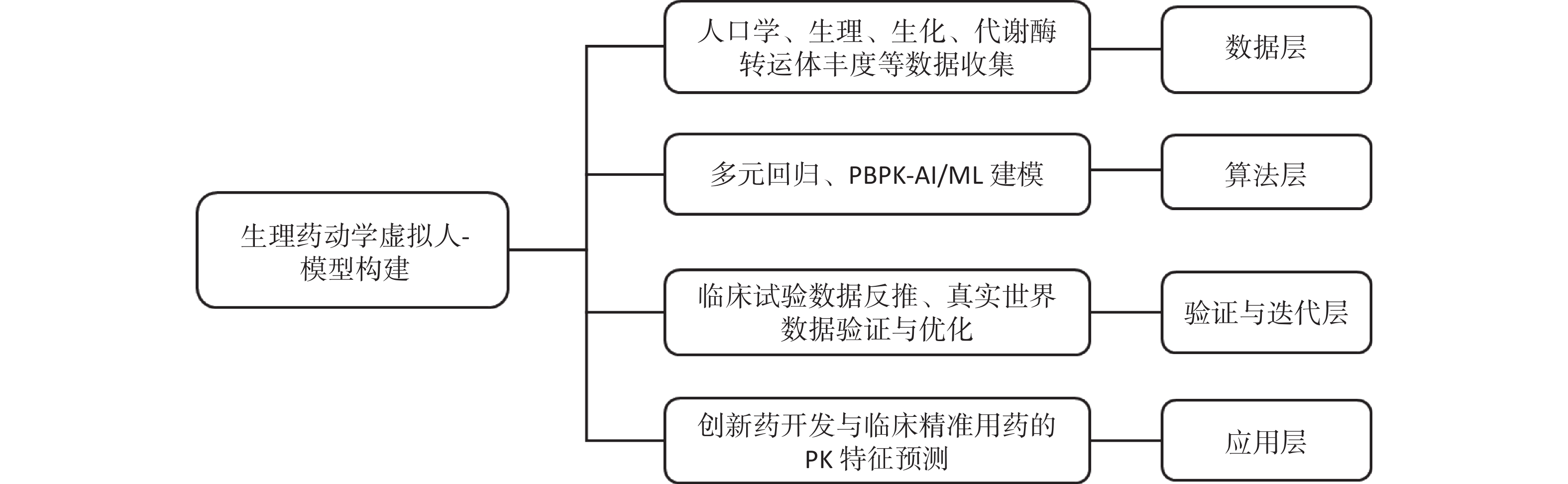
图 2 生理药动学虚拟人构建图
Fig.2 Diagram of physiologically based pharmacokinetic virtual human construction
| 1 |
Pacanowski M, Liu Q. Precision medicine 2030[J]. Clin Pharmacol Ther, 2020, 107 (1): 62- 64.
doi: 10.1002/cpt.1675 |
| 2 | Guo R. China Ethnic Statistical Yearbook 2020 [M]. 2020. |
| 3 |
Li J, Lou H, Yang X, et al. Genetic architectures of ADME genes in five Eurasian admixed populations and implications for drug safety and efficacy[J]. J Med Genet, 2014, 51 (9): 614- 622.
doi: 10.1136/jmedgenet-2014-102530 |
| 4 |
Niu R, Guo L, Dong X, et al. Analysis of the difference in SLCO1B1 and APOE gene polymorphisms between Mongolian and Han populations[J]. Pharmacogenomics, 2022, 23 (14): 783- 790.
doi: 10.2217/pgs-2022-0072 |
| 5 |
Qi G, Han C, Zhou Y, et al. Allele and genotype frequencies of CYP3A4, CYP3A5, CYP3A7, and GSTP1 gene polymorphisms among mainland Tibetan, Mongolian, Uyghur, and Han Chinese populations[J]. Clin Exp Pharmacol Physiol, 2022, 49 (2): 219- 227.
doi: 10.1111/1440-1681.13604 |
| 6 |
Zhang J, Zhu J, Yao X, et al. Pharmacokinetics of lidocaine hydrochloride metabolized by CYP3A4 in Chinese Han volunteers living at low altitude and in Native Han and Tibetan Chinese volunteers living at high altitude[J]. Pharmacology, 2016, 97 (3/4): 107- 113.
doi: 10.1159/000443332 |
| 7 |
Khoury MJ, Bowen S, Dotson WD, et al. Health equity in the implementation of genomics and precision medicine: a public health imperative[J]. Genet Med, 2022, 24 (8): 1630- 1639.
doi: 10.1016/j.gim.2022.04.009 |
| 8 |
Jin T, Zhang M, Yang H, et al. Genetic polymorphisms of the drug-metabolizing enzyme CYP2C19 in the Uyghur population in northwest China[J]. Xenobiotica, 2016, 46 (7): 634- 640.
doi: 10.3109/00498254.2015.1102986 |
| 9 |
Liu Y, Xie J, Wang M, et al. Genomic insights into the population history and biological adaptation of southwestern Chinese Hmong-Mien people[J]. Front Genet, 2021, 12, 815160.
doi: 10.1101/2021.10.16.463767 |
| 10 |
Ma X, Yang W, Gao Y, et al. Genetic origins and sex-biased admixture of the huis[J]. Mol Biol Evol, 2021, 38 (9): 3804- 3819.
doi: 10.1093/molbev/msab158 |
| 11 |
Zhang Z, Zhang Y, Wang Y, et al. The Tibetan-Yi region is both a corridor and a barrier for human gene flow[J]. Cell Rep, 2022, 39 (4): 110720.
doi: 10.1016/j.celrep.2022.110720 |
| 12 |
Zhang J, Wang H, Niu G, et al. Deciphering DMET genetic data: comprehensive assessment of Northwestern Han, Tibetan, Uyghur populations and their comparison to eleven 1000 genome populations[J]. Artif Cells Nanomed Biotechnol, 2018, 46 (sup3): S1176- s1185.
doi: 10.1080/21691401.2018.1533849 |
| 13 |
He N, Yan FX, Huang SL, et al. CYP2C19 genotype and S-mephenytoin 4'-hydroxylation phenotype in a Chinese Dai population[J]. Eur J Clin Pharmacol, 2002, 58 (1): 15- 18.
doi: 10.1007/s00228-002-0425-x |
| 14 | Lai Y, Zhang J, Wang YX, et al. CYP3A5*3 and MDR-1 C3435T single nucleotide polymorphisms in six Chinese ethnic groups[J]. Pharmazie, 2011, 66 (2): 136- 140. |
| 15 |
Xiao ZS, Goldstein JA, Xie HG, et al. Differences in the incidence of the CYP2C19 polymorphism affecting the S-mephenytoin phenotype in Chinese Han and Bai populations and identification of a new rare CYP2C19 mutant allele[J]. J Pharmacol Exp Ther, 1997, 281 (1): 604- 609.
doi: 10.1016/S0022-3565(24)36606-6 |
| 16 |
Yin SJ, Ni YB, Wang SM, et al. Differences in genotype and allele frequency distributions of polymorphic drug metabolizing enzymes CYP2C19 and CYP2D6 in mainland Chinese Mongolian, Hui and Han populations[J]. J Clin Pharm Ther, 2012, 37 (3): 364- 369.
doi: 10.1111/j.1365-2710.2011.01298.x |
| 17 | Chang XY, Guo T, Xia DY. Pharmacokinetics of Tinidazole in Chinese subjects: comparison of Mongolian, Korean, Hui, Uighur and Han nationalities[J]. J Pharm Pharm Sci, 2009, 12 (2): 175- 180. |
| 18 |
Guo T, Mao GF, Xia DY, et al. Pharmacokinetics of midazolam tablet in different Chinese ethnic groups[J]. J Clin Pharm Ther, 2011, 36 (3): 406- 411.
doi: 10.1111/j.1365-2710.2010.01178.x |
| 19 |
Yang L, Guo T, Xia DY, et al. Pharmacokinetics of losartan and its active carboxylic acid metabolite E-3174 in five ethnic populations of China[J]. J Clin Pharm Ther, 2012, 37 (2): 226- 231.
doi: 10.1111/j.1365-2710.2011.01279.x |
| 20 | Lai Y, Huang M, Li H, et al. Distinct genotype distribution and haplotype profiles in MDR1 gene among Chinese Han, Bai, Wa and Tibetan ethnic groups[J]. Pharmazie, 2012, 67 (11): 938- 941. |
| 21 |
Sun B, Thao T, Culhane-Pera K, et al. Advancing pharmacogenomic research in US Hmong populations: prevalence of key single nucleotide variations in California Hmong[J]. Front Pharmacol, 2024, 15, 1432906.
doi: 10.3389/fphar.2024.1432906 |
| 22 | 段婧, 蔡乐, 肖义泽, 等. 云南省西双版纳州傣族与汉族代谢综合征及相关疾病的流行现状[J]. 现代预防医学, 2013, 40 (1): 79- 81,85. |
| 23 |
董哲, 康文玉, 余文, 等. 云南省18个少数民族2009-2018年乙型病毒性肝炎流行趋势[J]. 中华疾病控制杂志, 2020, 24 (2): 139- 144.
doi: 10.16462/j.cnki.zhjbkz.2020.02.004 |
| 24 | Džidić-Krivić A, Kusturica J, Sher EK, et al. Effects of intestinal flora on pharmacokinetics and pharmacodynamics of drugs[J]. Drug Metab Rev, 2023, 55 (1/2): 126- 139. |
| 25 |
Flowers SA, Bhat S, Lee JC. Potential implications of gut microbiota in drug pharmacokinetics and bioavailability[J]. Pharmacotherapy, 2020, 40 (7): 704- 712.
doi: 10.1002/phar.2428 |
| 26 | Li X, Liu L, Cao Z, et al. Gut microbiota as an "invisible organ" that modulates the function of drugs[J]. Biomed Pharmacother, 2020, 121, 109653. |
| 27 |
Noh K, Kang YR, Nepal MR, et al. Impact of gut microbiota on drug metabolism: an update for safe and effective use of drugs[J]. Arch Pharm Res, 2017, 40 (12): 1345- 1355.
doi: 10.1007/s12272-017-0986-y |
| 28 |
Enright EF, Govindarajan K, Darrer R, et al. Gut microbiota-mediated bile acid transformations alter the cellular response to multidrug resistant transporter substrates in vitro: focus on P-glycoprotein[J]. Mol Pharm, 2018, 15 (12): 5711- 5727.
doi: 10.1021/acs.molpharmaceut.8b00875 |
| 29 |
Feng W, Liu J, Ao H, et al. Targeting gut microbiota for precision medicine: focusing on the efficacy and toxicity of drugs[J]. Theranostics, 2020, 10 (24): 11278- 11301.
doi: 10.7150/thno.47289 |
| 30 |
Shen Y, Liu J, Yao B, et al. Non-alcoholic fatty liver disease changes the expression and activity of hepatic drug-metabolizing enzymes and transporters in rats[J]. Toxicol Lett, 2024, 396, 36- 47.
doi: 10.1016/j.toxlet.2024.04.010 |
| 31 |
Chen R, Duan ZY, Duan XH, et al. Progress in research on gut microbiota in ethnic minorities in China and consideration of intervention strategies based on ethnic medicine: a review[J]. Front Cell Infect Microbiol, 2022, 12, 1027541.
doi: 10.3389/fcimb.2022.1027541 |
| 32 |
Lin D, Wang R, Luo J, et al. The core and distinction of the gut microbiota in Chinese populations across geography and ethnicity[J]. Microorganisms, 2020, 8 (10): 1579.
doi: 10.3390/microorganisms8101579 |
| 33 |
Rao J, Qiu P, Zhang Y, et al. Gut microbiota trigger host liver immune responses that affect drug-metabolising enzymes[J]. Front Immunol, 2024, 15, 1511229.
doi: 10.3389/fimmu.2024.1511229 |
| 34 |
Ouyang Y, Pinstrup-Andersen P. Health inequality between ethnic minority and Han populations in China[J]. World Development, 2012, 40 (7): 1452- 1468.
doi: 10.1016/j.worlddev.2012.03.016 |
| 35 |
Maher D, Ailabouni N, Mangoni AA, et al. Alterations in drug disposition in older adults: a focus on geriatric syndromes[J]. Expert Opin Drug Metab Toxicol, 2021, 17 (1): 41- 52.
doi: 10.1080/17425255.2021.1839413 |
| 36 | Bai X, Liu G, Yang J, et al. Gut microbiota as the potential mechanism to mediate drug metabolism under high-altitude hypoxia[J]. Curr Drug Metab, 2022, 23 (1): 8- 20. |
| 37 | Min Q, Feng SL, Lu H, et al. Modulation of drug-metabolizing enzymes and transporters under hypoxia environment[J]. Sheng Li Xue Bao, 2019, 71 (2): 336- 342. |
| 38 | Qiu F, Sun Y, Li W, et al. A review on drug-metabolizing enzymes, transporters, and gut microbiota on pharmacokinetics in high-altitude environment [J]. Curr Drug Metab, 2025, doi: 10.2174/0113892002356402250130075811. |
| 39 |
Li X, Zhang J, Liu G, et al. High altitude hypoxia and oxidative stress: the new hope brought by free radical scavengers[J]. Life Sci, 2024, 336, 122319.
doi: 10.1016/j.lfs.2023.122319 |
| 40 | Valencia-Cervantes J, Huerta-Yepez S, Aquino-Jarquín G, et al. Hypoxia increases chemoresistance in human medulloblastoma DAOY cells via hypoxia-inducible factor 1α-mediated downregulation of the CYP2B6, CYP3A4 and CYP3A5 enzymes and inhibition of cell proliferation[J]. Oncol Rep, 2019, 41 (1): 178- 190. |
| 41 |
Zhou X, Nian Y, Qiao Y, et al. Hypoxia plays a key role in the pharmacokinetic changes of drugs at High Altitude[J]. Curr Drug Metab, 2018, 19 (11): 960- 969.
doi: 10.2174/1389200219666180529112913 |
| 42 | Morris ME, Ren T. Diet/Nutrient Interactions With Drug Transporters [M]// Drug Transporters, 2022: 515-541. |
| 43 |
Lu J, Yang T, Tang D, et al. Associations between major dietary patterns and blood pressure among Southwest Chinese: a cross-sectional analysis based on the China Multi-Ethnic Cohort (CMEC) study[J]. Nutr Metab Cardiovasc Dis, 2023, 33 (5): 987- 997.
doi: 10.1016/j.numecd.2023.01.023 |
| 44 |
Liu D, Liang XC. New developments in the pharmacodynamics and pharmacokinetics of combination of Chinese medicine and Western medicine[J]. Chin J Integr Med, 2017, 23 (4): 312- 319.
doi: 10.1007/s11655-016-2271-1 |
| 45 |
Zhou Y, Arribas GH, Turku A, et al. Rare genetic variability in human drug target genes modulates drug response and can guide precision medicine[J]. Sci Adv, 2021, 7 (36): eabi6856.
doi: 10.1126/sciadv.abi6856 |
| 46 |
Xie HG, Kim RB, Wood AJ, et al. Molecular basis of ethnic differences in drug disposition and response[J]. Annu Rev Pharmacol Toxicol, 2001, 41, 815- 850.
doi: 10.1146/annurev.pharmtox.41.1.815 |
| 47 |
Yasuda SU, Zhang L, Huang SM. The role of ethnicity in variability in response to drugs: focus on clinical pharmacology studies[J]. Clin Pharmacol Ther, 2008, 84 (3): 417- 23.
doi: 10.1038/clpt.2008.141 |
| 48 |
Lam MP, Cheung BM. The pharmacogenetics of the response to warfarin in Chinese[J]. Br J Clin Pharmacol, 2012, 73 (3): 340- 347.
doi: 10.1111/j.1365-2125.2011.04097.x |
| 49 |
Wang L, Aikemu A, Yibulayin A, et al. Genetic polymorphisms of pharmacogenomic VIP variants in the Uygur population from northwestern China[J]. BMC Genet, 2015, 16, 66.
doi: 10.1186/s12863-015-0232-x |
| 50 |
Guo L, Zhang W, Meng W, et al. Very important pharmacogenes polymorphism landscape and potential clinical relevance in the Chinese Mongolian[J]. Gene, 2023, 850, 146960.
doi: 10.1016/j.gene.2022.146960 |
| 51 |
He Y, Wu W, Zheng HM, et al. Regional variation limits applications of healthy gut microbiome reference ranges and disease models[J]. Nat Med, 2018, 24 (10): 1532- 1535.
doi: 10.1038/s41591-018-0164-x |
| 52 |
Chrysostomou D, Roberts LA, Marchesi JR, et al. Gut microbiota modulation of efficacy and toxicity of cancer chemotherapy and immunotherapy[J]. Gastroenterology, 2023, 164 (2): 198- 213.
doi: 10.1053/j.gastro.2022.10.018 |
| 53 | Yifei JIA, Panpan W, Yijia C, et al. Advances in gut microbial drug metabolism[J]. Prog Pharmaceut Sci, 2020, 44 (2): 83- 99. |
| 54 | Xia B, Li B, Wang H, et al. Characteristics of gut microbiota in different regions and ethnic minorities of China and their associations with diseases [J/OL]. Authorea, 2025, http://www.authorea.com/doi/full/10.22541/au. |
| 55 |
Zhao Q, Chen Y, Huang W, et al. Drug-microbiota interactions: an emerging priority for precision medicine[J]. Signal Trans Targ Thery, 2023, 8 (1): 386.
doi: 10.1038/s41392-023-01619-w |
| 56 |
Tao L, Tian T, Liu L, et al. Cohort profile: the Xinjiang Multiethnic Cohort (XMC) study[J]. BMJ Open, 2022, 12 (5): e048242.
doi: 10.1136/bmjopen-2020-048242 |
| 57 |
Williamson DM, Marrie RA, Ashley-Koch A, et al. Interaction of HLA-DRB1*1501 and TNF-Alpha in a population-based case-control study of multiple sclerosis[J]. Immunol Infect Dis, 2013, 1 (1): 10- 17.
doi: 10.13189/iid.2013.010102 |
| 58 |
Duo D, Duan Y, Zhu J, et al. New strategy for rational use of antihypertensive drugs in clinical practice in high-altitude hypoxic environments[J]. Drug Metab Rev, 2023, 55 (4): 388- 404.
doi: 10.1080/03602532.2023.2250930 |
| 59 |
Peng W, Li K, Yan AF, et al. Prevalence, management, and associated factors of obesity, hypertension, and diabetes in Tibetan population compared with China overall[J]. Int J Environ Res Public Health, 2022, 19 (14): 8787.
doi: 10.3390/ijerph19148787 |
| 60 |
Niederberger E, Parnham MJ. The impact of diet and exercise on drug responses[J]. Int J Mol Sci, 2021, 22 (14): 7692.
doi: 10.3390/ijms22147692 |
| 61 |
Aoyama T, Ishida Y, Kaneko M, et al. Pharmacokinetics and pharmacodynamics of meloxicam in East Asian populations: the role of ethnicity on drug response[J]. CPT Pharmacometrics Syst Pharmacol, 2017, 6 (12): 823- 832.
doi: 10.1002/psp4.12259 |
| 62 | Le TT, Mcgrath SR, Fasinu PS. Herb-drug interactions in neuropsychiatric pharmacotherapy-A review of clinically relevant findings[J]. Curr Neuropharmacol, 2022, 20 (9): 1736- 1751. |
| 63 | Cazzola M, Calzetta L, Matera MG, et al. How does race/ethnicity influence pharmacological response to asthma therapies ?[J]. Expert Opin Drug Metab Toxicol, 2018, 14 (4): 435- 446. |
| 64 |
Liu B, Yuan M, Yang M, et al. The effect of high-altitude hypoxia on neuropsychiatric functions[J]. High Alt Med Biol, 2024, 25 (1): 26- 41.
doi: 10.1089/ham.2022.0136 |
| 65 | Jordan IK, Sharma S, Nagar SD, et al. The apportionment of pharmacogenomic variation: race, ethnicity, and adverse drug reactions [J]. Med Res Arch, 2022, 10(9). 10.18103/mra. v10i9.2986. |
| 66 |
Lin S, Xian Y, Liu Y, et al. Risk factors and community intervention for nonalcoholic fatty liver disease in community residents of Urumqi, China[J]. Medicine(Baltimore), 2018, 97 (9): e0021.
doi: 10.1097/md.0000000000010021 |
| 67 |
Duan M, Xi Y, Tian Q, et al. Prevalence, awareness, treatment and control of type 2 diabetes and its determinants among Mongolians in China: a cross-sectional analysis of IMAGINS 2015-2020[J]. BMJ Open, 2022, 12 (11): e063893.
doi: 10.1136/bmjopen-2022-063893 |
| 68 |
Mohamed ME, Saqr A, Staley C, et al. Pharmacomicrobiomics: immunosuppressive drugs and microbiome interactions in transplantation[J]. Transplantation, 2024, 108 (9): 1895- 1910.
doi: 10.1097/TP.0000000000004926 |
| 69 |
Bharani T, Mogensen KM, Rosen JH, et al. Concomitant use of monoamine oxidase inhibitor and tyrosine in parenteral nutrition[J]. Eur J Clin Nutr, 2024, 78 (3): 274- 276.
doi: 10.1038/s41430-023-01375-8 |
| 70 | Chen Y, Xia Q, Song C, et al. Study on the hepatoxicity mechanisms of Huangyaozi (Rhizoma dioscoreae bulbiferae) on mouse liver by cDNA microarray[J]. Fen Zi Xi Bao Sheng Wu Xue Bao, 2006, 39 (6): 568- 572. |
| 71 |
Iranshahy M, Iranshahi M. Traditional uses, phytochemistry and pharmacology of asafoetida (Ferula assa-foetida oleo-gum-resin)-a review[J]. J Ethnopharmacol, 2011, 134 (1): 1- 10.
doi: 10.1016/j.jep.2010.11.067 |
| 72 |
Liu J, Zhang F, Ravikanth V, et al. Chemical Compositions of Metals in Bhasmas and Tibetan Zuotai Are a Major Determinant of Their Therapeutic Effects and Toxicity[J]. Evid Based Complement Alternat Med, 2019, 2019, 1697804.
doi: 10.1155/2019/1697804 |
| 73 |
Cui C, Li X, Liang H, et al. Physiologically based pharmacokinetic model of renally cleared antibacterial drugs in Chinese renal impairment patients[J]. Biopharm Drug Dispos, 2021, 42 (1): 24- 34.
doi: 10.1002/bdd.2258 |
| 74 |
Cui C, Valerie Sia JE, Tu S, et al. Development of a physiologically based pharmacokinetic (PBPK) population model for Chinese elderly subjects[J]. Br J Clin Pharmacol, 2021, 87 (7): 2711- 2722.
doi: 10.1111/bcp.14609 |
| 75 | El-Khateeb E, Burkhill S, Murby S, et al. Physiological-based pharmacokinetic modeling trends in pharmaceutical drug development over the last 20-years; in-depth analysis of applications, organizations, and platforms[J]. Biopharm Drug Dispos, 2021, 42 (4): 107- 117. |
| 76 |
Li Y, Li X, Zhu M, et al. Development of a Physiologically Based Pharmacokinetic Population Model for Diabetic Patients and its Application to Understand Disease-drug-drug Interactions[J]. Clin Pharmacokinet, 2024, 63 (6): 831- 845.
doi: 10.1007/s40262-024-01383-2 |
| 77 |
Rostami-Hodjegan A, Tucker GT. Simulation and prediction of in vivo drug metabolism in human populations from in vitro data[J]. Nat Rev Drug Discov, 2007, 6 (2): 140- 148.
doi: 10.1038/nrd2173 |
| 78 |
Wu Y, Kong W, Li J, et al. Development of PBPK Population Model for End-Stage Renal Disease Patients to Inform OATP1B-, BCRP-, P-gp-, and CYP3A4-Mediated Drug Disposition with Individual Influencing Factors[J]. Pharmaceutics, 2025, 17 (8): 1078.
doi: 10.3390/pharmaceutics17081078 |
| 79 |
Yu Z, Lei Z, Yao X, et al. Potential drug-drug interaction of olverembatinib (HQP1351) using physiologically based pharmacokinetic models[J]. Front Pharmacol, 2022, 13, 1065130.
doi: 10.3389/fphar.2022.1065130 |
| 80 |
Song L, Guo X, Yang W, et al. Maternal-Fetal Physiologically Based Population Pharmacokinetics Model Development of Lopinavir/Ritonavir in HIV/HBV Co-infected Pregnant Women to Quantitatively Describe the Gestational PK Characteristics and Predict the Potential Disease-Drug-Drug Interaction (DDDI)[J]. Clin Pharmacokinet, 2025, 64 (6): 885- 898.
doi: 10.1007/s40262-025-01493-5 |
| 81 |
Cui C, Zhang M, Yao X, et al. Dose selection of chloroquine phosphate for treatment of COVID-19 based on a physiologically based pharmacokinetic model[J]. Acta Pharm Sin B, 2020, 10 (7): 1216- 1227.
doi: 10.1016/j.apsb.2020.04.007 |
| 82 |
Zhang M, Lei Z, Yao X, et al. Model informed drug development: HSK21542 PBPK model supporting dose decisions in specific populations[J]. Eur J Pharm Sci, 2024, 196, 106763.
doi: 10.1016/j.ejps.2024.106763 |
| 83 |
Zhang M, Zhang S, Wang L, et al. Key Factors for Improving Predictive Accuracy and Avoiding Overparameterization of the PBPK Absorption Model in Food Effect Studies of Weakly Basic Water-Insoluble Compounds in Immediate Release Formulations[J]. Pharmaceutics, 2024, 16 (10): 1324.
doi: 10.3390/pharmaceutics16101324 |
| 84 |
Zhang L, Feng F, Wang X, et al. Dose Prediction and Pharmacokinetic Simulation of XZP-5610, a Small Molecule for NASH Therapy, Using Allometric Scaling and Physiologically Based Pharmacokinetic Models[J]. Pharmaceuticals (Basel), 2024, 17 (3): 369.
doi: 10.3390/ph17030369 |
| 85 | Zhang M, Yao X, Hou Z, et al. Development of a Physiologically Based Pharmacokinetic Model for Hydroxychloroquine and Its Application in Dose Optimization in Specific COVID-19 Patients[J]. Front Pharmacol, 2020, 11, 585021. |
| 86 |
Zhang M, Yu Z, Yao X, et al. Prediction of pyrotinib exposure based on physiologically-based pharmacokinetic model and endogenous biomarker[J]. Front Pharmacol, 2022, 13, 972411.
doi: 10.3389/fphar.2022.972411 |
| 87 |
Bosilkovska M, Samer CF, Déglon J, et al. Geneva cocktail for cytochrome p450 and P-glycoprotein activity assessment using dried blood spots[J]. Clin Pharmacol Ther, 2014, 96 (3): 349- 359.
doi: 10.1038/clpt.2014.83 |
| 88 |
Donzelli M, Derungs A, Serratore MG, et al. The basel cocktail for simultaneous phenotyping of human cytochrome P450 isoforms in plasma, saliva and dried blood spots[J]. Clin Pharmacokinet, 2014, 53 (3): 271- 282.
doi: 10.1007/s40262-013-0115-0 |
| 89 |
Stopfer P, Giessmann T, Hohl K, et al. Pharmacokinetic evaluation of a drug transporter cocktail consisting of digoxin, furosemide, metformin, and rosuvastatin[J]. Clin Pharmacol Ther, 2016, 100 (3): 259- 267.
doi: 10.1002/cpt.406 |
| 90 | Kong W, Pan Y, Wu Y, et al. Microdose cocktail study reveals the activity and key influencing factors of OATP1B, P-Gp, BCRP, and CYP3A in end-stage renal disease patients[J]. Clin Pharmacol Ther, 2025, 117 (5): 1303- 1312. |
| 91 | Valerie Sia JE, Lai X, Mak WY, et al. Aging-related CYP3A functional changes in Chinese older patients: New findings from model-based assessment of amlodipine[J]. Clin Pharmacol Ther, 2024, 116 (3): 858- 865. |
| 92 | Yoshikado T, Aoki Y, Mochizuki T, et al. Cluster gauss-Newton method analyses of PBPK model parameter combinations of coproporphyrin-I based on OATP1B-mediated rifampicin interaction studies[J]. CPT Pharmacometrics Syst Pharmacol, 2022, 11 (10): 1341- 1357. |
| 93 |
Song L, Song J, Wang Y, et al. Systematic quantitative analysis of fetal dexamethasone exposure and fetal lung maturation in pregnant animals: model informed dexamethasone precision dose study[J]. ACS Pharmacol Transl Sci, 2024, 7 (6): 1770- 1782.
doi: 10.1021/acsptsci.3c00391 |
| 94 |
Guo X, Zhang L, Lei Z, et al. A simple LC-MS/MS method for the simultaneous quantification of drug metabolic enzymes[J]. J Chromatogr B Analyt Technol Biomed Life Sci, 2023, 1214, 123536.
doi: 10.1016/j.jchromb.2022.123536 |
| 95 |
Zhang L, Liu X, Jin T, et al. Isomers-oriented separation of forty-five plasma bile acids with liquid chromatography-tandem mass spectrometry[J]. J Chromatogr A, 2024, 1721, 464827.
doi: 10.1016/j.chroma.2024.464827 |
| 96 |
Cui C, Fang L, Li L, et al. Odoribacter splanchnicus rescues aging-related intestinal P-glycoprotein damage via GDP-L-fucose secretion[J]. Nat Commun, 2025, 16 (1): 10665.
doi: 10.1038/s41467-025-65692-1 |
| [1] | 陈冰, 左笑丛, 李新刚, 尚德为, 周佩军, 丁俊杰, 相小强, 邱晓燕, 王卓, 李晓宇, 张弋, 赵维, 王玉珠, 高建军, 焦正. 模型引导的抗排异治疗患者他克莫司精准用药专家共识[J]. 中国临床药理学与治疗学, 2025, 30(4): 433-445. |
| [2] | 石娟, 江琳, 马小鹏, 王静, 王教媛, 罗彬, 王婷婷. 乳腺癌患者自我隐瞒潜在剖面分析及影响因素研究[J]. 中国临床药理学与治疗学, 2024, 29(9): 1027-1034. |
| [3] | 袁世轩, 吕子彦, 杨勇, 陈璐, 张丽娟. 模型引导下的万古霉素血药浓度监测临床研究[J]. 中国临床药理学与治疗学, 2024, 29(12): 1344-1352. |
| [4] | 陶绍能, 葛俊亮, 杨继文, 陈晓磊, 尹惟礼, 王莹莹, 刘小岑. 分化型甲状腺癌术后首次131I治疗后疗效及影响因素分析[J]. 中国临床药理学与治疗学, 2024, 29(12): 1435-1440. |
| [5] | 王 鑫, 邬国栋, 安 明, 李 刚, 刘 洋. 文拉法辛相关PK-PD关系及影响因素研究进展[J]. 中国临床药理学与治疗学, 2023, 28(7): 788-795. |
| [6] | 钱 锦, 王峰岩. 老年急性心肌梗死患者PCI术后血清NT-proBNP水平的影响因素并分析其对近期预后的影响[J]. 中国临床药理学与治疗学, 2023, 28(6): 658-665. |
| [7] | 张进华, 刘茂柏, 蔡铭智, 郑英丽, 劳海燕, 向倩, 都丽萍, 朱珠, 董婧, 左笑丛, 李新刚, 尚德为, 陈 冰, 叶岩荣, 王玉珠, 高建军, 张健, 陈万生, 谢海棠, 焦正. 模型引导的华法林精准用药:中国专家共识(2022版)[J]. 中国临床药理学与治疗学, 2022, 27(11): 1201-1212. |
| [8] | 郭胜杰, 管汐蕊, 曹文莉, 梁思成, 齐晓怡, 葛广波, 吕沐瀚. 尿苷二磷酸葡醛酸转移酶介导的胆汁酸代谢过程及其内源和外源影响因素研究进展[J]. 中国临床药理学与治疗学, 2022, 27(1): 102-107. |
| [9] | 彭敏, 黄攀豪, 邓银华, 刘文, 李威, 于珍, 夏青, 谢悦良. 造血干细胞移植患者伏立康唑稳态谷浓度监测及其影响因素分析[J]. 中国临床药理学与治疗学, 2021, 26(6): 640-646. |
| [10] | 焦正, 李新刚, 尚德为, 董婧, 左笑丛, 陈冰, 刘剑敏, 潘雁, 周田彦, 张菁, 刘东阳, 李禄金, 方 翼, 马广立, 丁俊杰, 赵维, 陈锐, 相小强, 王玉珠, 高建军, 谢海棠, 胡蓓, 郑青山. 模型引导的精准用药:中国专家共识(2021版)[J]. 中国临床药理学与治疗学, 2021, 26(11): 1215-1228. |
| [11] | 彭静, 刘俊, 许慧芳, 李越然, 江佳, 汪盛, 周德喜, 朱艳虹, 杨魁, 栾家杰. 细胞色素P4502C19基因多态性及代谢型与ADP诱导的血小板聚集抑制率及氯吡格雷抵抗的关联性研究[J]. 中国临床药理学与治疗学, 2020, 25(7): 746-751. |
| [12] | 李禄金, 丁俊杰, 刘东阳, 王曦培, 邓晨辉, 季双敏, 陈文君, 马广立, 王 鲲, 盛玉成, 许 羚, 裴 奇, 陈渊成, 陈 锐, 史 军, 李改玲, 王亚宁, 王玉珠, 谢海棠, 周田彦, 方 翼, 张 菁, 焦 正, 胡 蓓, 郑青山. 基于模型的荟萃分析一般考虑[J]. 中国临床药理学与治疗学, 2020, 25(11): 1250-1267. |
| [13] | 刘思敏,蔡 俊,李慧馨,杨 立,赵 燕,张晋萍. 成人应用伏立康唑的群体药动学研究进展[J]. 中国临床药理学与治疗学, 2019, 24(9): 1015-1023. |
| [14] | 马广立, 许 羚, 陈 锐, 陈渊成, 赵 维, 刘东阳, 焦 正, 李 健, 季双敏, 李 丽, 李 良, 王玉珠, 杨进波, 王亚宁, 孙 鹤, 胡 蓓, 郑青山, 卢 炜. 新药研发中群体药动学/药效学研究的一般考虑[J]. 中国临床药理学与治疗学, 2019, 24(11): 1201-1220. |
| [15] | 刘东阳,王 鲲,马广立,相小强,刘 江,赵 平,陈 锐,陈渊成,黄晓晖,李 丽,李禄金,聂 晶,王玉珠,魏春敏,卢 炜,史 军,李改玲,郑青山. 新药研发中定量药理学研究的价值及其一般考虑[J]. 中国临床药理学与治疗学, 2018, 23(9): 961-973. |
| 阅读次数 | ||||||
|
全文 |
|
|||||
|
摘要 |
|
|||||