| 1 |
Bray F, Laversanne M, Sung H, et al. Global cancer statistics 2022: GLOBOCAN estimates of incidence and mortality worldwide for 36 cancers in 185 countries[J]. CA Cancer J Clin, 2024, 74 (3): 229- 263.
doi: 10.3410/f.739487650.793592245
|
| 2 |
Travis WD, Brambllla E, Noguchi M, et al. International association for the study of lung cancer/American thoracic society/European respiratory society international multidisciplinary classification of lung adenocarcinoma[J]. J Thorac Oncol, 2011, 6 (2): 244- 285.
doi: 10.1097/JTO.0b013e318206a221
|
| 3 |
Travis WD, Brambilla E, Nicholson AG, et al. The 2015 world health organization classification of lung tumors: impact of genetic, clinical and radiologic advances since the 2004 classification[J]. J Thorac Oncol, 2015, 10 (9): 1243- 1260.
|
| 4 |
高万里, 周绮纯, 王苏美. 预知子经ROS介导的PI3K-Akt通路诱导非小细胞肺癌细胞凋亡[J]. 中国临床药理学与治疗学, 2025, 30 (3): 339- 346.
doi: 10.12092/j.issn.1009-2501.2025.03.006
|
| 5 |
Guckenberger M, Aerts JG, Van Schil P, et al. The American society of clinical oncology-endorsed American society for radiation oncology evidence-based guideline of stereotactic body radiotherapy for early-stage non-small cell lung cancer: an expert opinion[J]. J Thorac Cardiovasc Surg, 2019, 157 (1): 358- 361.
doi: 10.1016/j.jtcvs.2018.09.107
|
| 6 |
Zhang W, Luo J, Dong X, et al. Salivary microbial dysbiosis is associated with systemic inflammatory markers and predicted oral metabolites in non-small cell lung cancer patients[J]. J Cancer, 2019, 10 (7): 1651- 1662.
doi: 10.7150/jca.28077
|
| 7 |
张威, 王田, 王孝彬. 成纤维细胞生长因子受体1在非小细胞肺癌患者中表达水平及其临床意义[J]. 临床军医杂志, 2024, 52 (12): 1226- 1230.
doi: 10.16680/j.1671-3826.2024.12.05
|
| 8 |
Ma S, Nie H, Wei C, et al. Association between immune-related adverse events and prognosis in patients with advanced non-small cell lung cancer: a systematic review and meta-analysis[J]. Front Oncol, 2024, 14, 1402017.
doi: 10.3389/fonc.2024.1402017
|
| 9 |
Dong J, Li B, Lin D, et al. Advances in targeted therapy and immunotherapy for non-small cell lung cancer based on accurate molecular typing[J]. Front Pharmacol, 2019, 10, 230.
doi: 10.3389/fphar.2019.00230
|
| 10 |
Garg P, Singhal S, Kulkarni P, et al. Advances in non-small cell lung cancer: current insights and future directions[J]. J Clin Med, 2024, 13 (14): 4189.
doi: 10.3390/jcm13144189
|
| 11 |
Liu W, Zhang Q, Zhang T, et al. Quality of life in patients with non-small cell lung cancer treated with PD-1/PD-L1 inhibitors: a systematic review and meta-analysis[J]. World J Surg Oncol, 2022, 20 (1): 333.
doi: 10.1186/s12957-022-02800-1
|
| 12 |
Korpanty GJ, Graham DM, Vincent MD, et al. Biomarkers that currently affect clinical practice in lung cancer: EGFR, ALK, MET, ROS-1, and KRAS[J]. Front Oncol, 2014, 4, 204.
doi: 10.3389/fonc.2014.00204
|
| 13 |
Spagnolo CC, Ciappina G, Giovannetti E, et al. Targeting MET in non-small cell lung cancer (NSCLC): a new old story?[J]. Int J Mol Sci, 2023, 24 (12): 10119.
doi: 10.3390/ijms241210119
|
| 14 |
Sun D, Wu W, Wang L, et al. Identification of MET fusions as novel therapeutic targets sensitive to MET inhibitors in lung cancer[J]. J Transl Med, 2023, 21 (1): 150.
doi: 10.1186/s12967-023-03999-7
|
| 15 |
Chen S, Hu T, Zhao J, et al. Novel molecular subtypes of METex14 non-small cell lung cancer with distinct biological and clinical significance[J]. NPJ Precis Oncol, 2024, 8 (1): 159.
doi: 10.1038/s41698-024-00642-6
|
| 16 |
Engelman JA, Zejnullahu K, Mitsudomi T, et al. MET amplification leads to gefitinib resistance in lung cancer by activating ERBB3 signaling[J]. Science, 2007, 316 (5827): 1039- 1043.
doi: 10.1126/science.1141478
|
| 17 |
Santarpia M, Massafra M, Gebbia V, et al. A narrative review of MET inhibitors in non-small cell lung cancer with MET exon 14 skipping mutations[J]. Transl Lung Cancer Res, 2021, 10 (3): 1536- 1556.
doi: 10.21037/tlcr-20-1113
|
| 18 |
Reungwetwattana T, Liang Y, Zhu V, et al. The race to target MET exon 14 skipping alterations in non-small cell lung cancer: the Why, the How, the Who, the Unknown, and the Inevitable[J]. Lung Cancer, 2017, 103, 27- 37.
doi: 10.1016/j.lungcan.2016.11.011
|
| 19 |
Drusbosky LM, Dawar R, Rodriguez E, et al. Therapeutic strategies in METex14 skipping mutated non-small cell lung cancer[J]. J Hematol Oncol, 2021, 14 (1): 129.
doi: 10.1186/s13045-021-01138-7
|
| 20 |
王美玲. 克唑替尼治疗MET基因扩增或14号外显子突变晚期非小细胞肺癌的临床观察 [D]. 大连: 大连医科大学, 2020.
|
| 21 |
Wolf J, Garon EB, Groen HJM, et al. Patient-reported outcomes in capmatinib-treated patients with METex14-mutated advanced NSCLC: results from the GEOMETRY mono-1 study[J]. Eur J Cancer, 2023, 183, 98- 108.
doi: 10.1016/j.ejca.2022.10.030
|
| 22 |
Choi HY, Chang JE. Targeted therapy for cancers: from ongoing clinical trials to FDA-approved drugs[J]. Int J Mol Sci, 2023, 24 (17): 13618.
doi: 10.3390/ijms241713618
|
| 23 |
Mathieu LN, Larkins E, Akinboro O, et al. FDA approval summary: capmatinib and tepotinib for the treatment of metastatic NSCLC harboring MET exon 14 skipping mutations or alterations[J]. Clin Cancer Res, 2022, 28 (2): 249- 254.
doi: 10.1158/1078-0432.CCR-21-1566
|
| 24 |
Mazieeres J, Paik PK, Garassino MC, et al. Tepotinib treatment in patients with MET exon 14-skipping non-small cell lung cancer: long-term follow-up of the VISION Phase 2 nonrandomized clinical trial[J]. JAMA Oncol, 2023, 9 (9): 1260- 1266.
doi: 10.1001/jamaoncol.2023.1962
|
| 25 |
Kato T, Yang JC, Ahn MJ, et al. Efficacy and safety of tepotinib in Asian patients with advanced NSCLC with MET exon 14 skipping enrolled in VISION[J]. Br J Cancer, 2024, 130 (10): 1679- 1686.
doi: 10.1038/s41416-024-02615-9
|
| 26 |
Markham A. Savolitinib: first approval[J]. Drugs, 2021, 81 (14): 1665- 1670.
doi: 10.1007/s40265-021-01584-0
|
| 27 |
Halder P, Rai A, Talukdar V, et al. Pyrazolopyridine-based kinase inhibitors for anti-cancer targeted therapy[J]. RSC Med Chem, 2024, 15 (5): 1452- 1470.
doi: 10.1039/D4MD00003J
|
| 28 |
Yang JJ, Zhang Y, Wu L, et al. Vebreltinib for advanced non-small cell lung cancer harboring c-Met exon 14 skipping mutation: a multicenter, single-arm, Phase II KUNPENG study[J]. J Clin Oncol, 2024, 42 (31): 3680- 3691.
doi: 10.1200/JCO.23.02363
|
| 29 |
Matsumura N, Mandai M. PMDA regulatory update on approval and revision of the precautions for use of anticancer drugs: approval selpercatinib for solid tumor with RET fusion, gumarontinib for non-small cell lung cancer with MET gene exon 14 skipping mutation, momelotinib for myelofibrosis, bexarotene for adult T-cell leukemia/lymphoma, valemetostat for peripheral T-cell lymphoma, and pirtobrutinib for mantle cell lymphoma in Japan[J]. Int J Clin Oncol, 2024, 29 (9): 1207- 1208.
doi: 10.1007/s10147-024-02579-z
|
| 30 |
中国临床肿瘤学会指南工作委员会. 中国临床肿瘤学会(CSCO)非小细胞肺癌肺癌诊疗指南 2025 [M]. 北京: 人民卫生出版社, 2025: 131-145.
|
| 31 |
Zhang QW, Ye ZD, Shen C, et al. Synthesis of novel 6, 7-dimethoxy-4-anilinoquinolines as potent c-Met inhibitors[J]. J Enzyme Inhib Med Chem, 2019, 34 (1): 124- 133.
doi: 10.1080/14756366.2018.1533822
|
| 32 |
Belova NV, Pimenov OA, Kotova VE, et al. Molecular structure and electron distribution of 4-nitropyridine N-oxide: experimental and theoretical study of substituent effects[J]. J Mol Struct, 2020, 1217, 128476.
doi: 10.1016/j.molstruc.2020.128476
|
| 33 |
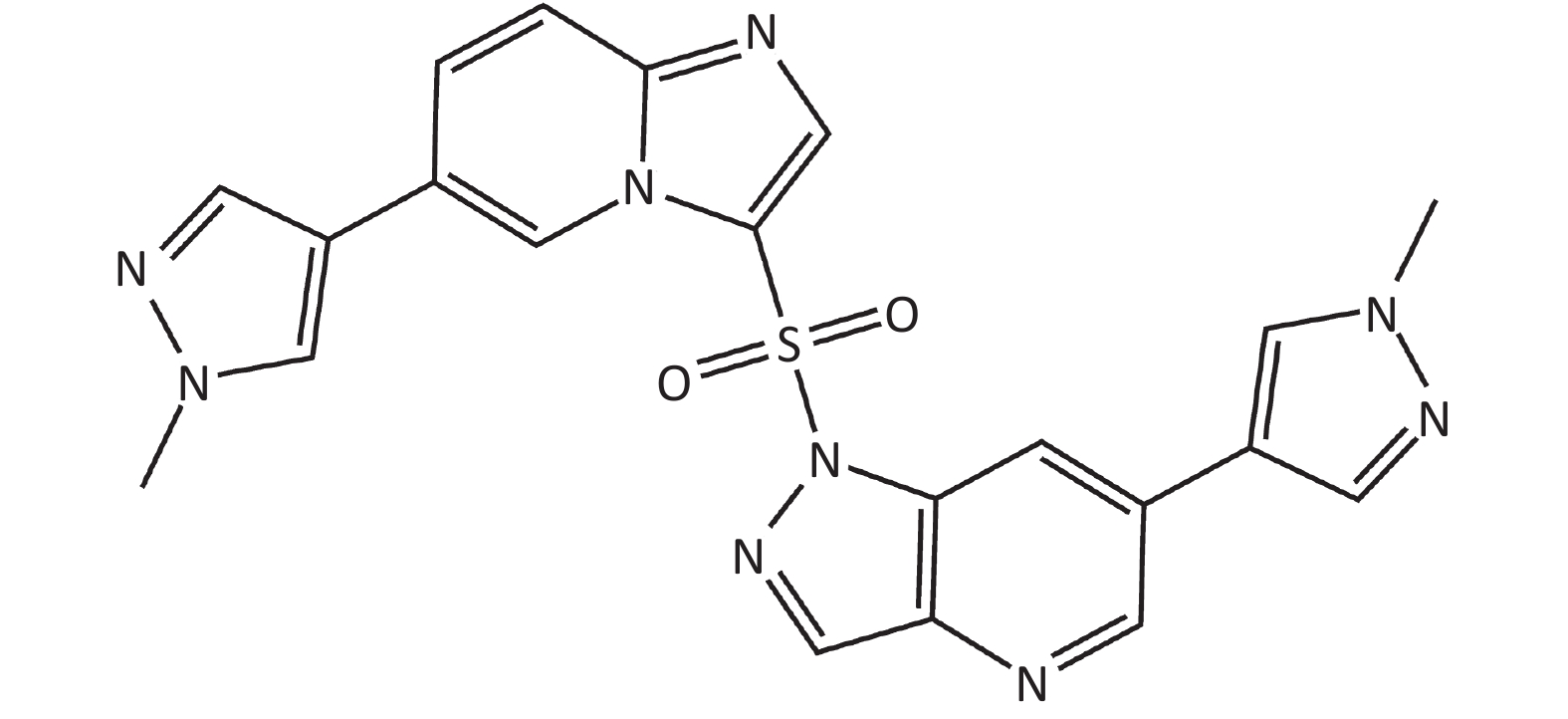
Ma Y, Sun G, Chen D, et al. Design and optimization of a series of 1-sulfonylpyrazolo[4, 3-b]pyridines as selective c-Met inhibitors[J]. J Med Chem, 2015, 58 (5): 2513- 2529.
doi: 10.1021/jm502018y
|
| 34 |
国家药品监督管理局. 国家药监局附条件批准谷美替尼片上市 [EB/OL]. (2023-03-08)[2025-08-04]. https://www.nmpa.gov.cn/zhuanti/cxylqx/cxypxx/20230308152513168.html.
|
| 35 |
上海海和药物研究开发股份有限公司. 海益坦® 谷美替尼片药品说明书 [EB/OL]. (2023-06-12)[2025-08-04]. https://db.yaozh.com/instruct/3604898119870592.html.
|
| 36 |
Yu Y, Dong W, Shi Y, et al. A pooled analysis of clinical outcome in driver-gene negative non-small cell lung cancer patients with MET overexpression treated with gumarontinib[J]. Ther Adv Med Oncol, 2024, 16, 1- 14.
doi: 10.1177/17588359241264730
|
| 37 |
Yu Y, Zhou J, Li X, et al. Gumarontinib in patients with non-small-cell lung cancer harbouring MET exon 14 skipping mutations: a multicentre, single-arm, open-label, phase 1b/2 trial[J]. EClinicalMedicine, 2023, 59, 101952.
doi: 10.1016/j.eclinm.2023.101952
|
| 38 |
Chen HJ, Yang JJ, Yang XN, et al. A phase I clinical trial to assess the safety, pharmacokinetics, and antitumor activity of glumetinib (SCC244) in patients with advanced non-small cell lung cancers (NSCLCs)[J]. J Clin Oncol, 2020, 38 (suppl_15): e21702.
doi: 10.1200/jco.2020.38.15_suppl.e21702
|
| 39 |
Chen HJ, Yang JJ, Zhou JY, et al. 32O first-in-human (FIH) study of SCC244, a novel potent and highly selective c- MET inhibitor, in patients (pts) with advanced non-small cell lung cancer (NSCLC)[J]. Ann Oncol, 2021, 32 (suppl_1): S14.
doi: 10.1016/j.annonc.2021.01.047
|
| 40 |
Wu J, Xu H, Li H, et al. Effect of food on the pharmacokinetics and safety of a novel c-Met inhibitor SCC244: a randomized phase I study in healthy subjects[J]. Drug Des Devel Ther, 2023, 17, 761- 769.
doi: 10.2147/DDDT.S388846
|
| 41 |
申亦可, 尼样卓玛, 胡琳, 等. 二甲双胍药动学影响因素的研究进展[J]. 中国药房, 2022, 33 (12): 1513- 1519.
|
| 42 |
中国药学会医院药学专业委员会, 中华医学会临床药学分会, 《中国窄治疗指数药物临床应用管理专家共识》编写组. 中国窄治疗指数药物临床应用管理专家共识[J]. 中国医院药学杂志, 2025, 45 (17): 1933- 1946,2005.
doi: 10.13286/j.1001-5213.2025.17.01
|
| 43 |
Yu Y, Yang N, Zhang Y, et al. 305MO SCC244 plus osimertinib in patients with stage IIIB/IIIC or IV, EGFR TKI resistant EGFR-mutant NSCLC harboring MET amplification[J]. Ann Oncol, 2022, 33 (suppl_9): S1553.
doi: 10.1016/j.annonc.2022.10.334
|
| 44 |
Hui JJ, Ding SJ, Qin BD, et al. Case report: aumolertinib plus gumarontinib in a patient with EGFR mutated non-small-cell lung cancer harboring acquired MET amplification following progression on afatinib plus crizotinib[J]. Front Pharmacol, 2025, 16, 1525251.
doi: 10.3389/fphar.2025.1525251
|
| 45 |
A real-world study of treatment patterns and effectiveness in MET mutation-positive advanced lung cancer [EB/OL]. (2024-09-19)[2025-08-04]. https://clinicaltrials.gov/study/NCT06183762?intr=Glumetinib&rank=10.
|