Loading...
Welcome to Chinese Journal of Clinical Pharmacology and Therapeutics,Today is Chinese

Table of Content

    Volume 31 Issue 3
    26 March 2026
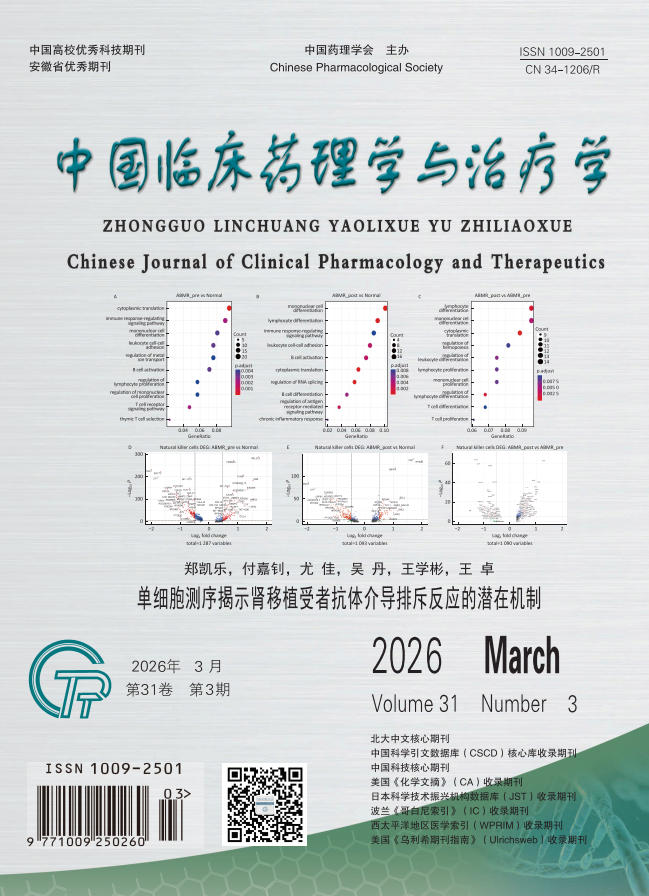
    Single-cell sequencing reveals the underlying mechanism of antibody-mediated rejection in renal transplant recipients
    Kaile ZHENG, Jiazhao FU, Jia YOU, Dan WU, Xuebin WANG, Zhuo WANG
    2026, 31(3):  289-299.  doi:10.12092/j.issn.1009-2501.2026.03.001
    Asbtract ( 47 )   HTML ( 0)   PDF (2190KB) ( 19 )  
    Figures and Tables | References | Related Articles | Metrics

    AIM: Based on single-cell sequencing analysis, the underlying mechanism of antibody-mediated rejection (ABMR) in kidney transplant recipients. METHODS: Recipients with 6 months or more after kidney transplantation were selected as research subjects, and high-resolution scRNA-seq analysis of immune cell subsets in peripheral blood mononuclear cells (PBMC) was performed using single-cell RNA sequencing (scRNA-seq) technology. Flow cytometry was used to examine the effect of differential genes on renal transplant ABMR in different immune cell populations. RESULTS: This study analyzed differential gene expression between ABMR patients and healthy controls using single-cell sequencing technology, identifying CD69, CD83, CD52, CD74, and CX3CR1 as key differentially expressed genes. In classical monocytes, ABMR patients exhibited increased CD83 and CD52 gene expression levels compared to the control group, which showed a downward trend after treatment. Regarding initial CD4+T cells, ABMR patients demonstrated significantly reduced CD69 gene expression. In NK cells, ABMR patients displayed decreased CX3CR1 gene expression initially, with further reduction in its geometric mean value post-treatment. Conversely, the geometric mean value of CD74 showed an increasing trend. CONCLUSION: In classical mononuclear cells, upregulated expression of CD83 and CD52 genes correlates with enhanced antigen-presenting cell functionality, thereby promoting the development of antigen-bonded microenvironment remodeling (ABMR). In initial CD4+T cells, elevated CD69 gene expression is associated with T cell activation and proliferation, further contributing to ABMR progression. Conversely, downregulated CX3CR1 gene expression in NK cells relates to impaired immune surveillance mechanisms, which partially inhibits ABMR formation.

    Effect of Angelica astragalus ultrafiltration on cardiomyocytes induced by ionizing radiation and its mechanism
    Xiaying WANG, Hugang JIANG, Jiakun LIU, Jing MA, Kai LIU, Yingdong LI, Xinke ZHAO
    2026, 31(3):  300-312.  doi:10.12092/j.issn.1009-2501.2026.03.002
    Asbtract ( 39 )   HTML ( 0)   PDF (10881KB) ( 16 )  
    Figures and Tables | References | Related Articles | Metrics

    AIM: To investigate the effects of ionizing radiation on H9C2 cardiomyocytes and the intervention efficacy of Radix Angelicae Sinensis-Radix Astragali ultrafiltrate (RAS-RH). METHODS: An H9C2 cardiomyocyte injury model was established using X-ray irradiation, followed by intervention with RAS-RH. Cell viability was assessed using the CCK-8 assay. Phalloidin staining was employed to observe changes in the cytoskeletal structure of cardiomyocytes. JC-1 staining combined with flow cytometry was used to measure mitochondrial membrane potential (ΔΨm). Hoechst 33324 staining and flow cytometry were applied to evaluate apoptosis. Western blot was performed to determine the expression levels of Drp1 and HSP70 proteins. RESULTS: (1) X-ray irradiation significantly inhibited the proliferation of H9C2 cells (P<0.05), disrupted cytoskeletal integrity, reduced cell viability, altered mitochondrial membrane potential (ΔΨm), and promoted apoptosis (P<0.01, P<0.05). (2) Intervention with RAS-RH (Radix Astragali and Radix Angelicae Sinensis ultrafiltrate) markedly enhanced H9C2 cell viability (P<0.01), restored cytoskeletal organization, and improved proliferative capacity, ΔΨm, and apoptosis resistance (P<0.01, P<0.05). (3) Mechanistically, RAS-RH ameliorated H9C2 cell function by modulating the relative protein expression levels of Drp1 (Dynamin-related protein 1) and HSP70 (Heat shock protein 70) (P<0.05). CONCLUSION: Ionizing radiation impairs the biological function of H9C2 cardiomyocytes by disrupting the cytoskeletal structure, reducing cell viability, downregulating ΔΨm, and promoting apoptosis. In contrast, RAS-RH can mitigate radiation-induced cardiomyocyte damage by regulating the relative expression levels of Drp1 and HSP70 proteins.

    Unraveling the molecular mechanisms of modified Er-Miao-San (MEMS) in acute gouty arthritis: a multidisciplinary integration of network pharmacology, molecular docking, and experimental validation
    Xiaomian LIU, Ying LIU, Wenjing TU, Shuo ZHANG, Gaoyan ZHU, Yuyan CUI, Xiaoyu CUI, Yixuan YANG, Xiaobing LI, Hongtao GUO, Dong LI, Xiaojuan HE
    2026, 31(3):  313-323.  doi:10.12092/j.issn.1009-2501.2026.03.003
    Asbtract ( 41 )   HTML ( 0)   PDF (4925KB) ( 16 )  
    Figures and Tables | References | Related Articles | Metrics

    AIM: To investigate the therapeutic efficacy and potential mechanisms of modified Er Miao-San (MEMS) in the treatment of Acute Gouty Arthritis (AGA). METHODS: Network pharmacology, molecular docking, and molecular dynamics simulations were used to validate the interactions between the active components of MEMS and the targets associated with AGA. An AGA model was established in rats by injecting 25 mg/kg of monosodium urate (MSU) suspension into the right ankle joint. Treatment efficacy was evaluated by measuring ankle joint swelling, gait scores, and inflammation indices. Enzyme-linked immunosorbent assay (ELISA) was used to determine the serum levels of TNF-α, IL-6, IL-1β, IL-17, MDA, SOD, and GSH in AGA rats. Hematoxylin and eosin (HE) staining was performed to observe the pathological changes in the ankle joint synovial tissue, and Western blotting (WB) was used to analyze the protein levels of NLRP3 and STAT3 in the synovial tissue. RESULTS: Network pharmacology analysis identified quercetin, β-sitosterol, stigmasterol, and wogonin as the core active components in MEMS for the treatment of AGA. The key therapeutic targets of MEMS in treating AGA include TNF, STAT3, IL-6, and IL-1β. The core active components exhibited strong binding affinity and stable conformations with these targets. The key targets were predominantly enriched in signaling pathways, including NOD-like receptors, IL-17, and TNF. In vivo experiments demonstrated that MEMS effectively reduced ankle joint swelling, improved gait scores, alleviated synovial cell proliferation, neutrophil infiltration, and capillary congestion in AGA rats. It also lowered the serum levels of TNF-α, IL-1β, IL-6, IL-17, and MDA, while increasing the levels of SOD and GSH. Furthermore, MEMS downregulated the expression of NLRP3 and STAT3 proteins in the synovial tissue. CONCLUSION: MEMS alleviates inflammation and oxidative stress in AGA rats, exerting anti-inflammatory and antioxidative effects. Its mechanism of action may be associated with the modulation of inflammation factor levels via the inhibition of the STAT3/NLRP3 signaling pathway.

    Effect of Dan-Lou tablets on the pharmacokinetics and pharmacodynamics of atorvastatin in high-fat diet-fed rats
    Ke ZHANG, Ziting LI, Fofo JIANG, Feng ZHAO, Yinling MA, Guoxun PANG
    2026, 31(3):  324-336.  doi:10.12092/j.issn.1009-2501.2026.03.004
    Asbtract ( 35 )   HTML ( 0)   PDF (2285KB) ( 16 )  
    Figures and Tables | References | Related Articles | Metrics

    AIM: To investigate the effects of Dan-Lou tablets (DLT) on the pharmacokinetics and pharmacodynamics of atorvastatin (ATV) in hyperlipidemic rats, and provide theoretical basis for clinical combination therapy of Chinese and Western medicines in dyslipidemia management. METHODS: A high-fat diet-induced hyperlipidemic rat model was established. Following single and multiple oral administrations of DLT at clinical equivalent doses combined with ATV, plasma concentrations of ATV and its active metabolites were quantified using LC-MS/MS with multiple reaction monitoring (MRM) mode. Pharmacokinetic parameters were calculated through non-compartmental analysis. Pharmacodynamic evaluations included serum lipid profiles (TC, TG, HDL-C, LDL-C) and histopathological examination of hepatic tissue. RESULTS: Pharmacokinetic analysis revealed that compared with ATV monotherapy, DLT co-administration increased AUC0-24h by 160.63% and 50.96% in normal and model groups, respectively, with corresponding Cmax elevations of 27.95% and 7.93%. Pharmacodynamically, the combination therapy demonstrated superior effects with 29.89% body weight reduction versus 12.48% in ATV monotherapy group. Significant improvements were observed in lipid profiles: TC, TG and LDL-C decreased by 38.2%, 41.7% and 52.4% respectively, while HDL-C increased by 28.6% (all P<0.01). Hepatic histopathology showed remarkable reduction of lipid droplet accumulation in combination group compared to monotherapy. CONCLUSION: DLT significantly enhances systemic exposure of ATV in hyperlipidemic conditions by altering its pharmacokinetic profile. These findings suggest that when combining DLT with ATV in clinical practice, therapeutic efficacy and potential adverse reactions should be closely monitored, with particular attention to adjusting ATV dosing regimens to mitigate potential drug interaction risks.

    The anti-hepatic fibrosis mechanism of Dendrobium officinale poly saccharides in vitro through epithelial-mesenchymal transition and Notch signaling pathway
    Yajie BAI, Liuqing YANG, Qin FAN, Xuwei LIU, Yuchen HE, Jiamao CHENG, Haiyan CHEN
    2026, 31(3):  337-343.  doi:10.12092/j.issn.1009-2501.2026.03.005
    Asbtract ( 37 )   HTML ( 0)   PDF (1179KB) ( 15 )  
    Figures and Tables | References | Related Articles | Metrics

    AIM: To explore the effect of Dendrobium officinale polysaccharide (DOP) on the activation of rat hepatic stellate cells (HSC-T6) induced by TGF-β1, and its anti-hepatic fibrosis (HF) mechanism, through epithelial-mesenchymal transition (EMT) and Notch signaling pathway. METHODS: The administration concentration of DOP to HSC-T6 cells was detected, and its 24-hour half maximal inhibitory concentration (IC50) was calculated to determine the safe dosage for administration by CCK-8 method. HSC-T6 cells were randomly divided into normal group, TGF-β1 group (10 ng/mL), and the low, medium, and high DOP groups (1.6, 3.2, 6.4 mg/mL, respectively). TGF-β1 at a concentration of 10 ng/mL was added into the TGF-β1 group and each drug group, and the corresponding concentrations of DOP were administered to different drug groups. After 24 hours culture, the activity of HSC-T6 cells in each group after was detected by CCK-8 method, and the mRNA and protein expression levels of fibrosis indicators (α-SMA, COL-I), EMT indicators (E-cadherin, Vimentin, ZEB1), and Notch signaling pathway indicators (Notch1, Jagged1, Hes1) were detected by RT-qPCR and Western blot methods. RESULTS: After 24 hours of DOP intervention, compared with the TGF-β1 group, the activity of HSC-T6 cells was significantly inhibited (P<0.01), and the expression levels of α-SMA, COL-I, Vimentin, ZEB1, Notch1, Jagged1, Hes1 mRNAs and proteins in the cells were significantly reduced, and the expression of E-cadherin mRNA and protein was significantly increased (P<0.05 or 0.01) in the medium and high DOP groups, while there is a smaller effect on HSC-T6 cells in the low DOP group. CONCLUSION: DOP can exert anti-HF effects by directly inhibiting the activation of HSCs, EMT and Notch signaling pathways in the TGF-β1 activated HSCs, or indirectly by inhibiting the Notch signaling pathway to suppress EMT.

    Precision medication analysis based on the detection of neurological and psychotropic drug gene polymorphisms in 36 patients using MALDI-TOF-MS technology
    Yanan CHEN, Yaru YANG, Chen JIANG, Feng YAO, Ke WANG, Renpeng ZHOU, Yingjie ZHAO, Wei HU
    2026, 31(3):  344-351.  doi:10.12092/j.issn.1009-2501.2026.03.006
    Asbtract ( 35 )   HTML ( 0)   PDF (1676KB) ( 15 )  
    Figures and Tables | References | Related Articles | Metrics

    AIM: To detect and analyze the polymorphism of related drug genes in patients treated with neurological and psychiatric drugs, and to explore the clinical value of gene detection for neurological and psychiatric drugs, so as to provide basis for precision drug use. METHODS: Stroma-assisted laser desorption ionization time-of-flight mass spectrometry (MALDI-TOF-MS) was employed to detect genes related to neurological and psychiatric drugs in 36 patients admitted to the department of psychology and sleep medicine at the second affiliated hospital of Anhui medical university between February 2024 and September 2024. The polymorphisms of drug-metabolizing enzyme genes (CYP2D6 and CYP2C19) and target genes (FKBP5, SACM1L, MDGA2, HTR1A, and HTR2A) were analyzed. Based on the results of gene polymorphism, precision drug use analysis was conducted. RESULTS: Among the 36 patients, the mutation frequency of the CYP2D6*4 gene was the lowest at 0.00%, while that of the CYP2C19*2 gene was the highest at 44.4%. Regarding drug target gene polymorphisms, the AC genotype of MDGA2 had the highest frequency at 38.3%, the GG genotype of SACM1L was the most frequent at 63.8%, and the GG genotype of FKBP5 was prevalent at 61.1%. Additionally, the CG and GG genotypes of HTR1A both had the highest frequencies at 47.2%, and the GG genotype of HTR2A was the most common at 55.6%. For patients with the CYP2D6*10/*10 and CYP2C19*2/*2 genotypes, drug metabolism and clearance may be reduced. It is recommended to lower the dose and regularly monitor blood drug concentration in these patients. CONCLUSION: The polymorphism of genes related to neurological and psychotropic drugs is closely linked to patients' responses to these medications. Providing precision medication guidance based on genetic testing results for these drugs holds significant clinical value.

    Research progress on the pharmacological effects and mechanisms of oxazepam
    Yiqun WANG, Zhilin WANG, Qingyang LI, Wenjie CEN, Qiaoyuan ZHENG, Zhili HUANG
    2026, 31(3):  352-361.  doi:10.12092/j.issn.1009-2501.2026.03.007
    Asbtract ( 47 )   HTML ( 0)   PDF (717KB) ( 10 )  
    Figures and Tables | References | Related Articles | Metrics

    Oxazepam belongs to the class of medium-to-short-acting benzodiazepine sedative-hypnotic drugs. Its mechanism of action mainly involves regulating the γ-aminobutyric acid A receptor through positive allosteric effects, thereby enhancing the inhibitory neural transmission of γ-aminobutyric acid. Studies have shown that oxazepam has significant efficacy in regulating biological rhythms, improving sleep, and alleviating anxiety. Recent researches have found that this drug can also promote the generation of neurosteroids by binding to mitochondrial translocation proteins, thereby potentially playing a role in the treatment of drug addiction and alcohol dependence. In terms of safety, compared with some long-acting benzodiazepine drugs, oxazepam has a relatively smaller impact on cognitive function, especially in elderly patients, as its metabolic pathway does not rely on cytochrome P450, and there are fewer cases of excessive sedation and drug accumulation, making it safer. When using this drug clinically, it is necessary to fully consider the patient's symptom characteristics and individual condition, comprehensively weigh the pros and cons, and use it in a standardized and reasonable manner.

    Uridine cytidine kinase 2's function in tumors and the ongoing research on its inhibitors
    Jiawei ZHANG, Xuehan MA, Enhao XIAO, Simiao FAN, Danyang LIU
    2026, 31(3):  362-371.  doi:10.12092/j.issn.1009-2501.2026.03.008
    Asbtract ( 38 )   HTML ( 0)   PDF (2821KB) ( 12 )  
    Figures and Tables | References | Related Articles | Metrics

    Uridine cytidine kinase 2 (UCK2) is the rate-limiting enzyme in the pyrimidine salvage synthesis pathway. Recent studies have shown that UCK2 is overexpressed in a variety of tumors and is associated with poor prognosis. In addition to its catalytic function as a kinase, UCK2 also plays a non-catalytic role in cellular signal transduction. UCK2 can not only support the rapid proliferation of tumor cells by catalyzing nucleotide synthesis, but also regulate various signaling pathways, thereby affecting the occurrence and development of tumors. Therefore, UCK2 is a promising target for cancer therapy, and it is of great clinical significance to explore its role in tumorigenesis and development and the development of related inhibitors. Now, the UCK2 inhibitors mainly include two categories: one is based on nucleotide analogs, which are competitive inhibitors of this enzyme’s catalytic function, and the other is based on non-competitive inhibitors that target the catalytic function of signal transduction. In addition, based on the database and molecular docking, we explore the molecules that may interact with UCK2 and their binding ability with UCK2. In conclusion, this review summarizes the roles and mechanisms of UCK2 in cancer, and the progress in the development of compounds that inhibit the biological functions of UCK2 and the mechanisms.

    Research progress in the intervention of myocardial fibrosis by regulating signal pathways with traditional Chinese medicine
    Yuanyuan HUANG, Lingzhun WANG
    2026, 31(3):  372-381.  doi:10.12092/j.issn.1009-2501.2026.03.009
    Asbtract ( 38 )   HTML ( 0)   PDF (579KB) ( 11 )  
    Figures and Tables | References | Related Articles | Metrics

    Myocardial fibrosis is a heart disease characterized by abnormal cardiac structure and function, primarily manifested by pathological deposition of the extracellular matrix in myocardial cells. The pathogenesis of this disease is complex and involves multiple biological pathways, which have not yet been fully elucidated. Currently, traditional Chinese medicine (TCM) can intervene in the treatment of myocardial fibrosis by regulating signaling pathways such as TGF-β, MAPKs, PI3K/Akt, Wnt, AMPK, NF-κB, JAK/STAT, and Notch. This article deeply analyzes the potential mechanisms and clinical applications of traditional Chinese compound formulas, single Chinese herbs, and other TCM therapies in the treatment of myocardial fibrosis, providing a scientific basis for optimizing treatment protocols for myocardial fibrosis. By regulating relevant signaling pathways, TCM has shown unique advantages and broad application prospects in the prevention and treatment of myocardial fibrosis.

    Clinical research advances in the treatment of immune thrombocytopenia with hetrombopag in combination therapy
    Shuangmiao JIANG, Huaijun ZHU, Danying LI
    2026, 31(3):  382-391.  doi:10.12092/j.issn.1009-2501.2026.03.010
    Asbtract ( 12 )   HTML ( 0)   PDF (497KB) ( 8 )  
    Figures and Tables | References | Related Articles | Metrics

    Immune thrombocytopenia (ITP) is an acquired autoimmune disease involving multiple mechanisms, which leads to platelet destruction and macrocytosis and impaired platelet production, mainly manifested as decreased platelet levels and a tendency to bleed, which seriously affects the quality of life and prognosis of patients. Treatment of ITP aims to increase platelet count (PLT), reduce the incidence of fatal bleeding, and improve quality of life. To improve efficacy, reduce adverse reactions and the advent of thrombopoietin receptor agonists (TPO-RAs) prompted a shift in ITP treatment to combination therapy. Hetrombopag is a novel oral second generation small molecule, non-peptide TPO-RAs that binds to the transmembrane domain of thrombopoietin receptor (TPO-R), stimulates megakaryocyte proliferation and differentiation, and promotes platelet production. Hetrombopag combined with other drugs (glucocorticoid, rhTPO and cyclosporine A) in the treatment of ITP can achieve multi-target treatment, through the integration of different drug mechanisms of action, can more comprehensively intervene in the pathogenesis of ITP, so as to improve the therapeutic effect, so this article reviews the clinical research progress of hetrombopag combination in the treatment of ITP.

    Therapeutic advances in small-molecule drugs for moderate-to-severe ulcerative colitis
    Furui WANG, Tian HUANG, Wenli JIANG, Zenan HU
    2026, 31(3):  392-399.  doi:10.12092/j.issn.1009-2501.2026.03.011
    Asbtract ( 41 )   HTML ( 0)   PDF (2129KB) ( 7 )  
    Figures and Tables | References | Related Articles | Metrics

    Ulcerative colitis (UC) is a chronic non-infectious inflammation primarily affecting the colon and rectum, characterised by continuous inflammation and ulceration of the intestinal mucosal layer. In recent years, with deepening research into the pathogenesis of UC, treatment strategies have progressively shifted towards precision targeted therapy at the molecular level. Small-molecule drugs, owing to their distinct advantages such as convenient administration, lack of immunogenicity, and short half-life, demonstrate significant potential in the treatment of moderate-to-severe UC. This review summarises therapeutic advances in small-molecule drugs for moderate-to-severe UC, focusing on representative compounds and their clinical trial outcomes in recent years.

    Research progress on the treatment of type I hypersensitivity reactions via different epinephrine administration routes
    Jiarui CHEN, He ZHANG, Haili ZHANG, Yi CHENG, Chunyan LIU, Meng LI, Nan LIU, Zengming WANG, Hui ZHANG, Aiping ZHENG
    2026, 31(3):  400-408.  doi:10.12092/j.issn.1009-2501.2026.03.012
    Asbtract ( 29 )   HTML ( 0)   PDF (960KB) ( 5 )  
    Figures and Tables | References | Related Articles | Metrics

    Epinephrine is the first-line drug for treating type I hypersensitivity reactions and can effectively alleviate symptoms such as hypotension, erythema, urticaria, and angioedema, while also inhibiting the further release of allergic mediators. Intramuscular administration of epinephrine ensures rapid absorption and efficacy, and both epinephrine injection vials and auto-injectors are available on the market, providing timely treatment in emergency situations. To enhance the convenience of drug administration and improve patient compliance, new routes of administration for epinephrine are being explored, including liquid nasal sprays, powder nasal sprays, sublingual formulations, and inhalers. This article summarizes the advantages and limitations of currently available and under-researched epinephrine formulations with different routes of administration and predicts future research directions and priorities.

    Research progress on pathogenesis and drug intervention of alcoholic liver disease
    Yuxiu ZHANG, Bo HE, Lijun ZHANG, Le JI, Zhuang MA, Hongxing ZHENG, Shanshan QI
    2026, 31(3):  409-419.  doi:10.12092/j.issn.1009-2501.2026.03.013
    Asbtract ( 29 )   HTML ( 0)   PDF (809KB) ( 7 )  
    Figures and Tables | References | Related Articles | Metrics

    Alcoholic liver disease (ALD) is a disease of the liver that results from prolonged and heavy drinking, which is initially manifested as a fatty liver, and then develops into hepatitis, cirrhosis, and even hepatocellular carcinoma. The pathogenesis of ALD is characterized by oxidative stress, immune inflammation, gut-hepatic axis, apoptosis, and autophagy induced by regulatory factors such as acetaldehyde dehydrogenase 2 (ALDH2), nuclear factor-κB (NF-κB), and farnesol X receptor (FXR). This article takes regulatory factors as the entry point to summarize drugs such as the NF-κB inhibitor ergacurone, the FXR agonist INT-787, and the PPARα agonist fenofibrate, and explores the current research status from broad treatment to targeted precision treatment. The aim is to gain a deeper understanding of the pathogenesis of ALD and provide a basic information for the prevention and control research of ALD and targeted drug intervention.

    A novel drug for the treatment of METex14 skipping mutation non-small cell lung cancer—Glumetinib
    Xiaoyu YIN, Ming LU, Zefang YU, Guoxun PANG
    2026, 31(3):  420-427.  doi:10.12092/j.issn.1009-2501.2026.03.014
    Asbtract ( 25 )   HTML ( 0)   PDF (533KB) ( 7 )  
    Figures and Tables | References | Related Articles | Metrics

    The MET exon 14 (METex14) skipping mutation is an important therapeutic target in non-small cell lung cancer (NSCLC). Glumetinib, a highly selective oral MET inhibitor developed in China, has gained approval in China and Japan for treating locally advanced or metastatic NSCLC harboring the METex14 skipping mutation. Preclinically, glumetinib selectively inhibits c-Met kinase activity and its downstream signaling pathways, demonstrating an inhibition rate exceeding 87.7% against MET-driven tumors. In a pivotal phase II study involving 79 patients with METex14-positive NSCLC, glumetinib treatment yielded an objective response rate (ORR) of 66% and a median progression-free survival (PFS) of 8.5 months. The incidence of grade ≥3 treatment-related adverse events (TRAEs) was 54%, primarily edema, hypoalbuminemia, and transaminase elevations. Treatment discontinuation due to adverse events occurred in only 8% of patients, indicating a manageable safety profile. Glumetinib thus represents a novel and effective therapeutic option for NSCLC patients with METex14 skipping mutations, particularly in managing brain metastases. Its clinical application is expanding to include overcoming drug resistance and exploring combination therapies. This paper aims to concisely review Glumetinib's structural properties, pharmacokinetics, efficacy, safety profile, drug interactions, and potential in combination therapy. Furthermore, it seeks to outline future applications of this drug, providing a valuable reference for clinical medication selection in NSCLC management.

    New antipsychotic drug KarXT
    Xin LIU, Xiaolin LIU, Yanan ZHOU, Jinguo ZHAI
    2026, 31(3):  428-432.  doi:10.12092/j.issn.1009-2501.2026.03.015
    Asbtract ( 12 )   HTML ( 0)   PDF (428KB) ( 6 )  
    References | Related Articles | Metrics

    At present, antipsychotic drugs mainly act on dopamine receptors, but the improvement of negative symptoms and cognitive symptoms is limited. There are extrapyramidal adverse reactions, metabolic syndrome, endocrine disorders and other adverse reactions, which some patients can not tolerate. KarXT (trade name Cobenfy), a novel antipsychotic drug approved by the FDA for the treatment of schizophrenia in adults, acts on M1 and M4 muscarinic acetylcholine receptors (mAChR). The results of current clinical trials have shown that KarXT can improve the positive symptoms, negative symptoms and cognitive impairment of schizophrenia, and the adverse reactions are mainly gastrointestinal symptoms. This article reviews the latest literature on the pharmacological mechanism, pharmacokinetics, clinical evaluation, and safety of KarXT.