Loading...
Welcome to Chinese Journal of Clinical Pharmacology and Therapeutics,Today is Chinese

Table of Content

    Volume 30 Issue 9
    26 September 2025
    Effects and model evaluation of Jianpi Huatan formula on regulatory T cells and Th17 cells in polycystic ovary syndrome patients with spleen deficiency phlegm dampness syndrome
    DAI Yue, HE Bing, YANG Sijie, YU Ximing, YANG Zhengwang, LI Lan
    2025, 30(9):  1153-1164.  doi:10.12092/j.issn.1009-2501.2025.09.001
    Asbtract ( 192 )   PDF (2203KB) ( 598 )  
    Related Articles | Metrics
    AIM: To explore the effects of Jianpi Huatan formula on regulating T cells and helper T cells 17 (Th17) cells in patients with polycystic ovary syndrome (PCOS) due to spleen deficiency and phlegm dampness syndrome, and conduct a model evaluation. METHODS: Ninety-two patients with spleen deficiency phlegm dampness syndrome (PCOS) admitted to our hospital from January 2023 to October 2024 were selected as the research subjects. Propensity score matching (PSM) method was used to match them in a 1:1 ratio, with 46 patients in each group. The control group received conventional treatment, while the observation group received treatment with Jianpi Huatan formula on the basis of the control group. Compared and analyze the differences in clinical data and laboratory indicators between two groups; Compared the changes of sex hormone, glucose metabolism and TCM syndrome score before and after treatment in the two groups, and focused on the changes of regulatory T cells (Treg) and Th17 cells in the two groups before and after treatment; And used the Generalized Estimation Equation (GEE) model to analyze its improvement. Multiple linear regression analysis was used to examine its correlation with the score of traditional Chinese medicine syndrome. A time effect model of Jianpi Huatan formula for treating PCOS with spleen deficiency and phlegm dampness syndrome was established using a nonlinear mixed effects model. The fitting effect of the final model was evaluated through the goodness of fit. Bootstrap was used to test and evaluate the stability of model parameters. Visual prediction testing was used to evaluate the predictive performance of the model. Typical time effect curves of traditional Chinese medicine symptom scores was simulated based on the final model for each baseline. RESULTS: After treatment, the total effective rate of the observation group was significantly higher than that of the control group (χ2=4.842, P=0.028); Compared with before treatment, after 1months and 3 months of treatment, TC, TG, LDL-C, T, LH, FSH, AMH, FPG, FINS, HOMA-IR, the score of traditional Chinese medicine syndrome were significantly reduced, while E2 and HDL-C were significantly increased, and the improvement in the observation group was significantly greater than that in the control group (P<0.05);The results of repeated measures ANOVA showed significant differencesin the time effects, inter group effects, and interaction effects of Treg, Th17, and Treg/Th17 between the two groups of patients (P<0.05) . The GEE analysis results showed that the improvement of Treg, Th17, and Treg/Th17 in the observation group were better than that in the control group (P<0.05);The results of multiple linear regression analysis showed that the levels of TC,TG, LDL-C,T, LH, FSH, AMH, FPG, FINS, HOMA-IR, Th17 were significantly positively correlated with TCM syndrome score, while the levels of E2, HDL-C, Treg, and Treg/Th17 were significantly negatively correlated with TCM syndrome score (P<0.05); The decrease in traditional Chinese medicine symptom score compared to baseline gradually increases over time, eventually reaching the pharmacological platform, which was consistent with the classic Emax model. After gradually screening covariates, it was found that the baseline value of traditional Chinese medicine symptom score had a significant impact on the efficacy parameter Emax. The final model was Emax, i=15.42+1.21×(Baselinei-24.41). The goodness of fit results showed that the final model had a good fitting effect on the measured data. The model parameters obtained from Bootstrap testing were very consistent with the original model, indicated that the model parameter estimation was robust. The visual prediction test results showed that the model had good predictive performance. The typical efficacy time curve showed that the higher the baseline value of TCM symptom score, the greater the decrease in score. At 3 months of treatment, the TCM symptom score at each baseline basically decreased to below 10 points. CONCLUSION: The formula for strengthening the spleen and resolving phlegm can effectively improve the levels of Treg and Th17 in PCOS patients with spleen deficiency and phlegm dampness syndrome, and has good therapeutic effects, which is worthy of clinical application.

    Study on analgesic effect and mechanism of sophoridine oxide on neuropathic pain model mice 
    CHENG Fan, SHI Lei, ZHANG Xiujuan, HU Yanli, GAO Jinxian
    2025, 30(9):  1165-1173.  doi:10.12092/j.issn.1009-2501.2025.09.002
    Asbtract ( 124 )   PDF (3652KB) ( 70 )  
    Related Articles | Metrics
    AIM: To study the mechanism of oxysophoridine (OSR) in relieving neuropathic pain (NP). METHODS: The analgesic effect of OSR was observed by measuring mechanical pain sensitivity. By combining OSR with agonists and antagonists related to synthesis and metabolism of gamma aminobutyric acid (GABA), the mechanism related to analgesic effects of OSR and GABA nervous system is studied. The expression of c-Fos immunopositive cells and the expression of c-Fos and Glutamic acid decarboxylase (Glutamic acid decarboxylase 67) in brain and spinal cord were detected by immunofluorescence staining. Co-expression of GAD67, GABA transporter 1 (gamma-Aminobutyric acid Transporter 1, GAT-1) immunopositive cells. RESULTS: Compared with Sham group, spared nerve injury (SNI) group showed increased mechanical pain sensitivity, increased expression of c-Fos immunopositive cells, decreased and increased co-expression of c-Fos and GAD67 and GAT-1 immunopositive cells, respectively. Compared with SNI group, mechanical algesia in OSR 500 and 1 000 mg/kg groups was decreased, algesia in OSR 250 mg/kg combined with antagonist group was decreased, and algesia in OSR 500 mg/kg combined with agonist group was increased. The co-expression of c-Fos and GAD67 immunopositive cells in the brain and spinal cord of OSR 500 mg/kg group increased, while the co-expression of c-Fos and GAT-1 decreased. CONCLUSION: OSR has a good analgesic effect on NP mice induced by SNI. The mechanism is that OSR increases the content of central GABA by up-regulating GABAergic neurons in brain and spinal cord.
    Effects of sinomenine hydrochloride on adjuvant arthritis rats based on NLRP3/Gasdermin D/Caspase-1/Interleukin-1β pyroptosis pathway
    XU Yuxiang, TIAN Ying, XU Qian, GE Zijing, YAO Lusha
    2025, 30(9):  1174-1181.  doi:10.12092/j.issn.1009-2501.2025.09.003
    Asbtract ( 133 )   PDF (1980KB) ( 252 )  
    Related Articles | Metrics
    AIM: To investigate the protective effect of sinomenine hydrochloride (SIN) on adjuvant arthritis (AA) rats by regulating the NLRP3/Gasdermin D/Caspase-1/Interleukin-1β pyroptosis pathway. METHODS: Sixty rats were randomly divided into 6 groups, 10 rats in each group: Con group (normal rats), AA group (AA rat model), L-SIN group (AA rats were intragastrically administered with 100 mg/kg SIN), M-SIN group (AA rats were intragastrically administered with 200 mg/kg SIN), H-SIN group (AA rats were intragastrically administered with 400 mg/kg SIN), ACG group (positive drug group: AA rats were intragastrically administered with 150 mg/kg Wantong Jingu Tablets). Observe the degree of joint swelling and arthritis index. HE was used to observe the pathological changes of the right ankle joint tissue of rats. The levels of inflammatory factors and oxidative stress-related indicators in synovial tissue were detected. Western Blot was used to detect the expression levels of NLRP3/Gasdermin D/Caspase-1/Interleukin-1β pyroptosis pathway-related proteins. RESULTS: Compared with Con group, the degree of joint swelling, arthritis index, inflammatory factors and oxidative stress levels, NLRP3, GSDMD, Caspase-1 and IL-1β protein expression levels in AA group were significantly increased (P<0.05). Compared with AA group, the degree of joint swelling, arthritis index, inflammatory factors and oxidative stress levels, NLRP3, GSDMD, Caspase-1 and IL-1β protein expression levels were significantly decreased in SIN treatment group with the increase of treatment dose (P<0.05). Compared with AA group and L-SIN group, the degree of joint swelling, arthritis index, inflammatory factors and oxidative stress levels, NLRP3, GSDMD, Caspase-1 and IL-1β protein expression levels in ACG group were significantly decreased (P<0.05). Compared with H-SIN group, the degree of joint swelling, arthritis index, inflammatory factors and oxidative stress levels, NLRP3, GSDMD, Caspase-1 and IL-1β protein expression levels in ACG group were significantly increased (P<0.05). CONCLUSION: SIN can alleviate the inflammatory injury of AA rats and reduce the levels of inflammatory factors and oxidative stress, thus exerting a protective effect on AA rats. The mechanism may be based on the NLRP3/Gasdermin D/Caspase-1/Interleukin-1β pyroptosis pathway.
    Construction and validation of a machine learning network calculator for the risk of delayed awakening from anaesthesia in breast cancer patients
    GE Liang, LENG Yufang, ZHANG Peng, KONG Lingguo, HAN Xudong
    2025, 30(9):  1182-1192.  doi:10.12092/j.issn.1009-2501.2025.09.004
    Asbtract ( 130 )   PDF (2692KB) ( 78 )  
    Related Articles | Metrics
    AIM: To construct a network calculator based on machine learning (ML) models to predict the risk of delayed awakening from anaesthesia in breast cancer (BC) patients. METHODS: A total of 435 BC patients surgically treated at our hospital from January 2023 to June 2024 were selected. The Boruta algorithm was used to screen for important characteristic variables for the risk of delayed awakening from anaesthesia.All patients were randomly assigned to a training set (n=261) and a test set (n=174) based on a 3:2 ratio and nine ML models were constructed and trained. Nine ML models were evaluated on the basis of receiver operating characteristic (ROC) curves for a random sample of 10 subjects and the clinical utility of the models was assessed using decision curve analysis.Combined with SHapley Additive exPlanations (SHAP) bar graphs, summary graphs and force diagrams additional interpretation and visualization of the ML model.Construction of a network calculator for predicting the risk of delayed awakening from anesthesia in BC patients using the R package. RESULTS: Of the 435 BC patients, 25.1% experienced delayed awakening from anesthesia.Boruta algorithm screened seven feature variables.The ROC curve shows that the XGBoost model has the highest area under the curve (AUC) for 10 random samples among the 9 ML models, and the decision curve shows that the XGBoost model has a significant clinical net benefit.The SHAP bar graph shows the importance of ASA classification, surgery time, anesthesia time, intraoperative blood loss, propofol, preoperative anemia, and intraoperative hypothermia, and the SHAP summary graph reflects the distribution of the ranges of influence of the seven important characteristic variables, which are "separated at the ends."The SHAP force diagram visualization XGBoost model predicted the risk of delayed awakening from anesthesia for individual patients with a predictive value of 0.998 for patients with delayed awakening from anesthesia and 0.008 91 for patients without delayed awakening from anesthesia.A web-based calculator (https://xz-nomogram.shinyapps.io/DE_web/) based on an interpretable XGBoost model effectively predicts the risk of delayed awakening from anesthesia in BC patients. CONCLUSION: ASA classification, surgery time, propofol, intraoperative blood loss, anaesthesia time, preoperative anaemia and intraoperative hypothermia are important characteristic variables for the risk of delayed awakening from anaesthesia in BC patients. The network calculator based on the interpretable XGBoost model can accurately and quickly quantify the risk of delayed awakening from anaesthesia, which can help clinicians to effectively adjust the treatment strategy and better improve the prognosis of patients.
    Bioequivalence of ritonavir tablets in healthy Chinese volunteers
    WANG Yan, XIA Yuming, ZHU Rendi, OUYANG Ziwei, CHENG Yuanzhi, ZHOU Renpeng, HU Wei
    2025, 30(9):  1193-1199.  doi:10.12092/j.issn.1009-2501.2025.09.005
    Asbtract ( 148 )   PDF (882KB) ( 41 )  
    Related Articles | Metrics
    AIM: To appraise the bioequivalence and safety of the test preparation of ritonavir tablets and the reference preparation (trade name: Norvir?) in healthy adult subjects under fasting and postprandial conditions. METHODS: This study was a randomized, open-label, single-dose, four-period, fully repeated crossover design bioequivalence study protocol. Thirty-six healthy male and female volunteers were enrolled in the fasting and postprandial conditions, and a single dose of the test preparation and reference preparation was orally administered. We used liquid chromatography-tandem mass spectrometry (LC-MS/MS) to finish the bioassay of the drug concentration of ritonavir in plasma. Pharmacokinetic parameters were statistically analyzed using PhoenixWinNonlin8.1 software (Pharsight, USA) and a non-compartmental model.RESULTS: Under fasting conditions, the pharmacokinetic parameters of the test and reference preparations: Cmax (792.010±369.282) ng/mL and (856.939±394.427) ng/mL, AUC0-t (6 463.043±2 876.849) ng·mL-1·h and (6 907.690±3 046.132) ng·mL-1·h, AUC0-∞(6 603.617±2 916.352) ng·mL-1·h and (7 051.614±3 093.047) ng·mL-1·h. Here are the pharmacokinetic parameters for both the test preparation and the reference preparation in the postprandial condition: Cmax (574.380±289.566) ng/mL and (615.796±297.382) ng/mL, AUC0-t (5 084.796±2 435.557) ng·mL-1·h and (5 414.167±2 416.952) ng·mL-1·h,AUC0-∞ (5 219.144±2 487.793) ng·mL-1·h and (5 551.060±2 490.604) ng·mL-1·h. The 90% confidence interval of the geometric mean ratio of AUC0-t, AUC0-∞, and Cmax for the test preparation and reference preparation lied in the equivalent range of statistics. CONCLUSION: The tested preparation was bioequivalent to the reference preparation under fasting and postprandial conditions.
    A comparative analysis of the effects of metaraminol and norepinephrine on sublingual microcirculation in patients experiencing septic shock at high altitudes
    HE Zongzhao, WANG Hao, ZHENG Xing, SUN Bin, DENG Li
    2025, 30(9):  1200-1207.  doi:10.12092/j.issn.1009-2501.2025.09.006
    Asbtract ( 163 )   PDF (859KB) ( 86 )  
    Related Articles | Metrics
    AIM: To compare the effects and efficacy of methoxyamine and norepinephrine on sublingual microcirculation in patients with high-altitude septic shock. METHODS: A total of forty-six patients with septic shock from the Xining area of Qinghai Province were randomized into two groups: the M-hydroxylamine group (Group M, n=22) and the norepinephrine group (Group N, n=24). Baseline data as well as the incidence of acute kidney injury (AKI), distal limb necrosis/ischemia, and 28-day survival rates were documented. Sublingual microcirculation parameters were monitored and recorded at four time points: before treatment (T0), 24 hours post-treatment (T1), 48 hours post-treatment (T2), and 72 hours post-treatment (T3) using side-flow dark-field (SDF) imaging. The parameters included total vascular density (TVD), perfused vascular density (PVD), perfused vessel ratio (PPV), microvascular flow index (MFI), and heterogeneity index (HI). Additionally, changes in heart rate (HR), mean arterial pressure (MAP), blood urea nitrogen (BUN), serum creatinine (Cr), and lactate (Lac) levels were also recorded. RESULTS: There were no significant differences between the two groups in terms of baseline data, incidence of AKI, distal limb necrosis/ischemia, and 28-day survival rate. Additionally, there were no significant differences in HR, MAP, and Lac indices between the two groups at any time point. However, within-group comparisons showed that HR, MAP, and Lac indices improved over the course of treatment, with statistically significant differences. The BUN level at the T3 time point was significantly lower in the mehydroxyamine group compared to the norepinephrine group (P<0.05). Similarly, Cr levels were significantly lower at both T2 and T3 time points (P<0.05). There were no significant differences in sublingual microcirculation indices between the two groups at any time point. However, TVD, PVD, PPV, MIF, and HI in both groups improved over the course of treatment, with statistically significant differences. CONCLUSION: Both methoxyamine and norepinephrine can enhance both the macrocirculation and sublingual microcirculation in patients with septic shock at high altitudes. Additionally, methoxyamine leads to a faster recovery of creatinine levels within 72 hours.
    Correlation study between trimethylamine N-oxide and Hashimoto's thyroiditis
    JIANG Jianxiang, DU Peiyan, LIU Yurong, LV Haihong
    2025, 30(9):  1208-1214.  doi:10.12092/j.issn.1009-2501.2025.09.007
    Asbtract ( 105 )   PDF (751KB) ( 25 )  
    Related Articles | Metrics
    AIM:To explore the correlation between trimethylamine N-oxide (TMAO) and Hashimoto's thyroiditis (HT) and to provide new ideas for early clinical diagnosis of HT. METHODS: A total of 102 patients with Hashimoto's thyroiditis (HT group) and 204 healthy individuals (control group) were included in the study and clinical data were collected. Serum TMAO levels was determined by stable isotope dilution high-performance liquid chromatography tandem mass spectrometry (HPLC-MS/MS). SPSS 26.0 was used for statistical analysis. RESULTS: Analysis of the baseline data revealed that there was a statistically significant difference between the TMAO levels and gender between the HT group and the control group (P<0.05). In the high-level TMAO group, the proportion of HT (63.7%) was significantly higher than that of the control group (18.6%), the regression analysis showed that high levels of TMAO were correlated with HT and positively correlated with the levels of thyroid peroxidase antibody (TPOAb), thyroglobulin antibody (TgAb), Logistic regression analysis further revealed that serum TMAO was a risk factor for the development of HT. CONCLUSION: In the TMAO>6.80 μmol/L group, the level of TMAO was correlated with HT, and the high level of TMAO was positively correlated with TPOAb and TgAb, which were risk factors for the occurrence of HT. It is suggested that TMAO can predict the risk of HT and has certain clinical value.
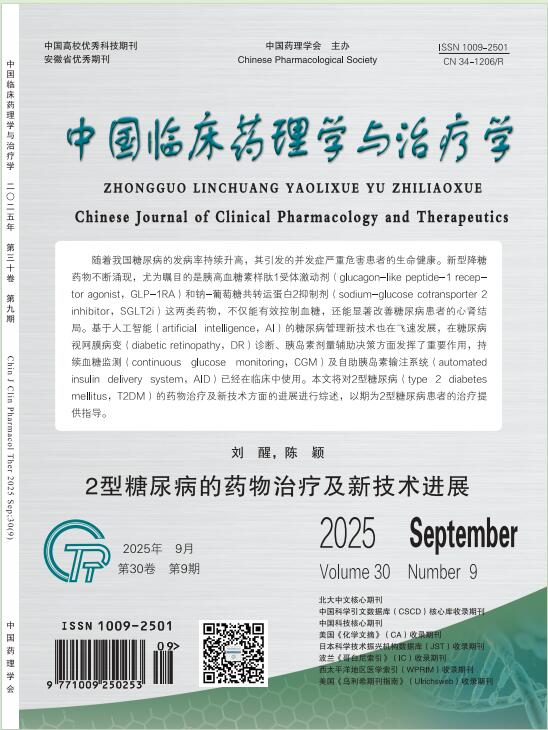
    Drug therapy and new technology progress of type 2 diabetes mellitus
    LIU Xing, CHEN Ying
    2025, 30(9):  1215-1223.  doi:10.12092/j.issn.1009-2501.2025.09.008
    Asbtract ( 241 )   PDF (665KB) ( 741 )  
    Related Articles | Metrics
    As the incidence of diabetes in China continues to rise, its complications pose a serious threat to the life health of patients. New hypoglycemic agents are constantly emerging, with particular attention being paid to glucagon-like peptide-1 receptor agonists (GLP-1RA) and sodium-glucose cotransporter 2 inhibitor (SGLT2i), which can not only effectively control blood glucose levels, but also significantly improve the cardiac and renal outcomes of diabetic patients. New technologies for diabetes management based on artificial intelligence (AI) are also developing rapidly, playing a crucial role in the diagnosis of diabetic retinopathy (DR) and insulin dose-assisted decision-making. Continuous glucose monitoring (CGM) and automated insulin delivery system (AID) have already been used clinically. This article reviews the progress in drug therapy and new technologies for type 2 diabetes mellitus T2DM, aiming to provide guidance for the treatment of T2DM patients.
    Advances in animal models of diabetic erectile dysfunction based on therapeutic approaches
    JING Jiawen, MENG Qingbo, BI Zheng, WANG Fanjing, LI Yufan, FANG Zhaohui
    2025, 30(9):  1224-1232.  doi:10.12092/j.issn.1009-2501.2025.09.009
    Asbtract ( 130 )   PDF (713KB) ( 573 )  
    Related Articles | Metrics
    Diabetic erectile dysfunction is a common complication of diabetes that severely affects the quality of life of men and their sexual partners. Active participation in scientific research on diabetic erectile dysfunction is particularly important, and animal models are an important basis for exploring the pathogenesis of the disease, evaluating the efficacy of drug treatments, and developing new drugs. The pathogenesis of diabetic erectile dysfunction is complex, and current treatments mainly focus on regulating blood sugar, anti-oxidative stress, PDE5 inhibitors, stem cell therapy, inhibiting neurovascular injury, anti-fibrosis, traditional Chinese medicine, and other aspects. In particular, correcting hyperglycemia is crucial for preventing or stopping the progression of the disease. This article summarizes and updates existing treatment methods by reviewing the latest literature, and reviews the animal models used in different treatment methods, in order to provide a reference for animal experiments and clinical treatment.
    Research progress on the addictivity and neurotoxicity of ketamine
    ZI Zhian, ZHAO Tingyi, WANG Gongwu, CAO Jun
    2025, 30(9):  1233-1242.  doi:10.12092/j.issn.1009-2501.2025.09.010
    Asbtract ( 543 )   PDF (676KB) ( 235 )  
    Related Articles | Metrics
    As a new type of rapid antidepressant, ketamine has provided a new approach for the treatment and research on the pathological mechanism of major depressive disorder. However, the addictive potential and neurotoxicity of ketamine have become issues that cannot be ignored in clinical medication. This article briefly introduces the relevant research progress on ketamine addiction and neurotoxicity mechanisms at home and abroad, hoping to provide a reference for the rational development and utilization of ketamine.
    Apelin: A new target for the prevention and treatment of chronic kidney disease#br#
    LYU Chengguo, WU Caiqian, MI Qianrui, ZHANG Guojing, LI Ling, YE Qifa
    2025, 30(9):  1243-1252.  doi:10.12092/j.issn.1009-2501.2025.09.011
    Asbtract ( 124 )   PDF (1189KB) ( 43 )  
    Related Articles | Metrics
    Chronic kidney disease (CKD) is a chronic renal structural and functional disorder caused by multiple causes (history of kidney injury>3 months), with complex etiology and high incidence, which will eventually lead to end-stage renal disease (ESRD). Common chronic kidney diseases include diabetic nephropathy, polycystic nephropathy, nephrogenic diabetes insipidus and renal fibrosis. At present, there is still a lack of effective specific treatment for chronic kidney disease. The Apelin system is an endogenous physiological regulator. Studies have shown that Apelin is involved in the occurrence and development of the above diseases mainly through the regulation of kidney body fluids and blood vessels, and the regulation of kidney glucose and lipid metabolism and immunity. This article aims to review the role of Apelin in chronic kidney diseases in recent years, and provide ideas for the treatment and drug development of kidney diseases with Apelin as a new target.
    Research progress on the interaction between epithelial cells and macrophages in lung diseases
    LI Mengyu, JIANG Wei, ZHANG Yafei, PAN Xin, WANG Yuanyuan
    2025, 30(9):  1253-1259.  doi:10.12092/j.issn.1009-2501.2025.09.012
    Asbtract ( 115 )   PDF (863KB) ( 583 )  
    Related Articles | Metrics
    The interaction between epithelial cells and macrophages plays a crucial role in the progression of lung diseases, including immune defense, inflammation regulation, tissue repair, and regeneration. However, an imbalance in this interaction can contribute to the development of various lung diseases. In idiopathic pulmonary fibrosis, chronic obstructive pulmonary disease, and lung cancer, macrophages can promote disease progression by secreting cytokines that act on epithelial cells. Simultaneously, activated epithelial cells release cytokines to recruit and activate more macrophages in a positive feedback loop. Thus, comprehensive studies of the interactions between epithelial cells and macrophages in various lung diseases have the potential to identify new therapeutic targets and develop innovative strategies for disease management. This review aims to summarize the current knowledge regarding the interaction between epithelial cells and macrophages in idiopathic pulmonary fibrosis, chronic obstructive pulmonary disease, and lung cancer, with the goal of inspiring new research directions for the treatment of lung diseases.
    The role and mechanisms of lncRNA and miRNA in metabolic reprogramming regulation in hepatocellular carcinoma
    JIANG Yan, SONG Cangsang, WANG Guohui, MAO Panpan, LI Xingde
    2025, 30(9):  1260-1271.  doi:10.12092/j.issn.1009-2501.2025.09.013
    Asbtract ( 110 )   PDF (1143KB) ( 32 )  
    Related Articles | Metrics
    Hepatocellular carcinoma (HCC) is a cancer with extremely high mortality and incidence rates. In recent years, with the development of multidisciplinary approaches, key characteristics of cancer have gradually been revealed. Studies have shown that dysregulated energy metabolism and metabolic reprogramming in tumor cells form the basis for tumor cell growth and are critical factors in shaping the tumor microenvironment, immune evasion, and drug resistance. Non-coding RNAs (ncRNAs), as important regulatory factors, play a crucial role in the metabolic reprogramming of HCC. This article focuses on summarizing the mechanisms by which ncRNAs regulate metabolic reprogramming in HCC and explores their applications in clinical diagnosis, treatment, and prognostic assessment, aiming to provide new perspectives for effective HCC treatment and the development of novel drug targets.
    Research progress on the mechanism of quercetin in preventing and treating acute lung injury
    LIN Yiyan, WU Yueying, YAN Rui, WU Dong
    2025, 30(9):  1272-1280.  doi:10.12092/j.issn.1009-2501.2025.09.014
    Asbtract ( 161 )   PDF (723KB) ( 1073 )  
    Related Articles | Metrics
    Acute lung injury is an acute and critical respiratory disease with complex pathogenesis, which has a high incidence rate and high mortality. At present, acute lung injury is mainly treated by mechanical ventilation, glucocorticoid anti-inflammatory and extracorporeal membrane oxygenation. Traditional Chinese medicine also shows great potential in improving the clinical manifestations and prognosis of patients. Quercetin is a flavonol compound, which can prevent and treat acute lung injury by anti-inflammatory, anti-oxidative stress, regulating programmed cell death, antibacterial and antiviral. This article summarizes the mechanism of action and research progress of quercetin in the treatment of acute lung injury, aiming to provide reference for subsequent research and clinical applications.
    Research progress of PARP inhibitors in the treatment of brain glioma
    SONG Cong, GAO Jinglin, BAN Feng, MENG Meng, WANG Mingxia
    2025, 30(9):  1281-1289.  doi:10.12092/j.issn.1009-2501.2025.09.015
    Asbtract ( 139 )   PDF (693KB) ( 315 )  
    Related Articles | Metrics
    Poly- (adenosine diphosphate-ribose) -polymerase (PARP) inhibitors are a novel group of small molecule targeted therapeutic drugs. It has become an effective treatment for ovarian cancer, prostate cancer and breast cancer carrying BRCA1/2 mutations. Studies have demonstrated that PARP inhibitors (PARPi) can improve treatment outcomes by targeting genetic defects in tumors with synergistic effects with standard therapies for glioma treatment, such as increasing radiation sensitivity and overcoming temozolomide resistance. However, the limited blood-brain barrier permeability, the adverse reactions of drug combination and the occurrence of drug resistance are the key factors affecting the therapeutic effect. This article reviews the mechanism of action and research progress of PARP inhibitors involved in the treatment of brain glioma, and analyzes the challenges to be faced in clinical practice, in order to provide references for future research in this field.
    The world's first PD-1/VEGF bispecific antibody:ivonescimab
    SUN Caihong, HU Taotao, XIAO Xingxing, YUAN Mengnan, JIANG Simin, CHEN Yinqi, RUAN Guodong
    2025, 30(9):  1290-1296.  doi:10.12092/j.issn.1009-2501.2025.09.016
    Asbtract ( 217 )   PDF (1036KB) ( 53 )  
    Related Articles | Metrics
    Ivonescimab is a humanized bispecific antibody targeting human vascular endothelial growth factor-A (VEGF-A) and programmed death protein-1 (PD-1). It was approved by National Medical Products Administration on May 24th, 2024, and can be used in combination with pemetrexed and carboplatin for locally advanced or positive EGFR gene mutation after treatment with epidermal growth factor receptor (EGFR) tyrosine kinase inhibitor. This paper mainly introduces the research progress of the world's first PD-1/VEGF bispecific antibody ivonescimab, and summarizes the mechanism of action, pharmacokinetics, phase I-III clinical trials and drug safety.