中国临床药理学与治疗学 ›› 2026, Vol. 31 ›› Issue (6): 752-763.doi: 10.12092/j.issn.1009-2501.2026.06.004
• “糖尿病心血管并发症的药物进展”专栏 • 上一篇
郭苏1,2( ), 秦小江2,3, 江雪露2,4, 方梦薇1,2, 满志2,4, 孟欣2,4, 郑志发5, 赵良渊4, 施熠炜6, 侯晓敏1,2,*()
收稿日期:2025-07-23
出版日期:2026-06-26
发布日期:2026-07-06
通讯作者:
侯晓敏
E-mail:guosu142511@163.com;xiaominhou@sxmu.edu.cn
作者简介:郭苏,女,硕士研究生,研究方向:微血管药理学、病理生理学及天然产物的保护作用研究。E-mail:基金资助:
Su GUO1,2(), Xiaojiang QIN2,3, Xuelu JIANG2,4, Mengwei FANG1,2, Zhi MAN2,4, Xin MENG2,4, Zhifa ZHENG5, Liangyuan ZHAO4, Yiwei SHI6, Xiaomin HOU1,2,*()
Received:2025-07-23
Online:2026-06-26
Published:2026-07-06
Contact:
Xiaomin HOU
E-mail:guosu142511@163.com;xiaominhou@sxmu.edu.cn
摘要:
糖尿病是一种以慢性高血糖为特征的常见代谢性疾病。长期高血糖可损伤全身微血管,包括视网膜、肾小球、神经营养血管及心肌微小冠状动脉等,临床表现为糖尿病视网膜病变(diabetic retinopathy,DR)、糖尿病肾病(diabetic kidney disease,DKD)、糖尿病神经病变(diabetic neuropathy,DN)和糖尿病心肌病变(diabetic cardiomyopathy,DCM)。这些并发症严重影响患者生活质量,甚至危及生命。糖尿病微血管病变的发病机制与高血糖诱导的代谢途径异常激活、氧化应激及炎症反应等密切相关,最终导致微血管内皮功能损伤、基底膜增厚和微循环障碍。黄酮类化合物作为一类广泛存在于植物中的天然产物,具有抗炎、抗氧化和保护血管内皮等多种生物活性,在防治糖尿病微血管病变方面展现出巨大潜力。本文综述了近年来黄酮类化合物在该领域的研究进展,并探讨了其在临床应用中的挑战和未来发展方向,以期为后续开发和应用提供参考。
中图分类号:
郭苏, 秦小江, 江雪露, 方梦薇, 满志, 孟欣, 郑志发, 赵良渊, 施熠炜, 侯晓敏. 黄酮类化合物防治糖尿病微血管病变的研究进展[J]. 中国临床药理学与治疗学, 2026, 31(6): 752-763.
Su GUO, Xiaojiang QIN, Xuelu JIANG, Mengwei FANG, Zhi MAN, Xin MENG, Zhifa ZHENG, Liangyuan ZHAO, Yiwei SHI, Xiaomin HOU. Research progress on flavonoids in the prevention and treatment of diabetic microvascular complications[J]. Chinese Journal of Clinical Pharmacology and Therapeutics, 2026, 31(6): 752-763.
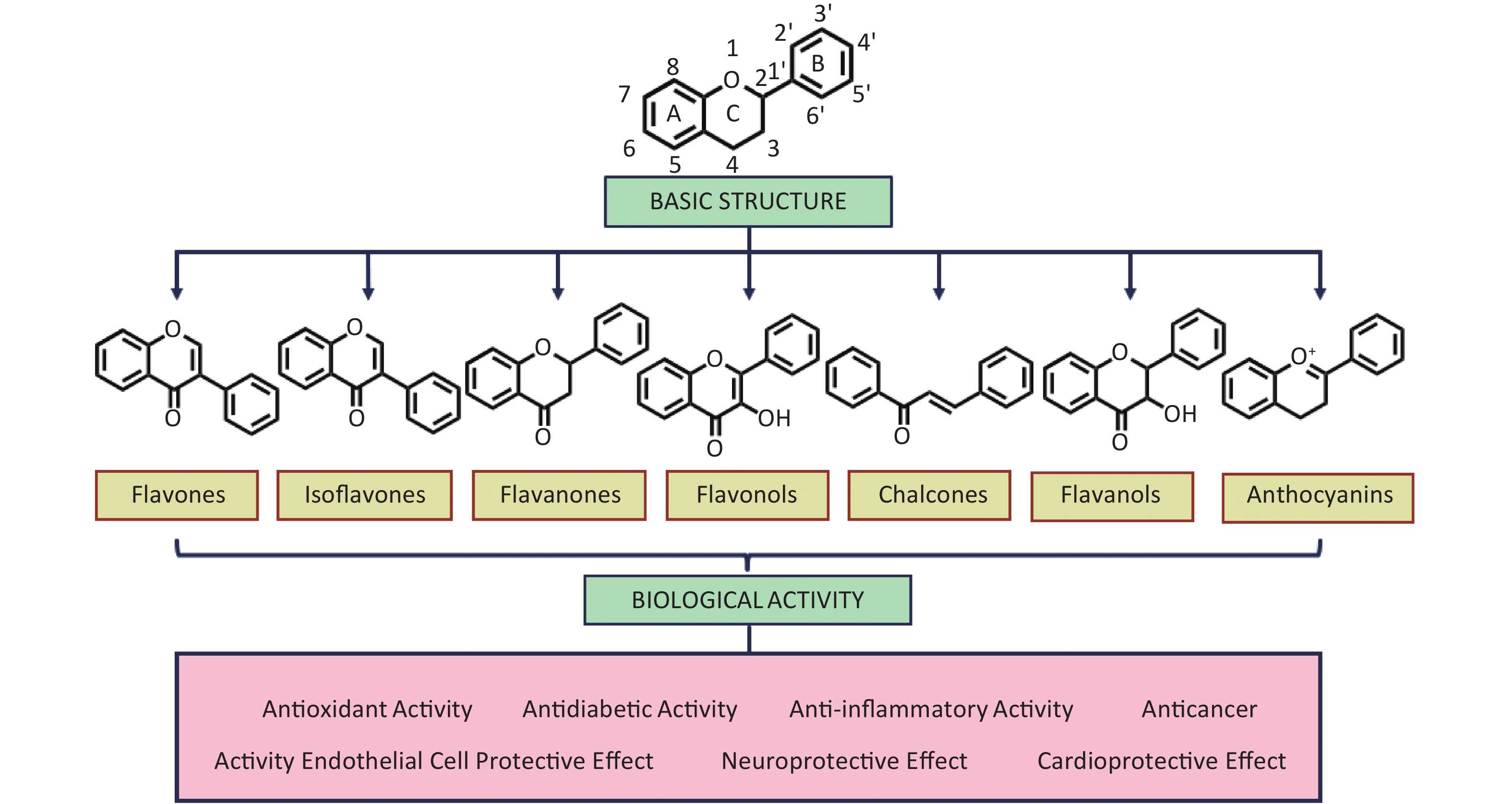
图 1
Fig.1 The basic molecular structure of flavonoids, classification, and biological activities

图 2
Fig.2 The pathogenesis of diabetic microvascular complications(by figdraw.com)

图 3
Fig.3 Pathological manifestations of diabetic microvascular complications in different target organs (by figdraw.com)
| Classification | Flavonoids | Sources | Mechanisms | Ref |
| Flavonols | Quercetin | Vegetables, tea, nuts, seed, fruits, red wine | (DR):↑ganglion cell number and retinal thickness, ↓ BRB breakdown, VEGF, ICAM-1 level, ↓ vascular permeability and leakage (DKD): ↓ EGFR/Erk1/2 signaling pathway → ↓ podocyte apoptosis,↑ Nrf2/HO-1 pathway → ↓ iron-driven lipid peroxidation (DN):↑Slit-2, Netrin-1 expression, ↓ Rho/ROCK signaling pathway overactivation →↑ nerve axon growth and regeneration,↑ nerve conduction ↑AMPK/PGC-1α pathway → ↓ mitochondrial morphology and dysfunction, ↓ ROS generation → protection of Schwann cells (DMC):↑ Nrf2 pathway → ↓ ROS level, cardiomyocyte apoptosis,↑ AMPK signaling pathway →↑ eNOS activity, microvascular density, blood flow | [ [ [ [ |
| Rutin | Buckwheat, tobacco, citrus fruits, tea, asparagus | (DN): ↓ NLRP3 inflammasome activity → ↓ IL-1β, IL-18 secretion,↑ blood perfusion (DCM):↑ capillary density, permeability →↑ myocardial perfusion ↓ MMP/TGF-β1 imbalance →↑ myocardial function, ↓cardiac remodeling | [ [ | |
| Kaempferol | Broccoli, apples, grapes, onions, herbs | (DR): ↓ERRα activity, ↓ cell proliferation, migration, tube formation, ↓ VEGF expression,↑TSP-1,ADAMTS-1 level→↓angiogenic effects (DKD): ↓RhoA/Rho kinase activity → ↓smooth muscle cell contraction and ECM hyperplasia,↑ hemodynamic disturbance | [ [ | |
| Flavanones | Hesperetin | Lemons, limes, Oranges, grapefruits, citrus | (DR):↑capillary resilience, maintain structural integrity, ↓fragility, and hemorrhage risk | [ |
| Naringenin naringin | Pomelos, lemons, limes, oranges, grapefruits, citrus | (DR):↑GTPCH1/eNOS pathway →↑eNOS activity and NO generation, retinal endothelial cells (DKD): ↓AGEs-RAGE, IL-1β, TNF-α levels → ↓ inflammatory cell adhesion and infiltration (DMC): ↓Bax/Caspase-3 expression → ↓ myocardial fibrosis, basement membrane thickness ↑ Nrf2 signaling, ↓ NF-κB signaling, ↓ ROS generation, and inflammatory cells →↑ cardiomyocytes, endothelial cells (DMC): induce ERK1/2, PKCδ, Akt phosphorylation →↑ Nrf2 nuclear translocation, antioxidant gene expression → ↓ apoptosis ↓ ROS level → ↓ mitochondrial membrane potential depolarization, Caspase-3 activity | [ [ [ [ | |
| Flavones | Luteolin | Lonicera japonica, peppermint, carrots, capsicum annuum, celery | (DR): modulation of the NLRP3/NOX4 signaling pathway→↓NLRP3,NOX4,TXNIP,NLRP1 expression,↓retinal cell apoptosis,↑integrity of the microvascular structure (DKD):↓ type IV collagen deposition,TGF-β1 level→↑basement membrane abnormalities (DN):↑Nrf2/HO-1 signaling pathway→↓MDA level,↑SOD activity,↓oxidative stress→↑nerve blood flow induction GAP-43 expression→neurite growth | [ [ [ |
| Baicalein baicalin | Scutellaria baicalensis | (DR):↓pVEGF-R2 level→↓NOX2 activity and ROS generation→↓oxidative damage of endothelial cells, ↓GFAP and VEGF expression in Müller cells, ↓vascular abnormality, and ganglion cell loss (DKD)↑Nrf2 signaling pathway,↑HO-1, NQO-1 expression→↓MDA,↑SOD,CAT level,↓Erk1/2, JNK,P38 phosphorylation→↓pro-inflammatory cytokines (IL-1β, IL-6, MCP-1, and TNF-α level) | [ [ | |
| Flavanols | Catechin | Tea, cocoa, grapes, apples, legumes | (DN):↑NO level, ↓ET-1level→↓nerve injury,↑nutritional support | [ |
| Epigallocatechin-3-gallate | Camellia sinensis | (DMC):↑AMPK/mTOR signaling pathway→↑cardiomyocyte,pericyte autophagy in microvessels ↓TGF-β1/MMPs signaling →↓myocardial interstitial deposition→↑microvascular function | [ | |
| Isoflavones | Genistein puerarin | Soybeans and other plants, Pueraria lobata | (DKD):↑SIRT1expression, AMPK/mTOR pathway→↑podocyte autophagy→↓urinary protein,renal injury (DN):↓oxidative stress, endothelial dysfunction ↑NGF level,microvascular dysfunction | [ [ |
表 1
Table 1 Flavonoids and their mechanism of action in diabetic microangiopathy
| Classification | Flavonoids | Sources | Mechanisms | Ref |
| Flavonols | Quercetin | Vegetables, tea, nuts, seed, fruits, red wine | (DR):↑ganglion cell number and retinal thickness, ↓ BRB breakdown, VEGF, ICAM-1 level, ↓ vascular permeability and leakage (DKD): ↓ EGFR/Erk1/2 signaling pathway → ↓ podocyte apoptosis,↑ Nrf2/HO-1 pathway → ↓ iron-driven lipid peroxidation (DN):↑Slit-2, Netrin-1 expression, ↓ Rho/ROCK signaling pathway overactivation →↑ nerve axon growth and regeneration,↑ nerve conduction ↑AMPK/PGC-1α pathway → ↓ mitochondrial morphology and dysfunction, ↓ ROS generation → protection of Schwann cells (DMC):↑ Nrf2 pathway → ↓ ROS level, cardiomyocyte apoptosis,↑ AMPK signaling pathway →↑ eNOS activity, microvascular density, blood flow | [ [ [ [ |
| Rutin | Buckwheat, tobacco, citrus fruits, tea, asparagus | (DN): ↓ NLRP3 inflammasome activity → ↓ IL-1β, IL-18 secretion,↑ blood perfusion (DCM):↑ capillary density, permeability →↑ myocardial perfusion ↓ MMP/TGF-β1 imbalance →↑ myocardial function, ↓cardiac remodeling | [ [ | |
| Kaempferol | Broccoli, apples, grapes, onions, herbs | (DR): ↓ERRα activity, ↓ cell proliferation, migration, tube formation, ↓ VEGF expression,↑TSP-1,ADAMTS-1 level→↓angiogenic effects (DKD): ↓RhoA/Rho kinase activity → ↓smooth muscle cell contraction and ECM hyperplasia,↑ hemodynamic disturbance | [ [ | |
| Flavanones | Hesperetin | Lemons, limes, Oranges, grapefruits, citrus | (DR):↑capillary resilience, maintain structural integrity, ↓fragility, and hemorrhage risk | [ |
| Naringenin naringin | Pomelos, lemons, limes, oranges, grapefruits, citrus | (DR):↑GTPCH1/eNOS pathway →↑eNOS activity and NO generation, retinal endothelial cells (DKD): ↓AGEs-RAGE, IL-1β, TNF-α levels → ↓ inflammatory cell adhesion and infiltration (DMC): ↓Bax/Caspase-3 expression → ↓ myocardial fibrosis, basement membrane thickness ↑ Nrf2 signaling, ↓ NF-κB signaling, ↓ ROS generation, and inflammatory cells →↑ cardiomyocytes, endothelial cells (DMC): induce ERK1/2, PKCδ, Akt phosphorylation →↑ Nrf2 nuclear translocation, antioxidant gene expression → ↓ apoptosis ↓ ROS level → ↓ mitochondrial membrane potential depolarization, Caspase-3 activity | [ [ [ [ | |
| Flavones | Luteolin | Lonicera japonica, peppermint, carrots, capsicum annuum, celery | (DR): modulation of the NLRP3/NOX4 signaling pathway→↓NLRP3,NOX4,TXNIP,NLRP1 expression,↓retinal cell apoptosis,↑integrity of the microvascular structure (DKD):↓ type IV collagen deposition,TGF-β1 level→↑basement membrane abnormalities (DN):↑Nrf2/HO-1 signaling pathway→↓MDA level,↑SOD activity,↓oxidative stress→↑nerve blood flow induction GAP-43 expression→neurite growth | [ [ [ |
| Baicalein baicalin | Scutellaria baicalensis | (DR):↓pVEGF-R2 level→↓NOX2 activity and ROS generation→↓oxidative damage of endothelial cells, ↓GFAP and VEGF expression in Müller cells, ↓vascular abnormality, and ganglion cell loss (DKD)↑Nrf2 signaling pathway,↑HO-1, NQO-1 expression→↓MDA,↑SOD,CAT level,↓Erk1/2, JNK,P38 phosphorylation→↓pro-inflammatory cytokines (IL-1β, IL-6, MCP-1, and TNF-α level) | [ [ | |
| Flavanols | Catechin | Tea, cocoa, grapes, apples, legumes | (DN):↑NO level, ↓ET-1level→↓nerve injury,↑nutritional support | [ |
| Epigallocatechin-3-gallate | Camellia sinensis | (DMC):↑AMPK/mTOR signaling pathway→↑cardiomyocyte,pericyte autophagy in microvessels ↓TGF-β1/MMPs signaling →↓myocardial interstitial deposition→↑microvascular function | [ | |
| Isoflavones | Genistein puerarin | Soybeans and other plants, Pueraria lobata | (DKD):↑SIRT1expression, AMPK/mTOR pathway→↑podocyte autophagy→↓urinary protein,renal injury (DN):↓oxidative stress, endothelial dysfunction ↑NGF level,microvascular dysfunction | [ [ |
| 1 |
Roy B. Pathophysiological mechanisms of diabetes-induced macrovascular and microvascular complications: the role of oxidative stress[J]. Med Sci, 2025, 13 (3): 87.
doi: 10.3390/medsci13030087 |
| 2 |
Desoye G, Simmons D, van Poppel M. Identifying type 2 diabetes risk at birth: a new frontier for early prevention[J]. Diabetes Care, 2025, 48 (8): 1320- 1322.
doi: 10.2337/dci25-0053 |
| 3 | 丁浚峰, 涂珺. 中药治疗糖尿病微血管病变的研究进展[J]. 中国实验方剂学杂志, 2023, 29 (6): 260- 267. |
| 4 |
Hu X, Lv J, Zhao Y, et al. Important regulatory role of mitophagy in diabetic microvascular complications[J]. J Transl Med, 2025, 23 (1): 269.
doi: 10.1186/s12967-025-06307-7 |
| 5 | 何婉如, 张晓熙, 徐长玉, 等. 黄酮类化合物防治糖尿病及其并发症研究进展[J]. 浙江中医药大学学报, 2024, 48 (2): 241- 246. |
| 6 |
Leonte D, Ungureanu D, Zaharia V. Flavones and related compounds: synthesis and biological activity[J]. Molecules, 2023, 28 (18): 6528.
doi: 10.3390/molecules28186528 |
| 7 |
Chen S, Wang X, Cheng Y, et al. A review of classification, biosynthesis, biological activities and potential applications of flavonoids[J]. Molecules, 2023, 28 (13): 4982.
doi: 10.3390/molecules28134982 |
| 8 |
Kumar S, Pandey AK. Chemistry and biological activities of flavonoids: an overview[J]. Sci World J, 2013, 2013, 162750.
doi: 10.1155/2013/162750 |
| 9 |
Agarawal K, Anant Kulkarni Y, Wairkar S. Nanoformulations of flavonoids for diabetes and microvascular diabetic complications[J]. Drug Deliv Transl Res, 2023, 13 (1): 18- 36.
doi: 10.1007/s13346-022-01174-x |
| 10 |
Hao B, Yang Z, Liu H, et al. Advances in flavonoid research: sources, biological activities, and developmental prospectives[J]. Curr Issues Mol Biol, 2024, 46 (4): 2884- 2925.
doi: 10.3390/cimb46040181 |
| 11 |
Xiong Y, Knoedler S, Alfertshofer M, et al. Mechanisms and therapeutic opportunities in metabolic aberrations of diabetic wounds: a narrative review[J]. Cell Death Dis, 2025, 16 (1): 341.
doi: 10.1038/s41419-025-07583-3 |
| 12 |
Chen X, Xie N, Feng L, et al. Oxidative stress in diabetes mellitus and its complications: from pathophysiology to therapeutic strategies[J]. Chin Med J, 2025, 138 (1): 15- 27.
doi: 10.1097/CM9.0000000000003230 |
| 13 |
Pan D, Xu L, Guo M. The role of protein kinase C in diabetic microvascular complications[J]. Front Endocrinol, 2022, 13, 973058.
doi: 10.3389/fendo.2022.973058 |
| 14 | Qin P, He C, Ye P, et al. Pkcδ regulates the vascular biology in diabetic atherosclerosis[J]. Cell Commun Signal, 2023, 21 (1): 1- 18. |
| 15 |
Zhang Y, Zhang Z, Tu C, et al. Advanced glycation end products in disease development and potential interventions[J]. Antioxidants, 2025, 14 (4): 492.
doi: 10.3390/antiox14040492 |
| 16 |
Rojas A, Lindner C, Schneider I, et al. The RAGE axis: a relevant inflammatory hub in human diseases[J]. Biomolecules, 2024, 14 (4): 412.
doi: 10.3390/biom14040412 |
| 17 |
Yamaguchi H, Nagai R. Insights from the fructose-derived product glucoselysine: revisiting the polyol pathway in diabetic complications[J]. J Diabetes Investig, 2025, 16 (4): 569- 577.
doi: 10.1111/jdi.70000 |
| 18 |
Thorne CA, Grey AC, Lim JC, et al. The synergistic effects of polyol pathway-induced oxidative and osmotic stress in the aetiology of diabetic cataracts[J]. Int J Mol Sci, 2024, 25 (16): 9042.
doi: 10.3390/ijms25169042 |
| 19 |
An Y, Xu BT, Wan SR, et al. The role of oxidative stress in diabetes mellitus-induced vascular endothelial dysfunction[J]. Cardiovasc Diabetol, 2023, 22 (1): 237.
doi: 10.1186/s12933-023-01965-7 |
| 20 |
Li Y, Liu Y, Liu S, et al. Diabetic vascular diseases: molecular mechanisms and therapeutic strategies[J]. Signal Transduct Target Ther, 2023, 8 (1): 152.
doi: 10.1038/s41392-023-01400-z |
| 21 |
Liu S, Liu J, Wang Y, et al. Oxidative stress: signaling pathways, biological functions, and disease[J]. MedComm, 2025, 6 (7): e70268.
doi: 10.1002/mco2.70268 |
| 22 |
Jia G, Bai H, Mather B, et al. Diabetic vasculopathy: molecular mechanisms and clinical insights[J]. Int J Mol Sci, 2024, 25 (2): 804.
doi: 10.3390/ijms25020804 |
| 23 |
Nashtahosseini Z, Eslami M, Paraandavaji E, et al. Cytokine signaling in diabetic neuropathy: a key player in peripheral nerve damage[J]. Biomedicines, 2025, 13 (3): 589.
doi: 10.3390/biomedicines13030589 |
| 24 |
Xue C, Chen K, Gao Z, et al. Common mechanisms underlying diabetic vascular complications: focus on the interaction of metabolic disorders, immuno-inflammation, and endothelial dysfunction[J]. Cell Commun Signal, 2023, 21 (1): 298.
doi: 10.1186/s12964-022-01016-w |
| 25 |
Seo H, Park SJ, Song M. Diabetic retinopathy (DR): mechanisms, current therapies, and emerging strategies[J]. Cells, 2025, 14 (5): 376.
doi: 10.3390/cells14050376 |
| 26 |
Muhammad T, Ikram M, Ullah R, et al. Hesperetin, a citrus flavonoid, attenuates LPS-induced neuroinflammation, apoptosis and memory impairments by modulating TLR4/NF-κB signaling[J]. Nutrients, 2019, 11 (3): 648.
doi: 10.3390/nu11030648 |
| 27 |
Xue B, Wang Y. Naringenin upregulates GTPCH1/eNOS to ameliorate high glucose-induced retinal endothelial cell injury[J]. Exp Ther Med, 2022, 23 (6): 1- 9.
doi: 10.3892/etm.2022.11355 |
| 28 |
Wu Y, Zhang Q, Zhang R. Kaempferol targets estrogen-related receptor α and suppresses the angiogenesis of human retinal endothelial cells under high glucose conditions[J]. Exp Ther Med, 2017, 14 (6): 5576- 5582.
doi: 10.3892/etm.2017.5261 |
| 29 |
Gómez-Jiménez V, Burggraaf-Sánchez de Las Matas R, Ortega ÁL. Modulation of oxidative stress in diabetic retinopathy: therapeutic role of natural polyphenols[J]. Antioxidants, 2025, 14 (7): 875.
doi: 10.3390/antiox14070875 |
| 30 | Yang Y, Zhou M, Liu H. Luteolin, an aryl hydrocarbon receptor antagonist, alleviates diabetic retinopathy by regulating the nlrp/Nox4 signalling pathway: experimental and molecular docking study[J]. Physiol Int, 2021, 108 (2): 211- 222. |
| 31 |
Matos AL, Bruno DF, Ambrósio AF, et al. The benefits of flavonoids in diabetic retinopathy[J]. Nutrients, 2020, 12 (10): 3169.
doi: 10.3390/nu12103169 |
| 32 |
Lerner G. Investigation of diabetic kidney disease in the network for pancreatic organ donors with diabetes-kidney cohort[J]. Kidney360, 2025, 6 (1): 1- 3.
doi: 10.34067/KID.0000000664 |
| 33 |
Huang R, Zeng J, Yu X, et al. Luteolin alleviates diabetic nephropathy fibrosis involving AMPK/NLRP3/TGF-Β pathway[J]. Diabetes Metab Syndr Obes, 2024, 17, 2855- 2867.
doi: 10.2147/DMSO.S450094 |
| 34 |
Liu Y, Li Y, Xu L, et al. Quercetin attenuates podocyte apoptosis of diabetic nephropathy through targeting EGFR signaling[J]. Front Pharmacol, 2021, 12, 792777.
doi: 10.3389/fphar.2021.792777 |
| 35 |
Feng Q, Yang Y, Qiao Y, et al. Quercetin ameliorates diabetic kidney injury by inhibiting ferroptosis via activating Nrf2/HO-1 signaling pathway[J]. Am J Chin Med, 2023, 51 (4): 997- 1018.
doi: 10.1142/S0192415X23500465 |
| 36 |
Hu Q, Qu C, Xiao X, et al. Flavonoids on diabetic nephropathy: advances and therapeutic opportunities[J]. Chin Med, 2021, 16 (1): 74.
doi: 10.1186/s13020-021-00485-4 |
| 37 |
Valle-Velázquez E, Zambrano-Vásquez OR, Cortés-Camacho F, et al. Naringenin - a potential nephroprotective agent for diabetic kidney disease: a comprehensive review of scientific evidence[J]. Biomol Biomed, 2024, 24 (6): 1441- 1451.
doi: 10.17305/bb.2024.10511 |
| 38 |
Ma L, Wu F, Shao Q, et al. Baicalin alleviates oxidative stress and inflammation in diabetic nephropathy via Nrf2 and MAPK signaling pathway[J]. Drug Des Devel Ther, 2021, 15, 3207- 3221.
doi: 10.2147/DDDT.S319260 |
| 39 | 刘世林, 李安冬, 南征, 等. 糖尿病肾脏疾病足细胞自噬机制及中药干预研究进展[J]. 长春中医药大学学报, 2025, 41 (5): 586- 590. |
| 40 |
Eid SA, Rumora AE, Beirowski B, et al. New perspectives in diabetic neuropathy[J]. Neuron, 2023, 111 (17): 2623- 2641.
doi: 10.1016/j.neuron.2023.05.003 |
| 41 |
Zhang Q, Song W, Zhao B, et al. Quercetin attenuates diabetic peripheral neuropathy by correcting mitochondrial abnormality via activation of AMPK/PGC-1α pathway in vivo and in vitro[J]. Front Neurosci, 2021, 15, 636172.
doi: 10.3389/fnins.2021.636172 |
| 42 |
Song W, Li Y, Jia Y, et al. Quercetin alleviates diabetic peripheral neuropathy by regulating axon guidance factors and inhibiting the rho/ROCK pathway in vivo and in vitro[J]. Diabetes Metab Syndr Obes, 2024, 17, 4339- 4354.
doi: 10.2147/DMSO.S491175 |
| 43 |
Oh YS. Bioactive compounds and their neuroprotective effects in diabetic complications[J]. Nutrients, 2016, 8 (8): 472.
doi: 10.3390/nu8080472 |
| 44 |
Weng L, Zhang F, Wang R, et al. A review on protective role of genistein against oxidative stress in diabetes and related complications[J]. Chem Biol Interact, 2019, 310, 108665.
doi: 10.1016/j.cbi.2019.05.031 |
| 45 |
Khanna S, Kumar S, Sharma P, et al. Flavonoids regulating NLRP3 inflammasome: a promising approach in alleviating diabetic peripheral neuropathy[J]. Inflammopharmacology, 2025, 33 (5): 2231- 2262.
doi: 10.1007/s10787-025-01729-7 |
| 46 |
Dash JR, Pattnaik G, Ghosh G, et al. Protective effect of epicatechin in diabetic-induced peripheral neuropathy: a review[J]. J Appl Pharm Sci, 2023, 13 (1): 56- 63.
doi: 10.7324/japs.2023.130105-1 |
| 47 |
Deng J, Yan F, Tian J, et al. Potential clinical biomarkers and perspectives in diabetic cardiomyopathy[J]. Diabetol Metab Syndr, 2023, 15 (1): 35.
doi: 10.1186/s13098-023-00998-y |
| 48 |
Ozorowski M, Wiciński M, Kuźmiński O, et al. The effects of quercetin on vascular endothelium, inflammation, cardiovascular disease and lipid metabolism-a review[J]. Nutrients, 2025, 17 (9): 1579.
doi: 10.3390/nu17091579 |
| 49 | Wei Z, Jing Z, Pinfang K, et al. Quercetin inhibits pyroptosis in diabetic cardiomyopathy through the Nrf2 pathway[J]. J Diabetes Res, 2022, 2022, 9723632. |
| 50 |
He Y, Wang S, Sun H, et al. Naringenin ameliorates myocardial injury in STZ-induced diabetic mice by reducing oxidative stress, inflammation and apoptosis via regulating the Nrf2 and nf-κb signaling pathways[J]. Front Cardiovasc Med, 2022, 9, 946766.
doi: 10.3389/fcvm.2022.946766 |
| 51 | 刘丹, 苗加伟, 谭子豪, 等. 柚皮苷对心血管疾病的药理作用研究进展[J]. 中国临床药理学与治疗学, 2025, 30 (2): 272- 281. |
| 52 |
Huang R, Shi Z, Chen L, et al. Rutin alleviates diabetic cardiomyopathy and improves cardiac function in diabetic apoeknockout mice[J]. Eur J Pharmacol, 2017, 814, 151- 160.
doi: 10.1016/j.ejphar.2017.08.023 |
| 53 |
Jia Q, Yang R, Mehmood S, et al. Epigallocatechin-3-gallate attenuates myocardial fibrosis in diabetic rats by activating autophagy[J]. Exp Biol Med, 2022, 24 (17): 1591- 1600.
doi: 10.1177/15353702221110646 |
| 54 |
Reis A, Rocha S, Dias IH, et al. Type 2 diabetes mellitus alters the cargo of (poly) phenol metabolome and the oxidative status in circulating lipoproteins[J]. Redox Biol, 2023, 59, 102572.
doi: 10.1016/j.redox.2022.102572 |
| 55 |
Hakami T, Mahmoud MI, de Juan E, et al. Pharmacokinetics of genistein distribution in blood and retinas of diabetic and non-diabetic rats[J]. Drug Metab Pharmacokinet, 2021, 39, 100404.
doi: 10.1016/j.dmpk.2021.100404 |
| 56 |
Taheri Y, Sharifi-Rad J, Antika G, et al. Paving luteolin therapeutic potentialities and agro-food-pharma applications: emphasis on in vivo pharmacological effects and bioavailability traits[J]. Oxid Med Cell Longev, 2021, 2021, 1987588.
doi: 10.1155/2021/1987588 |
| 57 |
Liu L, Barber E, Kellow NJ, et al. Improving quercetin bioavailability: a systematic review and meta-analysis of human intervention studies[J]. Food Chem, 2025, 477, 143630.
doi: 10.1016/j.foodchem.2025.143630 |
| 58 |
Corcoran MP, McKay DL, Blumberg JB. Flavonoid basics: chemistry, sources, mechanisms of action, and safety[J]. J Nutr Gerontol Geriatr, 2012, 31 (3): 176- 189.
doi: 10.1080/21551197.2012.698219 |
| 59 |
Jucá MM, Cysne Filho FMS, De Almeida JC, et al. Flavonoids: biological activities and therapeutic potential[J]. Nat Prod Res, 2020, 34 (5): 692- 705.
doi: 10.1080/14786419.2018.1493588 |
| 60 |
Vieira-Frez FC, Sehaber-Sierakowski CC, Perles JVCM, et al. Anti- and pro-oxidant effects of quercetin stabilized by microencapsulation on interstitial cells of cajal, nitrergic neurons and M2-like macrophages in the jejunum of diabetic rats[J]. Neurotoxicology, 2020, 77, 193- 204.
doi: 10.1016/j.neuro.2020.01.011 |
| 61 | Ouyang J, Zhu K, Liu Z, et al. Prooxidant effects of epigallocatechin-3-gallate in health benefits and potential adverse effect[J]. Oxid Med Cell Longev, 2020, 2020, 9723686. |
| 62 |
Rasheed NOA, Ahmed LA, Abdallah DM, et al. Paradoxical cardiotoxicity of intraperitoneally-injected epigallocatechin gallate preparation in diabetic mice[J]. Sci Rep, 2018, 8 (1): 7880.
doi: 10.1038/s41598-018-25901-y |
| 63 |
Jin Y, Arroo R. The protective effects of flavonoids and carotenoids against diabetic complications-a review of in vivo evidence[J]. Front Nutr, 2023, 10, 1020950.
doi: 10.3389/fnut.2023.1020950 |
| 64 |
Hu L, Luo Y, Yang J, et al. Botanical flavonoids: efficacy, absorption, metabolism and advanced pharmaceutical technology for improving bioavailability[J]. Molecules, 2025, 30 (5): 1184.
doi: 10.3390/molecules30051184 |
| 65 |
Kalita P, Chakrabarti S, Bhattacharjee B, et al. Recent progress in improving delivery, bioavailability and bioactivity of polyphenolic compounds through encapsulation: a comprehensive review[J]. Food Chem, 2025, 490, 145087.
doi: 10.1016/j.foodchem.2025.145087 |
| 66 |
Mao Y, Luo J, Cai Z. Biosynthesis and regulatory mechanisms of plant flavonoids: a review[J]. Plants, 2025, 14 (12): 1847.
doi: 10.3390/plants14121847 |
| 67 |
Reinhardt JK, Craft D, Weng JK. Toward an integrated omics approach for plant biosynthetic pathway discovery in the age of AI[J]. Trends Biochem Sci, 2025, 50 (4): 311- 321.
doi: 10.1016/j.tibs.2025.01.010 |
| [1] | 陈玲, 王中群. 临床研究视角下的SGLT2抑制剂:糖尿病心力衰竭治疗的“破界先锋”[J]. 中国临床药理学与治疗学, 2026, 31(6): 722-728. |
| [2] | 徐晓曼, 周蕾. GLP-1受体激动剂在糖尿病心肌病中的心血管保护作用:机制和临床前景[J]. 中国临床药理学与治疗学, 2026, 31(6): 729-734. |
| [3] | 刘学武, 姜德建, 杜艳华. 糖尿病肾病发病机制及药物研发进展[J]. 中国临床药理学与治疗学, 2026, 31(6): 735-751. |
| [4] | 周莹, 刘军彤, 王庆峰, 杨宇峰, 石岩. 中药靶向2型糖尿病相关通路的药理机制研究进展[J]. 中国临床药理学与治疗学, 2026, 31(4): 500-508. |
| [5] | 李金菊, 杨浩, 阮诺冰, 许奇, 毕正, 李瑜璠, 王帆竞, 林逸轩, 方朝晖. 糖尿病微血管病变中的细胞衰老及治疗药物研究进展[J]. 中国临床药理学与治疗学, 2026, 31(4): 509-516. |
| [6] | 孙立亚, 李嘉鑫, 孙贵炎, 陈志超, 王庆峰, 杨宇峰, 石岩. 基于肠道菌群和支链氨基酸探讨中医药防治糖尿病肾病的研究进展[J]. 中国临床药理学与治疗学, 2026, 31(4): 527-535. |
| [7] | 吴子瑜, 俞婷, 郑谋炜, 郭太林. 二甲双胍通过上调Nrf2表达抑制糖尿病肾小管上皮细胞铁死亡[J]. 中国临床药理学与治疗学, 2026, 31(1): 40-47. |
| [8] | 刘醒, 陈颖. 2型糖尿病的药物治疗及新技术进展[J]. 中国临床药理学与治疗学, 2025, 30(9): 1215-1223. |
| [9] | 经加吻, 孟庆波, 毕正, 王帆竞, 李瑜璠, 方朝晖. 基于治疗方法的糖尿病勃起功能障碍动物模型研究进展[J]. 中国临床药理学与治疗学, 2025, 30(9): 1224-1232. |
| [10] | 吕程果, 吴采倩, 米芊睿, 张国婧, 李玲, 叶啟发. Apelin:慢性肾脏疾病防治的新靶点[J]. 中国临床药理学与治疗学, 2025, 30(9): 1243-1252. |
| [11] | 邢英, 郑嵘炅, 姜春晖, 玛依拉·卡哈尔, 木胡牙提·乌拉斯汉. 利拉鲁肽治疗后2型糖尿病合并冠心病患者肠道菌群变化及其与糖、脂代谢指标相关性[J]. 中国临床药理学与治疗学, 2025, 30(8): 1084-1091. |
| [12] | 黄运超, 王益琼, 张婷, 张鋆, 李兰, 张玲. 西红花酸通过抗炎促血管新生改善糖尿病下肢缺血作用研究[J]. 中国临床药理学与治疗学, 2025, 30(7): 899-906. |
| [13] | 李倩, 王贞香, 梁艳婷, 马玮玮, 张振, 王霞, 安琼. 基于网络药理学、分子对接和动物实验探究西河柳对链脲佐菌素诱导的糖尿病大鼠的影响及作用机制[J]. 中国临床药理学与治疗学, 2025, 30(7): 907-920. |
| [14] | 胡静, 张迪, 程二林. TLR-9(1237 T/C)基因多态性对糖尿病足患者复发感染的影响[J]. 中国临床药理学与治疗学, 2025, 30(7): 950-960. |
| [15] | 张孟丽, 吴芳芳, 谭栀恩, 欧敏, 刘灵杰, 陆纳, 乔丽娅, 杨晓男. 支链氨基酸和芳香族氨基酸对2型糖尿病作用进展[J]. 中国临床药理学与治疗学, 2025, 30(4): 526-532. |
| 阅读次数 | ||||||
|
全文 |
|
|||||
|
摘要 |
|
|||||