中国临床药理学与治疗学 ›› 2026, Vol. 31 ›› Issue (8): 1034-1052.doi: 10.12092/j.issn.1009-2501.2026.08.004
• 基础研究 • 上一篇
周如凤1,2( ), 张颖1,2, 孟子元2, 刘杰2, 石孟琼1,*(), 廖勇3, 许杰4, 李浩然4, 谈燕清4, 覃慧林4, 贾亮亮5, 游艳3,*()
收稿日期:2025-09-23
修回日期:2025-11-09
出版日期:2026-08-26
发布日期:2026-09-09
通讯作者:
石孟琼,游艳
E-mail:2826720856@qq.com;shmq0212@126.com;497091164@qq.com
作者简介:周如凤,女,硕士研究生,主要从事中药防治消化系统疾病、皮肤疾病基础研究。E-mail:基金资助:
Rufeng ZHOU1,2(), Ying ZHANG1,2, Ziyuan MENG2, Jie LIU2, Mengqiong SHI1,*(), Yong LIAO3, Jie XU4, Haoran LI4, Yanqing TAN4, Huilin QIN4, Liangliang JIA5, Yan YOU3,*()
Received:2025-09-23
Revised:2025-11-09
Online:2026-08-26
Published:2026-09-09
Contact:
Mengqiong SHI,Yan YOU
E-mail:2826720856@qq.com;shmq0212@126.com;497091164@qq.com
摘要:
目的: 研究委陵菜酸(TA)对乙醇诱导GES-1细胞损伤的保护作用及其机制。方法: 建立乙醇诱导GES-1细胞损伤模型,实验设置对照组、模型组、TA(12.5 μg/mL)组、Nrf2抑制剂(ML385,10 μmol/L)组和NLRP3抑制剂(MCC950,8 μmol/L)组。药物干预组细胞加入相应药物培养22 h后,除对照组外,加入7%乙醇处理后继续培养细胞2 h,然后收集上清液和细胞。采用MTT检测细胞活力;采用细胞划痕和Transwell检测细胞迁移;AnnexinV-FITC/PI双染检测细胞凋亡,免疫荧光检测细胞MMP和细胞中ROS水平;比色法和ELISA检测细胞上清液中LDH、IL-4、IL-1β、IL-6、IL-10、IL-18、NO、TNF-α含量;比色法检测细胞中CAT、GSH、MDA、MPO、SOD、T-AOC及胞浆和线粒体中cytochrome C含量;采用免疫荧光检测NLRP3、ASC、caspase-1共定位;电子显微镜观察细胞内超微结构;实时荧光定量PCR测定GES-1细胞中Apaf-1、ASC、Bcl-2、Bcl-xl、Bad、Bax、caspase-1、COX-1、COX-2、GCLC、HO-1、iNOS、Keap-1、NEK7、NLRP3、NQO1、Nrf2、PGE2、TXNIP mRNA表达;Western blot测定GES-1细胞中Apaf-1、ASC、Bcl-2、Bcl-xl、Bad、Bax、caspase-1、cleaved-caspase-3、cleaved-caspase-9、PARP-1、cleaved-PARP-1、GCLC、HO-1、Keap-1、NEK7、NLRP3、NQO1、pro-caspase-1、pro-caspase-3、pro-caspase-9、pro-IL-18、pro-IL-1β、总Nrf2、TXNIP蛋白表达。结果: 与模型组比较,TA可显著促进乙醇诱导的GES-1细胞迁移;显著抑制细胞凋亡和LDH释放;降低细胞内ROS水平,上清液中IL-1β、IL-6、IL-18、NO、TNF-α水平,细胞中MDA、MPO水平和胞浆中cytochrome C含量(P<0.01);升高MMP,上清液中IL-4、IL-10水平,细胞中CAT、GSH、SOD、T-AOC水平和线粒体中cytochrome C含量(P<0.01);下调乙醇诱导的GES-1细胞中ASC、Apaf-1、Bad、Bax、caspase-1、COX-2、iNOS、Keap-1、NEK7、NLRP3、TXNIP mRNA和ASC、Apaf-1、Bad、Bax、caspase-1、cleaved-caspase-3、cleaved-caspase-9、cleaved-PARP-1、Keap-1、NEK7、NLRP3、pro-caspase-1、pro-IL-1β、pro-IL-18、TXNIP蛋白表达,抑制GES-1细胞内NLRP3、ASC和caspase-1共定位;改善细胞核及核仁结构、减轻线粒体肿胀;上调乙醇诱导的GES-1细胞中COX-1、Bcl-2、Bcl-xl、GCLC、HO-1、NQO1、Nrf2、PGE2 mRNA和Bcl-2、Bcl-xl、GCLC、HO-1、NQO1、总Nrf2、胞核Nrf2、pro-caspase-3、pro-caspase-9蛋白表达及Bcl-2/Bax、Bcl-xl/Bad比率(P<0.01)。结论: TA对乙醇所致GES-1细胞损伤具有显著的保护作用,其作用机制与激活Keap-1/Nrf2通路、减轻氧化应激,抑制NLRP3炎症小体通路激活、减轻炎症反应,进而抑制线粒体凋亡通路激活密切相关。
中图分类号:
周如凤, 张颖, 孟子元, 刘杰, 石孟琼, 廖勇, 许杰, 李浩然, 谈燕清, 覃慧林, 贾亮亮, 游艳. 委陵菜酸调节Keap-1/Nrf2和NLRP3炎症小体信号通路对乙醇诱导GES-1细胞损伤的保护作用及机制研究[J]. 中国临床药理学与治疗学, 2026, 31(8): 1034-1052.
Rufeng ZHOU, Ying ZHANG, Ziyuan MENG, Jie LIU, Mengqiong SHI, Yong LIAO, Jie XU, Haoran LI, Yanqing TAN, Huilin QIN, Liangliang JIA, Yan YOU. Tormentic acid protects alcohol induced GES-1 cells via regulating Keap-1/Nrf2 and NLRP3 inflammasome signaling pathways[J]. Chinese Journal of Clinical Pharmacology and Therapeutics, 2026, 31(8): 1034-1052.
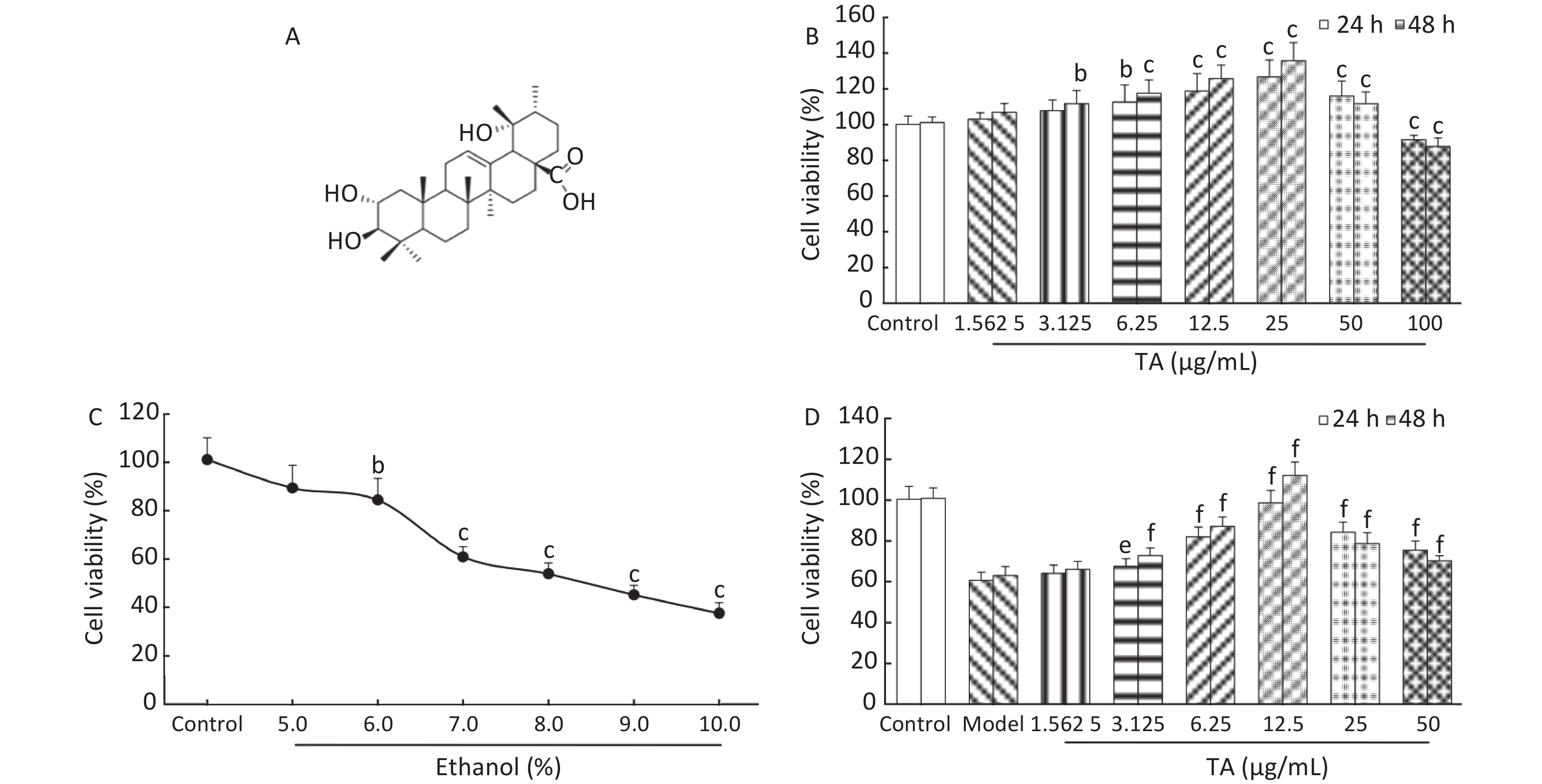
图 1
Fig.1 TA?s chemical structure and effects of different concentrations of TA and alcohol on the viabilities of GES-1 cells ($ \overline{x} $±s, n=5) A: TAʼs chemical structure; B: effect of TA on the viability of GES-1 cells; C: effect of ethanol on the cell viability of GES-1 cells; D: effect of ethanol on the cell viability of GES-1 cells induced by alcohol; bP<0.05, cP<0.01, compared with control group; eP<0.05, fP<0.01, compared with model group.
| Gene | F:(5′-3′) | R:(5′-3′) |
| Keap-1 | AGCGTGGAGAGAGATATGAGCC | ATCATCCGCCACTCATTCCT |
| Nrf2 | GGCTACGTTTCAGTCACTT | AGCTCCTCCCAAACTTGCTC |
| GCLC | TGGCAATGCAGTGGTGGAT | AACACACCTTCCTTCCCATTGA |
| HO-1 | TGGCAGCTGTCTCAAACCTC | TGCCGTTAAACACCTCCCTC |
| NQO1 | CAGTGGTTTGGAGTCCCTGC | CAGTGGTTTGGAGTCCCTGCA |
| TXNIP | CAGCAGTGCAAACAGACTTCGG | CTGAGGAAGCTCAAAGCCGAAC |
| NEK7 | ATGGAGGAGCCCGAGAAGAG | CTCCTGCTCCAGCTTCTTCC |
| NLRP3 | GCACTGTGTTTGGAGTGGGTTTCA | CCCGACAGTGGATATAGAACAGA |
| ASC | TGGATGCTCTGTACGGGAAG | CCAGGCTGGTGTGAAACTGAA |
| Caspase-1 | TTTCCGCAAGGTTCGATTTTCA | GGCATCTGCGCTCTACCATC |
| COX-1 | CTATCACTGGATCCGTTCAT | AAAGTTCCTACCCCCACCAAT |
| COX-2 | CAAATCCTTGCTGTTCCCACCCAT | GCACTGTGTTTGGAGTGGGTTTCA |
| iNOS | GCAATGGGCAGACTCTGAAG | CGATGTCATGAGCAAAGGCA |
| PGE2 | CTCCTTGCCTTTCACGATTT | ACAACAGAGGACTGAACGCAT |
| Bcl-2 | CATGTGTGTGGAGAGCGTCAA | GCCGGTTCAGGTACTCAGTCA |
| Bcl-xl | TCCTTGTCTACGCTTTCCACG | GGTCGCATTGTGGCCTTT |
| Bax | ATGGGCTGGACATTGGAC | GGGACATCAGTCGCTTCAG |
| Bad | CCAGAGTTTGAGCCGAGTGAG | GATGATGCTTGCCGGAGCC |
| Apaf-1 | AGGACACAGACGGTGGAAAC | ATCGCACTGACCAGCTTCTT |
| GAPDH | AACGGCACAGTCAAGGCTGA | ACG CCAGTAGACTCCACGACAT |
表 1
Table 1 Primer sequences
| Gene | F:(5′-3′) | R:(5′-3′) |
| Keap-1 | AGCGTGGAGAGAGATATGAGCC | ATCATCCGCCACTCATTCCT |
| Nrf2 | GGCTACGTTTCAGTCACTT | AGCTCCTCCCAAACTTGCTC |
| GCLC | TGGCAATGCAGTGGTGGAT | AACACACCTTCCTTCCCATTGA |
| HO-1 | TGGCAGCTGTCTCAAACCTC | TGCCGTTAAACACCTCCCTC |
| NQO1 | CAGTGGTTTGGAGTCCCTGC | CAGTGGTTTGGAGTCCCTGCA |
| TXNIP | CAGCAGTGCAAACAGACTTCGG | CTGAGGAAGCTCAAAGCCGAAC |
| NEK7 | ATGGAGGAGCCCGAGAAGAG | CTCCTGCTCCAGCTTCTTCC |
| NLRP3 | GCACTGTGTTTGGAGTGGGTTTCA | CCCGACAGTGGATATAGAACAGA |
| ASC | TGGATGCTCTGTACGGGAAG | CCAGGCTGGTGTGAAACTGAA |
| Caspase-1 | TTTCCGCAAGGTTCGATTTTCA | GGCATCTGCGCTCTACCATC |
| COX-1 | CTATCACTGGATCCGTTCAT | AAAGTTCCTACCCCCACCAAT |
| COX-2 | CAAATCCTTGCTGTTCCCACCCAT | GCACTGTGTTTGGAGTGGGTTTCA |
| iNOS | GCAATGGGCAGACTCTGAAG | CGATGTCATGAGCAAAGGCA |
| PGE2 | CTCCTTGCCTTTCACGATTT | ACAACAGAGGACTGAACGCAT |
| Bcl-2 | CATGTGTGTGGAGAGCGTCAA | GCCGGTTCAGGTACTCAGTCA |
| Bcl-xl | TCCTTGTCTACGCTTTCCACG | GGTCGCATTGTGGCCTTT |
| Bax | ATGGGCTGGACATTGGAC | GGGACATCAGTCGCTTCAG |
| Bad | CCAGAGTTTGAGCCGAGTGAG | GATGATGCTTGCCGGAGCC |
| Apaf-1 | AGGACACAGACGGTGGAAAC | ATCGCACTGACCAGCTTCTT |
| GAPDH | AACGGCACAGTCAAGGCTGA | ACG CCAGTAGACTCCACGACAT |

图 2
Fig.2 Effect of TA on migration ability of GES-1 cells induced by alcohol ($ \overline{x} $±s, n=5) A: cell scratch assay for detecting cell migration (scale bar=50 µm); B: transwell assay for detecting cell migration (scale bar=100 µm); cP<0.01, compared with control group; eP<0.05, fP<0.01, compared with model group.
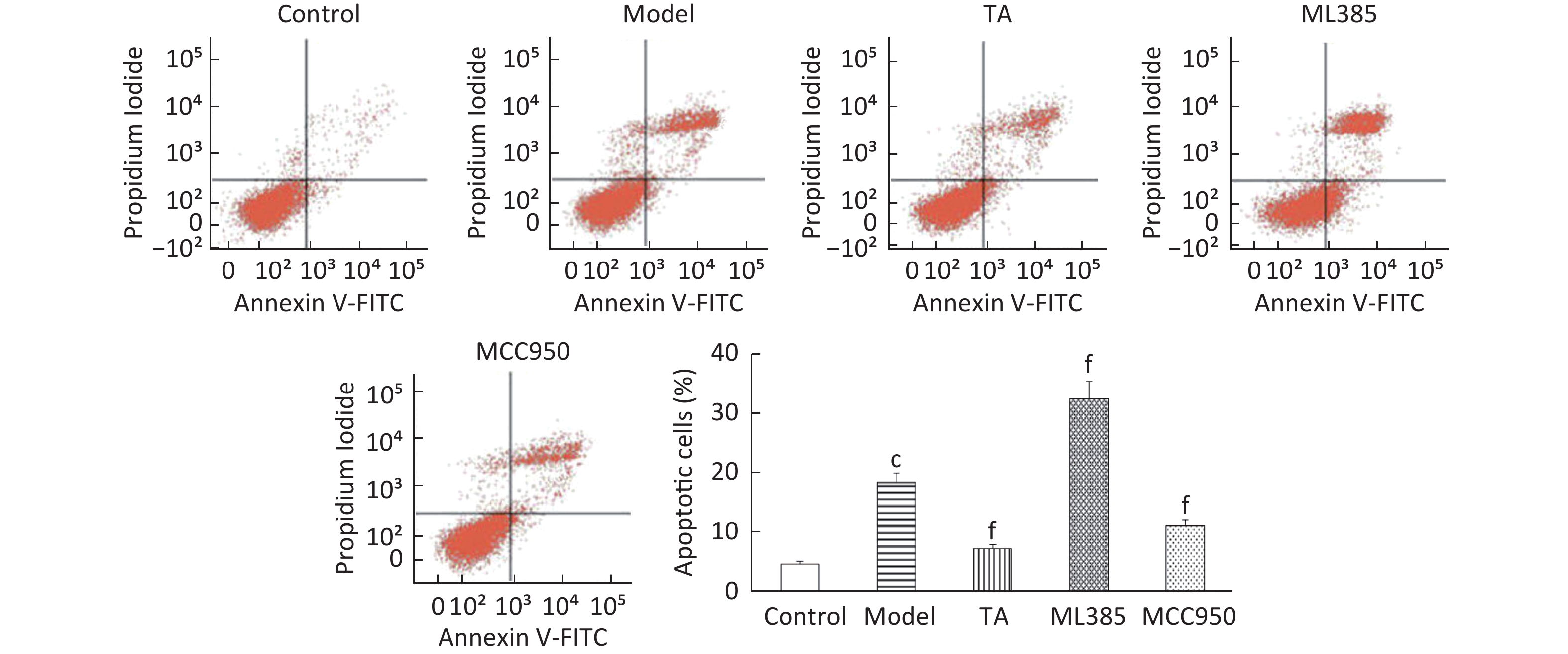
图 3
Fig.3 Effect of TA on apoptosis of GES-1 cells induced by alcohol ($ \overline{x} $±s, n=5) cP<0.01, compared with control group; fP<0.01, compared with model group.

图 4
Fig.4 Effects of TA on ROS level and MMP of GES-1 cells induced by alcohol ($ \overline{x} $±s, n=5) A: ROS levels (scale bar=100 µm); B:MMP (scale bar=100 µm); cP<0.01, compared with the control group; fP<0.01, compared with the model group.
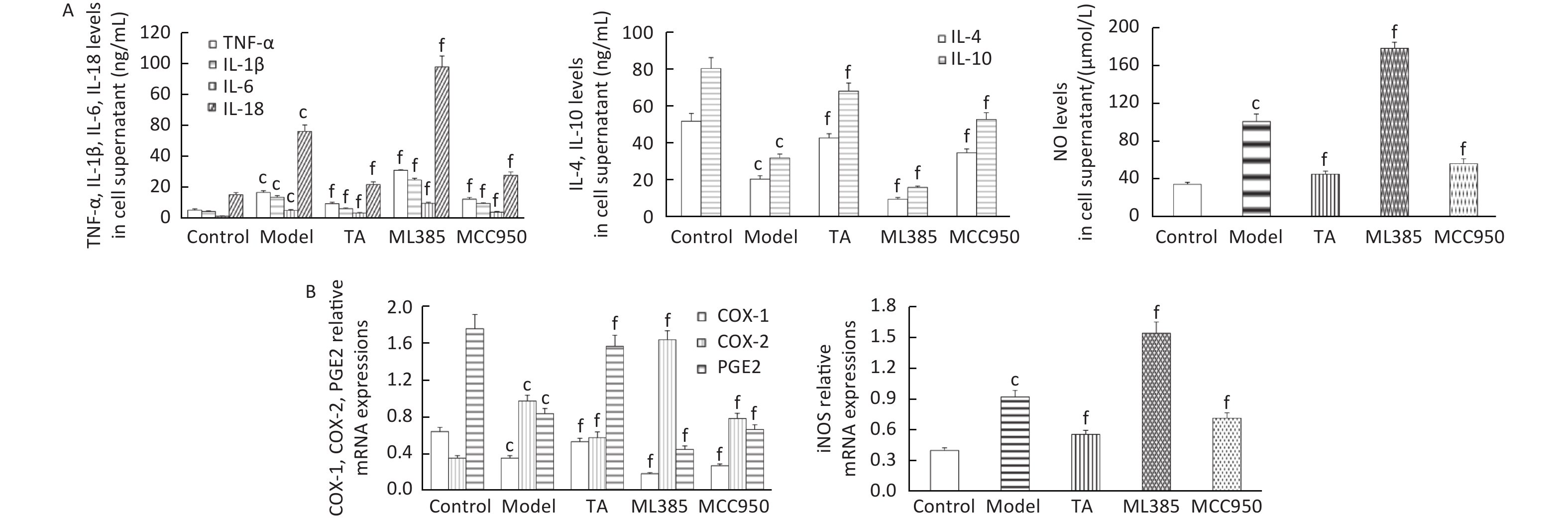
图 5
Fig.5 Effect of TA on cytokine levels of the supernatant of GES-1 cells and GES-1 cells induced by alcohol ($ \overline{x} $±s, n=5) A: cytokine levels in cell supernatant; B: mRNA expressions of cytokines in cells; cP<0.01, compared with control group; fP<0.01, compared with model group.
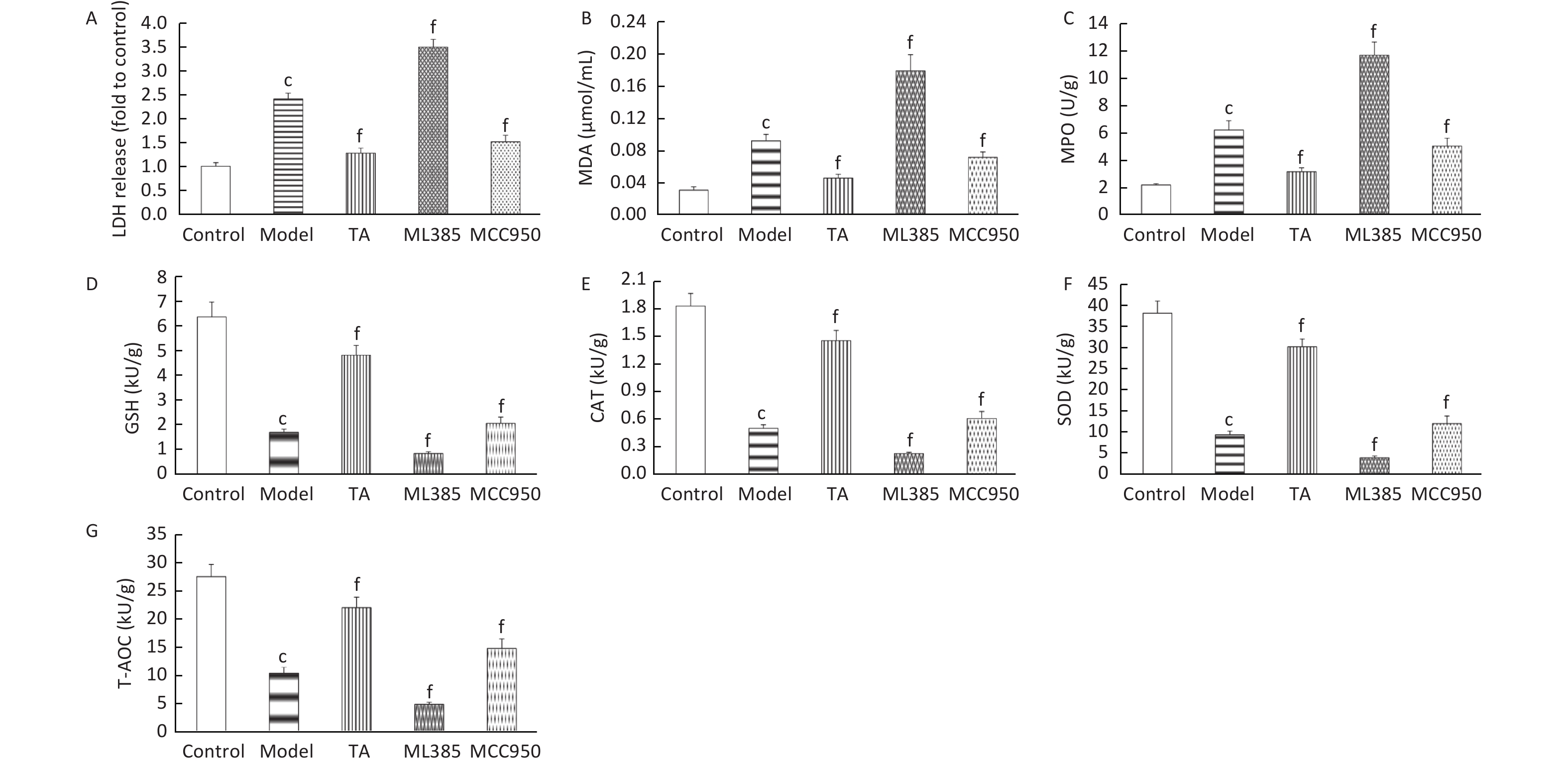
图 6
Fig.6 Effects of TA on LDH level and oxidative stress index of GES-1 cells induced by alcohol ($ \overline{x} $±s, n=5) A: LDH release; B: MDA levels; C-G: endogenous antioxidant enzyme activity; cP<0.01, compared with control group; fP<0.01, compared with model group.

图 7
Fig.7 Effect of TA on co localization of NLRP3 inflammasome in GES-1 cells induced by alcohol (scale bar=200 μm)

图 8
Fig.8 Effect of TA on the ultrastructure in GES-1 cells induced by alcohol ($ \overline{x} $±s, n=5) A: mitochondrial ultrastructure of GES-1 cells under electron microscopy; B: quantitative comparison of mitochondrial area; C: comparison of mitochondrial count, with each count defined within the size range of 4 μm × 4 μm; D: comparison of mitochondrial aspect ratio, i.e. the ratio of mitochondrial long axis to short axis; The red arrow points to the mitochondria, and the yellow arrow points to the nucleus, scale bar=2 μm; cP<0.01, compared with control group; fP<0.01, compared with model group.

图 9
Fig.9 Effects of TA on the relative gene mRNA and protein expressions Keap1/Nrf2 pathway in GES-1 cells induced by alcohol ($ \overline{x} $±s, n=5) A: relative gene mRNA expressions of Keap-1/Nrf2 pathway; B: relative gene protein expressions of Keap-1/Nrf2 pathway; cP<0.01, compared with control group; eP<0.05, fP<0.01, compared with model group.
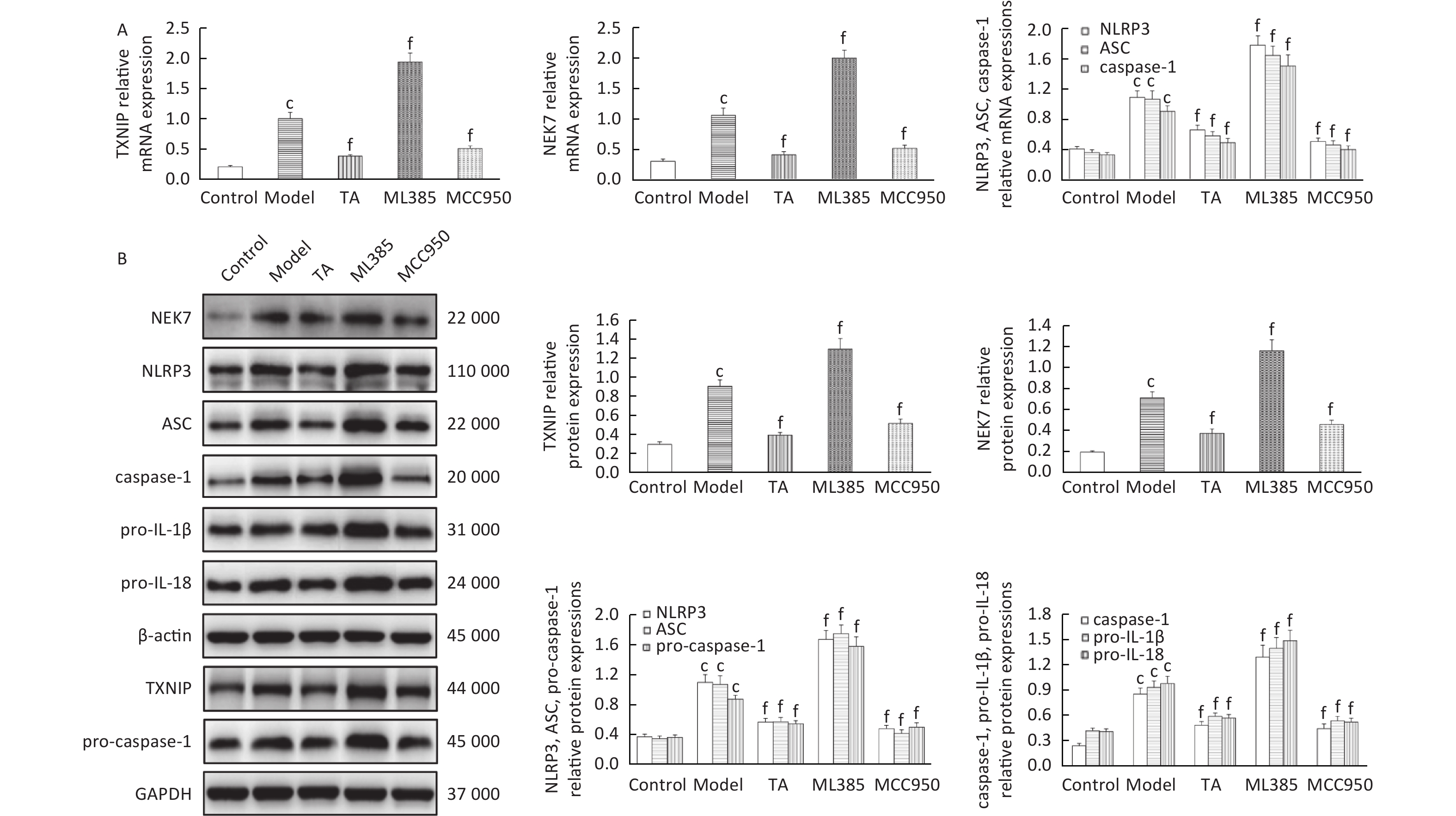
图 10
Fig.10 Effects of TA on the relative gene mRNA and protein expressions NLRP3 inflammasome pathway in GES-1 cells induced by alcohol ($ \overline{x} $±s, n=5) A: relative gene mRNA expressions of NLRP3 inflammasome pathway; B: relative gene protein expressions of NLRP3 inflammasome pathway; cP<0.01, compared with the control group; fP<0.01, compared with the model group.

图 11
Fig.11 Effects of TA on the relative gene mRNA and protein expressions of mitochondria-dependent apoptotic pathway in GES-1 cells induced by alcohol ($ \overline{x} $±s, n=5) A: cytochrome C content in cytosol and mitochondria; B: relative gene mRNA expressions of mitochondria-dependent apoptotic pathway; C: relative gene protein expressions of mitochondria-dependent apoptotic pathway; cP<0.01, compared with control group; fP<0.01, compared with model group.

图 12
Fig.12 The mechanism of TA regulating Keap-1/Nrf2 and NLRP3 inflammasome signaling pathways in protecting against ethanol induced GES-1 cell damage
| 1 |
Mehta G, Sheron N. No safe level of alcohol consumption-implications for global health[J]. J Hepatol, 2019, 70 (4): 587- 589.
doi: 10.1016/j.jhep.2018.12.021 |
| 2 |
Rumgay H, Shield K, Charvat H, et al. Global burden of cancer in 2020 attributable to alcohol consumption: a population-based study[J]. Lancet Oncol, 2021, 22 (8): 1071- 1080.
doi: 10.1016/S1470-2045(21)00279-5 |
| 3 |
Chang Y, Tian Y, Zhou D, et al. Gentiopicroside ameliorates ethanol-induced gastritis via regulating MMP-10 and pERK1/2 signaling[J]. Int Immunopharmacol, 2021, 90 (1): 107213.
doi: 10.1016/j.intimp.2020.107213 |
| 4 |
Chen Y, Zhao YM, Lu H, et al. Protective effect of short-chain fructo-oligosaccharides from chicory on alcohol-induced injury in GES-1 cells via Keap1/Nrf2 and NLRP3 inflammasome signaling pathways[J]. Front Nutr, 2024, 11 (5): 1374579.
doi: 10.3389/fnut.2024.1374579 |
| 5 |
Pereira Junior LC, Nascimento FG, Oliveira S, et al. Protective effect against gastric mucosa injury of a sulfated agaran from Acanthophora spicifera[J]. Carbohydr Polym, 2021, 261 (6): 117829.
doi: 10.1016/j.carbpol.2021.117829 |
| 6 |
Amirshahrokhi K, Khalili AR. Gastroprotective effect of 2-mercaptoethane sulfonate against acute gastric mucosal damage induced by ethanol[J]. Int Immunopharmacol, 2016, 34 (5): 183- 188.
doi: 10.1016/j.intimp.2016.03.006 |
| 7 |
Tamura M, Matsui H, Kaneko T, et al. Alcohol is an oxidative stressor for gastric epithelial cells: detection of superoxide in living cells[J]. J Clin Biochem Nutr, 2013, 53 (2): 75- 80.
doi: 10.3164/jcbn.13-32 |
| 8 |
Yu C, Mei XT, Zheng YP, et al. Gastroprotective effect of taurine zinc solid dispersions against absolute ethanol-induced gastric lesions is mediated by enhancement of antioxidant activity and endogenous PGE2 production and attenuation of NO production[J]. Eur J Pharmacol, 2014, 740 (10): 329- 336.
doi: 10.1016/j.ejphar.2014.07.014 |
| 9 |
Amirshahrokhi K, Khalili AR. The effect of thalidomide on ethanol-induced gastric mucosal damage in mice: involvement of inflammatory cytokines and nitric oxide[J]. Chem Biol Interact, 2015, 225 (1): 63- 69.
doi: 10.1016/j.cbi.2014.11.019 |
| 10 |
Li WF, Hao DJ, Fan T, et al. Protective effect of chelerythrine against ethanol-induced gastric ulcer in mice[J]. Chem Biol Interact, 2014, 208 (2): 18- 27.
doi: 10.1016/j.cbi.2013.11.011 |
| 11 |
Watanabe T, Higuchi K, Hamaguchi M, et al. Monocyte chemotactic protein-1 regulates leukocyte recruitment during gastric ulcer recurrence induced by tumor necrosis factor-alpha[J]. Am J Physiol Gastrointest Liver Physiol, 2004, 287 (4): G919- G928.
doi: 10.1152/ajpgi.00372.2003 |
| 12 |
Liu S, Yan W, Hu YB, et al. Shikonin alleviates endothelial cell injury induced by ox-LDL via AMPK/Nrf2/HO-1 signaling pathway[J]. Evid Based Complement Alternat Med, 2021, 2021 (12): 5881321.
doi: 10.1155/2021/5881321 |
| 13 |
Jensen JS, Fan X, Guidot DM. Alcohol causes alveolar epithelial oxidative stress by inhibiting the nuclear factor (erythroid-derived 2)-like 2-antioxidant response element signaling pathway[J]. Am J Respir Cell Mol Biol, 2013, 48 (4): 511- 517.
doi: 10.1165/rcmb.2012-0334OC |
| 14 |
Alzokaky AAM, Abdelkader EM, EL-Dessouki AM, et al. C-phycocyanin protects against ethanol-induced gastric ulcers in rats: Role of HMGB1/NLRP3/NF-κB pathway[J]. Basic Clin Pharmacol Toxicol, 2020, 127 (4): 265- 277.
doi: 10.1111/bcpt.13415 |
| 15 |
Ma CC, Zhang L, Huang QD, et al. Canolol alleviates ethanol-induced gastric ulcer by inhibiting p38 MAPK/NF-κB/NLRP3 pathway[J]. J Agric Food Chem, 2025, 73 (15): 9103- 9111.
doi: 10.1021/acs.jafc.5c00621 |
| 16 |
Arab HH, Eid AH, EL-Sheikh AAK, et al. Irbesartan reprofiling for the amelioration of ethanol-induced gastric mucosal injury in rats: role of inflammation, apoptosis, and autophagy[J]. Life Sci, 2022, 308 (12): 120939.
doi: 10.1016/j.lfs.2022.120939 |
| 17 | 国家药典委员会. 中华人民共和国药典(一部)[M]. 北京: 中国医药科技出版社, 2025: 64. |
| 18 |
He HB, Feng ML, Xu HY, et al. Total triterpenoids from the fruits of Chaenomeles speciosa exerted gastroprotective activities on indomethacin-induced gastric damage via modulating microRNA-423-5p-mediated TFF/NAG-1 and apoptotic pathways[J]. Food Funct, 2020, 11 (1): 662- 679.
doi: 10.1039/C9FO02322D |
| 19 |
Zhang YY, Xu HY, He HB, et al. Total triterpenes from the fruits of Chaenomeles speciosa (Sweet) Nakai protects against indomethacin-induced gastric mucosal injury: involvement of TFF1-mediated EGF/EGFR and apoptotic pathways[J]. J Pharm Pharmacol, 2020, 72 (3): 409- 423.
doi: 10.1111/jphp.13207 |
| 20 |
贺海波, 李小琴, 李小妹, 等. 木瓜总三萜和奥美拉唑联用对吲哚美辛诱导大鼠胃溃疡的治疗作用研究[J]. 中国中药杂志, 2019, 44 (11): 2338- 2347.
doi: 10.19540/j.cnki.cjcmm.20190320.404 |
| 21 |
贺海波, 张永峰, 李小妹, 等. 木瓜三萜对吲哚美辛致胃黏膜损伤小鼠胃酸分泌及胃黏膜屏障的影响[J]. 生物资源, 2017, 39 (3): 211- 216.
doi: 10.14188/j.ajsh.2017.03.010 |
| 22 | 覃慧林, 张永峰, 贺海波, 等. 木瓜三萜抗吲哚美辛诱导RGM-1细胞凋亡的作用[J]. 中国临床药理学与治疗学, 2016, 21 (12): 1347- 1353. |
| 23 |
He JY, Li J, Zhang YY, et al. Tormentic acid, a triterpenoid isolated from the fruits of Chaenomeles speciose, protected indomethacin-induced gastric mucosal lesion via modulating miR-139 and the CXCR4/CXCL12/PLC/PKC/Rho a/MLC pathway[J]. Pharm Biol, 2023, 61 (1): 1343- 1363.
doi: 10.1080/13880209.2023.2249526 |
| 24 |
贺海波, 朱丽金, 贺君宇, 等. 委陵菜酸对幽门螺杆菌诱导GES-1细胞损伤的保护作用[J]. 中草药, 2021, 52 (16): 4892- 4903.
doi: 10.7501/j.issn.0253-2670.2021.16.014 |
| 25 |
Duan ZW, Yu SS, Wang SP, et al. Protective effects of piperine on ethanol-induced gastric mucosa injury by oxidative stress inhibition[J]. Nutrients, 2022, 14 (22): 4744.
doi: 10.3390/nu14224744 |
| 26 |
Liu XM, Ma YM, Luo LJ, et al. Dihydroquercetin suppresses cigarette smoke induced ferroptosis in the pathogenesis of chronic obstructive pulmonary disease by activating Nrf2-mediated pathway[J]. Phytomedicine, 2022, 96 (2): 153894.
doi: 10.1016/j.phymed.2021.153894 |
| 27 |
Lin NH, Song X, Chen B, et al. Leptin is upregulated in epididymitis and promotes apoptosis and IL-1β production in epididymal epithelial cells by activating the NLRP3 inflammasome[J]. Int Immunopharmacol, 2020, 88 (11): 106901.
doi: 10.1016/j.intimp.2020.106901 |
| 28 |
赵芳卿, 杨雯雯, 殷玉杰, 等. 丹酚酸A激活AMPK及SIRT1减轻棕榈酸诱导的肝细胞脂毒性[J]. 中国临床药理学与治疗学, 2021, 26 (3): 241- 249.
doi: 10.12092/j.issn.1009-2501.2021.03.001 |
| 29 |
Sun WH, Liu F, Chen Y, et al. Hydrogen sulfide decreases the levels of ROS by inhibiting mitochondrial complex IV and increasing SOD activities in cardiomyocytes under ischemia/reperfusion[J]. Biochem Biophys Res Commun, 2012, 421 (2): 164- 169.
doi: 10.1016/j.bbrc.2012.03.121 |
| 30 |
贺君宇, 覃诗颖, 郑婧琪, 等. 木瓜总三萜和吲哚美辛联用对弗氏完全佐剂诱导大鼠类风湿性关节炎的治疗作用研究[J]. 中药药理与临床, 2024, 40 (8): 42- 50.
doi: 10.13412/j.cnki.zyyl.20240131.002 |
| 31 |
Fu JN, Wu H. Structural mechanisms of NLRP3 inflammasome assembly and activation[J]. Annu Rev Immunol, 2023, 41 (4): 301- 316.
doi: 10.1146/annurev-immunol-081022-021207 |
| 32 |
贺海波, 张永峰, 李小妹, 等. 木瓜三萜片与奥美拉唑胶囊联用治疗非甾体抗炎药致上消化道出血临床研究[J]. 中药药理与临床, 2017, 33 (2): 209- 212.
doi: 10.13412/j.cnki.zyyl.2017.02.060 |
| 33 |
贺海波, 李小妹, 李小琴, 等. 木瓜三萜与瑞巴派特联用治疗非甾体抗炎药致小肠损伤临床研究[J]. 中药药理与临床, 2018, 34 (4): 172- 176.
doi: 10.13412/j.cnki.zyyl.2018.04.041 |
| 34 |
张继红, 李小妹, 石孟琼, 等. 木瓜三萜联合美沙拉嗪对溃疡性结肠炎临床疗效、炎症因子及肠黏膜屏障保护因子的影响[J]. 中国临床药理学与治疗学, 2018, 23 (10): 1165- 1173.
doi: 10.12092/j.issn.1009-2501.2018.10.013 |
| 35 |
Pan JS, He SZ, Xu HZ, et al. Oxidative stress disturbs energy metabolism of mitochondria in ethanol-induced gastric mucosa injury[J]. World J Gastroenterol, 2008, 14 (38): 5857- 5867.
doi: 10.3748/wjg.14.5857 |
| 36 |
Miao ZF, Sun J X, Huang XZ, et al. Metaplastic regeneration in the mouse stomach requires a reactive oxygen species pathway[J]. Dev Cell, 2024, 59 (9): 1175- 1191.
doi: 10.1016/j.devcel.2024.03.002 |
| 37 |
Korbut E, Brzozowski T, Magierowski M. Carbon monoxide being hydrogen sulfide and nitric oxide molecular sibling, as endogenous and exogenous modulator of oxidative stress and antioxidative mechanisms in the digestive system[J]. Oxid Med Cell Longev, 2020, 2020 (4): 5083876.
doi: 10.1155/2020/5083876 |
| 38 |
Pu XN, Lu C, Yang X, et al. Unveiling the hepatoprotective mechanisms of Desmodium heterocarpon (L. ) DC: Novel flavonoid identification and Keap1/Nrf2 pathway activation[J]. Phytomedicine, 2025, 136 (1): 156323.
doi: 10.1016/j.phymed.2024.156323 |
| 39 | 焦蓓蓓, 栗田, 周蓓蓓, 等. 右归丸经Serpina3k调控Keap1/Nrf2信号通路抑制氧化应激诱发的颗粒细胞损伤 [J]. 中国中药杂志, 202, 50(4): 1111-1120. |
| 40 |
Shi Y, Sun Y, Sun XP, et al. Up-regulation of HO-1 by Nrf2 activation protects against palmitic acid-induced ROS increase in human neuroblastoma BE(2)-M17 cells[J]. Nutr Res, 2018, 52 (4): 80- 86.
doi: 10.1016/j.nutres.2018.02.003 |
| 41 |
Zhu JY, Wang HH, Chen F, et al. An overview of chemical inhibitors of the Nrf2-ARE signaling pathway and their potential applications in cancer therapy[J]. Free Radic Biol Med, 2016, 99 (10): 544- 556.
doi: 10.1016/j.freeradbiomed.2016.09.010 |
| 42 |
Wang SL, Huang J, Chen YT, et al. Qifu-yin activates the Keap1/Nrf2/ARE signaling and ameliorates synaptic injury and oxidative stress in APP/PS1 mice[J]. J Ethnopharmacol, 2024, 333 (10): 118497.
doi: 10.1016/j.jep.2024.118497 |
| 43 |
Li MQ, Lv RZ, Xu XM, et al. Tricholoma matsutake-derived peptides show gastroprotective effects against ethanol-induced acute gastric injury[J]. J Agric Food Chem, 2021, 69 (49): 1498514994.
doi: 10.1021/acs.jafc.1c07050.s001 |
| 44 |
Haneklaus M, O’neill LA. NLRP3 at the interface of metabolism and inflammation[J]. Immunol Rev, 2015, 265 (1): 53- 62.
doi: 10.1111/imr.12285 |
| 45 |
Hughes MM, O’neill LA. Metabolic regulation of NLRP3[J]. Immunol Rev, 2018, 281 (1): 88- 98.
doi: 10.1111/imr.12608 |
| 46 |
Liang HS, Liang YY, Wu LP, et al. Pretreatment with Citrus reticulata ʻChachiʼ polysaccharide alleviates alcohol-induced gastric ulcer by inhibiting NLRP3/ASC/caspase-1 and Nrf2/HO-1 signaling pathways[J]. Nutrients, 2025, 17 (13): 2062.
doi: 10.3390/nu17132062 |
| 47 |
Xie J, Fan L, Xiong LY, et al. Rabeprazole inhibits inflammatory reaction by inhibition of cell pyroptosis in gastric epithelial cells[J]. BMC Pharmacol Toxicol, 2021, 22 (1): 44.
doi: 10.1186/s40360-021-00509-7 |
| 48 |
Albalawi M, Khateeb S. Enhanced therapeutic efficacy of omeprazole nanosuspension in ethanol-induced gastric ulcer: a focus on oxidative stress and inflammatory pathways[J]. Biomolecules, 2025, 15 (6): 902.
doi: 10.3390/biom15060902 |
| 49 |
Hauge T, Persson J, Sjölund K. et al. Neuropeptides in the duodenal mucosa of chronic alcoholic heavy drinkers[J]. Alcohol Alcohol, 2001, 36 (3): 213- 218.
doi: 10.1093/alcalc/36.3.213 |
| 50 | Luo B, Cai MG, Huang HY, et al. A pectic polysaccharide from wax gourd peel improves ethanol-induced gastric ulcer injury in mice via the PI3K/AKT signaling pathway [J]. Int J Biol Macromol, 2025, 316(Pt 2): 144755. |
| 51 |
石孟琼, 贺君宇, 王晓, 等. 木瓜总三萜对幽门螺杆菌诱导小鼠胃炎的保护作用研究[J]. 中国中药杂志, 2021, 46 (18): 4782.
doi: 10.19540/j.cnki.cjcmm.20210521.401 |
| 52 |
He HB, Li XM, Yu HL, et al. Gastroprotective effect of araloside A on ethanol- and aspirin-induced gastric ulcer in mice: involvement of H+/K+-ATPase and mitochondrial-mediated signaling pathway[J]. J Nat Med, 2019, 73 (2): 339- 352.
doi: 10.1007/s11418-018-1256-0 |
| 53 | Zhang H, Hu YK, Wang H, et al. Cytoplasmic upregulation of Cyto c and AIF serve as biomarkers of mechanical asphyxia death[J]. Am J Transl Res, 2019, 11 (7): 4568- 4583. |
| 54 |
贺海波, 吴勉, 许杰, 等. 基于Drp1/HK1/NLRP3和线粒体凋亡信号通路研究香草酸改善异丙肾上腺素致小鼠心脏纤维化的作用机制[J]. 中国中药杂志, 2025, 50 (8): 2193- 2208.
doi: 10.19540/j.cnki.cjcmm.20240914.401 |
| [1] | 高米娜, 杨丽娅, 段尚英, 陈歆璐, 李小雅, 乔波, 吴月滢. 基于“肺-脑轴”探讨中医药防治高原疾病的研究进展[J]. 中国临床药理学与治疗学, 2026, 31(5): 675-682. |
| [2] | 曾亢, 邢维鑫, 牟青春. 广藿香醇在治疗缺血相关疾病的研究进展[J]. 中国临床药理学与治疗学, 2026, 31(5): 691-699. |
| [3] | 丁乾坤, 曾德洁, 孙夏青, 赵继利, 孙琪, 诸宏伟. 天然产物治疗孤独症谱系障碍的研究进展[J]. 中国临床药理学与治疗学, 2026, 31(5): 700-708. |
| [4] | 王玮辰, 马雅萍, 王萌, 李庆林, 程卉. 基于CYP7A1/FXR/SHP途径探究大黄素对胆汁淤积性肝损伤小鼠的治疗作用[J]. 中国临床药理学与治疗学, 2026, 31(2): 204-212. |
| [5] | 文一如, 杨金拉姆, 美嘎, 李娜, 录亚鹏, 张琰, 刘婕婷. 巨噬细胞极化与肠道菌群及其代谢产物在器官损伤中相关研究进展[J]. 中国临床药理学与治疗学, 2026, 31(1): 125-132. |
| [6] | 林艺燕, 吴月莹, 严锐, 吴东. 槲皮素防治急性肺损伤作用机制的研究进展[J]. 中国临床药理学与治疗学, 2025, 30(9): 1272-1280. |
| [7] | 杨焕然, 吴胜男, 高琴. 右美托咪定抑制Nrf2通路减轻大鼠脑缺血/再灌注损伤铁死亡[J]. 中国临床药理学与治疗学, 2025, 30(7): 921-928. |
| [8] | 杨冬梨, 李静, 段丽芳, 张文将, 李娜, 张红. 氧化应激相关调控蛋白Cygb抗纤维化作用的研究进展[J]. 中国临床药理学与治疗学, 2025, 30(5): 683-689. |
| [9] | 刘静, 侯凯, 张丽. 紫铆因改善非酒精性脂肪性肝炎及作用机制研究[J]. 中国临床药理学与治疗学, 2025, 30(3): 355-365. |
| [10] | 余孝海, 金宇, 孙敏琼, 从辉, 郭欠影. 杜鹃花总黄酮对脑缺血再灌注大鼠脑氧化应激损伤的改善作用[J]. 中国临床药理学与治疗学, 2025, 30(2): 216-221. |
| [11] | 任梦涵, 姚建莉, 杨丽霞, 舒畅. 镰形棘豆提取物调节PI3K/AKT/Nrf2通路改善高糖诱导足细胞氧化损伤的作用及机制研究[J]. 中国临床药理学与治疗学, 2025, 30(10): 1361-1373. |
| [12] | 武雨幸, 李祎, 岳晓晴, 张晨露, 张燕平. 安宫牛黄丸联合常规治疗对痰热内闭型脑出血患者神经功能恢复的影响:基于AMPK-PGC1α-NRF2通路的随机对照研究[J]. 中国临床药理学与治疗学, 2025, 30(10): 1391-1399. |
| [13] | 雷国杰, 于艳华, 刘影超, 边文霞, 杜璟, 童向民. PX-12通过氧化应激诱导肝癌细胞凋亡的作用机制[J]. 中国临床药理学与治疗学, 2024, 29(9): 961-967. |
| [14] | 杨娟娟, 李浩林, 杨天宁, 程伟刚, 王振东, 金芳梅, 年芳红, 苏小军, 王家强, 王海平, 王海东. 祖师麻膏药对胶原诱导型关节炎小鼠炎症及骨破坏的抑制作用[J]. 中国临床药理学与治疗学, 2024, 29(9): 979-987. |
| [15] | 李泽朋, 顾文强, 陈晓, 王银华, 李先伟. 依帕司他对放射性肺炎小鼠线粒体氧化应激损伤的保护作用[J]. 中国临床药理学与治疗学, 2024, 29(7): 809-818. |
| 阅读次数 | ||||||
|
全文 |
|
|||||
|
摘要 |
|
|||||