中国临床药理学与治疗学 ›› 2026, Vol. 31 ›› Issue (10): 1400-1409.doi: 10.12092/j.issn.1009-2501.2026.10.011
• 综述与讲座 • 上一篇
张思源( ), 王祥麒, 尹怡()
收稿日期:2025-12-17
修回日期:2026-03-25
出版日期:2026-10-26
发布日期:2026-11-11
通讯作者:
尹怡
E-mail:1370967149@qq.com;413672306@qq.com
作者简介:张思源,男,硕士,研究方向为中医药防治恶性肿瘤。E-mail:基金资助:
Siyuan ZHANG(), Xiangqi WANG, Yi YIN()
Received:2025-12-17
Revised:2026-03-25
Online:2026-10-26
Published:2026-11-11
Contact:
Yi YIN
E-mail:1370967149@qq.com;413672306@qq.com
摘要:
肺癌(lung cancer,LC)是全球高发的癌症类型,主要分为小细胞肺癌(small cell lung cancer,SCLC)和非小细胞肺癌(non-small cell lung cancer,NSCLC)。超过50%的NSCLC患者在初次诊断时已经发生转移,晚期治疗方案较为有限。免疫疗法的出现成为重要突破,其中PD-1/PD-L1抑制剂通过阻断PD-1与PD-L1的结合,恢复T细胞活性,从而抑制肿瘤的免疫逃逸。天然产物PD-1/PD-L1抑制剂(PD-1/PD-L1 inhibitors of natural product,PDNP)具有口服生物利用度好、组织渗透性强、成本低廉等优势,能够调节肿瘤微环境,增强免疫治疗的敏感性。本文综述了PDNP在治疗肺癌领域中的最新进展,主要包括:黄酮类、生物碱类、萜类以及其他类化合物,通过直接或间接的调控PD-1/PD-L1通路,激活T细胞从而抗肺癌作用机制,主要作用机制包括:直接阻断PD-1/PD-L1的结合;通过调节上游信号通路Janus激酶2/信号转导子和转录激活子3(Janus kinase 2/signal transducer and activator of transcription 3,JAK2/STAT3)、核因子κB(nuclear factor kappa B,NF-κB)、磷脂酰肌醇3-激酶/蛋白激酶B/雷帕霉素靶蛋白(phosphatidylinositol 3-kinase/protein kinase B/mammalian target of rapamycin,PI3K/AKT/mTOR)等;调节肿瘤微环境间接调控PD-1/PD-L1通路的激活状态。 本文通过总结多种中药及其有效成分在调节PD-1/PD-L1通路方面的作用,探讨其抗肺癌效果及协同减弱化疗药物耐药性的机制,旨在为肺癌治疗和逆转耐药提供新的思路,同时也为开发新型抗肺癌药物提供参考。
中图分类号:
张思源, 王祥麒, 尹怡. 中药及天然产物通过PD-1/PD-L1途径增强免疫疗法干预肺癌研究进展[J]. 中国临床药理学与治疗学, 2026, 31(10): 1400-1409.
Siyuan ZHANG, Xiangqi WANG, Yi YIN. Research progress on enhancement of immunotherapy sensitivity of lung cancer by PD-1/PD-L1 pathway with traditional Chinese medicine and natural products[J]. Chinese Journal of Clinical Pharmacology and Therapeutics, 2026, 31(10): 1400-1409.
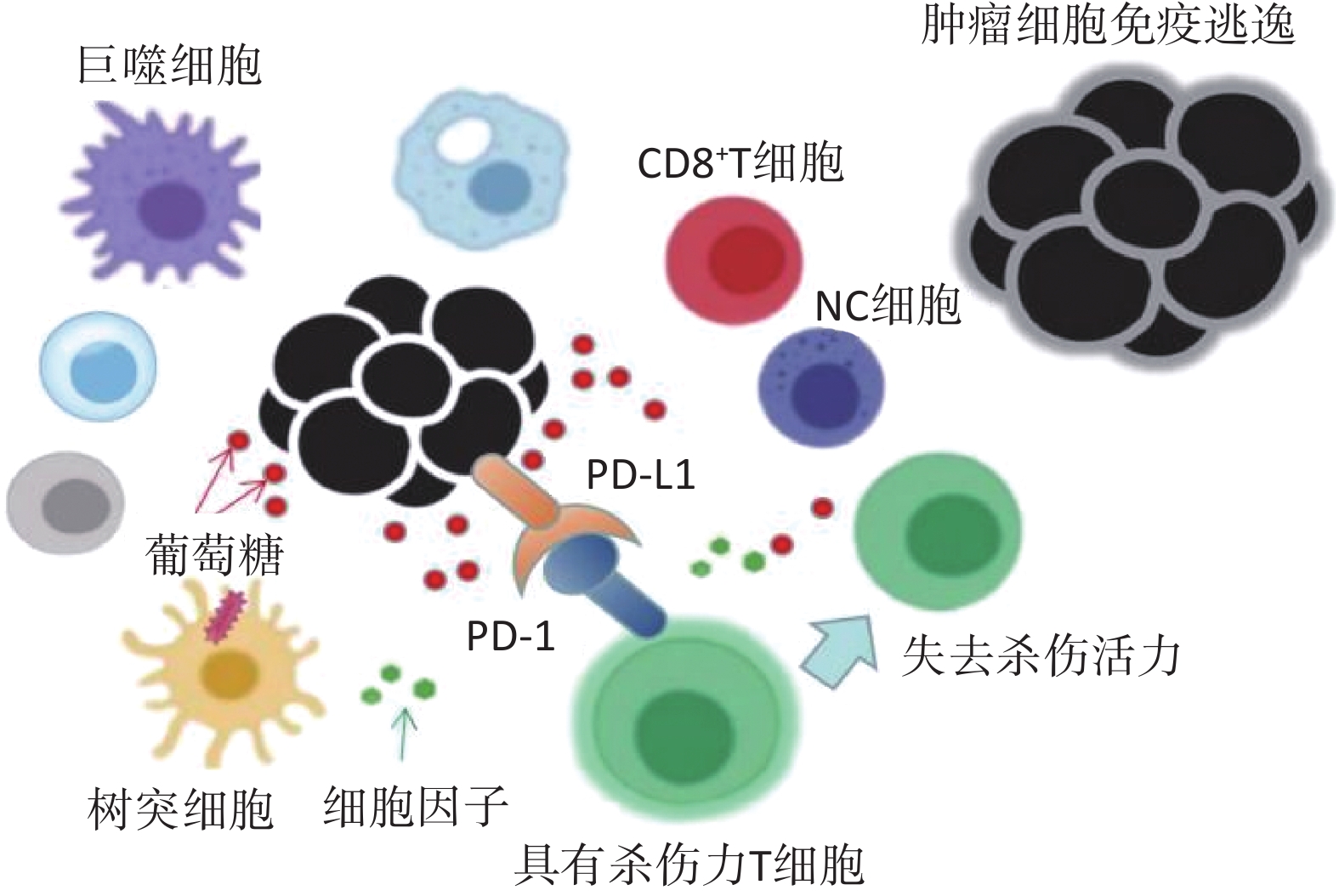
图 1 抗PD-1治疗的反应受限造成肿瘤免疫逃逸
Fig.1 The limited response to anti-PD-1 treatment leads to tumor immune escape
| 编号 | 天然产物 | 分子式 | 来源 | 细胞动物模型 | 作用机制 | 参考文献 |
| 1 | 山奈酚 | C15H10O6 | 广泛存在于蔬菜、药用植物和水果中 | A549与Lewis肺癌荷瘤小鼠 | 通过直接结合PD-1蛋白,抑制PD-1/PD-L1相互作用从而逆转免疫抑制 | [ |
| 2 | 甘草查酮A | C21H22O4 | 甘草 | A549和 H1299细胞 | 通过清除ROS可有效抑制IFN-γ诱导的PD-L1表达 | [ |
| 3 | 水飞蓟素 | C25H22O10 | 从菊科药用植物水飞蓟种子的种皮 | H3122细胞 | 抑制免疫检查点调节因子PD-L1和EMT调节因子:SLUG, VIM,CD44 | [ |
| 4 | 木犀草素 | C15H10O6 | 广泛存在于蔬菜、药用植物和水果中 | H358细胞异种移植物小鼠肺癌 模型;H358、H460、 H2122和A549细胞 | 阻断PD-1/PD-L1轴,下调PDL1表达 | [ |
| 5 | 槲皮素 | C15H10O7 | 广泛存在于蔬菜、药用植物和水果中 | NCI-H460 cells细胞系、Lewis肺癌荷瘤小鼠 | 通过抑制PD-1/PD-L1相互作用来减弱PD-L1对T细胞的抑制作用 | [ |
| 6 | (-)表没食子儿茶素没食子酸酯 | C22H18O11 | 存在中国绿茶中 | A549、Lu99细胞系4-甲基亚硝基吡啶1-丁酮诱导的A/J肺癌小鼠模型 | 抑制IFN-γ和EGF诱导的非小细胞肺癌细胞中PD-L1的表达 | [ |
| 7 | 杨梅素 | C15H10O8 | 杨梅科、蓼科、报春花科、松科和角豆科植物 | A549、H1650和 H460细胞 | 逆转Jurkat-PD-1 T细胞存活率 | [ |
| 8 | 金合欢素 | C16H12O5 | 广泛存在于金合欢树、洋槐树、大蓟、密蒙花、菊花 | A549和H460细胞系、A549异种移植小鼠肺癌模型 | 上调miR-34a的表达水平,下调体外 NSCLC细胞和体内肿瘤的PD-L1表达水平 | [ |
表 1 8种黄酮类化合物的基础信息与作用机制
Table 1 Basic information and mechanism of action of eight flavonoids
| 编号 | 天然产物 | 分子式 | 来源 | 细胞动物模型 | 作用机制 | 参考文献 |
| 1 | 山奈酚 | C15H10O6 | 广泛存在于蔬菜、药用植物和水果中 | A549与Lewis肺癌荷瘤小鼠 | 通过直接结合PD-1蛋白,抑制PD-1/PD-L1相互作用从而逆转免疫抑制 | [ |
| 2 | 甘草查酮A | C21H22O4 | 甘草 | A549和 H1299细胞 | 通过清除ROS可有效抑制IFN-γ诱导的PD-L1表达 | [ |
| 3 | 水飞蓟素 | C25H22O10 | 从菊科药用植物水飞蓟种子的种皮 | H3122细胞 | 抑制免疫检查点调节因子PD-L1和EMT调节因子:SLUG, VIM,CD44 | [ |
| 4 | 木犀草素 | C15H10O6 | 广泛存在于蔬菜、药用植物和水果中 | H358细胞异种移植物小鼠肺癌 模型;H358、H460、 H2122和A549细胞 | 阻断PD-1/PD-L1轴,下调PDL1表达 | [ |
| 5 | 槲皮素 | C15H10O7 | 广泛存在于蔬菜、药用植物和水果中 | NCI-H460 cells细胞系、Lewis肺癌荷瘤小鼠 | 通过抑制PD-1/PD-L1相互作用来减弱PD-L1对T细胞的抑制作用 | [ |
| 6 | (-)表没食子儿茶素没食子酸酯 | C22H18O11 | 存在中国绿茶中 | A549、Lu99细胞系4-甲基亚硝基吡啶1-丁酮诱导的A/J肺癌小鼠模型 | 抑制IFN-γ和EGF诱导的非小细胞肺癌细胞中PD-L1的表达 | [ |
| 7 | 杨梅素 | C15H10O8 | 杨梅科、蓼科、报春花科、松科和角豆科植物 | A549、H1650和 H460细胞 | 逆转Jurkat-PD-1 T细胞存活率 | [ |
| 8 | 金合欢素 | C16H12O5 | 广泛存在于金合欢树、洋槐树、大蓟、密蒙花、菊花 | A549和H460细胞系、A549异种移植小鼠肺癌模型 | 上调miR-34a的表达水平,下调体外 NSCLC细胞和体内肿瘤的PD-L1表达水平 | [ |
| 编号 | 天然产物 | 分子式 | 来源 | 细胞动物模型 | 作用机制 | 参考文献 |
| 1 | 小檗碱 | C20H18NO4 | 黄连 Coptis chinensis Franch | A549,H157,H358, H460,H1299,H1975,LLC和Jurkat(E6-1)细胞系,LLC皮下瘤小鼠与BALB/c裸鼠 | 通过降低癌细胞中PD-L1的水平,增强肿瘤细胞对共培养T细胞的敏感性 | [ |
| 2 | 石斛碱 | C16H25NO2 | 金钗石斛Dendrobium nobile Lindl. | A549细胞系、 BALB/c裸鼠 | 显著降低肿瘤组织中PD-L1+、CD11b+、CD25+FOXP3+细胞百分比,提高CD4+、CD8+细胞百分比,提高肿瘤组织中IL-2、IFN-γ、TGF-β水平 | [ |
| 3 | 吴茱萸次碱 | C18H13N3O | 吴茱萸 Euodia rutaecarpa(Juss.)Benth. | A549和H358细胞系 | 显著激活STING 信号通路,降低PD-L1在癌细胞的表达,激活CD8+T细胞 | [ |
| 4 | 汉防已乙素 | C37H40N2O6 | 粉防己 Stephania tetrandra S. Moore | NCI-H1299、NCI-H1975、A549、NCI-H1650和 NCI-H446细胞系 | 联合PD-1阻断,增加CD8+T细胞介导的细胞毒性 | [ |
| 5 | 苦参总碱 | C15H24N2O | 苦参 Sophora flavescens Ait. | H1299和LLC细胞系、LLC皮下瘤小鼠模型 | 增强了抗PD-L1/TGF-β双特异性抗体,抑制自噬和活性氧的产生,从而诱导肿瘤细胞凋亡,阻止肿瘤生长 | [ |
| 6 | 苦豆碱 | C15H24N2 | 苦豆子 Sophora alopecuroides L | H1299和LLC细胞系、LLC皮下瘤小鼠模型 | 增强了抗PD-L1/TGF-β双特异性抗体,抑制自噬和活性氧的产生,从而诱导肿瘤细胞凋亡,阻止肿瘤生长 | [ |
| 7 | 菲卡普临辛 | C18H11ClN2O | 海绵 Spongia | A549细胞系、LLC小鼠模型 | 诱导细胞凋亡和铁死亡,在体内提高抗PD-1免疫治疗的敏感性,从而发挥抗癌作用 | [ |
表 2 7种生物碱类化合物的基础信息与作用机制
Table 2 Basic information and mechanism of action of seven alkaloid compounds
| 编号 | 天然产物 | 分子式 | 来源 | 细胞动物模型 | 作用机制 | 参考文献 |
| 1 | 小檗碱 | C20H18NO4 | 黄连 Coptis chinensis Franch | A549,H157,H358, H460,H1299,H1975,LLC和Jurkat(E6-1)细胞系,LLC皮下瘤小鼠与BALB/c裸鼠 | 通过降低癌细胞中PD-L1的水平,增强肿瘤细胞对共培养T细胞的敏感性 | [ |
| 2 | 石斛碱 | C16H25NO2 | 金钗石斛Dendrobium nobile Lindl. | A549细胞系、 BALB/c裸鼠 | 显著降低肿瘤组织中PD-L1+、CD11b+、CD25+FOXP3+细胞百分比,提高CD4+、CD8+细胞百分比,提高肿瘤组织中IL-2、IFN-γ、TGF-β水平 | [ |
| 3 | 吴茱萸次碱 | C18H13N3O | 吴茱萸 Euodia rutaecarpa(Juss.)Benth. | A549和H358细胞系 | 显著激活STING 信号通路,降低PD-L1在癌细胞的表达,激活CD8+T细胞 | [ |
| 4 | 汉防已乙素 | C37H40N2O6 | 粉防己 Stephania tetrandra S. Moore | NCI-H1299、NCI-H1975、A549、NCI-H1650和 NCI-H446细胞系 | 联合PD-1阻断,增加CD8+T细胞介导的细胞毒性 | [ |
| 5 | 苦参总碱 | C15H24N2O | 苦参 Sophora flavescens Ait. | H1299和LLC细胞系、LLC皮下瘤小鼠模型 | 增强了抗PD-L1/TGF-β双特异性抗体,抑制自噬和活性氧的产生,从而诱导肿瘤细胞凋亡,阻止肿瘤生长 | [ |
| 6 | 苦豆碱 | C15H24N2 | 苦豆子 Sophora alopecuroides L | H1299和LLC细胞系、LLC皮下瘤小鼠模型 | 增强了抗PD-L1/TGF-β双特异性抗体,抑制自噬和活性氧的产生,从而诱导肿瘤细胞凋亡,阻止肿瘤生长 | [ |
| 7 | 菲卡普临辛 | C18H11ClN2O | 海绵 Spongia | A549细胞系、LLC小鼠模型 | 诱导细胞凋亡和铁死亡,在体内提高抗PD-1免疫治疗的敏感性,从而发挥抗癌作用 | [ |
| 编号 | 天然产物 | 分子式 | 来源 | 细胞动物模型 | 作用机制 | 参考文献 |
| 1 | 人参皂苷Rg3 | C42H72O13 | 人参 Panax ginseng C.A.Mey | A549和A549/DDP 细胞系 | NF-κB p65和Akt | [ |
| 2 | 人参皂苷RH2 | C36H62O8 | 人参 Panax ginseng C.A.Mey | A549细胞系 | 影响PD-1和PD-L1的表达抑制免疫逃逸,降低肺癌A549细胞的行为 | [ |
| 3 | 人参皂苷RK1 | C42H70O12 | 人参 Panax ginseng C.A.Mey | A549细胞系 | 通过抑制NF-κB信号传导降低肺腺癌细胞中PD-L1的高表达 | [ |
| 4 | 人参皂苷Rb1 | C54H92O23 | 人参 Panax ginseng C.A.Mey | PI3K突变的A549细胞系、344SQ_R cells耐药细胞系,皮下瘤裸鼠 | 调控PI3K/AKT/mTOR信号通路并诱导免疫微环境重塑 | [ |
| 5 | 桔梗皂苷D | C57H92O28 | 桔梗属大花 (雅克)A.DC | LLC皮下瘤小鼠模型 | 降低PD-1 表达,缓解 CD8?T细胞耗竭 | [ |
| 6 | 三七皂苷R1 | C47H80O18 | 三七 Panax notoginseng (Burk.) F.H. | LLC皮下瘤小鼠模型 | 通过SERPINE1下调来增强化疗卡铂和免疫检查点阻断剂 | [ |
| 7 | 黄芪甲苷IV | C41H68O14 | 黄芪 Astragalus membranaceus(Fisch.)Bge. var. | LLC皮下瘤小鼠模型 | 影响肿瘤内TME和促生存信号通路的免疫细胞浸润,增强抗PD-1的抗肿瘤作用 | [ |
| 8 | 罗汉松内酯E | C19H24O6 | 罗汉松 Podocarpus macrophyllus (Thunb.) D. Don | LLC and 4T1细胞系、4T1皮下肿瘤模型 | 通过激活JNK-c-Jun轴上调肺癌细胞中PD-L1的表达 | [ |
表 3 8种萜类化合物的基础信息与作用机制
Table 3 Basic information and mechanism of action of 8 terpenoids
| 编号 | 天然产物 | 分子式 | 来源 | 细胞动物模型 | 作用机制 | 参考文献 |
| 1 | 人参皂苷Rg3 | C42H72O13 | 人参 Panax ginseng C.A.Mey | A549和A549/DDP 细胞系 | NF-κB p65和Akt | [ |
| 2 | 人参皂苷RH2 | C36H62O8 | 人参 Panax ginseng C.A.Mey | A549细胞系 | 影响PD-1和PD-L1的表达抑制免疫逃逸,降低肺癌A549细胞的行为 | [ |
| 3 | 人参皂苷RK1 | C42H70O12 | 人参 Panax ginseng C.A.Mey | A549细胞系 | 通过抑制NF-κB信号传导降低肺腺癌细胞中PD-L1的高表达 | [ |
| 4 | 人参皂苷Rb1 | C54H92O23 | 人参 Panax ginseng C.A.Mey | PI3K突变的A549细胞系、344SQ_R cells耐药细胞系,皮下瘤裸鼠 | 调控PI3K/AKT/mTOR信号通路并诱导免疫微环境重塑 | [ |
| 5 | 桔梗皂苷D | C57H92O28 | 桔梗属大花 (雅克)A.DC | LLC皮下瘤小鼠模型 | 降低PD-1 表达,缓解 CD8?T细胞耗竭 | [ |
| 6 | 三七皂苷R1 | C47H80O18 | 三七 Panax notoginseng (Burk.) F.H. | LLC皮下瘤小鼠模型 | 通过SERPINE1下调来增强化疗卡铂和免疫检查点阻断剂 | [ |
| 7 | 黄芪甲苷IV | C41H68O14 | 黄芪 Astragalus membranaceus(Fisch.)Bge. var. | LLC皮下瘤小鼠模型 | 影响肿瘤内TME和促生存信号通路的免疫细胞浸润,增强抗PD-1的抗肿瘤作用 | [ |
| 8 | 罗汉松内酯E | C19H24O6 | 罗汉松 Podocarpus macrophyllus (Thunb.) D. Don | LLC and 4T1细胞系、4T1皮下肿瘤模型 | 通过激活JNK-c-Jun轴上调肺癌细胞中PD-L1的表达 | [ |
| 编号 | 天然产物 | 分子式 | 分类 | 来源 | 细胞动物模型 | 作用机制 | 参考文献 |
| 1 | 白藜芦醇 | C14H12O3 | 多酚类 | 广泛存在于蔬菜、药用植物和水果中 | A549和H1299 细胞系 | 通过激活Wnt信号通路来调节PD-L1的表达,从而抑制抗肿瘤免疫 | [ |
| 2 | 醉茄素A | C28H38O6 | 甾体内酯类 | 印 度 人 参 Withania somnifera (L.)Duna | Lewis肺癌细胞小鼠模型;H1650 和 A549细胞 | 可激活NSCLC细胞的ICD通路,从而上调PD-L1的表达 | [ |
| 3 | 红景天苷 | C14H20O7 | 苯丙烷类苷类 | 红景天 | A549异种移植小鼠肺癌模型,A549细胞 | 抑制PD-L1,促进CD8+T细胞的免疫活性 | [ |
| 4 | 和厚朴酚 | C18H18O2 | 联苯型木脂素 | 木兰属植物 | H460和A549 以及小鼠 Lewis肺癌细胞系、 尾静脉注射LL2细胞建立小鼠肺癌模型 | Lipo-HNK和抗PD-1疗法的组合导致CD8+T细胞浸润和激活增加,从而增强整体抗肿瘤免疫反应 | [ |
| 5 | 三白脂素A | C42H52O11 | 木脂素类 | 龙脑 Saururus cernuus L. | A549细胞系、A549 异种移植小鼠肺癌模型 | 与抗PD-1抗体协同发挥抗肿瘤活性 | [ |
表 4 5种其他类化合物的基础信息与作用机制
Table 4 Basic information and mechanism of action of five other types of compounds
| 编号 | 天然产物 | 分子式 | 分类 | 来源 | 细胞动物模型 | 作用机制 | 参考文献 |
| 1 | 白藜芦醇 | C14H12O3 | 多酚类 | 广泛存在于蔬菜、药用植物和水果中 | A549和H1299 细胞系 | 通过激活Wnt信号通路来调节PD-L1的表达,从而抑制抗肿瘤免疫 | [ |
| 2 | 醉茄素A | C28H38O6 | 甾体内酯类 | 印 度 人 参 Withania somnifera (L.)Duna | Lewis肺癌细胞小鼠模型;H1650 和 A549细胞 | 可激活NSCLC细胞的ICD通路,从而上调PD-L1的表达 | [ |
| 3 | 红景天苷 | C14H20O7 | 苯丙烷类苷类 | 红景天 | A549异种移植小鼠肺癌模型,A549细胞 | 抑制PD-L1,促进CD8+T细胞的免疫活性 | [ |
| 4 | 和厚朴酚 | C18H18O2 | 联苯型木脂素 | 木兰属植物 | H460和A549 以及小鼠 Lewis肺癌细胞系、 尾静脉注射LL2细胞建立小鼠肺癌模型 | Lipo-HNK和抗PD-1疗法的组合导致CD8+T细胞浸润和激活增加,从而增强整体抗肿瘤免疫反应 | [ |
| 5 | 三白脂素A | C42H52O11 | 木脂素类 | 龙脑 Saururus cernuus L. | A549细胞系、A549 异种移植小鼠肺癌模型 | 与抗PD-1抗体协同发挥抗肿瘤活性 | [ |

图 2 中药及天然产物通过PD-1/PD-L1途径干预肺癌代表性机制图
Fig.2 The representative mechanism diagram of traditional Chinese medicine and natural products intervening in lung cancer through the PD-1/PD-L1 pathway
| 1 | Bray F, Laversanne M, Sung H, et al. Global cancer statistics 2022: GLOBOCAN estimates of incidence and mortality worldwide for 36 cancers in 185 countries[J]. CA Cancer J Clin, 2024, 74 (3): 229- 263. |
| 2 |
Eng L, Evans WK, Eisele M, et al. The international association for the study of lung cancer staging project: the impact of smoking status on lung cancer staging in the ninth edition of the TNM classification[J]. J Thorac Oncol, 2025, 20 (10): 1441- 1458.
doi: 10.1016/j.jtho.2025.07.002 |
| 3 |
Wang B, Guo H, Xu H, et al. Research progress and challenges in the treatment of central nervous system metastasis of non-small cell lung cancer[J]. Cells, 2021, 10 (10): 2620.
doi: 10.3390/cells10102620 |
| 4 |
李松珍, 邵天航, 姚舒洋. 非小细胞肺癌寡转移的研究进展及挑战[J]. 中国肺癌杂志, 2025, 28 (6): 467- 471.
doi: 10.3779/j.issn.1009-3419.2025.102.22 |
| 5 | Pang K, Shi ZD, Wei LY, et al. Research progress of therapeutic effects and drug resistance of immunotherapy based on PD-1/PD-L1 blockade[J]. Drug Resist Updat, 2022, 66, 100907. |
| 6 |
Kluger H, Barrett JC, Gainor JF, et al. Society for immunotherapy of cancer (SITC) consensus definitions for resistance to combinations of immune checkpoint inhibitors[J]. J Immunother Cancer, 2023, 11 (3): e005921.
doi: 10.1136/jitc-2022-005921 |
| 7 |
Ri MH, Ma J, Jin X. Development of natural products for anti-PD-1/PD-L1 immunotherapy against cancer[J]. J Ethnopharmacol, 2021, 281, 114370.
doi: 10.1016/j.jep.2021.114370 |
| 8 |
Li L, Pu H, Zhang X, et al. Resistance to PD-1/PD-L1 immune checkpoint blockade in advanced non-small cell lung cancer[J]. Crit Rev Oncol Hematol, 2025, 209, 104683.
doi: 10.1016/j.critrevonc.2025.104683 |
| 9 |
Zhou Y, Chen C, Zhang X, et al. Immune-checkpoint inhibitor plus chemotherapy versus conventional chemotherapy for first-line treatment in advanced non-small cell lung carcinoma: a systematic review and meta-analysis[J]. J Immunother Cancer, 2018, 6 (1): 155.
doi: 10.1186/s40425-018-0477-9 |
| 10 |
Li X, Yan S, Yang J, et al. Efficacy and safety of PD-1/PD-L1 inhibitors plus chemotherapy versus PD-1/PD-L1 inhibitors in advanced non-small cell lung cancer: a network analysis of randomized controlled trials[J]. Front Oncol, 2021, 10, 574752.
doi: 10.3389/fonc.2020.574752 |
| 11 | Gao P, Li X, Duan Z, et al. Improvement of the anticancer efficacy of PD-1/PD-L1 blockade: advances in molecular mechanisms and therapeutic strategies [J]. MedComm (2020), 2025, 6(8): e70274. |
| 12 |
Zhao Y, Harrison DL, Song Y, et al. Antigen-presenting cell-intrinsic PD-1 neutralizes PD-L1 in cis to attenuate PD-1 signaling in T cells[J]. Cell Rep, 2018, 24 (2): 379- 390.
doi: 10.1016/j.celrep.2018.06.054 |
| 13 |
Yu ZZ, Liu YY, Zhu W, et al. ANXA1-derived peptide for targeting PD-L1 degradation inhibits tumor immune evasion in multiple cancers[J]. J Immunother Cancer, 2023, 11 (3): e006345.
doi: 10.1136/jitc-2022-006345 |
| 14 | Li K, Tian HQ. Development of small-molecule immune checkpoint inhibitors of PD-1/PD-L1 as a new therapeutic strategy for tumour immunotherapy[J]. J Drug Target, 2018, 27 (3): 244- 256. |
| 15 |
Tang Q, Chen Y, Li X, et al. The role of PD-1/PD-L1 and application of immune-checkpoint inhibitors in human cancers[J]. Front Immunol, 2022, 13, 964442.
doi: 10.3389/fimmu.2022.964442 |
| 16 | Awad MM, Gadgeel SM, Borghaei H, et al. Long-term overall survival from KEYNOTE-021 cohort G: pemetrexed and carboplatin with or without pembrolizumab as first-line therapy for advanced nonsquamous NSCLC[J]. J Thorac Oncol, 2020, 16 (1): 162- 168. |
| 17 |
Renaud E, Ricordel C, Corre R, et al. Pembrolizumab plus pemetrexed-carboplatin combination in first-line treatment of advanced non-squamous non-small cell lung cancer: a multicenter real-life study (CAP29)[J]. Transl Lung Cancer Res, 2023, 12 (2): 266- 276.
doi: 10.21037/tlcr-22-556 |
| 18 |
Yao P, Liang S, Liu Z, et al. A review of natural products targeting tumor immune microenvironments for the treatment of lung cancer[J]. Front Immunol, 2024, 15, 1343316.
doi: 10.3389/fimmu.2024.1343316 |
| 19 |
Shen N, Wang TF, Gan Q, et al. Plant flavonoids: classification, distribution, biosynthesis, and antioxidant activity[J]. Food Chem, 2022, 383, 132531.
doi: 10.1016/j.foodchem.2022.132531 |
| 20 |
Zanoaga O, Braicu C, Jurj A, et al. Progress in research on the role of flavonoids in lung cancer[J]. Int J Mol Sci, 2019, 20 (17): 4291.
doi: 10.3390/ijms20174291 |
| 21 |
Sun Q, Liu Q, Zhou X, et al. Flavonoids regulate tumor-associated macrophages -From structure-activity relationship to clinical potential (Review)[J]. Pharmacol Res, 2022, 184, 106419.
doi: 10.1016/j.phrs.2022.106419 |
| 22 |
Kim JH, Kim YS, Choi JG, et al. Kaempferol and its glycoside, kaempferol 7-O-rhamnoside, inhibit PD-1/PD-L1 interaction in vitro[J]. Int J Mol Sci, 2020, 21 (9): 3239.
doi: 10.3390/ijms21093239 |
| 23 |
Jiang ZB, Wang WJ, Xu C, et al. Luteolin and its derivative apigenin suppress the inducible PD-L1 expression to improve anti-tumor immunity in KRAS-mutant lung cancer[J]. Cancer Lett, 2021, 515, 36- 48.
doi: 10.1016/j.canlet.2021.05.019 |
| 24 |
Zhang JL, Liu XQ, Zhang GY, et al. To explore the effect of kaempferol on non-small cell lung cancer based on network pharmacology and molecular docking[J]. Front Pharmacol, 2023, 14, 1148171.
doi: 10.3389/fphar.2023.1148171 |
| 25 |
Li X, Bai Y, Zhou JW, et al. Luteolin targets peroxiredoxin 2 to augment T-cell-mediated cytotoxicity and suppress lung adenocarcinoma progression[J]. Eur J Pharmacol, 2025, 1004, 177984.
doi: 10.1016/j.ejphar.2025.177984 |
| 26 |
Jing L, Lin JR, Yang Y, et al. Quercetin inhibiting the PD-1/PD-L1 interaction for immune-enhancing cancer chemopreventive agent[J]. Phytother Res, 2021, 35 (11): 6441- 6451.
doi: 10.1002/ptr.7297 |
| 27 |
Jasemi S, Khazaei H, Fakhri S, et al. Quercetin modulates the signalling pathways and therapeutic targets in the pathophysiology of lung cancer: a systematic review[J]. Lett Drug Des Discov, 2024, 21 (14): 2903- 2915.
doi: 10.2174/1570180820666230719121525 |
| 28 |
Yuan LW, Jiang XM, Xu YL, et al. Licochalcone a inhibits interferon-gamma- induced programmed death-ligand 1 in lung cancer cells[J]. Phytomedicine, 2020, 80, 153394.
doi: 10.1016/j.phymed.2020.153394 |
| 29 |
Rawangkan A, Wongsirisin P, Namiki K, et al. Green Tea catechin is an alternative immune checkpoint inhibitor that inhibits PD-L1 expression and lung tumor growth[J]. Molecules, 2018, 23 (8): 2071.
doi: 10.3390/molecules23082071 |
| 30 |
Cuyàs E, Pérez-Sánchez A, Micol V, et al. STAT3-targeted treatment with silibinin overcomes the acquired resistance to crizotinib in ALK-rearranged lung cancer[J]. Cell Cycle, 2016, 15 (24): 3413- 3418.
doi: 10.1080/15384101.2016.1245249 |
| 31 |
Bosch-Barrera J, Sais E, Teixidor-Vilà E, et al. The STAT3/TIMP1 inhibitor silibinin overcomes secondary immunoresistance to pembrolizumab in brain metastases from METex14 skipping mutated non-small cell lung cancer: a case report[J]. Front Med (Lausanne), 2025, 12, 1612327.
doi: 10.3389/fmed.2025.1612327 |
| 32 |
Chen YC, He XL, Qi L, et al. Myricetin inhibits interferon-γ-induced PD-L1 and IDO1 expression in lung cancer cells[J]. Biochem Pharmacol, 2022, 197, 114940.
doi: 10.1016/j.bcp.2022.114940 |
| 33 |
Li J, Zhong XM, Zhao YS, et al. Acacetin inhibited non-small-cell lung cancer (NSCLC) cell growth via upregulating miR-34a in vitro and in vivo[J]. Sci Rep, 2024, 14 (1): 2348.
doi: 10.1038/s41598-024-52896-6 |
| 34 | Boedtkjer E, Pedersen SF. The acidic tumor microenvironment as a driver of cancer[J]. Annu Rev Physiol, 2019, 82, 103- 126. |
| 35 |
Mondal A, Gandhi A, Fimognari C, et al. Alkaloids for cancer prevention and therapy: Current progress and future perspectives[J]. Eur J Pharmacol, 2019, 858, 172472.
doi: 10.1016/j.ejphar.2019.172472 |
| 36 |
Zhang S, Zhou L, Zhang M, et al. Berberine maintains the neutrophil N1 phenotype to reverse cancer cell resistance to doxorubicin[J]. Front Pharmacol, 2020, 10, 1658.
doi: 10.3389/fphar.2019.01658 |
| 37 |
Chen S, Ma S, Wang H, et al. Unraveling the mechanism of alkaloids from sophora alopecuroides linn combined with immune checkpoint blockade in the treatment of non-small cell lung cancer based on systems pharmacology[J]. Bioorg Med Chem, 2022, 64, 116724.
doi: 10.1016/j.bmc.2022.116724 |
| 38 |
Li L, Nong J, Li J, et al. Dendrobine suppresses tumor growth by regulating the PD-1/PD-L1 checkpoint pathway in lung cancer[J]. Curr Cancer Drug Targets, 2025, 25 (9): 1108- 1117.
doi: 10.2174/0115680096305416240820040314 |
| 39 |
Jiang ZB, He QH, Kang LP, et al. Rutecarpine suppresses non-small cell lung cancer progression through activating the STING pathway and elevating CD8+T cells[J]. Chem Biol Drug Des, 2025, 105 (2): e70070.
doi: 10.1111/cbdd.70070 |
| 40 |
Tan Y, Zhu QC, Yang ML, et al. Tetrandrine activates STING/TBK1/IRF3 pathway to potentiate anti-PD-1 immunotherapy efficacy in non-small cell lung cancer[J]. Pharmacol Res, 2024, 207, 107314.
doi: 10.1016/j.phrs.2024.107314 |
| 41 |
Song Y, Jiang YX, Guan JY, et al. Fangchinoline-mediated autophagy inhibition amplifies antigen presentation and PD-1 blockade efficacy in lung cancer[J]. Acta Pharmacol Sin, 2025, 46 (10): 2751- 2764.
doi: 10.1038/s41401-025-01541-7 |
| 42 |
Zhu LL, Huang SS, Li JH, et al. Sophoridine inhibits lung cancer cell growth and enhances cisplatin sensitivity through activation of the p53 and Hippo signaling pathways[J]. Gene, 2020, 742, 144556.
doi: 10.1016/j.gene.2020.144556 |
| 43 |
Guo WN, Zhou HF, Wang JB, et al. Aloperine suppresses cancer progression by interacting with VPS4A to inhibit autophagosome-lysosome fusion in NSCLC[J]. Adv Sci (Weinh), 2024, 11 (31): e2308307.
doi: 10.1002/advs.202308307 |
| 44 |
Luo L, Xu G. Fascaplysin induces apoptosis and ferroptosis, and enhances Anti-PD-1 immunotherapy in non-small cell lung cancer (NSCLC) by promoting PD-L1 expression[J]. Int J Mol Sci, 2022, 23 (22): 13774.
doi: 10.3390/ijms232213774 |
| 45 | Sun H, Zhang LJ, Sui BW, et al. The effect of terpenoid natural Chinese medicine molecular compound on lung cancer treatment[J]. Evid Based Complement Alternat Med, 2021, 2021, 3730963. |
| 46 | Singh A, Debnath R, Sharma A, et al. Exploring the potential of terpenoids as a possible treatment for cancer: structure-activity relationship and mechanistic studies[J]. Curr Med Chem, 2024, 31 (24): 2799- 2820. |
| 47 |
Li M, Wang X, Wang Y, et al. Strategies for remodeling the tumor microenvironment using active ingredients of ginseng-a promising approach for cancer therapy[J]. Front Pharmacol, 2021, 12, 797634.
doi: 10.3389/fphar.2021.797634 |
| 48 |
Jiang ZS, Yang YF, Yang YL, et al. Ginsenoside Rg3 attenuates cisplatin resistance in lung cancer by downregulating PD-L1 and resuming immune[J]. Biomed Pharmacother, 2017, 96, 378- 383.
doi: 10.1016/j.biopha.2017.09.129 |
| 49 | Cao BX, Wei Q, Feng H, He Z. Mesoporous silica nano-modified Ginsenoside Rh2 promote tumor immunosuppression and inhibit lung cancer development through the PD-1/PD-L1 pathway[J]. Ann Clin Lab Sci, 2024, 54 (5): 597- 603. |
| 50 |
Hu ML, Yang J, Qu LL, et al. Ginsenoside Rk1 induces apoptosis and downregulates the expression of PD-L1 by targeting the NF-κB pathway in lung adenocarcinoma[J]. Food Funct, 2020, 11 (1): 456- 471.
doi: 10.1039/C9FO02166C |
| 51 |
Jin XY, Wuyun THS, Zhang Y, et al. Overcoming acquired immunotherapy resistance in non-small cell lung cancer using ginsenoside Rb1-loaded, peptide-enhanced exosome delivery systems[J]. J Nanobiotechnology, 2025, 23 (1): 443.
doi: 10.1186/s12951-025-03456-1 |
| 52 |
Yang RJ, Pei TL, Huang RF, et al. Platycodon grandiflorum triggers antitumor immunity by restricting PD-1 expression of CD8+T cells in local tumor microenvironment[J]. Front Pharmacol, 2022, 13, 774440.
doi: 10.3389/fphar.2022.774440 |
| 53 | Wang YH, Wang P, Liu JQ, et al. Panax notoginseng saponins enhance chemotherapy carboplatin and immune checkpoint blockades PD1ab by modulating SERPINE1 downregulation in LUAD[J]. Pharmacogn Mag, 2025, 21 (4): 1- 11. |
| 54 |
Wu T, Wu SK, Gao H, et al. Astragaloside IV augments anti-PD-1 therapy to suppress tumor growth in lung cancer by remodeling the tumor microenvironment[J]. Eur J Histochem, 2024, 68 (4): 4098.
doi: 10.4081/ejh.2024.4098 |
| 55 | Chen YC, Huang MY, Zhang LL, et al. Nagilactone E increases PD-L1 expression through activation of c-Jun in lung cancer cells[J]. Chin J Nat Med, 2020, 18 (7): 517- 525. |
| 56 |
Yang MM, Li ZY, Tao JP, et al. Resveratrol induces PD-L1 expression through snail-driven activation of Wnt pathway in lung cancer cells[J]. J Cancer Res Clin Oncol, 2021, 147 (4): 1101- 1113.
doi: 10.1007/s00432-021-03510-z |
| 57 |
Khalil R, Green RJ, Sivakumar K, et al. Withaferin A increases the effectiveness of immune checkpoint blocker for the treatment of non-small cell lung cancer[J]. Cancers (Basel), 2023, 15 (12): 3089.
doi: 10.3390/cancers15123089 |
| 58 |
Jin GL, Ma M, Yang CY, et al. Salidroside suppresses the multiple oncogenic activates and immune escape of lung adenocarcinoma through the circ_0009624-mediated PD-L1 pathway[J]. Thorac Cancer, 2023, 14 (24): 2493- 2503.
doi: 10.1111/1759-7714.15034 |
| 59 |
Luo LX, Wu T, Ji MR, et al. Honokiol suppress the PD-L1 expression to improve anti-tumor immunity in lung cancer[J]. Int Immunopharmacol, 2024, 133, 112098.
doi: 10.1016/j.intimp.2024.112098 |
| 60 |
Lang LW, Liu XY, Li Y, et al. A synthetic manassantin a derivative inhibits hypoxia-inducible factor 1 and tumor growth[J]. PLos One, 2014, 9 (6): e99584.
doi: 10.1371/journal.pone.0099584 |
| 61 | Zhang Y, Liu H, Wang L, et al. Natural-derived compounds reshape anti-tumor immunity to overcome PD-1/PD-L1 resistance in non-small-cell lung cancer[J]. Phytomedicine, 2025, 132, 155871. |
| 62 |
Li HF, Seeram NP, Liu C, et al. Further investigation of blockade effects and binding affinities of selected natural compounds to immune checkpoint PD-1/PD-L1[J]. Front Oncol, 2022, 12, 995461.
doi: 10.3389/fonc.2022.995461 |
| 63 | Qu JJ, Mei QH, Liu L, et al. The progress and challenge of anti-PD-1/PD-L1 immunotherapy in treating non-small cell lung cancer [J]. Ther Adv Med Oncol, 2021, 13: 1758835921992968 |
| 64 |
Xu MT, Lin XW, Xu HC, et al. Proanthocyanidins enhance antitumor immunity by promoting ubiquitin-proteasomal PD-L1 degradation via stabilization of LKB1 and SYVN1[J]. J Clin Invest, 2026, 136 (3): e197592.
doi: 10.1172/JCI197592 |
| 65 | Huang QY, Zang XL, Jin XU, et al. Discovery of PD-L1 peptide inhibitors from ascidian enzymatic hydrolysates by affinity ultrafiltration coupled to nanoLC-MS/MS[J]. Mar Drugs, 2026, 23 (1): 37. |
| 66 | Ahmed SF, Hossain MS, Mondal A, et al. In silico identification of promising PD-L1 inhibitors from selected Indian medicinal plants for treatment of triple negative breast cancer[J]. Plos One, 2026, 11 (3): e0327475. |
| 67 | Xia LL, Liu YY, Wang Y. PD-1/PD-L1 blockade therapy in advanced non-small-cell lung cancer: current status and future directions [J]. Oncologist, 2019, 24(suppl 1): S31-S41. |
| 68 |
Chen L, Zheng Y, Zhou M, et al. Plant-derived bioactive molecules potentiate anti-PD-1 immunotherapy in lung cancer: molecular mechanisms and pre-clinical evidence[J]. Int J Mol Sci, 2024, 25 (20): 11023.
doi: 10.3390/ijms252011023 |
| 69 |
Kumar GS, Moustafa M, Sahoo AK, et al. Computational investigations on the natural small molecule as an inhibitor of programmed death ligand 1 for cancer immunotherapy[J]. Life (Basel), 2022, 12 (5): 659.
doi: 10.3390/life12050659 |
| 70 |
Bulbul EO, Okur NU. Difficulties in using natural herbal substances and their current use in some pharmaceutical dosage forms[J]. Curr Pharm Des, 2025, 31 (28): 2252- 2266.
doi: 10.2174/0113816128346715250120074519 |
| [1] | 王荣, 周昳欣, 薛璟, 郝吉庆, 黄帆, 邢江浩. PD-1/PD-L1抑制剂联合化疗一线治疗晚期胆道恶性肿瘤的疗效及安全性研究[J]. 中国临床药理学与治疗学, 2026, 31(8): 1076-1084. |
| [2] | 张媛君, 马婧, 刘菊香, 权金星. 中药单体靶向调控糖尿病相关信号转导通路的分子药理学机制研究进展[J]. 中国临床药理学与治疗学, 2026, 31(8): 1135-1143. |
| [3] | 徐茜茜, 汪清, 史元元, 王巧雪, 龙桓. 中药调控细胞焦亡治疗类风湿关节炎研究进展[J]. 中国临床药理学与治疗学, 2026, 31(7): 965-974. |
| [4] | 许潇, 王帅霖, 钱欣, 姚逸, 王彰禹, 朱晓奕, 毛庆, 郭齐. 中药治疗糖尿病心肌病研究进展[J]. 中国临床药理学与治疗学, 2026, 31(6): 764-773. |
| [5] | 卢爱琳, 袁梦蕊, 吴永青, 刘弘毅. 中药干预HMGB1通路改善2型糖尿病及其并发症的研究进展[J]. 中国临床药理学与治疗学, 2026, 31(6): 827-835. |
| [6] | 李群, 张馨月, 祁硕, 谭劲. TGF-β1/Smads信号通路在口腔黏膜下纤维化中的作用机制及中药调控研究进展[J]. 中国临床药理学与治疗学, 2026, 31(5): 666-674. |
| [7] | 丁乾坤, 曾德洁, 孙夏青, 赵继利, 孙琪, 诸宏伟. 天然产物治疗孤独症谱系障碍的研究进展[J]. 中国临床药理学与治疗学, 2026, 31(5): 700-708. |
| [8] | 周莹, 刘军彤, 王庆峰, 杨宇峰, 石岩. 中药靶向2型糖尿病相关通路的药理机制研究进展[J]. 中国临床药理学与治疗学, 2026, 31(4): 500-508. |
| [9] | 尹晓玉, 路明, 于泽芳, 庞国勋. 治疗METex14跳跃突变非小细胞肺癌新药——谷美替尼[J]. 中国临床药理学与治疗学, 2026, 31(3): 420-427. |
| [10] | 李蒙雨, 江伟, 张亚飞, 潘欣, 王媛媛. 上皮细胞和巨噬细胞相互作用在肺部疾病中的研究进展[J]. 中国临床药理学与治疗学, 2025, 30(9): 1253-1259. |
| [11] | 孙彩红, 胡涛桃, 肖幸幸, 袁梦男, 江思民, 陈寅琪, 阮国栋. 全球首个PD-1/VEGF双特异性抗体:依沃西单抗[J]. 中国临床药理学与治疗学, 2025, 30(9): 1290-1296. |
| [12] | 耿彪, 孙珍贵, 赵春阳, 陈兴无. 髓系来源抑制性细胞对非小细胞肺癌患者接受PD-1抑制剂联合化疗疗效与预后的影响[J]. 中国临床药理学与治疗学, 2025, 30(8): 1076-1083. |
| [13] | 刘德伟, 吴东, 黄丹, 招轩娜, 吴斌. 非编码RNA介导的凋亡在肺癌中的研究进展[J]. 中国临床药理学与治疗学, 2025, 30(7): 968-976. |
| [14] | 高子恬, 陈彧, 贺海东, 唐余燕. 短链脂肪酸调控NLRP3炎症小体通路在慢性肾脏病中的作用及中药干预的研究进展[J]. 中国临床药理学与治疗学, 2025, 30(6): 812-819. |
| [15] | 张译丹, 孙兴华, 曲阳, 胡晓阳, 张淼. 中药有效成分调控PI3K/Akt信号通路治疗脑缺血再灌注损伤的研究进展[J]. 中国临床药理学与治疗学, 2025, 30(6): 820-827. |
| 阅读次数 | ||||||
|
全文 |
|
|||||
|
摘要 |
|
|||||