中国临床药理学与治疗学 ›› 2026, Vol. 31 ›› Issue (10): 1297-1309.doi: 10.12092/j.issn.1009-2501.2026.10.001
• 基础研究 • 下一篇
刘奕1( ), 郁文华2(), 宋昀键3, 金鸣锋1, 蒋欣1, 王中群1,*()
收稿日期:2025-10-22
修回日期:2026-01-28
出版日期:2026-10-26
发布日期:2026-11-11
通讯作者:
王中群
E-mail:84413029@qq.com;ywh295667@163.com;wangtsmc@126.com
作者简介:刘奕,女,硕士在读,研究方向:糖尿病心血管并发症的基础与临床。E-mail:基金资助:
Yi LIU1(), Wenhua YU2(), Yunjian SONG3, Mingfeng JIN1, Xin JIANG1, Zhongqun WANG1,*()
Received:2025-10-22
Revised:2026-01-28
Online:2026-10-26
Published:2026-11-11
Contact:
Zhongqun WANG
E-mail:84413029@qq.com;ywh295667@163.com;wangtsmc@126.com
摘要:
目的: 研究干扰素基因刺激因子1(stimulator of interferon genes,STING1)在糖尿病动脉粥样硬化血管及视网膜病变中的作用。方法: 采用ApoE?/?小鼠和STING1?/?/ApoE?/?小鼠作为实验对象。以腹腔注射链脲佐菌素(streptozotocin,STZ)2周后随机血糖>16.7 mmol/L构建糖尿病小鼠,进一步对小鼠高脂喂养16周,构建糖尿病动脉粥样硬化模型。本研究将造模成功的小鼠分为ApoE?/?鼠糖尿病组(ApoE?/? +高脂饮食+STZ)和STING1?/?/ApoE?/?鼠糖尿病组(STING1?/?/ApoE?/? +高脂饮食+STZ)。另设动脉粥样硬化组(ApoE?/? +高脂饮食)作为对照。使用酶联免疫吸附测定法(ELISA)检测脂代谢指标和炎症因子。通过苏木精-伊红染色(hematoxylin-eosin staining,HE staining)、马松三色染色(masson,s trichrome staining,masson staining)、过碘酸-雪夫染色(periodic acid-Schiff staining,PAS staining)观察小鼠主动脉斑块以及视网膜的形态学变化。通过蛋白质印迹法和免疫组织化学法评估STING1在斑块和视网膜中的表达情况。进一步运用CD31、CD34和LYVE-1三种抗体检测了动脉斑块和视网膜组织中的新生血管形成情况。结果: 与对照组相比,糖尿病组小鼠血脂及炎症水平均升高,动脉粥样硬化斑块面积更大,胶原沉积减少,视网膜厚度增厚,无细胞毛细血管增多,斑块和视网膜中的STING1表达也显著上调。相反,STING1缺陷减少了斑块面积及视网膜厚度,增多了斑块内胶原含量。此外,敲除STING1抑制了斑块内和视网膜内的新生血管形成。STING1的表达水平与主动脉斑块面积及视网膜厚度均呈显著正相关(P<0.05)。结论: STING1的表达调控能够显著影响糖尿病动脉粥样硬化斑块的进展、视网膜组织的病理改变,以及血管新生。提示STING1可能是糖尿病血管和视网膜病变共同的分子桥梁,为开发新的治疗策略提供潜在靶点。
中图分类号:
刘奕, 郁文华, 宋昀键, 金鸣锋, 蒋欣, 王中群. STING1在糖尿病动脉粥样硬化血管及视网膜中的作用研究[J]. 中国临床药理学与治疗学, 2026, 31(10): 1297-1309.
Yi LIU, Wenhua YU, Yunjian SONG, Mingfeng JIN, Xin JIANG, Zhongqun WANG. Research on the role of STING1 in diabetic atherosclerotic blood vessels and retina[J]. Chinese Journal of Clinical Pharmacology and Therapeutics, 2026, 31(10): 1297-1309.
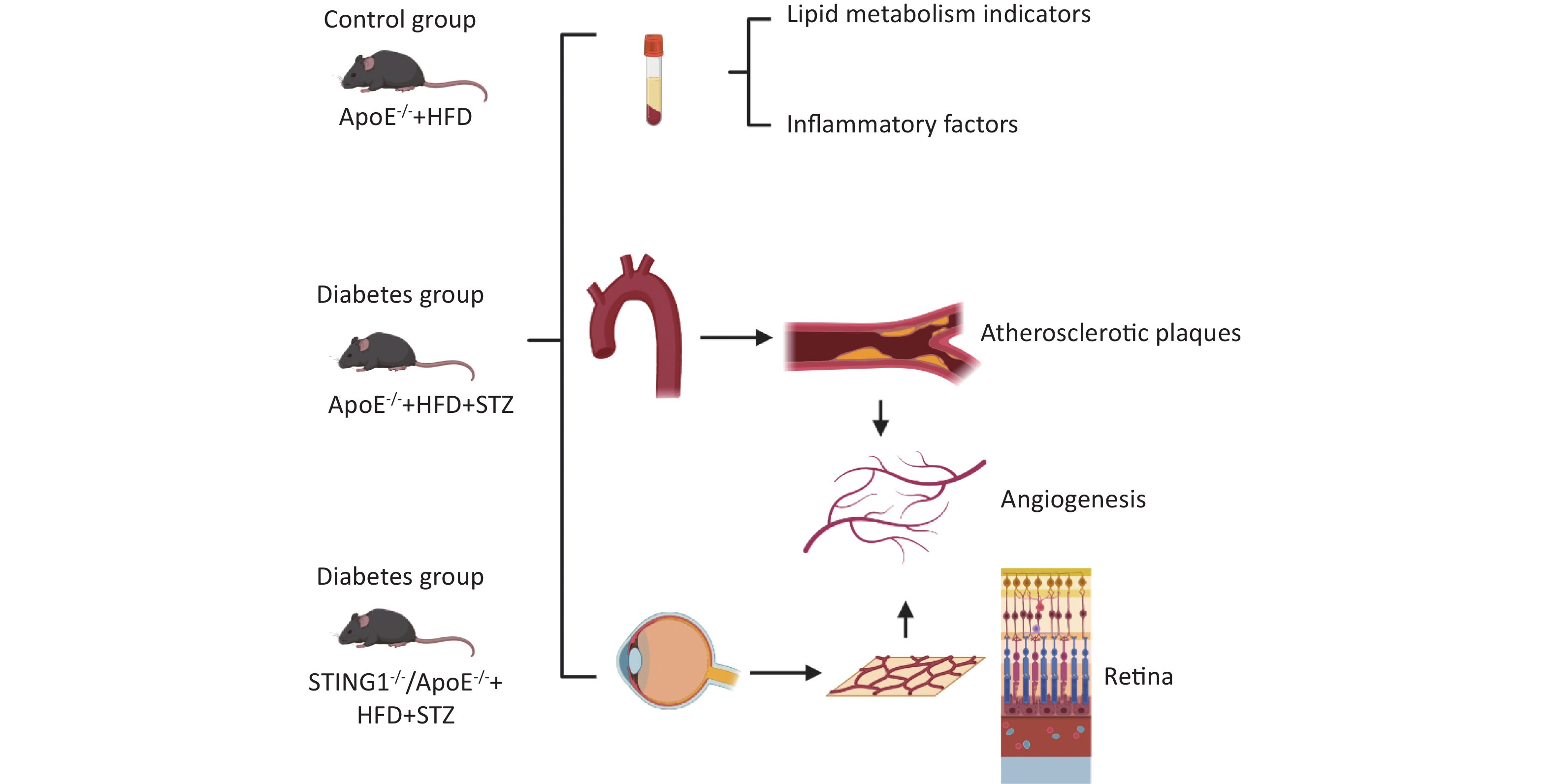
图 1
Fig.1 Schematic of experimental mouse grouping and procedure (n=5) Image created with BioRender.com.
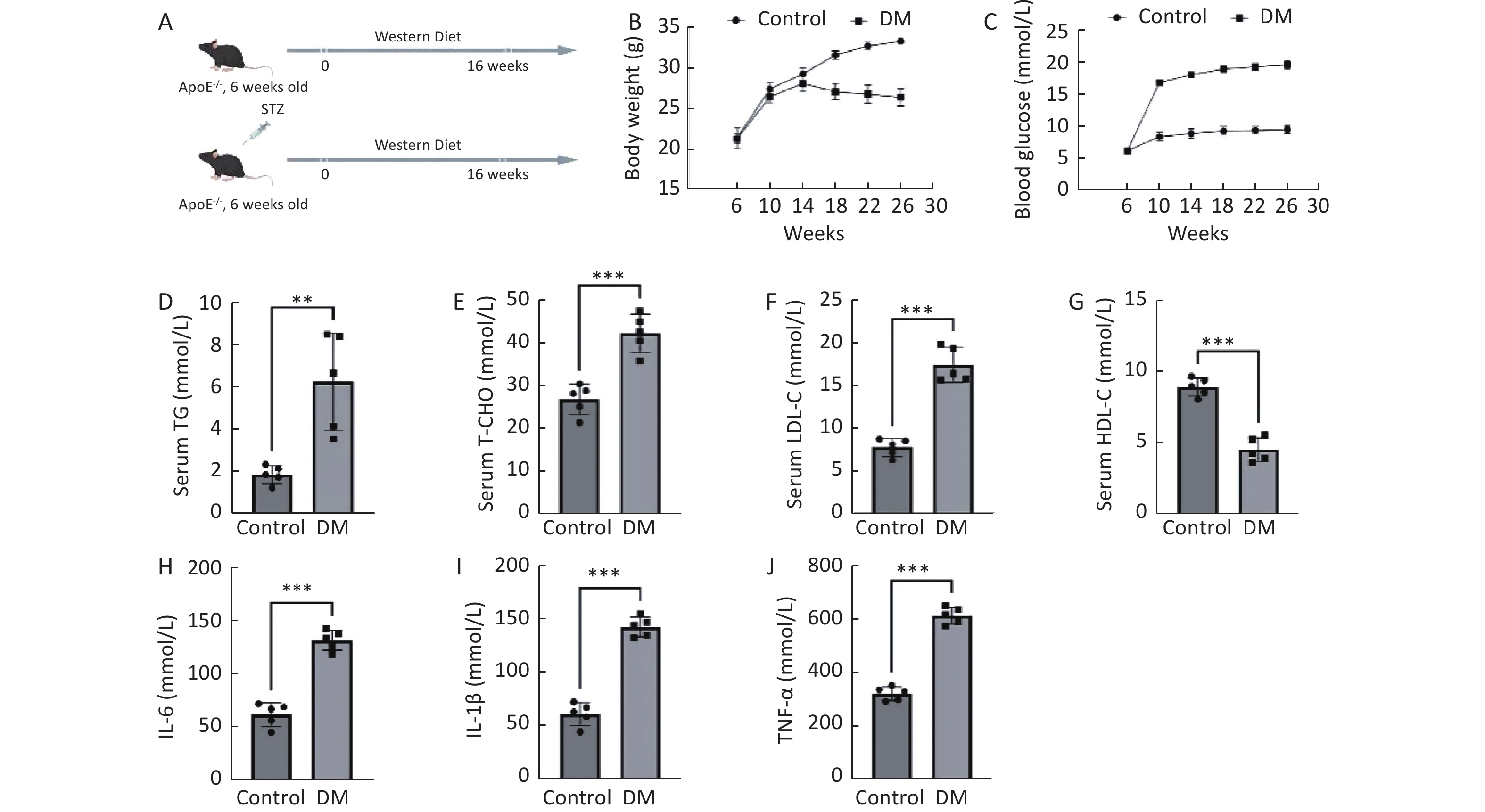
图 2
Fig.2 Effects of diabetic atherosclerosis on body weight, glucose and lipid metabolism and inflammatory levels ($\bar x$±s, n = 5) A: schematic diagram of the time point construction of the diabetic atherosclerosis model in ApoE−/− mice (Created by Figdraw). B: body weight changes in mice in the Control group (ApoE−/− + HFD) and DM group (ApoE−/− + HFD + STZ). C: changes in blood glucose of each group. D-G: levels of four blood lipids (TG, T-CHO, LDL-C, HDL-C) of each group. H-J: levels of inflammatory factors (IL-6, IL-1β, TNF-α) of each group. **P<0.01, ***P<0.001.
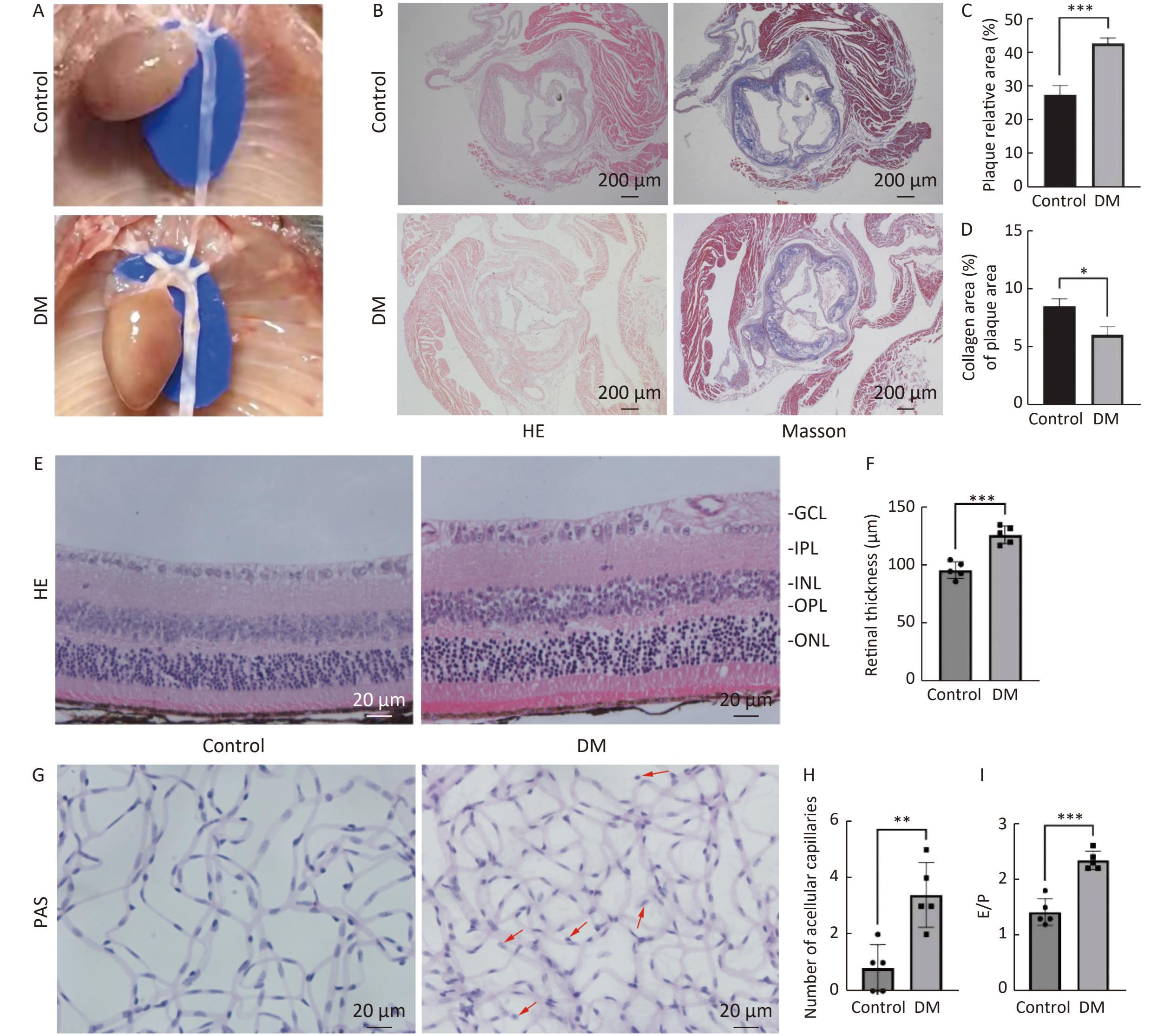
图 3
Fig.3 Diabetic atherosclerosis promotes the progression of vascular plaque and retinopathy ($\bar x $±s, n=5) A: gross view of the aorta of mice in the Control group and DM group. B: HE and Masson staining of aortic roots of two groups. Scale bar=200 μm. C: quantitative analysis of aortic plaque area/lumen area. D: quantitative analysis of collagen fiber content in aortic plaque. E: HE staining of retinal sections of two groups. Scale bar=20 μm.F: quantitative analysis of retinal thickness. G: PAS staining of retinal vascular sections of two groups. Scale bar=20 μm. H: comparison of cell-free capillary numbers. I: comparison of the endothelial cell to pericyte ratio (E/P) . *P<0.05, **P<0.01, ***P<0.001.
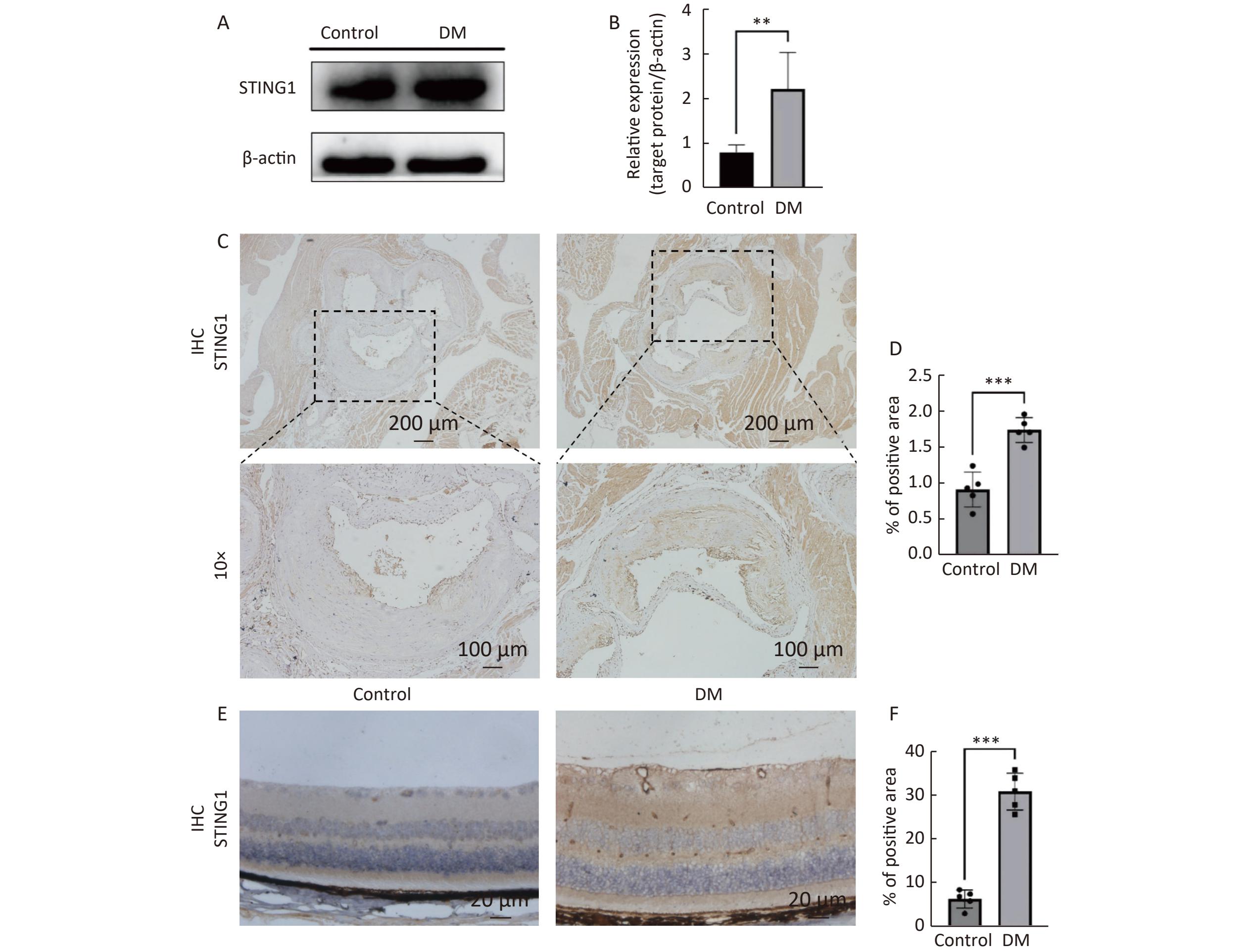
图 4
Fig.4 The expression of STING1 increases in diabetic atherosclerotic plaque and retinopathy ($\bar x $±s, n=5) A: Western blot was used to detect the expression of STING1 in the aorta of mice in the control group and DM group. B: quantitative analysis of STING1 protein expression. C: immunohistochemical staining of STING1 in aortic root sections of each group. The first row: Scale bar=200 μm; the second row: Scale bar=100 μm. D: semi-quantitative analysis of STING1 immunohistochemical staining of aortic root sections. E: immunohistochemical staining of STING1 retinal sections of each group. Scale bar=20 μm. F: semi-quantitative analysis of STING1 immunohistochemical staining of retinal sections. **P<0.01, ***P<0.001.
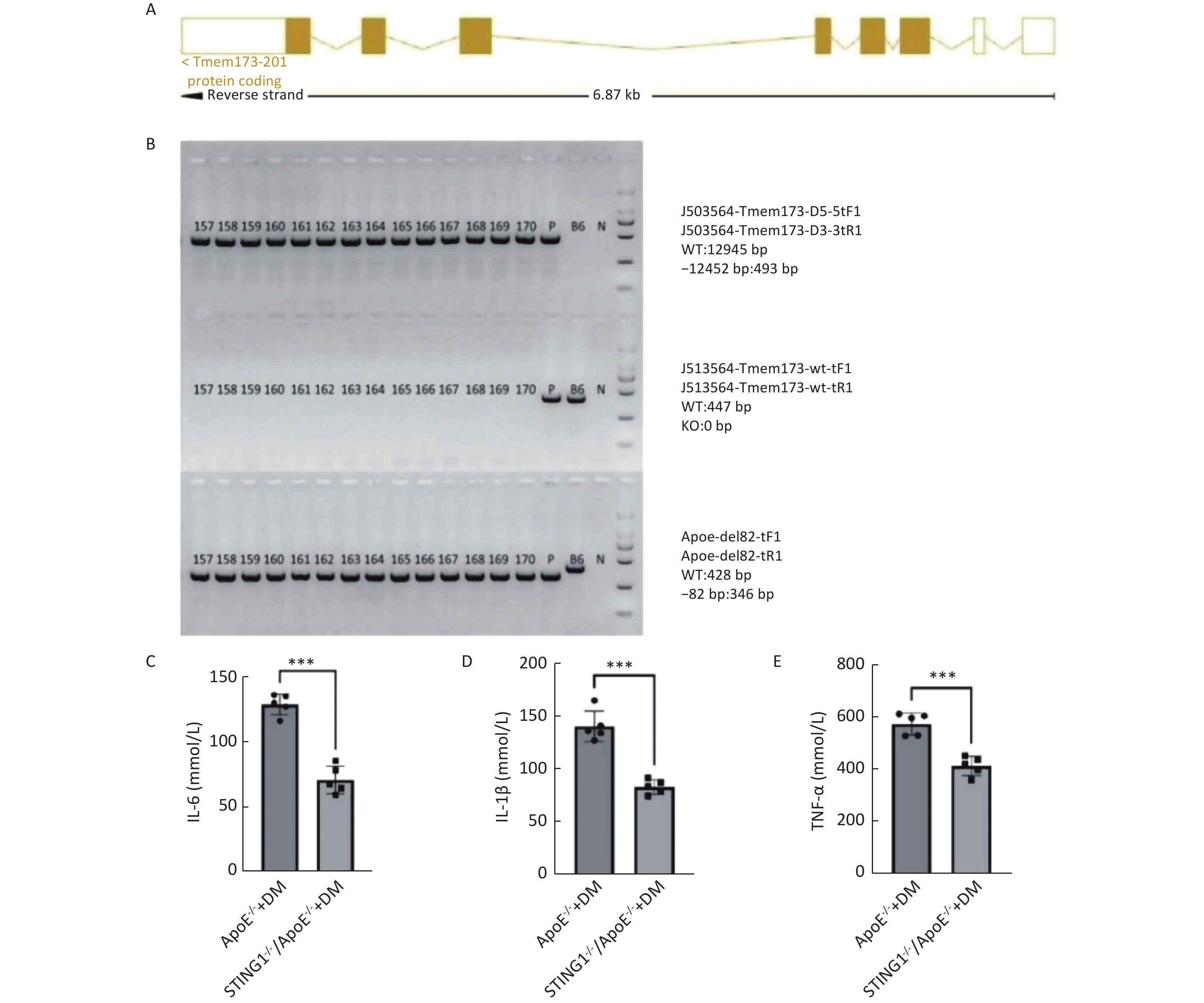
图 5
Fig.5 Generation of STING1?/?/ApoE?/? mice and their effects on inflammation ($\bar x $±s, n=5) A: design of the tmem173-201 transcript. B: genotype verification of STING1−/−/ApoE−/− mice (P: positive control, B6: negative control N: no-template control). C-E: changes in inflammatory factors (IL-6, IL-1β, TNF-α) in mice in the DM group (ApoE −/− + HFD + STZ) and STING1−/−/ApoE−/− group (STING1−/− /ApoE −/− + HFD + STZ). ***P<0.001.
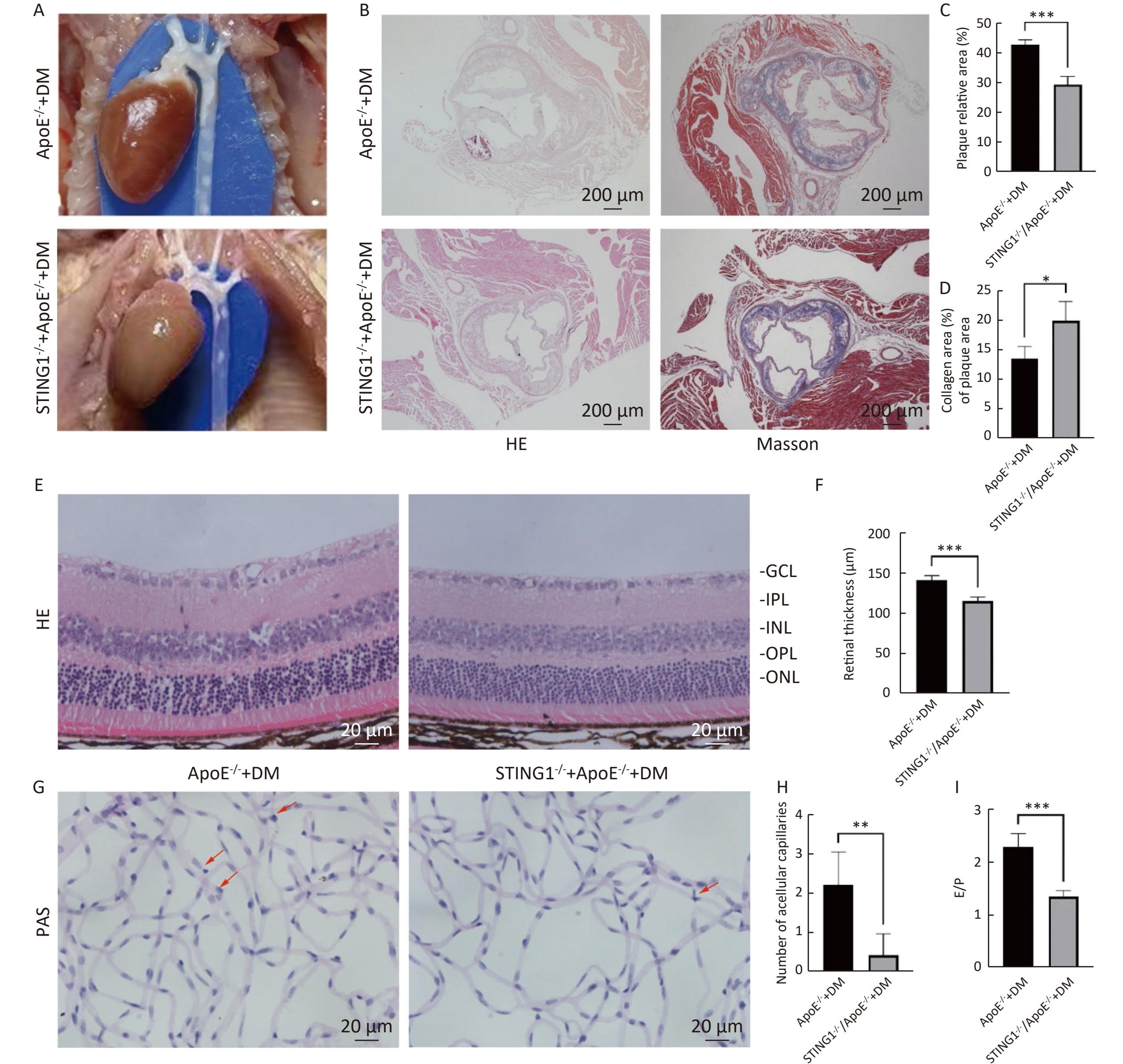
图 6
Fig.6 STING1 knockdown reduces plaque formation and retinal damage ($\bar {\boldsymbol{x}} $±s, n=5) A: gross morphology of aortas in the DM group and STING1−/−/ApoE−/− group. B: HE and Masson staining of aortic roots in the two groups. Scale bar=200 μm. C: quantitative analysis of aortic plaque area/lumen area. D: quantitative analysis of collagen fiber content in aortic plaque. E: HE staining of retinal sections in the two groups. Scale bar=20 μm. F: imageJ quantitative analysis of retinal thickness. G: PAS staining of retinal vasculature in mice in two groups. Scale bar=20 μm. H: comparison of cell-free capillary numbers. I: comparison of endothelial cell to pericyte ratio (E/P). *P<0.05, **P<0.01, ***P<0.001.

图 7
Fig.7 STING1 deficiency inhibits pathological angiogenesis of plaques ($\bar x $±s, n=5) A: immunohistochemical staining of CD31, CD34, and LYVE-1 in the aortic roots of mice in the DM group and STING1−/−/ApoE−/− group. The first and third columns: Scale bar=200 μm; the second and fourth columns: Scale bar=100 μm. B-D: semi-quantitative analysis of aortic root sections by immunohistochemical staining of CD31, CD34, and LYVE-1. **P<0.01, ***P<0.001.

图 8
Fig.8 STING1 deficiency suppresses retinal pathological angiogenesis and correlates with disease severity ($\bar x $±s, n=5) A: immunohistochemical staining and semi-quantitative analysis of CD31, CD34, and LYVE-1 in the retina of mice in the DM group and STING1−/−/ApoE−/− group. Scale bar=20 μm. B: correlation analysis of STING1 level, aortic plaque size, and retinal thickness in mice. ***P<0.001.
| 1 |
Wong ND, Sattar N. Cardiovascular risk in diabetes mellitus: epidemiology, assessment and prevention[J]. Nat Rev Cardiol, 2023, 20 (10): 685- 695.
doi: 10.1038/s41569-023-00877-z |
| 2 |
Ma C, Li Y, Tian M, et al. Gsα regulates macrophage foam cell formation during atherosclerosis[J]. Circ Res, 2024, 134 (7): e34- e51.
doi: 10.1161/circresaha.123.323156 |
| 3 |
Nurmohamed NS, Gaillard EL, Malkasian S, et al. Lipoprotein(a) and long-term plaque progression, low-density plaque, and pericoronary inflammation[J]. JAMA Cardiol, 2024, 9 (9): 826- 834.
doi: 10.1001/jamacardio.2024.1874 |
| 4 |
Camaré C, Pucelle M, Nègre-Salvayre A, et al. Angiogenesis in the atherosclerotic plaque[J]. Redox Biol, 2017, 12, 18- 34.
doi: 10.1016/j.redox.2017.01.007 |
| 5 |
Aplin AC, Nicosia RF. Tissue oxygenation stabilizes neovessels and mitigates hemorrhages in human atherosclerosis-induced angiogenesis[J]. Angiogenesis, 2023, 26 (1): 63- 76.
doi: 10.1007/s10456-022-09851-8 |
| 6 | Yu W, Yang B, Xu S, et al. Diabetic retinopathy and cardiovascular disease: a literature review[J]. Diabetes Metab Syndr Obes, 2023, 16, 4247- 4261. |
| 7 |
Simó R, Stitt AW, Gardner TW. Neurodegeneration in diabetic retinopathy: does it really matter?[J]. Diabetologia, 2018, 61 (9): 1902- 1912.
doi: 10.1007/s00125-018-4692-1 |
| 8 |
Zhang R, Kang R, Tang D. STING1 in different organelles: location dictates function[J]. Front Immunol, 2022, 13, 842489.
doi: 10.3389/fimmu.2022.842489 |
| 9 |
Zhang R, Kang R, Tang D. The STING1 network regulates autophagy and cell death[J]. Signal Transduct Target Ther, 2021, 6 (1): 208.
doi: 10.1038/s41392-021-00613-4 |
| 10 |
Barber GN. STING: infection, inflammation and cancer[J]. Nat Rev Immunol, 2015, 15 (12): 760- 770.
doi: 10.1038/nri3921 |
| 11 |
Chen Y, Yue S, Yu L, et al. Regulation and function of the cGAS-STING pathway: mechanisms, post-translational modifications, and therapeutic potential in immunotherapy[J]. Drug Des Devel Ther, 2025, 19, 1721- 1739.
doi: 10.2147/DDDT.S501773 |
| 12 |
简武, 何璐, 屈洪涛, 等. STING通路在心血管疾病中作用的研究进展[J]. 中国心血管杂志, 2025, 30 (1): 106- 111.
doi: 10.3969/j.issn.1007-5410.2026.01.021 |
| 13 |
Pham PT, Fukuda D, Nishimoto S, et al. STING, a cytosolic DNA sensor, plays a critical role in atherogenesis: a link between innate immunity and chronic inflammation caused by lifestyle-related diseases[J]. Eur Heart J, 2021, 42 (42): 4336- 4348.
doi: 10.1093/eurheartj/ehab249 |
| 14 |
Cai D, Liu H, Wang J, et al. Balasubramide derivative 3C attenuates atherosclerosis in apolipoprotein E-deficient mice: role of AMPK-STAT1-STING signaling pathway[J]. Aging (Albany NY), 2021, 13 (8): 12160- 12178.
doi: 10.18632/aging.202929 |
| 15 | 薛愚愚, 叶璐, 叶河江. cGAS-STING信号通路在眼科疾病中的作用研究进展[J]. 眼科新进展, 2024, 44 (12): 999- 1004. |
| 16 |
Liu H, Ghosh S, Vaidya T, et al. Activated cGAS/STING signaling elicits endothelial cell senescence in early diabetic retinopathy[J]. JCI Insight, 2023, 8 (12): e168945.
doi: 10.1172/jci.insight.168945 |
| 17 |
杨燕, 陈正涛, 肖华胜, 等. 糖尿病大血管病变小鼠模型研究进展[J]. 中国实验动物学报, 2023, 31 (9): 1194- 1205.
doi: 10.3969/j.issn.1005-4847.2023.09.011 |
| 18 |
Furman BL. Streptozotocin-induced diabetic models in mice and rats[J]. Curr Protoc, 2021, 1 (4): e78.
doi: 10.1002/cpz1.78 |
| 19 |
乔羽, 王晓磊, 吴长江, 等. 葛根-丹参对糖尿病相关动脉粥样硬化小鼠脂肪因子稳态的影响[J]. 中国病理生理杂志, 2024, 40 (12): 2238- 2244.
doi: 10.3969/j.issn.1000-4718.2024.12.006 |
| 20 |
Sun Z, Li L, Wu Y, et al. Acetylation-ubiquitination crosstalk of DJ-1 mediates microcalcification formation in diabetic plaques via collagen-matrix vesicles interaction[J]. Cardiovasc Res, 2025, 121 (2): 296- 310.
doi: 10.1093/cvr/cvae263 |
| 21 |
Xie J, Ikram MK, Cotch MF, et al. Association of diabetic macular edema and proliferative diabetic retinopathy with cardiovascular disease: a systematic review and meta-analysis[J]. JAMA Ophthalmol, 2017, 135 (6): 586- 593.
doi: 10.1001/jamaophthalmol.2017.0988 |
| 22 |
An Y, Xu BT, Wan SR, et al. The role of oxidative stress in diabetes mellitus-induced vascular endothelial dysfunction[J]. Cardiovasc Diabetol, 2023, 22 (1): 237.
doi: 10.1186/s12933-023-01965-7 |
| 23 |
Batty M, Bennett MR, Yu E. The role of oxidative stress in atherosclerosis[J]. Cells, 2022, 11 (23): 3843.
doi: 10.3390/cells11233843 |
| 24 |
Seo H, Park SJ, Song M. Diabetic retinopathy (DR): mechanisms, current therapies, and emerging strategies[J]. Cells, 2025, 14 (5): 376.
doi: 10.3390/cells14050376 |
| 25 |
Kinuthia UM, Wolf A, Langmann T. Microglia and inflammatory responses in diabetic retinopathy[J]. Front Immunol, 2020, 11, 564077.
doi: 10.3389/fimmu.2020.564077 |
| 26 |
Xu S, Ilyas I, Little PJ, et al. Endothelial dysfunction in atherosclerotic cardiovascular diseases and beyond: from mechanism to pharmacotherapies[J]. Pharmacol Rev, 2021, 73 (3): 924- 967.
doi: 10.1124/pharmrev.120.000096 |
| 27 |
Gui F, You Z, Fu S, et al. Endothelial dysfunction in diabetic retinopathy[J]. Front Endocrinol (Lausanne), 2020, 11, 591.
doi: 10.3389/fendo.2020.00591 |
| 28 |
Celletti FL, Waugh JM, Amabile PG, et al. Vascular endothelial growth factor enhances atherosclerotic plaque progression[J]. Nat Med, 2001, 7 (4): 425- 429.
doi: 10.1038/86490 |
| 29 | Valiatti FB, Crispim D, Benfica C, et al. The role of vascular endothelial growth factor in angiogenesis and diabetic retinopathy[J]. Arq Bras Endocrinol Metabol, 2011, 55 (2): 106- 113. |
| 30 |
Chen C, Xu P. Cellular functions of cGAS-STING signaling[J]. Trends Cell Biol, 2023, 33 (8): 630- 648.
doi: 10.1016/j.tcb.2022.11.001 |
| 31 |
Oduro PK, Zheng X, Wei J, et al. The cGAS-STING signaling in cardiovascular and metabolic diseases: future novel target option for pharmacotherapy[J]. Acta Pharm Sin B, 2022, 12 (1): 50- 75.
doi: 10.1016/j.apsb.2021.05.011 |
| 32 |
Ablasser A, Goldeck M, Cavlar T, et al. cGAS produces a 2'-5'-linked cyclic dinucleotide second messenger that activates STING[J]. Nature, 2013, 498 (7454): 380- 384.
doi: 10.1038/nature12306 |
| 33 |
Sun L, Wu J, Du F, et al. Cyclic GMP-AMP synthase is a cytosolic DNA sensor that activates the type I interferon pathway[J]. Science, 2013, 339 (6121): 786- 791.
doi: 10.1126/science.1232458 |
| 34 |
Burdette DL, Monroe KM, Sotelo-Troha K, et al. STING is a direct innate immune sensor of cyclic di-GMP[J]. Nature, 2011, 478 (7370): 515- 518.
doi: 10.1038/nature10429 |
| 35 | Moretti J, Roy S, Bozec D, et al. STING senses microbial viability to orchestrate stress-mediated autophagy of the endoplasmic reticulum [J]. Cell, 2017, 171(4): 809-823. e13. |
| 36 |
Tapia PJ, Martina JA, Contreras PS, et al. TFEB and TFE3 regulate STING1-dependent immune responses by controlling type I interferon signaling[J]. Autophagy, 2025, 21 (9): 2028- 2045.
doi: 10.1080/15548627.2025.2487036 |
| 37 |
Hopfner KP, Hornung V. Molecular mechanisms and cellular functions of cGAS-STING signalling[J]. Nat Rev Mol Cell Biol, 2020, 21 (9): 501- 521.
doi: 10.1038/s41580-020-0244-x |
| 38 |
Balka KR, Louis C, Saunders TL, et al. TBK1 and IKKε act redundantly to mediate STING-induced NF-κB responses in myeloid cells[J]. Cell Rep, 2020, 31 (1): 107492.
doi: 10.1016/j.celrep.2020.03.056 |
| 39 |
Liu Y, Carmona-Rivera C, Seto NL, et al. Role of STING deficiency in amelioration of mouse models of lupus and atherosclerosis[J]. Arthritis Rheumatol, 2025, 77 (5): 547- 559.
doi: 10.1002/art.43062 |
| 40 |
Fan X, Han J, Zhong L, et al. Macrophage-derived GSDMD plays an essential role in atherosclerosis and cross talk between macrophages via the mitochondria-STING-IRF3/NF-κB axis[J]. Arterioscler Thromb Vasc Biol, 2024, 44 (6): 1365- 1378.
doi: 10.1161/ATVBAHA.123.320612 |
| 41 | Lin W, Szabo C, Liu T, et al. STING trafficking activates MAPK-CREB signaling to trigger regulatory T cell differentiation [J]. Proc Natl Acad Sci U S A, 2024, 121(29): e2320709121. |
| 42 |
Lee BJ, Byeon HE, Cho CS, et al. Histamine causes an imbalance between pro-angiogenic and anti-angiogenic factors in the retinal pigment epithelium of diabetic retina via H4 receptor/p38 MAPK axis[J]. BMJ Open Diabetes Res Care, 2020, 8 (2): e001710.
doi: 10.1136/bmjdrc-2020-001710 |
| 43 |
Shami A, Gonçalves I, Hultgårdh-Nilsson A. Collagen and related extracellular matrix proteins in atherosclerotic plaque development[J]. Curr Opin Lipidol, 2014, 25 (5): 394- 399.
doi: 10.1097/MOL.0000000000000112 |
| 44 |
Chistiakov DA, Orekhov AN, Bobryshev YV. Contribution of neovascularization and intraplaque haemorrhage to atherosclerotic plaque progression and instability[J]. Acta Physiol (Oxf), 2015, 213 (3): 539- 553.
doi: 10.1111/apha.12438 |
| 45 |
Migdalski A, Jawien A. Neovascularization as a leading mechanism of intraplaque hemorrhage and carotid plaque destabilization: a narrative review[J]. Curr Vasc Pharmacol, 2024, 22 (6): 377- 385.
doi: 10.2174/0115701611304241240523045704 |
| 46 |
Li B, Lu M, Wang H, et al. Macrophage ferroptosis promotes MMP2/9 overexpression induced by hemin in hemorrhagic plaque[J]. Thromb Haemost, 2024, 124 (6): 568- 580.
doi: 10.1055/a-2173-3602 |
| 47 |
王苏涵, 张乐颖, 秦婷婷, 等. VEGF在糖尿病视网膜病变破坏血-视网膜屏障机制中的研究新进展[J]. 国际眼科杂志, 2024, 24 (8): 1260- 1265.
doi: 10.3980/j.issn.1672-5123.2024.8.15 |
| [1] | 陈美轩, 刘凯, 徐源, 华圆, 郭怡洵, 张恺, 张岩. 依伏卡塞衍生物对糖尿病性骨质疏松的改善和促成骨作用[J]. 中国临床药理学与治疗学, 2026, 31(9): 1193-1199. |
| [2] | 杨玉洁, 张莉莉, 潘昕昀, 丁英鹏, 王中群. 糖尿病大血管并发症相关动物模型的构建与应用进展[J]. 中国临床药理学与治疗学, 2026, 31(8): 1127-1134. |
| [3] | 张媛君, 马婧, 刘菊香, 权金星. 中药单体靶向调控糖尿病相关信号转导通路的分子药理学机制研究进展[J]. 中国临床药理学与治疗学, 2026, 31(8): 1135-1143. |
| [4] | 卢爱琳, 吴永青, 袁梦蕊, 刘弘毅. 肾上腺髓质素及其受体在糖尿病周围神经病变中的作用机制[J]. 中国临床药理学与治疗学, 2026, 31(8): 1144-1152. |
| [5] | 郑丽萍, 朱晗, 赵克勤, 黄勇, 刘鹏. 黄芪活性成分改善糖尿病肾病脂代谢紊乱的研究进展[J]. 中国临床药理学与治疗学, 2026, 31(7): 928-936. |
| [6] | 陈玲, 王中群. 临床研究视角下的SGLT2抑制剂:糖尿病心力衰竭治疗的“破界先锋”[J]. 中国临床药理学与治疗学, 2026, 31(6): 722-728. |
| [7] | 徐晓曼, 周蕾. GLP-1受体激动剂在糖尿病心肌病中的心血管保护作用:机制和临床前景[J]. 中国临床药理学与治疗学, 2026, 31(6): 729-734. |
| [8] | 刘学武, 姜德建, 杜艳华. 糖尿病肾病发病机制及药物研发进展[J]. 中国临床药理学与治疗学, 2026, 31(6): 735-751. |
| [9] | 郭苏, 秦小江, 江雪露, 方梦薇, 满志, 孟欣, 郑志发, 赵良渊, 施熠炜, 侯晓敏. 黄酮类化合物防治糖尿病微血管病变的研究进展[J]. 中国临床药理学与治疗学, 2026, 31(6): 752-763. |
| [10] | 许潇, 王帅霖, 钱欣, 姚逸, 王彰禹, 朱晓奕, 毛庆, 郭齐. 中药治疗糖尿病心肌病研究进展[J]. 中国临床药理学与治疗学, 2026, 31(6): 764-773. |
| [11] | 吴俊, 宋雨薇, 梁宏彪, 冯娟. 氧化三甲胺与糖尿病患者血管重塑[J]. 中国临床药理学与治疗学, 2026, 31(6): 774-781. |
| [12] | 吴瑶, 周旋, 王小燕, 汪带娣, 孙振. 高密度脂蛋白相关比值指数与糖尿病患者冠脉支架植入术后再狭窄发生的关联研究[J]. 中国临床药理学与治疗学, 2026, 31(6): 789-797. |
| [13] | 祁光伟, 仝婉昱, 王冀鲁, 郭靖文, 黎瑞巧, 王启隆. 血栓通对糖尿病内皮细胞线粒体动态平衡、内皮功能损伤和动脉粥样硬化的保护作用研究[J]. 中国临床药理学与治疗学, 2026, 31(6): 798-807. |
| [14] | 刘妍, 秦小江, 魏成杰, 江雪露, 郑志发, 彭晓阳, 赵良渊, 施熠炜, 侯晓敏. 糖尿病心血管并发症药物分子靶向递送系统的研究进展[J]. 中国临床药理学与治疗学, 2026, 31(6): 808-820. |
| [15] | 潘昕昀, 宋昀键, 王中群. 巨噬细胞膜修饰纳米颗粒治疗糖尿病心血管并发症的研究进展[J]. 中国临床药理学与治疗学, 2026, 31(6): 821-826. |
| 阅读次数 | ||||||
|
全文 |
|
|||||
|
摘要 |
|
|||||