Loading...
Welcome to Chinese Journal of Clinical Pharmacology and Therapeutics,Today is Chinese

Table of Content

    Volume 31 Issue 4
    26 April 2026
    Regulation of peripheral clock to expression of substance P/MRGPRX2 contributes to circadian activity of mast cell
    Xinrong LI, Yue HUANG, Wen SUI, Yulan CHEN, Zeyi LYU, Yu LI, Xi CHEN, Zhuo PAN, Man YIN, Qihong LI, Hao YANG
    2026, 31(4):  433-442.  doi:10.12092/j.issn.1009-2501.2026.04.001
    Asbtract ( 27 )   HTML ( 2)   PDF (2287KB) ( 12 )  
    Figures and Tables | References | Related Articles | Metrics

    AIM: To investigate the role of substance P (SP) in the circadian activation of mast cells and its regulatory mechanisms. METHODS: Cell Counting Kit-8 (CCK8) colorimetric assay was used to detect the effects of different concentrations of SP on MCp815 cell activity, and the concentration for subsequent experiments was determined. MCp815 cell degranulation was induced using immunoglobulin E (IgE) to establish a degranulation model. A control group and a BMAL1 knockout group were set up, and both groups of cells were treated with 656.1 nmol/L SP for 30 minutes. Mast cell activation was monitored at different time intervals. Enzyme-linked immunosorbent assay (ELISA) was used to detect the release levels of histamine and tryptase. Quantitative real-time PCR was employed to detect the changes in mRNA levels of SP receptor Mrgprx2, Bmal1, Per2. Chromatin immunoprecipitation and luciferase reporter assays were used to analyze the DNA binding activity of the E-box in the Mrgprx2 gene and the promoter activity in the 2.0 kb upstream region of the transcription start site. C57BL/6 mice were randomly divided into a control group and an SP group, with 10 mice in each group. The mice were kept in either an LD10/10 (10h light/10h dark) cycle or an abnormal LD12/12 (12h light/12h dark) cycle for 8 weeks. HE staining was used to detect the pathological conditions of the nasal mucosa, and Ly6G staining was applied to observe the infiltration of myeloid neutrophils and mast cells in the nasal mucosa. ELISA was used to detect the levels of histamine and tryptase, and qPCR was performed to measure the changes in SP and Mrgprx2 mRNA levels in mouse nasal mucosa. RESULTS: (1) The dose of 656.1 nmol/L SP had no significant effect on mast cell activity and was chosen for use in subsequent experiments. In the control group, at 12 hours post SP treatment, histamine and tryptase secretion levels in mast cells (MC) were significantly higher compared to 24 hours. In the BMAL1 knockout group, there was no difference in the indicators between 12 and 24 hours. At 60 and 72 hours, there were no differences in the levels of histamine and tryptase produced by SP-stimulated MCs in either group. (2) Wild-type mice treated with SP showed more extensive neutrophil infiltration in the nasal cavity at ZT4, accompanied by increased secretion of histamine and tryptase, while at ZT16, this infiltration was less. (3) qPCR results showed that after SP treatment, Mrgprx2 expression in BMMCs at 12 hours was higher than at 24 hours in the control group, but this difference disappeared in BMAL1 knockout BMMCs. At 60 and 72 hours, there was no statistical difference in Mrgprx2 expression between the two groups of cells. At different time points, Mrgprx2 expression levels were consistent with PER2 changes and opposite to BMAL1 changes. The temporal changes in histamine and tryptase release from BMMCs were consistent with these expression patterns. (4) The non-canonical E-box (CATGTGA) in the Mrgprx2 gene showed significant BMAL1 binding activity and a clear time-dependent effect. Luciferase-reporter analysis showed that co-expression of BMAL1 and CLOCK upregulated luciferase activity, but when the E-box was mutated, Mrgprx2 transcription was abolished. (5) Mice housed in an LD10/10 cycle for 8 weeks lost the rhythm of SP-mediated neutrophil infiltration and mast cell Tac1/Mrgprx2 expression, while the rhythmic expression persisted in mice housed in the normal LD12/12 cycle. CONCLUSION: SP may play a key role in regulating the circadian activation of mast cells, with the potential mechanism involving BMAL1/CLOCK directly binding to the non-canonical E-box site in the promoter region of the SP receptor Mrgprx2 to regulate its transcription. Peripheral circadian signals may be an important pathway for MC activation in allergic rhinitis.

    Effects of IgD on polarization and phagocytosis of peripheral blood induced monocyte-macrophage in patients with rheumatoid arthritis
    Mengqin CHEN, Xi LING, Qiangqiang CHU, Danyan LIU, Yueye WANG, Tiantian WU, Manling DONG, Wei WEI, Yujing WU
    2026, 31(4):  443-450.  doi:10.12092/j.issn.1009-2501.2026.04.002
    Asbtract ( 28 )   HTML ( 0)   PDF (3088KB) ( 6 )  
    Figures and Tables | References | Related Articles | Metrics

    AIM: To investigate the effects of immunoglobulin D (IgD) on the function of human peripheral blood macrophages. METHODS: Peripheral blood mononuclear cells (PBMCs) were isolated from rheumatoid arthritis (RA) patients and healthy controls, and then adhered to the wall and stimulated with macrophage colony-stimulating factor (M-CSF). Flow cytometry was used to detect the expression of IgD Fc receptors (FcδR, IgDR) on the surface of peripheral blood mononuclear macrophages in RA patients and healthy controls. Stimulate macrophages with different concentrations of IgD (final concentrations of 1, 3, 10 μg/mL) for 48 hours, and flow cytometry was used to detect the expression of CD86 and CD206 on the surface of macrophages. Flow cytometry was used to detect the phagocytic of macrophages. RESULTS: Continuous expression of FcδR was detected on macrophages induced by peripheral blood mononuclear cells, and the expression was higher in RA patients than in healthy controls. The expression of M1 macrophages can be enhanced by IgD, while the expression of M2 macrophages can be weakened. At the same time, the phagocytic ability of macrophages are also enhanced with the increase of IgD levels. CONCLUSION: IgD may promote macrophage polarization in human peripheral blood monocytes by binding to FcδR, causing an imbalance in the proportion of M1 and M2 macrophages and enhancing phagocytic function of macrophages.

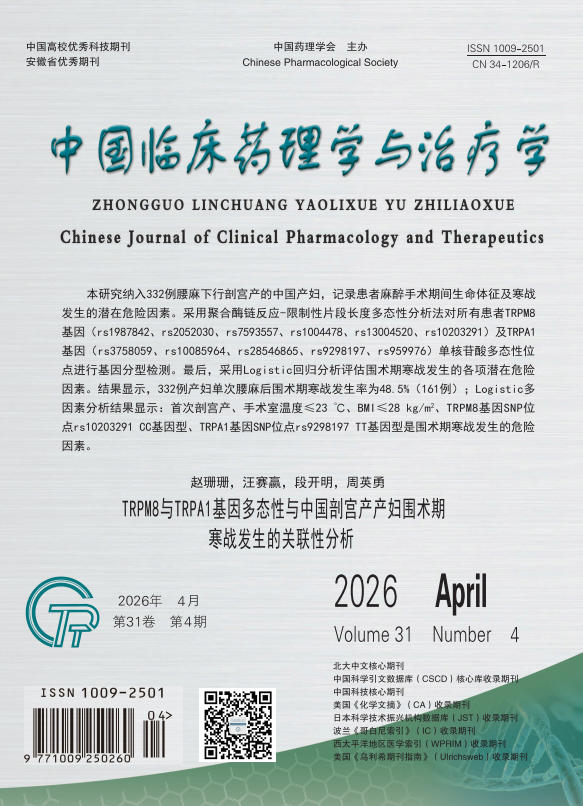
    Analysis of the association between TRPM8 and TRPA1 gene polymorphisms and the occurrence of perioperative shivering in Chinese women undergoing cesarean section
    Shanshan ZHAO, Saiying WANG, Kaiming DUAN, Yingyong ZHOU
    2026, 31(4):  451-459.  doi:10.12092/j.issn.1009-2501.2026.04.003
    Asbtract ( 23 )   HTML ( 0)   PDF (531KB) ( 5 )  
    Figures and Tables | References | Related Articles | Metrics

    AIM: To explore the impact of TRPM8 and TRPA1 gene polymorphisms on the occurrence of perioperative shivering in Chinese women undergoing cesarean delivery and to analyze the risk factors for perioperative shivering. METHODS: A total of 332 Chinese women undergoing cesarean delivery under lumbar anesthesia were enrolled, and the patients' vital signs and potential risk factors for shivering during anesthesia and surgery were recorded. Polymerase chain reaction-restriction fragment length polymorphism analysis was applied to genotype all patients with the gene locus rs1987842, rs2052030, rs7593557, rs1004478, rs13004520, rs10203291 of TRPM8 and the rs3758059, rs10085964, rs28546865, rs9298197, rs959976 gene locus of TRPA1. Finally, logistic regression analysis was conducted to assess all potential perioperative shivering risks. RESULTS: The incidence of perioperative shivering after single lumbar anesthesia in 332 women was 48.5%, with a total of 161 cases observed. The results of logistics multifactorial analysis showed that the first cesarean delivery, operating room temperature below 23 °C, BMI ≤ 28 kg/m2, SNP locus rs10203291 CC genotype of TRPM8, and the SNP locus rs9298197 TT genotype of TRPA1 were risk factors for perioperative shivering (P<0.05). CONCLUSION: TT genotype of TRPA1 gene rs9298197 and CC genotype of TRPM8 gene rs10203291, first cesarean delivery, operating room temperature below 23 °C, and BMI less than 28 kg/m2 were risk factors for perioperative shivering during cesarean delivery.

    Study on a nomogram model for predicting the prognosis of patients with acute organophosphorus pesticide poisoning in Southern Anhui
    Jiawang YU, Guomei LI, Changbao HUANG, Ning TANG, Weihua LU, Feng ZHOU
    2026, 31(4):  460-466.  doi:10.12092/j.issn.1009-2501.2026.04.004
    Asbtract ( 27 )   HTML ( 3)   PDF (892KB) ( 10 )  
    Figures and Tables | References | Related Articles | Metrics

    AIM: To establish a model capable of predicting the prognosis of patients with acute organophosphorus pesticide poisoning to more accurately forecast their prognosis and risk of mortality. METHODS: A total of 75 patients with organophosphorus poisoning who received treatment at the First Affiliated Hospital of Wannan Medical University (Yijishan Hospital) from January 2022 to December 2024 were included in the study. Single-factor Cox analysis and t test/Chi-square test were used to identify characteristics influencing patient prognosis (P<0.05), followed by LASSO Cox analysis to construct a prognosis prediction score (Score), which was validated. The Score and statistically significant characteristics were then used to establish a nomogram model. RESULTS: Through univariate Cox analysis, t test/Chi-square test and LASSO Cox analysis, a prognostic prediction score was established: Score = 0.0752×age (Age) + 0.0120×creatinine (CRE) ? 0.0003×cholinesterase (CHE). The AUC of the Score for organophosphorus pesticide poisoning patients was 0.917. A Nomogram model was further constructed to predict patient prognosis, with an AUC of 0.924 and a C-index of 0.886, demonstrating good discriminatory and calibration performance. CONCLUSION: Considering the significant variability in prognosis among patients with acute organophosphorus pesticide poisoning, establishing and validating a high-performance Nomogram model can provide individualised prognosis prediction and risk assessment for patients, and further guide clinical treatment decisions.

    Analysis of the effect of the 9-valent HPV vaccine in patients with cervical cytological ASC-US combined with HR-HPV positivity
    Shuna TIAN, Jiayan SHI, Yaxin XING, Junhong NING, Qizhen CHEN
    2026, 31(4):  467-473.  doi:10.12092/j.issn.1009-2501.2026.04.005
    Asbtract ( 27 )   HTML ( 0)   PDF (546KB) ( 6 )  
    Figures and Tables | References | Related Articles | Metrics

    AIM: To evaluate the effects of the nine-valent HPV vaccine on lesion progression and prognosis in patients with cervical atypical squamous cells of undetermined significance (ASC-US) combined with high-risk HPV (HR-HPV) positivity. METHODS: Using a prospective observational cohort study design, 178 eligible patients with cervical ASC-US combined with HR-HPV positivity were consecutively recruited at Wusong Hospital, affiliated to Zhongshan Hospital of Fudan University, from January 2022 to September 2024. Based on colposcopy-directed histopathology, participants were classified into a squamous intraepithelial lesion (SIL) group and a cervicitis group; the SIL group included low-grade (LSIL) and high-grade (HSIL) lesions. After completion of standard treatment, participants in each diagnostic category were randomized (1:1) to a vaccination arm or a no-vaccination (control) arm. High-risk human papillomavirus (HR-HPV) viral load and p16/Ki-67 dual-stain status were compared between arms at enrollment (baseline), 6 months, and 12 months. RESULTS: At enrollment, there were no statistically significant differences in HR-HPV viral load or p16/Ki-67 dual staining positivity rate between the vaccine and non-vaccine groups (P>0.05). At the 6-month follow-up, vaccine recipients in the SIL group exhibited significantly lower HPV16 and other 12-type HR-HPV viral loads compared to non-vaccine group (P<0.05); In the cervicitis group, vaccine recipients also had significantly lower HPV16 viral load than non-vaccine recipients (P<0.05). Moreover, the p16/Ki-67 dual staining positivity rate in the vaccine group was lower than that in the non-vaccine group (P<0.05). At the 12-month follow-up, both HR-HPV viral load and the p16/Ki-67 dual staining positivity rate in the vaccine group were significantly lower than those in the non-vaccine group, with statistically significant differences (P<0.05). CONCLUSION: Vaccination with the nine-valent HPV vaccine is an effective strategy for preventing HPV infection and can improve the prognosis in patients with cervical ASC-US and HR-HPV positivity.

    Drug-related problems and its associated factors among outpatients with COPD: A cross sectional retrospective study
    Jiaxian ZHANG, Jian XIAO, Hangxing HUANG, Mengyao LI, Ting YU, Huimin YU, Jingyang LI, Lei NING, Ying WANG
    2026, 31(4):  474-485.  doi:10.12092/j.issn.1009-2501.2026.04.006
    Asbtract ( 27 )   HTML ( 0)   PDF (856KB) ( 5 )  
    Figures and Tables | References | Related Articles | Metrics

    AIM: Chronic obstructive pulmonary disease (COPD) is a globally prevalent condition, including a substantial patient population in China. However, data on drug-related problems (DRPs) among Chinese COPD outpatients remain scarce. This study aimed to investigate the types, causes, associated factors, and potential triggers of DRPs in COPD outpatients at a large general hospital in southern China. METHODS: With ethics committee approval, 461 COPD patients prescribed at least one medication were enrolled in this retrospective study from September 2020 to November 2021. DRPs were identified and classified using the Pharmaceutical Care Network Europe (PCNE) DRP classification system (V9.10). Descriptive statistics, univariate analysis, and logistic regression were employed to explore potential risk factors for DRPs. RESULTS: A total of 239 DRPs with 567 underlying causes were identified. The most frequent DRP was "treatment effectiveness: insufficient effect" (91.2%, 218/239). The leading causes were "no or inappropriate outcome monitoring" (31.0%, 176/567) and "patient-related factors" (27.5%, 156/567). Risk factors for DRPs included older age, current smoking, comorbid bronchiectasis or silicosis, use of quinolone or lincosamide antibiotics, LABA+LAMA inhaler combinations, and a history of acute exacerbations. CONCLUSION: DRPs are common among Chinese COPD outpatients, primarily linked to suboptimal treatment effectiveness. Clinical pharmacists could play a crucial role in addressing these issues and implementing interventions in the future.

    Efficacy of bicyclol combined with Xuezhitong capsules in the treatment of non-alcoholic fatty liver disease
    Yishan JIN, Fengxiang JIANG, Jiaorong TAN, Minghua ZHU
    2026, 31(4):  486-492.  doi:10.12092/j.issn.1009-2501.2026.04.007
    Asbtract ( 30 )   HTML ( 0)   PDF (502KB) ( 5 )  
    Figures and Tables | References | Related Articles | Metrics

    AIM: To systematically evaluate the comprehensive therapeutic efficacy and safety profile of the combination therapy of bicyclol tablets and Xuezhitong capsules in patients with non-alcoholic fatty liver disease (NAFLD). The research design employed a prospective randomized controlled trial, allocating 160 NAFLD patients in a 1:1 ratio to two groups: the control group (n=80) received bicyclol tablets monotherapy, while the experimental group (n=80) underwent a combination therapy of bicyclol tablets and Xuezhitong capsules, with a total treatment duration of 12 weeks. The study focused on comparing key liver function indicators, including alanine aminotransferase (ALT), aspartate aminotransferase (AST), γ-glutamyl transpeptidase (GGT), lipid profile parameters, including total cholesterol (TC), triglycerides (TG), low-density lipoprotein cholesterol (LDL-C), high-density lipoprotein cholesterol (HDL-C), liver fibrosis progression markers, inflammatory mediator levels, and adverse event incidence rates between the two groups before and after treatment. RESULTS: After 12 weeks of systematic treatment, both groups demonstrated significant improvements in liver function indicators and lipid profile parameters (P<0.05). Notably, the experimental group showed superior improvements in key indicators compared to the control group: ALT levels decreased by 41.8% (vs. 26.4% in the control group), AST reduced by 33.9% (vs. 21.8%), TC decreased by 14.4% (vs. 9.6%), and TG showed a reduction of 25.2% (vs. 14.3%) (P<0.05). Furthermore, the composite endpoint response rate in the experimental group was 88.8%, significantly higher than the control group's 66.2% (P=0.001). Safety analysis revealed no statistically significant difference in adverse event incidence between the two groups (6.9% vs. 10.6%, P=0.323). CONCLUSION: The combination therapy of bicyclol tablets and Xuezhitong capsules demonstrates superior clinical efficacy in NAFLD treatment. This innovative therapeutic strategy provides an optimal treatment option for the clinical management of NAFLD.

    Median effective dose of oliceridine as an adjunct to propofol sedation in patients with preclinical obesity undergoing same-visit bidirectional endoscopy
    Yongjiu JI, Suli ZHOU, Siqi YANG, Yingzhou TU, Chenqi JIANG, Bingyuan ZHANG, Changmao ZHU, Qi ZHANG, Chun YANG, Suwan HU
    2026, 31(4):  493-499.  doi:10.12092/j.issn.1009-2501.2026.04.008
    Asbtract ( 57 )   HTML ( 0)   PDF (608KB) ( 7 )  
    Figures and Tables | References | Related Articles | Metrics

    AIM: To determine the median effective dose (ED50) and 95% effective dose (ED95) of oliceridine based on lean body weight (LBW) when combined with different propofol doses for same-visit bidirectional endoscopy in patients with preclinical obesity. METHODS: Fifty-four ASA physical status II–III preclinical obesity patients were randomized to receive propofol 2.0 mg/kg LBW (Group P1, n=28) or 2.5 mg/kg LBW (Group P2, n=26) combined with oliceridine (initial dose 0.02 mg/kg LBW, adjusted in ±0.005 mg/kg LBW increments). A positive response was defined as coughing or body movement ≥ grade 2 during gastroscopy (requiring procedure suspension or anesthetic deepening). The study terminated after observing seven crossover points (positive-to-negative response transitions). ED values were calculated using Probit regression analysis. Hemodynamics and adverse events were recorded. RESULTS: Patient demographics (gender, age, BMI, LBW) showed no intergroup differences. Based on LBW, the ED50 and ED95 of oliceridine in Group P1 were 0.037 mg/kg (95%CI: 0.033–0.042) and 0.048 mg/kg (95%CI: 0.043–0.075), respectively; in Group P2, the ED50 and ED95 were 0.012 mg/kg (95%CI: 0.004–0.016) and 0.023 mg/kg (95%CI: 0.017–0.063), respectively. Increasing propofol from 2.0 mg/kg to 2.5 mg/kg reduced oliceridine ED50 by 52.1% and ED95 by 67.6% (P<0.001), indicating synergism. Group P2 had lower incidence of respiratory depression (SpO2 <90%: 30.8% vs. 46.4%) but higher rates of bradycardia (11.5% vs. 0%) and hypotension (15.4% vs. 3.6%) (all P>0.05). Injection pain (P1: 25.0% vs. P2: 26.9%) and recovery/discharge times did not differ significantly. No nausea, vomiting, or post-discharge adverse events occurred in either group. CONCLUSION: Propofol and oliceridine exhibit dose-dependent synergism. For preclinical obesity patients, propofol 2.5 mg/kg LBW combined with oliceridine 0.023 mg/kg LBW is recommended, providing effective anesthesia with reduced oliceridine requirements, lower respiratory depression risk, and satisfactory recovery.

    Research progress on pharmacological mechanism of traditional Chinese medicine targeting type 2 diabetes related pathways
    Ying ZHOU, Juntong LIU, Qingfeng WANG, Yufeng YANG, Yan SHI
    2026, 31(4):  500-508.  doi:10.12092/j.issn.1009-2501.2026.04.009
    Asbtract ( 49 )   HTML ( 0)   PDF (800KB) ( 9 )  
    Figures and Tables | References | Related Articles | Metrics

    Type 2 diabetes mellitus (T2DM) is a common chronic metabolic disease characterized by hyperglycemia. Traditional Chinese medicine has the characteristics of overall regulation, syndrome differentiation and treatment, multi-target and multi-mechanism regulation, and has great potential in the treatment of T2DM. Recent studies have shown that, effective components and compound of traditional Chinese medicine regulate AMP-activated protein kinase (AMPK), nuclear transcription factor-κB (NF-κB), transforming growth factor-β (TGF-β), mitogen-activated protein kinases (MAPK), Phosphoinositol 3-kinase (PI3K) / protein kinase B (Akt), nuclear factor-erythroid 2 related factor 2 (Nrf2), wingless type MMTV integration site family (Wnt) / β-catenin, and other signaling pathways. It can inhibit the apoptosis of islet β cells, promote the proliferation of islet β cells, improve islet function, reduce oxidative stress and inflammatory response, inhibit liver gluconeogenesis, and improve insulin resistance (IR), thus playing a role in the treatment of T2DM. This paper summarizes and analyzes the research progress of the effective components of traditional Chinese medicine and compound intervention in T2DM and the mechanism of related pathways, in order to provide a new direction and reference for the treatment of T2DM.

    Research progress on cellular senescence and therapeutic drugs in diabetic microvascular complications
    Jinju LI, Hao YANG, Nuobing RUAN, Qi XU, Zheng BI, Yufan LI, Fanjing WANG, Yixuan LIN, Zhaohui FANG
    2026, 31(4):  509-516.  doi:10.12092/j.issn.1009-2501.2026.04.010
    Asbtract ( 27 )   HTML ( 0)   PDF (491KB) ( 5 )  
    References | Related Articles | Metrics

    Diabetic microangiopathy is the earliest and most common complication of diabetes mellitus, which is characterised by impaired endothelial function of the microvessels, basement membrane thickening and microthrombosis, involving the kidneys, retina and nerves, and it is also a key factor leading to the decline in the patient’s quality of life and the shortening of life expectancy. In recent years, clinical and experimental studies have found that cellular senescence is a major risk factor for this type of disease, and cellular senescence is an irreversible state of cell cycle arrest, which participates in a variety of physiopathological processes affecting the occurrence and development of diabetic microangiopathy. This article provides a review of the mechanism of cellular senescence in the process of diabetic microangiopathy and the drugs that target cellular senescence for the treatment of diabetic microangiopathy to provide new research ideas for the prevention and treatment of diabetic microangiopathy.

    Progress and application of phenylhydrazine derivatization combined with LC-MS/MS for quantitative analysis of carbonyl metabolites in biological samples
    Wenli DONG, Ruohao ZHANG, Beining GUO, Jing ZHANG, Yuhong XU, Baowei PENG, Xiaofen LIU
    2026, 31(4):  517-526.  doi:10.12092/j.issn.1009-2501.2026.04.011
    Asbtract ( 34 )   HTML ( 0)   PDF (563KB) ( 7 )  
    Figures and Tables | References | Related Articles | Metrics

    Ketones, aldehydes and carboxylic acids containing carbonyl compounds are important endogenous metabolites, which are widely distributed in the blood and body fluids of organisms. However, these compounds have the characteristics of strong volatility, poor chemical stability and low concentration in biological matrix, which make them have limitations in the trace detection of complex biological samples ( blood, tissue, feces, etc. ). Pre-column derivatization of the compounds generates products with stable structures and high detection responses, which can improve the detection sensitivity and enable accurate quantification of these compounds. This paper reviews the method that based on the phenylhydrazine chemical derivatization strategy and combined with liquid chromatography tandem mass spectrometry, and this method is applied to the determination of the role of fatty aldehydes and short-chain fatty acids in key physiological processes such as energy metabolism and immune response.

    Research progress of traditional Chinese medicine in the prevention and treatment of diabetic nephropathy based on intestinal flora and branched-chain amino acids
    Liya SUN, Jiaxin LI, Guiyan SUN, Zhichao CHEN, Qingfeng WANG, Yufeng YANG, Yan SHI
    2026, 31(4):  527-535.  doi:10.12092/j.issn.1009-2501.2026.04.012
    Asbtract ( 33 )   HTML ( 0)   PDF (749KB) ( 4 )  
    Figures and Tables | References | Related Articles | Metrics

    Diabetic nephropathy is characterized by progressive impairment of glomerular filtration and elevated blood glucose levels, ultimately leading to end-stage renal failure. It is one of the primary causes of end-stage renal disease worldwide. The gut microbiota plays a significant role in diabetic nephropathy, and branched-chain amino acids (BCAAs), as metabolites of the gut microbiota, are key regulators of energy support, nutrient sensing, neurotransmitter synthesis, and cell signaling. They serve as critical biomarkers in the development of diabetic nephropathy. Traditional Chinese Medicine (TCM) can prevent and treat diabetic nephropathy by improving gut microbiota function, maintaining its balanced homeostasis, and alleviating BCAAs metabolic disorders. This article primarily explores the roles of gut microbiota and BCAAs in diabetic nephropathy, as well as the research progress of TCM in preventing and treating diabetic nephropathy by regulating gut microbiota and BCAAs metabolism. The aim is to provide new insights with TCM characteristics for the prevention and treatment of diabetic nephropathy.

    Research progress of PARP inhibitors therapy for endometrial cancer
    Shouyan HE, Minjun LIU, Cong WAN, Buzhen TAN
    2026, 31(4):  536-542.  doi:10.12092/j.issn.1009-2501.2026.04.013
    Asbtract ( 25 )   HTML ( 0)   PDF (968KB) ( 6 )  
    Figures and Tables | References | Related Articles | Metrics

    Endometrial cancer (EC) is the second most common gynecological malignancy worldwide. The standard treatment for endometrial cancer primarily involves surgical intervention, supplemented by radiotherapy, chemotherapy, and hormonal therapies as part of a comprehensive treatment approach. In the early stages of endometrial cancer, most patients exhibit no significant positive signs, and they often present at advanced stages, leading to poor prognoses with standard treatment regimens for advanced or recurrent endometrial cancer. Therefore, there is an urgent clinical need for new therapeutic methods to improve the prognosis of patients with endometrial cancer. With advancements in molecular biology techniques, molecular targeted therapy has become a focal point of research. PARP inhibitors, as emerging targeted therapeutic agents, inhibit the progression of endometrial cancer through a synthetic lethality effect. This article will review the potential of PARP inhibitors in the treatment of endometrial cancer, with the hope of providing new strategies for clinical management of the disease.

    Progress of N6-methyladenosine modification in regulating the tumor immune microenvironment
    Yu ZHANG, Wenbin XU, Yueqin WANG
    2026, 31(4):  543-550.  doi:10.12092/j.issn.1009-2501.2026.04.014
    Asbtract ( 26 )   HTML ( 0)   PDF (745KB) ( 8 )  
    Figures and Tables | References | Related Articles | Metrics

    N6-methyladenosine (m6A), as the most prevalent and abundant RNA methylation modification, regulates RNA transcript stabilization, translation efficiency and pre-mRNA splicing and influences several biological processes and plays multiple roles in cancers. The tumor immune microenvironment consists of a variety of immune cells, cytokines, extracellular matrix and other tissue-resident cells that influence tumor growth, metastasis, and drug response. Based on the role of m6A modification in the expression of various immune-related genes, this review provides a comprehensive understanding of how m6A function in tumor immunity by directly regulating different immune cells as well as indirectly modulating the secretion of immune-related factors.

    microRNAs expression profile changes in patients with Parkinson's disease and prospects for potential diagnosis and treatment
    Jieyu ZHANG, Yina WENG, Fei CAO
    2026, 31(4):  551-560.  doi:10.12092/j.issn.1009-2501.2026.04.015
    Asbtract ( 36 )   HTML ( 0)   PDF (715KB) ( 8 )  
    Figures and Tables | References | Related Articles | Metrics

    Parkinson's disease (PD) is an age-associated, slowly progressive extrapyramidal disorder. Its prevalence is increasing annually in tandem with the aging population in China. The lack of highly specific biomarkers poses a significant challenge for the early diagnosis and treatment of PD. microRNAs (miRNAs), a class of short non-coding RNA molecules, have been found to be dysregulated in the bodily fluids of PD patients and participate in PD pathological processes by regulating endogenous gene expression. The discovery of specific miRNAs expression profiles renders them attractive candidates as non-invasive biomarkers and novel therapeutic targets. This review summarizes research on the relationship between miRNAs dysregulation and PD diagnosis and treatment. It elaborates on recent advancements concerning the roles of miRNAs in PD management by focusing on three key aspects: alterations in expression profiles, diagnostic value, and therapeutic potential.

    Research status of immunoparesis in multiple myeloma
    Qianmin ZENG, Jiejun ZHAO, Yaming XI
    2026, 31(4):  561-567.  doi:10.12092/j.issn.1009-2501.2026.04.016
    Asbtract ( 27 )   HTML ( 0)   PDF (649KB) ( 5 )  
    Figures and Tables | References | Related Articles | Metrics

    Multiple myeloma (MM) is associated with a high rate of disease recurrence, and one of the reasons for disease progression is changes in the tumor microenvironment and immune cell dysfunction, which leads to the loss of tumor-specific immunity. Immunoparesis is a common phenomenon in MM patients and is characterized by suppression of one or more uninvolved polyclonal immunoglobulins. In monoclonal gammopathy of undetermined significance and smoldering multiple myeloma, the presence of immunoparesis is considered to be one of the risk factors for progression to symptomatic MM. The increased risk of infection in MM patients has also been associated with immunoparesis. In recent years, the prognostic value of immunoparesis in patients with first diagnosis of MM has been reported, but whether it is a good prognostic indicator remains controversial. Understanding the pathophysiological mechanisms of immunoparesis in MM patients, the impact on the disease, and management is crucial to provide a direction for MM prognostic research.

    Research progress in pharmacokinetics and pharmacodynamics of polymyxin B in special populations
    Zexuan TIAN, Shizhuo LIU, Linan WANG, Yutian ZHANG, Yingchao MA, Xiuling YANG
    2026, 31(4):  568-576.  doi:10.12092/j.issn.1009-2501.2026.04.017
    Asbtract ( 26 )   HTML ( 0)   PDF (495KB) ( 5 )  
    Figures and Tables | References | Related Articles | Metrics

    As a key drug for the treatment of carbapenem-resistant gram-negative bacilli (CR-GNB) infections, polymyxin B exhibits differences in its pharmacokinetic (PK) characteristics among special populations, thus requiring the formulation of individualized dosing regimens based on patient characteristics. This article summarizes the PK, pharmacodynamic (PD) characteristics and applications of polymyxin B in special populations: for pediatric patients, a dose of 1.5-3.0 mg·kg?1·d?1 is recommended; for elderly patients, a fixed dose of 100-150 mg q12h may be used; for obese patients, based on adjusted body weight (ABW), a loading dose of 2.5 mg/kg and a maintenance dose of 1.25-1.5 mg/kg q12h may be considered, with a daily dose upper limit of 250 mg; for patients with hepatic dysfunction, the dose recommended in the guidelines (1.25-1.5 mg/kg q12h) can be used without adjustment; for patients with renal insufficiency, the dose should be adjusted based on creatinine clearance (CrCL): a fixed dose of 75 mg q12h is recommended for those with mild renal insufficiency (60≤CrCL<90 mL/min); 50 mg q12h for those with moderate renal insufficiency (30≤CrCL<60 mL/min); 30-40 mg q12h for those with severe renal insufficiency (15≤CrCL<30 mL/min); and a fixed dose of 100 mg q12h is recommended for patients undergoing continuous renal replacement therapy (CRRT).