Loading...
Welcome to Chinese Journal of Clinical Pharmacology and Therapeutics,Today is Chinese

Table of Content

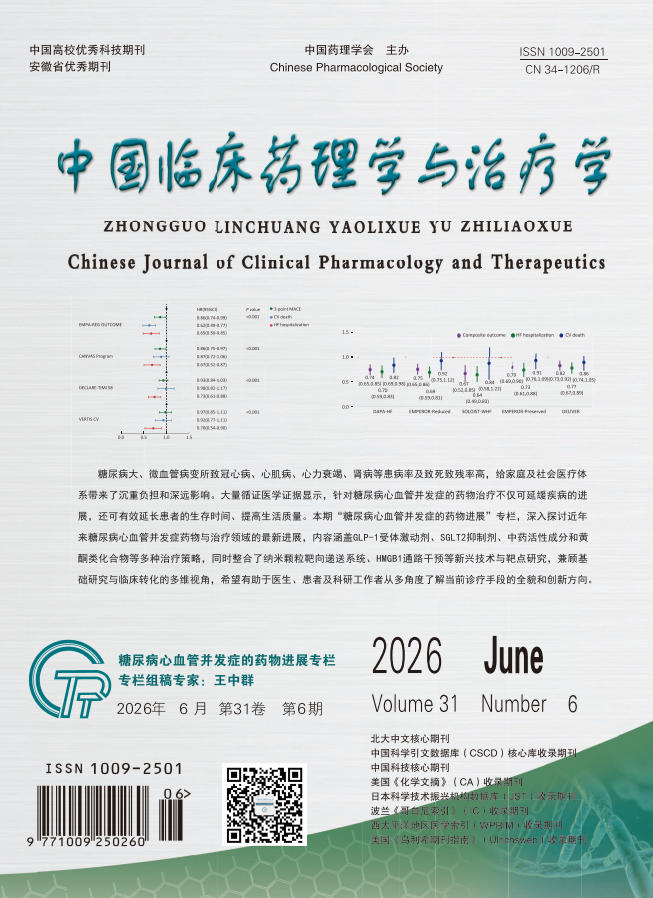
    Volume 31 Issue 6
    26 June 2026
    SGLT2 inhibitor from a clinical research perspective: boundary-breaking pioneer in the treatment of diabetic heart failure
    Ling CHEN, Zhongqun WANG
    2026, 31(6):  722-728.  doi:10.12092/j.issn.1009-2501.2026.06.001
    Asbtract ( 22 )   HTML ( 0)   PDF (743KB) ( 11 )  
    Figures and Tables | References | Related Articles | Metrics

    Extensive clinical trials have demonstrated that treatment with sodium-glucose co-transporter 2 inhibitor (SGLT2i) significantly reduces the risk of heart failure (HF) in patients with diabetes and improves clinical outcomes in those with established HF. Grounded in evidence-based medicine, this review summarizes current understanding and supporting evidence for the clinical benefits of SGLT2i in diabetic HF, providing new therapeutic strategies and rationale for its management.

    Cardiovascular protective effects of GLP-1 receptor agonists in diabetic cardiomyopathy: mechanisms and clinical prospects
    Xiaoman XU, Lei ZHOU
    2026, 31(6):  729-734.  doi:10.12092/j.issn.1009-2501.2026.06.002
    Asbtract ( 17 )   HTML ( 1)   PDF (450KB) ( 11 )  
    References | Related Articles | Metrics

    Diabetic cardiomyopathy (DCM) is a common cardiovascular complication in diabetic patients, especially more prevalent in patients with type 2 diabetes mellitus. Although remarkable progress has been made in hypoglycemic therapy for diabetes in recent years, conventional drugs still fail to effectively delay the progression of diabetic cardiomyopathy. Glucagon-like peptide-1 receptor agonists (GLP-1RAs) are novel incretin-based medications, which are not only used for the treatment of type 2 diabetes mellitus and obesity, but also exert significant cardioprotective and metabolic protective effects, and can reduce the risk of adverse cardiovascular events in diabetic patients. This paper reviews the pathophysiological mechanisms of DCM, and focuses on the extra-hypoglycemic protective mechanisms of GLP-1RAs in DCM as well as the latest advances in clinical research.

    Progress in pathogenesis and drug development of diabetic kidney disease
    Xuewu LIU, Dejian JIANG, Yanhua DU
    2026, 31(6):  735-751.  doi:10.12092/j.issn.1009-2501.2026.06.003
    Asbtract ( 16 )   HTML ( 0)   PDF (8133KB) ( 9 )  
    Figures and Tables | References | Related Articles | Metrics

    Diabetic kidney disease (DKD), a kind of microvascular lesion, is one of the major complications of diabetes. Clinically, it is characterized by proteinuria, mesangial proliferation and thickening of the basement membrane, glomerular sclerosis and fibrosis, and progressive decline of estimated glomerular filtration rate (eGFR), and is recognized as the main cause of end-stage renal disease (ESRD). The pathogenesis of DKD is complex, with genetic factors, abnormal energy metabolism, immunity and inflammation, and hemodynamic abnormalities all participating in and influencing the formation and progression of DKD. The complex molecular mechanism also brings great challenges to the construction of DKD models and the development of new drugs. This article reviews the recent progress in the research of the pathogenesis of DKD, animal disease models, and new drug development, aiming to provide new ideas for the development of drugs for the treatment of DKD.

    Research progress on flavonoids in the prevention and treatment of diabetic microvascular complications
    Su GUO, Xiaojiang QIN, Xuelu JIANG, Mengwei FANG, Zhi MAN, Xin MENG, Zhifa ZHENG, Liangyuan ZHAO, Yiwei SHI, Xiaomin HOU
    2026, 31(6):  752-763.  doi:10.12092/j.issn.1009-2501.2026.06.004
    Asbtract ( 16 )   HTML ( 0)   PDF (7171KB) ( 16 )  
    Figures and Tables | References | Related Articles | Metrics

    Diabetes mellitus is a common metabolic disease characterized by chronic hyperglycemia. Prolonged elevated blood glucose levels damage microvasculature throughout the body (including those in the retina, renal glomeruli, vasa nervorum, and intramyocardial small coronary arteries). This leads to clinical manifestations such as diabetic retinopathy, diabetic nephropathy, diabetic neuropathy, and diabetic cardiomyopathy, all of which significantly impair the patient's quality of life and can even pose fatal risks. The pathogenesis of diabetic microvascular complications is closely associated with pathological changes induced by hyperglycemia, including the abnormal activation of multiple metabolic pathways, oxidative stress, and inflammatory responses, among other factors. These processes ultimately lead to pathological alterations, including microvascular endothelial dysfunction, basement membrane thickening, and microcirculatory disturbances. Flavonoids, a broad class of naturally occurring compounds ubiquitous in plants, possess a wide range of biological activities, such as anti-inflammatory, antioxidant, and endothelium-protective effects, which render them highly promising for preventing and treating diabetic microvascular complications. This review summarizes recent advances in the study of flavonoids for preventing and treating diabetic microvascular complications. Furthermore, it discusses the current challenges and future directions for the clinical use of flavonoids, aiming to provide a comprehensive reference for their continued development and applications.

    Research progress on the treatment of diabetic cardiomyopathy with traditional Chinese medicine
    Xiao XU, Shuailin WANG, Xin QIAN, Yi YAO, Zhangyu WANG, Xiaoyi ZHU, Qing MAO, Qi GUO
    2026, 31(6):  764-773.  doi:10.12092/j.issn.1009-2501.2026.06.005
    Asbtract ( 27 )   HTML ( 0)   PDF (535KB) ( 9 )  
    Figures and Tables | References | Related Articles | Metrics

    Diabetic cardiomyopathy (DCM) is one of the severe complications of diabetes mellitus with complex pathogenesis. Currently, there are no specific therapeutic drugs for DCM in Western medicine. Traditional Chinese medicine (TCM) exhibits promising prospects in the prevention and treatment of DCM due to its multi-target and multi-pathway characteristics. This article systematically reviews the advances in experimental research on TCM intervention for DCM over the past five years, and summarizes the functional targets and signaling pathways of TCM from three categories: TCM monomers, classical compound prescriptions and modern proprietary Chinese medicines. The results demonstrate that TCM monomers (e.g., curcumin, astragalus polysaccharide, berberine, astragaloside IV and resveratrol) mainly activate signaling pathways including PI3K/AKT/mTOR, AMPK/mTOR, SIRT3/FOXO3a and Nrf2/HO-1/GPX4, thereby inhibiting oxidative stress, apoptosis, ferroptosis and pyroptosis, and improving myocardial structure and cardiac function. Classical compound prescriptions such as Buyang Huanwu Decoction, Zhigancao Decoction, Shengmai Yin and Didang Decoction can regulate insulin signaling pathway, TLR4/NF-κB axis, miR-181a-5p/SPHK2 and proteins related to mitochondrial dynamics, and alleviate myocardial inflammation and fibrosis. Modern proprietary Chinese medicines, including Tongxinluo Capsule, Zuojiang Jiangtang Shuxin Formula, Zhilong Huoxue Tongyu Capsule, Shexiang Tongxin Dropping Pills and Ziquan Tongmai Decoction, regulate AMPK-mTOR, TGF-β1/Smads and AGE-RAGE pathways to promote autophagy and ameliorate vascular endothelial dysfunction and microcirculatory disorders. All types of TCM can reduce blood glucose and blood lipid levels in DCM models, downregulate the expression of myocardial injury markers (CK-MB, MDA), and enhance the activities of antioxidant indicators (SOD, GSH-Px). TCM exerts synergistic therapeutic effects on DCM via multiple targets. Nevertheless, further in-depth studies are still required to elucidate its molecular network and promote clinical transformation.

    Trimethylamine-N-oxide and vascular remodeling in patients with diabetes
    Jun WU, Yuwei SONG, Hongbiao LIANG, Juan FENG
    2026, 31(6):  774-781.  doi:10.12092/j.issn.1009-2501.2026.06.006
    Asbtract ( 16 )   HTML ( 0)   PDF (1261KB) ( 7 )  
    Figures and Tables | References | Related Articles | Metrics

    Vascular remodeling represents a key pathophysiological basis for the onset and progression of diabetes-related cardiovascular and cerebrovascular diseases. In recent years, trimethylamine-N-oxide (TMAO) has attracted considerable attention as a novel risk factor implicated in various diseases. This review systematically summarizes the regulatory effects of TMAO on the intima, media, and adventitia of blood vessels. In particular, we highlight how TMAO contributes to pathological vascular remodeling—such as intimal hyperplasia, calcification, and fibrosis—by promoting vascular smooth muscle cell phenotypic switching, fibroblast differentiation, and abnormal alterations in structural proteins. Moreover, we focus on the complex interplay between TMAO and vascular remodeling under diabetic conditions, emphasizing the enhancement of advanced glycation end products, inflammation, and oxidative stress. Based on recent findings, lowering TMAO levels or blocking its signaling pathways may offer promising strategies for intervening in vascular remodeling, providing novel insights into the prevention and treatment of diabetic vascular complications.

    A cross-sectional study on the association between serum 1,5-anhydro-D-glucitol (1,5-AG) levels and cardiovascular disease risk
    Qianhao XU, Jiachen WANG, Yu FU, Yue LI, Tao YANG
    2026, 31(6):  782-788.  doi:10.12092/j.issn.1009-2501.2026.06.007
    Asbtract ( 15 )   HTML ( 1)   PDF (3249KB) ( 13 )  
    Figures and Tables | References | Related Articles | Metrics

    AIM: To evaluate the association between serum 1,5-anhydro-D-glucitol (1,5-AG) levels and the risk of developing cardiovascular diseases (CVDs), and to explore its potential value as a predictive biomarker for CVDs. METHODS: A cross-sectional study design was adopted, enrolling 873 community residents from Nanjing and Jurong, Jiangsu Province. Serum 1,5-AG levels were measured using a chemiluminescence enzyme immunoassay. Demographic characteristics, physical examination data, and laboratory parameters were collected. Multivariate logistic risk models were constructed to analyze the association between 1,5-AG levels and CVD events. Predictive performance was evaluated using Receiver Operating Characteristic (ROC) curves and Decision Curve Analysis (DCA). RESULTS: A total of 829 subjects (166 in the CVDs group and 663 in the control group) were included in the final analysis. Serum 1,5-AG levels in the CVDs group were significantly lower than those in the control group (0.11 [0.08, 0.14] μmol/L vs. 0.12 [0.09, 0.16] μmol/L, P = 0.003). After adjustment via multivariate logistic regression analysis, the established model indicated that low serum 1,5-AG levels were associated with an increased risk of CVDs (OR = 0.0111, P = 0.039). ROC analysis showed that the predictive model integrating serum 1,5-AG with conventional indicators demonstrated good discriminative performance for CVD risk (AUC=0.797), with a sensitivity of 0.681, specificity of 0.780, and a Youden index of 0.461. After adjusting for age and sex, serum 1,5-AG levels were negatively correlated with 10-year cardiovascular risk (r=?0.223), hemorrhagic stroke (r=?0.260), and ischemic stroke (r=?0.274), with all P<0.001. CONCLUSION: Decreased serum 1,5-AG levels are independently associated with CVD risk. Combining 1,5-AG with traditional indicators can improve predictive performance, potentially providing a new perspective for early CVD screening.

    Correlation between high density lipoprotein-related ratio index and in-stent restenosis in diabetic patients after percutaneous coronary intervention
    Yao WU, Xuan ZHOU, Xiaoyan WANG, Daidi WANG, Zhen SUN
    2026, 31(6):  789-797.  doi:10.12092/j.issn.1009-2501.2026.06.008
    Asbtract ( 16 )   HTML ( 0)   PDF (1495KB) ( 7 )  
    Figures and Tables | References | Related Articles | Metrics

    AIM: To explore the relationship between neutrophil/high density lipoprotein ratio (NHR), lymphocyte/high density lipoprotein ratio (LHR), monocyte/high density lipoprotein ratio (MHR) and platelet/high density lipoprotein ratio (PHR) and in-stent restenosis in diabetic patients after percutaneous coronary intervention. METHODS: From November 2021 to November 2024, 110 diabetic patients underwent percutaneous coronary intervention and re-examined coronary angiography were included. They were divided into non-restenosis group (62 cases) and restenosis group (48 cases). The correlation and predictive value of NHR, LHR, MHR and PHR for restenosis were evaluated by univariate/multivariate regression analysis, restricted cubic spline curves, correlation analysis, ROC analysis and decision curve analysis. Nomogram was established. RESULTS: Compared with the non-restenosis group, the levels of low-density lipoprotein cholesterol, lipoprotein (a), NHR, MHR and PHR in the restenosis group increased significantly (P<0.05). Logistic regression analysis showed that NHR, MHR and PHR were independently correlated with the restenosis in diabetic patients after percutaneous coronary intervention, and the levels of NHR, MHR and PHR were positively correlated with the occurrence of restenosis. There was no significant correlation between LHR and restenosis. ROC curve showed that MHR and PHR levels have a good predictive effect on the occurrence of restenosis in diabetic patients after percutaneous coronary intervention. CONCLUSION: NHR, MHR and PHR are significantly correlated with restenosis in diabetic patients after percutaneous coronary intervention, and they are effective indicators for predicting restenosis.

    Protective effects of Xueshuantong on mitochondrial dynamic balance, endothelial dysfunction, and atherosclerosis in diabetes
    Guangwei QI, Wanyu TONG, Jilu WANG, Jingwen GUO, Ruiqiao LI, Qilong WANG
    2026, 31(6):  798-807.  doi:10.12092/j.issn.1009-2501.2026.06.009
    Asbtract ( 12 )   HTML ( 0)   PDF (5264KB) ( 9 )  
    Figures and Tables | References | Related Articles | Metrics

    AIM: To investigate the therapeutic effect and underlying mechanisms of Xueshuantong (XST) in diabetes-accelerated atherosclerosis (AS). METHODS: Diabetes-accelerated AS models were established in ApoE?/? mice and C57BL/6J mice by intraperitoneal injection of streptozotocin (STZ) followed by XST administration for 12 weeks. Fasting blood glucose and serum levels of total cholesterol (TC), triglycerides (TG), low-density lipoprotein cholesterol (LDL-C), and high-density lipoprotein cholesterol (HDL-C) were measured. Atherosclerosis was assessed by evaluating plaque formation and lipid deposition in the aortic arch and root using Sudan IV and Oil Red O staining. Endothelium-dependent vasorelaxation was evaluated using isolated aortic ring assays. Mitochondrial morphology in aortic endothelial cells was examined by transmission electron microscopy. Human umbilical vein endothelial cells (HUVECs) were exposed to high glucose and treated with XST. Mitochondrial morphology and dynamics were analyzed using confocal microscopy. Mitochondrial reactive oxygen species (ROS) levels were measured, and the expression of mitochondrial dynamics-related protein was assessed by Western blotting. RESULTS: XST had no significant effect on blood glucose or lipid levels in diabetic AS mice. XST significantly reduced atherosclerotic plaque areas in the aortic arch and root of diabetic ApoE?/? mice, and improved acetylcholine-mediated endothelium-dependent vasorelaxation in STZ-induced C57BL/6J mice. In high glucose-stimulated HUVECs, XST significantly inhibited mitochondrial fragmentation and reduced mitochondrial ROS production. Mechanistically, high glucose increased the expression of dynamin-related protein 1 (Drp1) and mitochondrial fission protein 1 (Fis1), while decreasing phosphorylated AMP-activated protein kinase (p-AMPK) levels. XST treatment reversed these effects by activating AMPK and downregulating Drp1 and Fis1. CONCLUSION: XST may alleviates diabetes-accelerated atherosclerosis by activating the AMPK/Drp1 signaling pathway and restoring mitochondrial dynamic balance in endothelial cells.

    Research progress on drug molecular targeted delivery systems for cardiovascular complications of diabetes
    Yan LIU, Xiaojiang QIN, Chengjie WEI, Xuelu JIANG, Zhifa ZHENG, Xiaoyang PENG, Liangyuan ZHAO, Yiwei SHI, Xiaomin HOU
    2026, 31(6):  808-820.  doi:10.12092/j.issn.1009-2501.2026.06.010
    Asbtract ( 13 )   HTML ( 0)   PDF (10370KB) ( 9 )  
    Figures and Tables | References | Related Articles | Metrics

    Diabetes mellitus (DM) is a metabolic disorder characterized primarily by chronic hyperglycemia, with pathological features including disorders of carbohydrate, protein, and fat metabolism. This disease can lead to macrovascular and microvascular complications, resulting in various severe complications, such as diabetic neuropathy, diabetic nephropathy, and diabetic retinopathy. Cardiovascular complications are one of the major complications, serving as a key factor contributing to poor prognosis, increased disability rates, and mortality in diabetic patients. Clinical manifestations include coronary heart disease, diabetic cardiomyopathy, and cardiovascular autonomic neuropathy, among other pathological forms. Current clinical treatment options include blood glucose control, blood pressure management, lipid regulation, lifestyle interventions, and drug therapy. Traditional drug delivery systems have significant limitations, including marked interindividual differences in pharmacodynamics, suboptimal pharmacokinetic parameters, prominent long-term safety issues, insufficient target specificity, and limited administration routes. With the advancement of nanotechnology and molecular biology research, treatment strategies based on efficient targeted drug delivery systems have shown great potential in the field of diabetic cardiovascular complications. The development of efficient targeted drug delivery systems has become a key research direction in this field. This review systematically summarizes the latest research progress in targeted therapy for diabetic cardiovascular complications, focusing on the research achievements in cutting-edge fields such as nanocarrier technology, specific targeting molecule design, smart responsive delivery systems, and gene therapy. The aim is to elucidate the clinical translational value of molecular targeted delivery systems and provide theoretical basis and research insights for the development of novel therapeutic strategies.

    Research progress on macrophage membrane nanoparticles in the treatment of diabetic cardiovascular complications
    Xinyun PAN, Yunjian SONG, Zhongqun WANG
    2026, 31(6):  821-826.  doi:10.12092/j.issn.1009-2501.2026.06.011
    Asbtract ( 18 )   HTML ( 0)   PDF (2075KB) ( 10 )  
    Figures and Tables | References | Related Articles | Metrics

    Diabetic cardiovascular complications are one of the main causes of death in diabetic patients. In recent years, nanoparticle drug delivery systems have shown significant advantages in the field of drug delivery, especially in the treatment of infectious diseases, cancer and cardiovascular diseases. Among them, macrophage membrane nanoparticles significantly increase the enrichment of drugs in diseased tissues by virtue of their excellent immune escape ability and inflammatory targeting characteristics, making them a new direction for the treatment of cardiovascular complications. This article reviews the bionic characteristics, mechanism of action of macrophage membrane nanoparticles and the latest research progress in the treatment of diabetic cardiovascular complications. The mechanism of this technology in regulating the inflammatory response, alleviating oxidative stress and improving endothelial function was discussed. The aim is to provide new ideas for the development of precise treatment strategies for diabetic cardiovascular complications.

    Progress of Chinese medicine intervention in HMGB1 pathway to improve type 2 diabetes mellitus and its complications
    Ailin LU, Mengrui YUAN, Yongqing WU, Hongyi LIU
    2026, 31(6):  827-835.  doi:10.12092/j.issn.1009-2501.2026.06.012
    Asbtract ( 18 )   HTML ( 0)   PDF (1174KB) ( 8 )  
    Figures and Tables | References | Related Articles | Metrics

    The development of type2 diabetes mellitus (T2DM) is closely related to insulin resistance and pancreatic β-cell dysfunction, and high mobility group box 1 (HMGB1) and its related receptors and signaling pathways play an important role in the development of T2DM and its complications. HMGB1 is a core regulator of inflammatory response, widely found in various tissues and organs such as liver, adipose, skeletal muscle, and pancreatic islets, and affects the course of T2DM by enhancing inflammatory response and exacerbating insulin resistance. In recent years, a variety of traditional Chinese medicines (TCM) have been shown to slow down the progression of T2DM and its complications by regulating the expression of HMGB1 and its related receptors and signaling pathways. Therefore, the article discusses the current status of domestic and international research on the intervention of Chinese medicines in the HMGB1 pathway to improve T2DM and its complications, with the aim of providing medication ideas for the future use of Chinese medicines in the treatment of T2DM and its related complications.

    Effects of resveratrol on learning and memory abilities and the expression of SIRT1, STAT3, and IL-17 in the hippocampal CA1 region in VD rats
    Wei WANG, Qianying XIONG, Jian DING, Feng WU, Tongjun MA
    2026, 31(6):  836-843.  doi:10.12092/j.issn.1009-2501.2026.06.013
    Asbtract ( 17 )   HTML ( 0)   PDF (5466KB) ( 5 )  
    Figures and Tables | References | Related Articles | Metrics

    AIM: To investigate the effects of resveratrol (Rsv) on learning and memory abilities, as well as the expressions of silent information regulator 1 (SIRT1), signal transducer and activator of transcription 3 (STAT3), and interleukin-17 (IL-17) in the hippocampal CA1 region of rats with vascular dementia (VD), and to explore the potential therapeutic mechanism of resveratrol. METHODS: Adult healthy male Sprague-Dawley (SD) rats were randomly divided into the sham operation group (Sham group), sham operation + resveratrol group (Sham+Rsv group), and the operation group. The vascular dementia (VD) model was established in the operation group by permanent ligation of bilateral common carotid arteries. Rats with successful model establishment were screened out and randomly assigned to the VD group and VD + resveratrol group (VD+Rsv group), with 8 rats in each group. Both the VD+Rsv group and Sham+Rsv group were given Rsv (20 mg/kg) by gavage for 30 consecutive days. The learning and memory abilities of rats were evaluated using the Morris water maze test. The protein expressions of SIRT1, STAT3, and IL-17A in the hippocampal CA1 region were detected by immunohistochemistry and Western blotting. Additionally, the secretion of the inflammatory factor IL-17 was measured by enzyme-linked immunosorbent assay (ELISA). RESULTS: No statistically significant differences were observed in all measured outcomes between the Sham+Rsv group and the Sham group. Compared with the Sham group, the VD group exhibited a significant increase in escape latency, a prolonged latency to first cross the platform area, a shortened residence time in the target quadrant, and a reduced number of platform crossings (all P<0.001). In the hippocampal CA1 region of the VD group, the number of SIRT1-positive neurons was significantly decreased, with a marked increase in the average gray value (P<0.001) and a reduction in protein expression (P<0.01). Conversely, the numbers of STAT3-positive and IL-17A-positive neurons were significantly increased, accompanied by a significant decrease in the average gray value (P<0.001) and an elevation in their protein expressions (P<0.01). Additionally, the secretion of the inflammatory factor IL-17 was significantly increased in the VD group (P<0.001). After 4 weeks of resveratrol treatment in VD rats, compared with the VD group, the VD+Rsv group showed a significant reduction in escape latency (P<0.001), a shortened latency to first cross the platform area (P<0.001), an extended residence time in the target quadrant (P<0.05), and an increased number of platform crossings (P<0.01). In the hippocampal CA1 region of the VD+Rsv group, the number of SIRT1-positive neurons was increased (P<0.01), with a significant decrease in the average gray value (P<0.001) and an increase in protein expression (P<0.05). For STAT3 and IL-17A, the numbers of positive neurons were reduced (P<0.05 for STAT3, P<0.001 for IL-17A), with a significant increase in the average gray value (P<0.001) and a decrease in their protein expressions (P<0.05 for both). Moreover, the secretion of the inflammatory factor IL-17 was decreased in the VD+Rsv group (P<0.05). CONCLUSION: Rsv can alleviate VD-induced impairments in learning and memory abilities as well as neuroinflammation, and its mechanism of action may be related to the regulation of the expressions of SIRT1, STAT3, and IL-17.

    Sesamin improves liver injury in nonalcoholic fatty liver disease mice by inhibiting M1 macrophage polarization
    Junmin MA, Yue SUN, Yanhua TAO, Bei WEI, Qiuyun WANG, Cuiwei ZHANG, Guodong WANG, Xiang KONG, Haoran ZHANG
    2026, 31(6):  844-850.  doi:10.12092/j.issn.1009-2501.2026.06.014
    Asbtract ( 18 )   HTML ( 0)   PDF (5149KB) ( 1 )  
    Figures and Tables | References | Related Articles | Metrics

    AIM: To investigate whether Ses can improve liver injury in nonalcoholic fatty liver disease (NAFLD) mice by inhibiting M1 macrophages polarization. METHODS: A primary mouse bone marrow-derived macrophage (BMDMs) polarization model and a high-fat diet-fed NAFLD mouse model were used. After Ses treatment, the levels of inflammatory factors in BMDMs and mouse liver tissue, the expression of inducible nitric oxide synthase (iNOS, an M1 macrophage marker) and phosphorylated-signal transducer and activator of transcription1 (P-STAT1) were measured. Serum liver function indicators were also tested. Liver tissue sections were prepared for HE staining, F4/80 and P-STAT1 immunohistochemistry and immunofluorescence staining. RESULTS: Ses treatment reduced the levels of IL-1β and IL-6 in LPS-treated BMDMs and inhibited the expression of iNOS and P-STAT1. Ses treatment reduced the body weight of NAFLD mice and improved liver damage (P<0.01). In the Ses treatment group, the number of macrophages in the liver decreased, and the levels of IL-1β and IL-6, as well as the expression of iNOS and P-STAT1, were reduced(P<0.01). CONCLUSIONS: Ses improves liver damage in NAFLD mice. These effects may be associated with reduction of STAT1 phosphorylation and inhibition of M1 macrophage polarization.

    Clinical efficacy of ceftazidime/avibactam in critically ill patients with carbapenem-resistant gram-negative organism infections
    Ziping CHENG, Xian ZHA
    2026, 31(6):  851-864.  doi:10.12092/j.issn.1009-2501.2026.06.015
    Asbtract ( 14 )   HTML ( 0)   PDF (976KB) ( 2 )  
    Figures and Tables | References | Related Articles | Metrics

    AIM: To compare the clinical efficacy of ceftazidime-avibactam (CZA) monotherapy versus combination therapy in critically ill patients with carbapenem-resistant organism (CRO) infections and to identify risk factors affecting prognosis. METHODS: A total of 96 patients with CRO infections who were hospitalized at Zhongda Hospital Southeast University from 1 September 2019 to 31 December 2023 were enrolled. Based on the treatment regimens, patients were divided into monotherapy group (n=59) and combination therapy group (n=37). Propensity score matching (PSM) was applied to balance baseline characteristics between the two groups. The primary outcomes included 30-day all-cause mortality and 30-day clinical cure rate. Secondary outcomes included 14-day all-cause mortality, microbiological clearance rate, total hospital length of stay (LOS), intensive care unit (ICU) LOS, and duration of mechanical ventilation. RESULTS: After PSM, a total of 74 patients were included, with 37 cases in each group. Before PSM, the 30-day all-cause mortality was 35.6% in the monotherapy group and 21.6% in the combination therapy group; after PSM, the rates were 40.5% and 21.6%, respectively. The differences were not statistically significant before and after matching (P=0.147, P=0.079). The 30-day clinical cure rate was 62.7% in the monotherapy group and 73.0% in the combination therapy group before PSM, 56.8% and 73.0% respectively after PSM, with no statistically significant differences before and after matching (P=0.299, P=0.144). However, the microbiological clearance rate was significantly higher in the combination therapy group compared to the monotherapy group (70.3% vs. 49.2%, P=0.042), and the result remained stable after PSM (P=0.010). There were no significant differences in 14-day all-cause mortality, total hospital LOS, ICU LOS, or duration of mechanical ventilation between the two groups (P>0.05). Multivariate logistic regression analysis showed that the use of vasopressors and advanced age were independent risk factors for increased 30-day all-cause mortality. Advanced age, longer time from the positive culture to antibiotic administration, and diabetes were independent risk factors for reduced microbiological clearance, while combination therapy was a significant favorable factor in improving microbiological clearance (P<0.05). CONCLUSION: Although the combination therapy regimen did not show a significant advantage in reducing 30-day all-cause mortality or improving 30-day clinical cure rate in patients with CRO infections, it was associated with a higher microbiological clearance rate. The findings of this study provide new clinical evidence for the application of CZA in the management of CRO infections.