Loading...
Welcome to Chinese Journal of Clinical Pharmacology and Therapeutics,Today is Chinese

Table of Content

    Volume 31 Issue 7
    26 July 2026
    Ginkgetin suppresses proliferation and migration of triple-negative breast cancer cells by inducing ferroptosis via the GPX4/OTUB1 axis
    Feng YANG, Wei SHI, Huiling WANG, Zitong ZHENG
    2026, 31(7):  865-874.  doi:10.12092/j.issn.1009-2501.2026.07.001
    Asbtract ( 15 )   HTML ( 0)   PDF (10190KB) ( 2 )  
    Figures and Tables | References | Related Articles | Metrics

    AIM: To investigate the effects of Ginkgetin on ferroptosis in triple-negative breast cancer (TNBC) cells and explore its anti-tumor mechanism via regulating the GPX4/OTUB1 axis. METHODS: MDA-MB-231 and MDA-MB-468 cells were divided into vehicle control (0.1% DMSO), Ginkgetin treatment groups (5, 10, 20 μmol/L), and combination intervention groups (20 μmol/L Ginkgetin + 10 μmol/L Fer-1 or 20 μmol/L DFP). Cell viability was detected by CCK-8 assay; cell proliferation was assessed via EdU staining; colony formation assay was used to evaluate proliferative capacity; cell migration and invasion were measured by Transwell assay; intracellular reactive oxygen species (ROS), lipid peroxidation, and Fe2+ levels were quantified by flow cytometry; mitochondrial morphology was observed using transmission electron microscopy (TEM); protein expression (GPX4, OTUB1) was analyzed by Western blot; GPX4-OTUB1 interaction was studied by co-immunoprecipitation (Co-IP); and co-localization of GPX4 and OTUB1 was observed by immunofluorescence. RESULTS: CCK-8, EdU staining, colony formation assay, and Transwell assays demonstrated that Ginkgetin treatment significantly reduced the proliferation, invasion, and migration of MDA-MB-231 and MDA-MB-468 cells in a dose-dependent manner. Ferroptosis-related assays revealed that Ginkgetin-treated cells exhibited markedly increased intracellular ROS levels, lipid peroxidation products, and Fe2+ content (P<0.01), accompanied by significantly reduced glutathione (GSH) levels (P<0.01). These effects were partially reversed by ferroptosis inhibitors (Fer-1, DFP). Additionally, Fer-1 and DFP restored cell migration and invasion capabilities. TEM confirmed mitochondrial ultrastructural changes characteristic of ferroptosis. Western blot showed that Ginkgetin significantly downregulated GPX4 expression (P<0.01) and promoted its ubiquitination-dependent degradation. Co-IP confirmed that Ginkgetin inhibited the interaction between OTUB1 and GPX4 (P<0.01). CONCLUSION: Ginkgetin exerts anti-TNBC effects by inhibiting the OTUB1-GPX4 interaction, promoting GPX4 ubiquitination and degradation, and thereby inducing ferroptosis.

    Intervention of hydrogen sulfide on FDX1-cuproptosis pathway in rats with hypoxemic pulmonary hypertension
    Shuyuan WANG, Man HUANG, Sian CHEN, Congmei HAN, Yuan CHENG, Linbo YUAN, Huan YE, Wantie WANG
    2026, 31(7):  875-884.  doi:10.12092/j.issn.1009-2501.2026.07.002
    Asbtract ( 8 )   HTML ( 1)   PDF (2276KB) ( 2 )  
    Figures and Tables | References | Related Articles | Metrics

    AIM: To investigate whether hydrogen sulfide (H2S) improves hypoxic pulmonary hypertension (HPH) in rats through the FDX1-cuproptosis pathway. METHODS: Male Sprague-Dawley (SD) rats were randomly assigned to the Control group; Hypoxia group and Hypoxia+NaHS group, with 10 rats in each group. Rats in the Control group were housed in a normoxic environment (21% O2) and received a daily intraperitoneal injection of an equal volume of normal saline; rats in the Hypoxia group and Hypoxia+NaHS group were placed in hypoxic chambers and received a daily intraperitoneal injection of 14 μmol/kg NaHS. After 21 days of model establishment, the mean pulmonary arterial pressure (mPAP) of each group was measured by right heart catheterization and the right ventricular hypertrophy index (RVHI) was calculated after weighing. The levels of endothelin-1 (ET-1), nitric oxide (NO) and prostacyclin (PGI2) were measured by ELISA. Copper ion concentration was detected by inductively coupled plasma mass spectrometry (ICP-MS). The protein levels of copper transporter 1 (CTR1), copper-transporting ATPase α (ATP7A), copper-transporting ATPase β (ATP7B), ferredoxin 1 (FDX1), lipoic acid synthase (LIAS), dihydrolipoamide S-acetyltransferase (DLAT), dihydrolipoamide S-acetyltransferase dimer (DLAT Dimer) and dihydrolipoamide S-succinyltransferase (DLST) were detected by Western blot. The mRNA expression levels of FDX1, LIAS, DLAT and dihydrolipoamide dehydrogenase (DLD) were detected by RT-qPCR. Mitochondrial membrane potential was assessed using the JC-1 kit. ATP content was measured by chemiluminescence. The level of pyruvate dehydrogenase E1 subunit alpha 1 (PDHA1) was measured by ELISA. Citric acid (CA) content was measured by the sulfosalicylic acid method. RESULTS: Compared with the Control group, the Hypoxia group showed significantly increased mPAP and RVHI; significantly elevated ET-1 concentration while NO and PGI2 concentrations were significantly decreased; significantly increased copper ion concentration; significantly elevated expression of copper transporter 1 while the expressions of copper efflux proteins ATP7A and ATP7B were significantly decreased; the expressions of cuproptosis-related proteins FDX1, LIAS, DLAT and DLST were all significantly decreased, whereas the expression of DLAT dimer is significantly increased; the mRNA expression levels of FDX1, LIAS, DLAT and DLD were significantly decreased; the mitochondrial function indicators JC-1 and ATP levels were significantly decreased and the tricarboxylic acid cycle indicators PDHA1 and CA levels were significantly decreased (all P<0.05). Compared with the Hypoxia group, all the above changes in the Hypoxia+NaHS group were significantly reversed by the therapeutic agent NaHS. CONCLUSION: H2S may regulate the FDX1-cuproptosis pathway, thereby affecting mitochondrial function and metabolism in lung tissue cells, alleviating pulmonary vasoconstriction and ameliorating pulmonary hypertension.

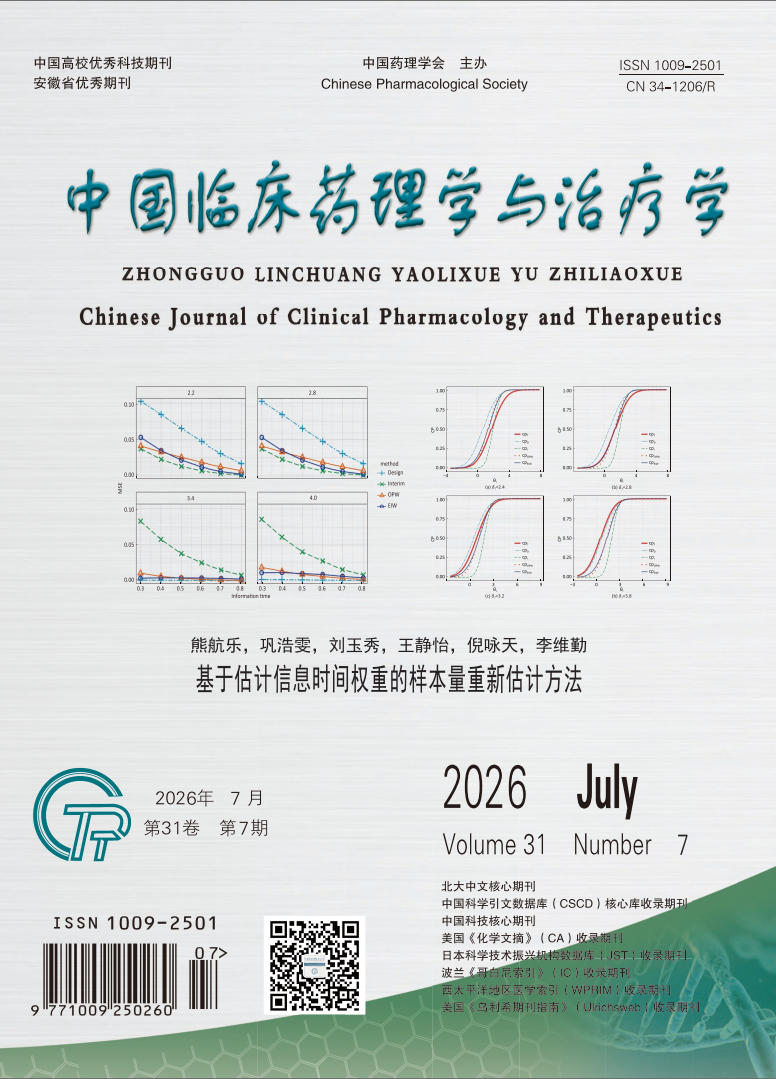
    Sample size re-estimation method based on estimated information time weighting
    Hangle XIONG, Haowen GONG, Yuxiu LIU, Jingyi WANG, Yongtian NI, Weiqin LI
    2026, 31(7):  885-891.  doi:10.12092/j.issn.1009-2501.2026.07.003
    Asbtract ( 11 )   HTML ( 0)   PDF (2733KB) ( 1 )  
    Figures and Tables | References | Related Articles | Metrics

    AIM: To propose a new conditional power (CP) algorithm and apply it to sample size re-estimation (SSR). METHODS: A temporary sample size was estimated based on the interim observed results, and the ratio of the current sample size to this estimated sample size was used as the weight, referred to as the estimated information time weighting (EIW). CP ($ {cp}_{\text{EIW}} $) was calculated using this weighting, and sample size re-estimation is performed. Monte Carlo simulation techniques were used to compare the accuracy of this method with three commonly used CP calculation methods: $ {cp}_{\text{D}} $ method (initial assumed parameter method), $ {cp}_{\text{I}} $ method (interim observation result method), and $ {cp}_{\text{OPW}} $ method (optimal hybrid weight method). Additionally, the statistical performance of sample size re-estimation based on four different CP algorithms was compared. RESULTS: Simulation results for CP accuracy showed that the accuracy of $ {cp}_{\text{EIW}} $ and $ {cp}_{\text{OPW}} $ were close, and both outperform the commonly used $ {cp}_{\text{D}} $ and $ {cp}_{\text{I}} $. For sample size re-estimation based on different CP algorithms, all four methods were able to control type Ⅰ error, with $ {cp}_{\text{EIW}} $ showing the highest conditional power and the best average performance score (APS). CONCLUSION: Among the four CP algorithms, $ {cp}_{\text{EIW}} $ exhibits good accuracy and provides better statistical performance for sample size re-estimation. It is recommended for application.

    Correlation between BTK, PLCG2, CYP3A4, and TP53 gene polymorphisms, and TPO concentration, and bleeding risk associated with ibrutinib
    Lei QIAN, Gongwei HAN, Xiaomin RUAN, Yufang LI, Qinhua LIU, Quan XIA
    2026, 31(7):  892-898.  doi:10.12092/j.issn.1009-2501.2026.07.004
    Asbtract ( 12 )   HTML ( 0)   PDF (528KB) ( 1 )  
    Figures and Tables | References | Related Articles | Metrics

    AIM: To explore the association between common single nucleotide polymorphisms (SNPs) in Bruton's tyrosine kinase (BTK), phospholipase Cγ2 (phospholipase C gamma 2, PLCG2), CYP3A4 (cytochrome), and tumor protein p53 (TP53) genes, plasma thrombopoietin (TPO) concentration, and ibrutinib treatment-related bleeding events, and to provide reference for individualized risk management. METHODS: A retrospective analysis was conducted on 34 patients with B-cell non-Hodgkin lymphoma who received ibrutinib treatment at the First Affiliated Hospital of Anhui Medical University from January 2022 to February 2024. Genotyping of 17 selected SNP sites across the four genes was performed using matrix-assisted laser desorption ionization-time of flight mass spectrometry (MALDI-TOF MS). Plasma TPO concentration was measured by enzyme-linked immunosorbent assay (ELISA). Treatment-related bleeding adverse reactions were assessed according to CTCAE 5.0 criteria. Statistical analyses included the χ2 test, Fisher's exact test, independent samples t-test, and Spearman correlation analysis. RESULTS: Among the 34 patients, 24 (70.6%) experienced adverse reactions, with bleeding (grades 1-2) being the most common (15 cases, 44.1%). Genetic analysis revealed no significant differences in genotype distribution for all detected SNP loci (including TP53 rs1042522, CYP3A4 rs2246709, etc.) between the bleeding and non-bleeding groups (all P>0.05). However, plasma TPO concentration was significantly higher in patients with bleeding compared to those without bleeding (540.6 ± 94.6 pg/mL vs. 483.7±60.5 pg/mL, P=0.041). Further analysis found no significant association between the polymorphisms at the studied SNP site and TPO concentration (all P> 0.05). CONCLUSION: The common polymorphisms in the BTK, PLCG2, CYP3A4, and TP53 genes were not major determinants of ibrutinib-associated bleeding risk. Elevated plasma TPO concentration was significantly correlated with bleeding events, suggesting it may serve as a potential biomarker for predicting bleeding risk during ibrutinib therapy. This marker requires validation in larger-scale prospective studies.

    Bioequivalence study of levodopa and benserazide hydrochloride tablets in healthy Chinese subjects under fasting and fed conditions
    Lin LI, Yuming XIA, Chenlin SHEN, Quan XIA, Shuai SONG
    2026, 31(7):  899-907.  doi:10.12092/j.issn.1009-2501.2026.07.005
    Asbtract ( 11 )   HTML ( 0)   PDF (2109KB) ( 2 )  
    Figures and Tables | References | Related Articles | Metrics

    AIM: To evaluate the bioequivalence of generic and original levodopa-benserazide tablets in healthy Chinese subjects under fasting and fed conditions. METHODS: A randomized, open-label, single-dose, two-sequence, four-period, fully replicated crossover study design was employed. A total of 64 healthy subjects were enrolled, with 32 subjects in the fasting group and 32 in the fed group, each divided into two groups of 16 subjects. Each subject received either one tablet of the test formulation or one tablet of the reference formulation in each period, with a washout period of 5 days between doses. The plasma concentrations of levodopa and tri-hydroxybenzylhydrazine were measured using liquid chromatography-tandem mass spectrometry, and pharmacokinetic parameters were calculated using WinNonlin 8.1 software to assess the bioequivalence of the two formulations. RESULTS: Under fasting conditions, the Cmax of levodopa for the test and reference formulations were (4261.10±1709.86) ng/mL and (4157.00±1538.07) ng/mL, respectively. The AUC0-t values were (7427.57±1409.34) h·ng·mL?1 and (7060.07±1389.62) h·ng·mL?1, while AUC0-∞ values were (7472.97±1411.51) h·ng·mL?1 and (7146.98±1295.45) h·ng·mL?1, respectively. For tri-hydroxybenzylhydrazine, Cmax values were (27.99±13.38) ng/mL and (26.56±14.06) ng/mL; AUC0-t were (17.85±6.00) h·ng·mL?1 and (17.22±5.39) h·ng·mL?1, respectively; and AUC0-∞values were (19.00±6.39) h·ng·mL?1 and (18.39±5.85) h·ng·mL?1, respectively. In the fed trials, the Cmax of levodopa for the test and reference formulations were (3338.28±1493.52) ng/mL and (3325.30±1524.62) ng/mL, respectively; AUC0-t values were (6744.79±1325.04) h·ng·mL?1 and (6615.38±1364.12) h·ng·mL?1, respectively; and AUC0-∞ values were (6786.27±1326.03) h·ng·mL?1 and (6658.58±1358.30) h·ng·mL?1, respectively. The Cmax, AUC0-t, and AUC0-∞ values for trihydroxybenzylhydrazine were (8.35 ± 6.49) and (8.44 ± 6.44) ng/mL, (6.71 ± 4.14) and (6.81 ± 3.79) h·ng·mL?1, and (7.14 ± 4.27) and (7.23 ± 3.98) h·ng·mL?1, respectively.The geometric mean ratios of the primary pharmacokinetic parameters for both formulations under fasting and fed conditions fell within the 90% confidence interval of 80.00%-125.00%. A total of 27 adverse events were reported during the study (17 in the fasting group and 10 in the fed group), with no serious adverse events occurring. CONCLUSION: The test formulation demonstrates bioequivalence to the reference formulation in healthy subjects under both fasting and fed conditions, with a favorable safety profile.

    Effect of gender on the efficacy of fospropofol disodium in inhibiting the reaction of gastroscopy insertion
    Yi ZHANG, Jie FANG, Shu ZHAO, Jingli YUAN, Xuejun REN
    2026, 31(7):  908-912.  doi:10.12092/j.issn.1009-2501.2026.07.006
    Asbtract ( 23 )   HTML ( 0)   PDF (1049KB) ( 2 )  
    Figures and Tables | References | Related Articles | Metrics

    AIM: To evaluate the effect of gender on the efficacy of fospropofol disodium in inhibiting the reaction of gastroscopy insertion. METHODS: This study was a prospective trial. Patients scheduled for painless gastroscopy, aged 18 to 64 years, with a BMI of 18 to 25 kg/m2, and ASA physical status classification Ⅰ or Ⅱ, were selected and divided into three groups randomly: male group (M group), female group (F group), and gender-unrestricted group (C group). A dose of 0.2 mg/kg of nalbuphine was intravenously injected, followed by fospropofol disodium 1 minutes later. When the modified observer's assessment of alertness and sedation (MOAA/S) ≤3, gastroscopy was performed by an experienced senior physician. According to the improved Dixon sequential method, the dose of fospropofol disodium for the first patient was set at 10 mg/kg. If the patient showed any reaction affected the procedure during the insertion of the endoscope, it was judged as a positive reaction, and the dose for the next patient was increased by 1 mg/kg; otherwise, it was decreased by 1 mg/kg. The trial was terminated when there were 7 positive and negative reaction crossover points, and adverse reactions were observed. The dose-response relationship was calculated by probit regression analysis method. RESULTS: The ED50 of fospropofol disodium in group M was 14.713 mg/kg (95% CI 14.044-14.988 mg/kg), ED95 was 16.854 mg/kg (95% CI 14.229-17.339 mg/kg). In group F, ED50 was 12.938 mg/kg (95% CI 12.072-13.363 mg /kg), and ED95 was 15.289 mg/kg (95% CI 12.265-16.293 mg /kg). Compared with group M, the ED50 of group F was decreased (P<0.05). The ED50 of fospropofol disodium in group C was 13.915 mg/kg (95%CI 13.110-13.977 mg/kg), and ED95 was 15.545 mg/kg (95%CI 13.311-15.675 mg/kg). Abnormal sensations occurred in 15 patients (16%), and respiratory depression occurred in 2 cases (2%). CONCLUSION: Gender factors influence the efficacy of sodium phosphopropofol in suppressing the response to endoscope insertion, with higher efficacy observed in females than that in males.

    Dual-scenario real-world study and pharmaceutical care strategy analysis of dalteparin sodium in orthopedic patients
    Yan LIU, Ji QIU, Guocui WU, Ruilin LI, Yizhao CHEN
    2026, 31(7):  913-920.  doi:10.12092/j.issn.1009-2501.2026.07.007
    Asbtract ( 23 )   HTML ( 0)   PDF (496KB) ( 4 )  
    Figures and Tables | References | Related Articles | Metrics

    AIM: To analyze the asymmetric risk pattern of "controllable bleeding in prophylaxis versus suboptimal dosing in treatment" during dalteparin sodium use in orthopedic patients using a dual-scenario framework, providing insights for refined anticoagulation management. METHODS: This retrospective study included 200 inpatients receiving dalteparin sodium in an orthopedic department (September 2023 to March 2025). Patients were categorized into prophylaxis (n=185) and treatment (n=15) groups. Multivariate logistic regression identified bleeding risk factors in the prophylaxis group, with stratified analysis and propensity score matching (PSM) assessing potential confounding by indication. For the small treatment group, exploratory analyses (Fisher's exact test, Firth regression, Bayesian methods) were employed. RESULTS: In the prophylaxis group, bleeding events occurred in 22.70% of patients. A Caprini score ≥5 was an independent risk factor (OR=8.06, 95%CI: 1.79–36.20, P=0.007), while inappropriate dosing timing was associated with reduced bleeding risk (OR=0.14, 95%CI: 0.05–0.46, P=0.001). Stratified analysis and PSM suggested confounding by indication. In the treatment group, subtherapeutic dosing was observed in 93.33% of patients, with a 21.43% treatment failure rate. All failures occurred in the subtherapeutic dosing subgroup, though sample size limitations precluded definitive conclusions. CONCLUSION: Dalteparin sodium use in orthopedics shows a dual-scenario pattern: concentrated bleeding risk in prophylaxis and prevalent dosing deviations in treatment. A Caprini score ≥5 serves as a key bleeding risk indicator in prophylaxis. Failure to implement weight-stratified dosing may contribute to therapeutic failure. The proposed tiered pharmaceutical care framework offers practical guidance for optimizing dalteparin sodium use in orthopedic practice.

    Pharmacokinetic/pharmacodynamic characteristics of adalimumab in moderate-to-severe psoriasis and its therapeutic drug monitoring applications
    Jianxin YANG, Yunli YU
    2026, 31(7):  921-927.  doi:10.12092/j.issn.1009-2501.2026.07.008
    Asbtract ( 16 )   HTML ( 0)   PDF (465KB) ( 3 )  
    Figures and Tables | References | Related Articles | Metrics

    As the first anti-TNF-α monoclonal antibody approved for clinical use worldwide, adalimumab has become a first-line treatment for moderate-to-severe psoriasis. However, this drug's pharmacokinetic (PK) and pharmacodynamic (PD) characteristics in psoriasis patients have not yet been fully elucidated. This article systematically reviews the PK and PD properties of adalimumab in the treatment of moderate-to-severe psoriasis, with a focus on the impact of patient-specific factors such as anti-drug antibody formation and body weight on drug exposure. Additionally, it analyzes the clinical application value and optimization strategies of therapeutic drug monitoring (TDM) in psoriasis treatment. This review emphasizes the importance of establishing psoriasis-specific drug concentration-efficacy relationship models and therapeutic windows, aiming to provide clear directions for future large-scale clinical studies and to guide the development and implementation of personalized precision treatment strategies for psoriasis.

    Research progress of active components of Astragalus membranaceus in improving lipid metabolism disorder of diabetic kidney disease
    Liping ZHENG, Han ZHU, Keqin ZHAO, Yong HUANG, Peng LIU
    2026, 31(7):  928-936.  doi:10.12092/j.issn.1009-2501.2026.07.009
    Asbtract ( 14 )   HTML ( 0)   PDF (1247KB) ( 2 )  
    Figures and Tables | References | Related Articles | Metrics

    Diabetic kidney disease (DKD) is a common microvascular complication secondary to diabetes. Its incidence is increasing year by year, which seriously threatens the prognosis and quality of life of diabetic patients. At present, the clinical treatment options for DKD are limited, and it is difficult to effectively prevent its progression. In the complex pathophysiological mechanism of DKD, lipid metabolism disorder plays an important role, which not only promotes lipid deposition in the kidney, but also accelerates the process of renal injury through lipid toxicity. In recent years, Chinese herbal medicine has attracted much attention because of its significant effect in improving DKD lipid metabolism disorder. Astragalus membranaceus is a commonly used Chinese herbal medicine for the treatment of DKD, which shows significant renal protective effect in the treatment of DKD. Astragalus membranaceus is rich in Astragaloside Ⅳ, formononetin, quercetin, kaempferol and other active ingredients. It shows unique advantages in improving DKD lipid metabolism disorders. It can not only effectively improve lipid metabolism disorders, but also reduce renal lipid deposition. This article systematically reviews the research progress of the effect of Astragalus active ingredients on improving lipid metabolism disorders in DKD, and provides a theoretical basis for clinical treatment of DKD strategies.

    Gut microbiota and colorectal cancer: advances from pathogenic mechanisms to therapeutic interventions
    Wei LIU, Wei ZHANG
    2026, 31(7):  937-947.  doi:10.12092/j.issn.1009-2501.2026.07.010
    Asbtract ( 12 )   HTML ( 3)   PDF (4108KB) ( 5 )  
    Figures and Tables | References | Related Articles | Metrics

    Colorectal cancer (CRC) is one of the most prevalent malignancies worldwide, and its incidence has shown a steadily increasing trend in recent years. Clinical investigations and experimental evidence from animal models have established a strong association between the gut microbiota and CRC. The gut microbiota functions as a key regulatory factor in the initiation and progression of CRC, primarily through shaping the local immune and inflammatory microenvironment, producing metabolites with either tumor-suppressive or tumor-promoting activities, and secreting genotoxic substances, among other mechanisms, thereby driving CRC development. Meanwhile, the gut microbiota can also modulate the sensitivity of CRC to chemotherapy and immunotherapy through multiple pathways. This review aims to explore specific microbial taxa closely related to CRC onset, progression, and treatment, with a particular focus on the gut microbiota–mediated pathogenic mechanisms of CRC and currently effective therapeutic strategies. Ultimately, this work seeks to advance understanding of the deeper interplay between the gut microbiota and CRC, while providing novel perspectives for improving therapeutic efficacy in CRC.

    Advances in molecular mechanisms of immune responses in primary membranous nephropathy
    Jin XU, Jiansheng LI, Zhenhua LIU, Xinli ZHANG, Feng JIN
    2026, 31(7):  948-956.  doi:10.12092/j.issn.1009-2501.2026.07.011
    Asbtract ( 11 )   HTML ( 0)   PDF (2605KB) ( 3 )  
    Figures and Tables | References | Related Articles | Metrics

    Primary Membranous Nephropathy (PMN) is a common chronic glomerular disease, which is characterized by glomerular basement membrane thickening and proteinuria. The core pathological mechanism is immune-mediated glomerular injury. In recent years, with the progress of immunology and molecular biology technology, important progress has been made in the pathogenesis of PMN, especially in the molecular mechanism of immune response. Previous studies have shown that anti-PLA2R antibody, as the core pathogenic factor of PMN, can form antigen-antibody complexes by binding to PLA2R on the podocyte membrane, induce the deposition of immune complexes, and lead to glomerular injury and proteinuria by activating the classical complement pathway. In addition, complement cleavage products, such as C3a and C5a, further exacerbate local inflammation and disrupt podocyte barrier function, ultimately leading to glomerulosclerosis. Immune cells also play an important role in the development of PMN. B cells directly participate in the formation of immune complexes by producing IgG4 antibodies. The Th2 type immune response of T cells promotes the production of pathological antibodies by enhancing the activation of B cells. Other immune cells such as dendritic cells and macrophages participate in the disease through antigen presentation, pro-inflammatory cytokine secretion and tissue damage. In this paper, the molecular mechanism of immune response in PMN is described, aiming to provide solid theoretical support and scientific basis for the prevention and treatment of this disease and future research direction.

    New research progress of tumor necrosis factor-α signaling pathway regulating alcoholic hepatitis
    Bei TIAN, Mei GUO, Zhiwang WANG, Yue ZHANG, Ping QUAN, Yue ZHAO, Qiwei WANG, Xinyu ZHU, Jing SHAO
    2026, 31(7):  957-964.  doi:10.12092/j.issn.1009-2501.2026.07.012
    Asbtract ( 171 )   HTML ( 0)   PDF (1930KB) ( 2 )  
    Figures and Tables | References | Related Articles | Metrics

    Alcoholic hepatitis (AH) is an immunoin flammatory disease of the liver caused by long-term heavy drinking of ethanol and its metabolites. Tumor necrosis factor-α (TNF-α) plays a key regulatory role in the inflammatory response of liver tissue, such as inflammatory cell infiltration, hepatocyte hepatocyte enlargement with steatosis, and fibrous tissue hyperplasia in the confluent area during the process of AH. Therefore, TNF-α regulation of AH-related signaling networks has become a new research hotspot in recent years. This article reviews the mechanism of TNF-α in regulating alcoholic hepatitis from the perspective of signaling networks such as nuclear factor-kappaB (NF-κB), Toll-like receptor 4 (TLR4), NOD-like receptor pyrin domain containing 3 (NLRP3) inflammasome, mitogen-activated protein kinase (MAPK) as well as signal transducers and activators of transcription 3 (STAT3), to provide a theoretical basis for the study of the inflammatory response mechanism of AH liver tissue and the development of new drugs.

    Research progress in traditional Chinese medicine regulating pyroptosis for treating rheumatoid arthritis
    Xixi XU, Qing WANG, Yuanyuan SHI, Qiaoxue WANG, Huan LONG
    2026, 31(7):  965-974.  doi:10.12092/j.issn.1009-2501.2026.07.013
    Asbtract ( 15 )   HTML ( 1)   PDF (825KB) ( 3 )  
    Figures and Tables | References | Related Articles | Metrics

    Rheumatoid arthritis is a chronic, progressive autoimmune disease. Disease progression can lead to joint swelling, deformity, and loss of function, severely affecting the patients' quality of life in the late stage of disease development. In recent years, it has been shown that pyroptosis, as a form of programmed cell death, plays a key role in the pathogenesis of rheumatoid arthritis. Pyroptosis is triggered by inflammasome activation and participates in the immune inflammatory response of rheumatoid arthritis through regulating the release of pro-inflammatory factors and immune cell activation. Traditional Chinese medicine, with its multi-target and multi-pathway characteristics, can effectively regulate rheumatoid arthritis-related pyroptosis processes. This review systematically summarized the important role of cell pyroptosis in the pathogenesis of rheumatoid arthritis, and the regulatory mechanisms of traditional Chinese medicine on pyroptosis related to rheumatoid arthritis, providing a new entry point for discussing the mechanisms of rheumatoid arthritis and a theoretical basis for developing traditional Chinese medicine treasure house.

    Novel in vitro liver metabolism models and their applications progress
    Sihan LU, Guanglin BAO, Jianguo SUN
    2026, 31(7):  975-989.  doi:10.12092/j.issn.1009-2501.2026.07.014
    Asbtract ( 15 )   HTML ( 3)   PDF (682KB) ( 4 )  
    Figures and Tables | References | Related Articles | Metrics

    Studies of hepatic drug metabolism are crucial for drug development, clinical dosing guidance, and assessment of drug safety. Although traditional in vitro liver models have been widely used, their limitations in maintaining hepatic function, predictive accuracy, and physiological fidelity have spurred the development of various advanced in vitro liver models. Previous reviews have focused on the technologies used for constructing novel models or on comparative evaluations of their performance, whereas systematic analyses of the application characteristics of different advanced models in drug metabolism research remain limited. Based on a comprehensive review of recent advanced in vitro liver models and the novel technologies they employ, this article further aligns model functional characteristics with specific drug-metabolism research scenarios and summarizes their performance in metabolic stability assessment, metabolite identification, and the evaluation of drug–drug interactions. This review aims to provide guidance for the rational selection and standardized application of in vitro models, thereby supporting preclinical research and clinical use of drugs.

    Cold exposure-induced pathophysiological changes and related diseases: recent advances
    Shunfang ZUO, Huali XU, Linyu LI, Tianlang LI, Wenwen FU, Yan XUE
    2026, 31(7):  990-1000.  doi:10.12092/j.issn.1009-2501.2026.07.015
    Asbtract ( 12 )   HTML ( 0)   PDF (1314KB) ( 2 )  
    Figures and Tables | References | Related Articles | Metrics

    Under cold conditions, organism activate the hypothalamic thermoregulatory center, initiating a neuroendocrine-metabolic cascade to maintain core body temperature homeostasis. This process simultaneously induces both adaptive and pathophysiological alterations. Cold exposure triggers key pathophysiological including enhanced thermogenesis, energy metabolism reprogramming, vasomotor dysfunction, immune regulation imbalance, overactivation of renin-angiotensin-aldosterone system (RAAS), and multi-system damage and dysfunction. These alterations are closely associated with the development and progression of frostbite, cardiovascular and cerebrovascular diseases (such as hypertension, atrial fibrillation, myocardial infarction, heart failure, and stroke), and respiratory diseases (including asthma and chronic obstructive pulmonary disease). This article systematically reviews the physiological compensatory mechanisms induced by cold exposure and recent research advances concerning their mediation of common cold-related diseases, thereby providing a theoretical basis for the precision prevention and treatment of cold-associated disorders.

    Research progress on ciliated cells and pulmonary diseases: from basic science to clinical applications
    Lele ZHANG, Guodong ZANG, Wei ZHANG
    2026, 31(7):  1001-1008.  doi:10.12092/j.issn.1009-2501.2026.07.016
    Asbtract ( 20 )   HTML ( 0)   PDF (2683KB) ( 3 )  
    Figures and Tables | References | Related Articles | Metrics

    Ciliated cells, as crucial structural and functional units in pulmonary tissue, are predominantly distributed in airway epithelium. They participate in maintaining normal respiratory system functions through their unique ultrastructure and play pivotal roles in preserving airway immune homeostasis and regulating local immune responses. Recent advancements in ciliated cell research have progressively elucidated their developmental processes, physiological functions, damage-repair mechanisms, and associations with various pulmonary and systemic diseases. This review comprehensively summarizes current research progress regarding the biological characteristics of ciliated cells, their functional roles in pulmonary pathophysiology, and therapeutic implications in respiratory disorders. Furthermore, we propose future research directions aiming to provide novel insights for disease prevention/treatment strategies and promote the translation of basic research findings into clinical applications.