Loading...
Welcome to Chinese Journal of Clinical Pharmacology and Therapeutics,Today is Chinese

Table of Content

    Volume 31 Issue 8
    26 August 2026
    Effects of Kv7 channels in nicotine-induced enhancement of pulmonary artery tone in mice
    Xin MENG, Xiaojiang QIN, Su GUO, Zhi MAN, Mengwei FANG, Xiaoxia REN, Zhifa ZHENG, Lingbo YANG, Yiwei SHI, Xiaomin HOU
    2026, 31(8):  1009-1015.  doi:10.12092/j.issn.1009-2501.2026.08.001
    Asbtract ( 5 )   HTML ( 0)   PDF (2761KB) ( 1 )  
    Figures and Tables | References | Related Articles | Metrics

    AIM: To investigate the role of Kv7 channels in nicotine-induced enhancement of pulmonary arterial tension in mice. METHODS: Mice were anesthetized, and lung tissues were quickly removed and placed in 4 ℃ Krebs–Henseleit (K-H) buffer. Pulmonary arteries were dissected under a microscope and cut into rings approximately 2 mm in length. Effect of nicotine on isolated pulmonary artery tension under agonist prestimulation: pulmonary artery rings with a basal tension >2 mN were precontracted with norepinephrine (NE) or phenylephrine (PE) to reach a plateau. Different concentrations of nicotine (10?11-10?5 mol/L) were then added, and changes in tension were recorded. The half-maximal effective concentration (EC50) was calculated and used as the optimal intervention concentration for subsequent experiments. Detection of intracellular Ca2+ in pulmonary artery smooth muscle cells (PASMCs): fresh PASMCs were isolated from mouse pulmonary arteries using enzymatic digestion and incubated in Ca2-free HBSS solution. Cells were stained with the Ca2+-sensitive fluorescent probe Fluo-4 AM, stimulated with EC50 nicotine, and fluorescence intensity before and after stimulation was recorded to evaluate changes in intracellular Ca2+ concentration. Effect of incubation time on nicotine-induced pulmonary arterial tension: pulmonary artery rings were incubated with EC50 nicotine for 0, 6, 12, and 24 h, respectively, followed by NE or PE stimulation. The contractile responses at different incubation times were compared. Effect of nicotine incubation on Kv7 channel function: Pulmonary artery rings were incubated with EC50 nicotine for 24 h, then treated with the Kv7 channel inhibitor XE991 (10?8-10?5 mol/L). The induced contractions were recorded to assess Kv7 channel activity. RESULTS: After mild prestimulation with NE or PE, nicotine induced concentration-dependent contractions of mouse pulmonary arteries (P<0.01), with an EC50 of 10?8 mol/L. Nicotine stimulation at 10?8 mol/L significantly increased intracellular Ca2+ levels in PASMCs (P<0.01). Nicotine (10?8 mol/L) incubation for 0, 6, 12, and 24 h progressively enhanced NE- and PE-induced contractions, with the 24 h group showing the most pronounced effect (P<0.01), which was selected as the optimal intervention duration. Compared with the control group, nicotine (10?8 mol/L, 24 h) incubation significantly attenuated XE991-induced pulmonary artery contraction (P<0.01). CONCLUSION: Nicotine increases pulmonary arterial tension in mice, and the underlying mechanism may be related to the inhibition of Kv7 channels.

    Experimental study on the inhibition of cholesterol gallstone formation by HDCA, the active component of Pulvis Fellis Suis, through regulation of intestinal bile acid metabolism
    Yingyang SU, Yan DENG, Xingyu LIU, Yuzhen DU, Min NING, Shan WU, Kaiyue WU, Shuang SHEN
    2026, 31(8):  1016-1026.  doi:10.12092/j.issn.1009-2501.2026.08.002
    Asbtract ( 3 )   HTML ( 0)   PDF (6948KB) ( 1 )  
    Figures and Tables | References | Related Articles | Metrics

    AIM: To explore how hyodeoxycholic acid (HDCA) regulates intestinal bile acid metabolism and thereby modulates the activity of farnesoid X receptor (FXR) to inhibit the formation of cholesterol gallstones. METHODS: The C57BL/6J mice were randomly divided into a control group, a cholesterol gallstone model group, and a Pulvis fellis suis (PFS) (7%, 10%) administration intervention group (6 mice in each group). The C57BL/6J mice were also randomly divided into a control group, a cholesterol gallstone model group, and HDCA (0.1%, 0.5%, 1%) administration intervention groups (6 mice in each group). The mice in each group were weighed, photographed, and tissue samples were collected for gallstone grade assessment. The total cholesterol (T-CHO) content in the samples was detected using a total cholesterol detection kit and a microplate reader. In the in vitro cell experiments, the direct regulatory effect of HDCA on FXR in intestinal cells was analyzed by quantitative polymerase chain reaction (qPCR). The differences in fecal microbiota among the groups were detected using 16S ribosomal RNA (16S rRNA) sequencing technology. The changes in the bile acid pool in the ileum tissue were determined by liquid chromatography-mass spectrometry (LC-MS/MS). RESULTS: Compared with the model group, both the 10% PFS and 1% HDCA intervention groups significantly reduced the grade of cholesterol gallstones in the gallbladder and the serum cholesterol content of mice (P<0.01), and the 1% HDCA group significantly decreased the ratio of liver weight to body weight and the cholesterol content in the liver of mice (P<0.01); in the in vitro experiments, HDCA significantly reduced the relative expression level of FXR in intestinal cells Caco-2 (P<0.05, P<0.01); HDCA significantly reduced the content of the Verrucomicrobiota (which was significantly positively correlated with activated FXR-type bile acids) (P<0.05) and significantly increased the content of the Bacteroidota (which was significantly negatively correlated with activated FXR-type bile acids) (P<0.01). Moreover, HDCA significantly changed the composition of intestinal bile acids, reducing the proportion of activated FXR-type bile acids and increasing the proportion of inhibitory FXR-type bile acids (P<0.05). CONCLUSION: HDCA may increase the inhibition of FXR-type bile acids by regulating the intestinal flora, thereby indirectly exerting the effect of inhibiting intestinal FXR, promoting bile acid synthesis and reducing cholesterol saturation, and achieving the goal of inhibiting the formation of cholesterol gallstones.

    Mechanism study on the liver cell damage induced by triptolide through activating the JNK pathway
    Yimeng FANG, Xinyi LEI, Sihan MA, Wenbo SHI, Luze CEN, Manyun DAI
    2026, 31(8):  1027-1033.  doi:10.12092/j.issn.1009-2501.2026.08.003
    Asbtract ( 3 )   HTML ( 0)   PDF (2122KB) ( 1 )  
    Figures and Tables | References | Related Articles | Metrics

    AIM: To investigate the role and mechanism of triptolide (TP) in mediating liver cell damage through activation of the JNK pathway. METHODS: Using human hepatocellular carcinoma cells HepG2 and primary mouse hepatocytes, exposure to different doses (25, 50, 100 nmol/L) and times was conducted to assess liver cell viability and function by measuring ALT and AST levels; Western blotting was employed to detect the expression levels of JNK pathway-related proteins; the JC-1 fluorescent probe was used to detect changes in mitochondrial membrane potential; the specific JNK inhibitor SP600125 (SP) was used for intervention verification. RESULTS: After exposure to different doses of TP for 24 hours, the levels of ALT and AST in the culture medium significantly increased (P<0.05), simultaneously dose-dependently inhibiting HepG2 cell viability; Western blotting detected that p-JNK expression in HepG2 cells and mouse primary liver cells under different doses and times of TP treatment showed a positive correlation with TP concentration and exposure time; the JC-1 assay revealed significant changes in mitochondrial membrane potential in HepG2 cells treated with different doses of triptolide for 24 hours, leading to mitochondrial damage and inhibition of liver cell viability, with the degree of damage correlating positively with dose; pre-exposure to the JNK inhibitor SP significantly reversed the TP-induced activation of p-JNK, resulting in significantly lower ALT and AST levels compared to the TP group (P<0.05), restoring cell viability. CONCLUSION: TP can significantly inhibit liver cell viability and impair their function, possibly by activating the JNK pathway and causing mitochondrial damage.

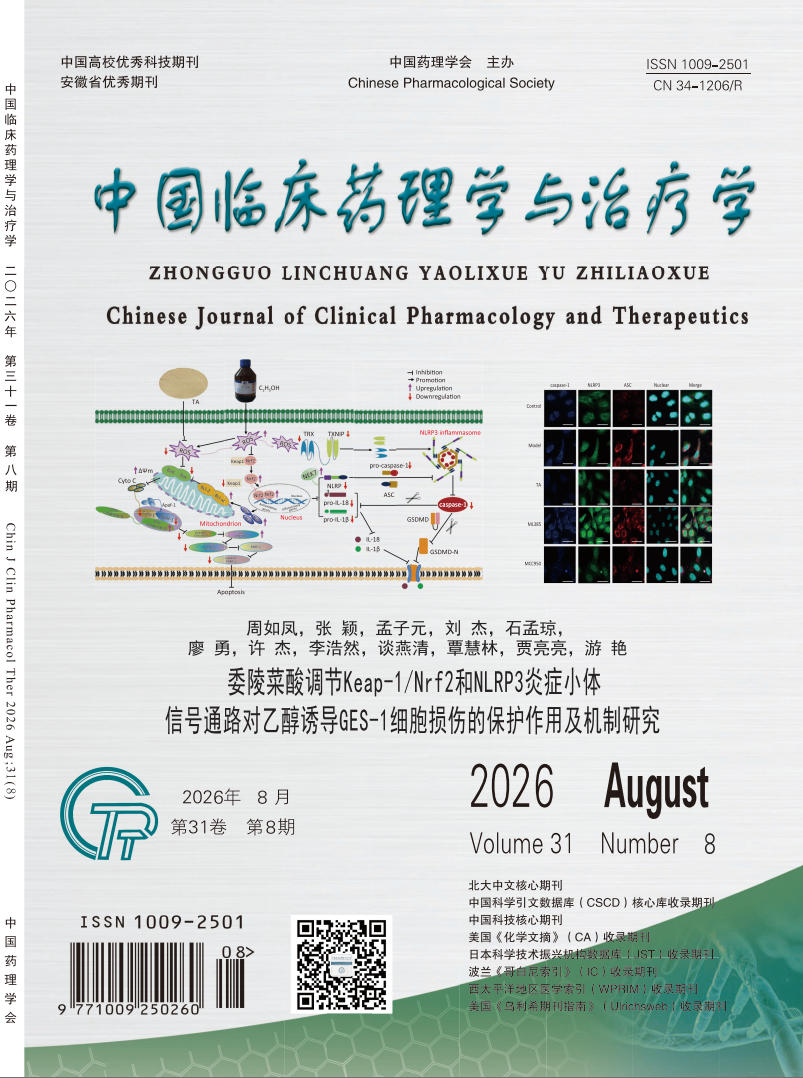
    Tormentic acid protects alcohol induced GES-1 cells via regulating Keap-1/Nrf2 and NLRP3 inflammasome signaling pathways
    Rufeng ZHOU, Ying ZHANG, Ziyuan MENG, Jie LIU, Mengqiong SHI, Yong LIAO, Jie XU, Haoran LI, Yanqing TAN, Huilin QIN, Liangliang JIA, Yan YOU
    2026, 31(8):  1034-1052.  doi:10.12092/j.issn.1009-2501.2026.08.004
    Asbtract ( 5 )   HTML ( 0)   PDF (10383KB) ( 1 )  
    Figures and Tables | References | Related Articles | Metrics

    AIM: To investigate the protective effect and mechanisms of tormentic acid (TA) on GES-1 cells induced by alcohol. METHODS: The GES-1 cell injury model induced alcohol was established. The GES-1 cells were divided into control group, model group, TA (12.5 μg/mL) group, Nrf2 inhibitor group (ML385, 10 μmol/L) group and NLRP3 inhibitor (MCC950, 8 μmol/L) group. After adding the corresponding drugs to the drug intervention group cells and culturing them for 22 hours, cells were treated with 7% alcohol except for the control group and cultured for another 2 hours, and then the cell supernatant and cells were collected, respectively. MTT assay was used to test cell viability; Cell scratch and Transwell were utilized to detect cell migration; AnnexinV FITC/PI double staining was used to test cell apoptosis; Immunofluorescences were used to detect MMP and ROS level in alcohol induced GES-1 cells; Colorimetric and ELISA methods were used to test the levels of LDH, IL-4, IL-1β, IL-6, IL-10, IL-18, NO and TNF-α in the GES-1 cell supernatants; Colorimetric method was utilized to detect the levels of CAT, GSH, MDA, MPO, SOD, T-AOC in alcohol induced GES-1 cells, and cytochrome C in the cytosol and mitochondria of GES-1 cells; Immunofluorescence was utilized to detect the co-localization of NLRP3, ASC and caspase-1; The changes in intracellular ultrastructure were observed under an electron microscope; Real-time PCR was used to detect the mRNA expression levels of Apaf-1, ASC, Bcl-2, Bcl-xl, Bad, Bax, caspase-1, COX-1, COX-2, GCLC, HO-1, iNOS, Keap-1, NEK7, NLRP3, NQO1, Nrf2, PGE2 and TXNIP in alcohol induced GES-1 cells; Western blot was utilized to test the protein expression levels of Apaf-1, ASC, Bcl-2, Bcl-xl, Bad, Bax, caspase-1, cleaved-caspase-3, cleaved-caspase-9, PARP-1, cleaved-PARP-1, GCLC, HO-1, Keap-1, NEK7, NLRP3, NQO1, nuclear Nrf2, pro-caspase-1, pro-caspase-3, pro-caspase-9, pro-IL-18, pro-IL-1β, total Nrf2 and TXNIP in GES-1 cells. RESULTS: Compared with the model group, TA prominently promote alcohol induced GES-1 cell migration, depressed cell apoptosis and LDH release, substantially reduced intracellular ROS level, IL-1β, IL-6, IL-18, NO, TNF-α levels in the GES-1 cell supernatants, MDA, MPO levels in alcohol induced GES-1 cells and cytochrome C content in cytosol (P<0.01), substantially elevated mitochondrial membrane potential, IL-4, IL-10 levels in the GES-1 cell supernatants, CAT, GSH, SOD, T-AOC levels in alcohol induced GES-1 cells and cytochrome C content in the mitochondria (P<0.01). It dramatically down-regulated the ASC, Apaf-1, Bad, Bax, caspase-1, COX-2, iNOS, Keap-1, NEK7, NLRP3, TXNIP mRNA and ASC, Apaf-1, Bad, Bax, caspase-1, cleaved-caspase-3, cleaved-caspase-9, cleaved-PARP-1, Keap-1, NEK7, NLRP3, pro-caspase-1, pro-IL-1β, pro-IL-18, TXNIP protein expressions in alcohol induced GES-1 cells, restrained co-localization of NLRP3, ASC and caspase-1 in alcohol induced GES-1 cells; The structure of the nucleus and nucleolus was intact, chromatin was uniform, and mitochondrial swelling was reduced; TA up-regulated the COX-1, Bcl-2, Bcl-xl, GCLC, HO-1, NQO1, Nrf2, PGE2 mRNA and Bcl-2, Bcl-xl, GCLC, HO-1, NQO1, total Nrf2, nuclear Nrf2, pro-caspase-3, pro-caspase-9 protein expressions and Bcl-2/Bax, Bcl-xl/Bad ratios in the alcohol induced GES-1 cells (P<0.01). CONCLUSION: TA has a significant protective effect on alcohol damaged GES-1 cells, and its mechanism is closely related to activating the Keap-1/Nrf2 pathway, reducing oxidative stress, inhibiting the activation of the NLRP3 inflammasome pathway, alleviating inflammatory response, and thereby suppressing the activation of the mitochondrial apoptosis pathway.

    Amelioration of PTSD-like behaviors in mice by the aqueous extract of Ziziphi Spinosae Semen via inhibition of GPR50 and regulation of synaptic plasticity
    Zixuan GAO, Cunbao HE, Shaojie YANG, Bin WANG, Guoqi ZHU, Hui CHENG, Lixia CHEN
    2026, 31(8):  1053-1063.  doi:10.12092/j.issn.1009-2501.2026.08.005
    Asbtract ( 3 )   HTML ( 0)   PDF (9461KB) ( 1 )  
    Figures and Tables | References | Related Articles | Metrics

    AIM: To evaluate the effects of the aqueous extract of Ziziphi Spinosae Semen (ZSS) on single prolonged stress (SPS)-induced post-traumatic stress disorder (PTSD)-like behaviors in mice, and to explore its potential mechanism from the perspective of hippocampal G protein-coupled receptor 50 (GPR50) and synaptic plasticity. METHODS: The UPLC-UV method was employed to determine the content of the main components, saponin A and saponin B, in the aqueous extract of ZSS. C57BL/6 mice were randomly divided into Control group, SPS group, SPS+ZSS-L, M, H groups and SPS+PRX group. Behavioral experiments were used to evaluate PTSD-like behaviors in SPS mice. Molecular docking was employed to evaluate the stability of the binding between the active ingredients in aqueous extract of ZSS and GPR50. Western blot combined with immunofluorescence were applied to detect GPR50, PSD95, GluN2A, and GluN2B protein expression in mouse hippocampal tissue. Bioinformatics analysis was used to predict key targets for ZSS treatment of PTSD. RESULTS: This study conducted qualitative and quantitative analyses of the main active ingredients saponin A and B in the aqueous extract of ZSS. Compared with the Control group, mice in the SPS group exhibited PTSD-like behaviors such as anxiety, depression, and difficulty in fear memory extinction (P<0.05), with elevated expression of GPR50 protein in the hippocampus and abnormal expression of synaptic plasticity-related proteins PSD95, GluN2A, and GluN2B. The aqueous extract of ZSS significantly improved PTSD behaviors in SPS mice (P<0.05) and inhibited GPR50 expression (P<0.05). A total of 209 potential targets of the aqueous extract of ZSS for treating PTSD were screened. These targets were enriched in pathways associated with functions such as inhibiting impaired synaptic plasticity and exerting antioxidant properties. Molecular docking demonstrated that ZSS saponin A and saponin B, bind stably to GPR50. CONCLUSION: The aqueous extract of ZSS can ameliorate SPS-induced PTSD-like behaviors in mice, and its mechanism may be associated with the inhibition of GPR50 to alleviate synaptic plasticity impairment.

    Evaluation of the in vitro antibacterial activity and mutant prevention potential of three quinolone antibiotics
    Kaiping LUO, Jie XU, Xianfeng ZHANG, Xin SHI, Yongfu HANG
    2026, 31(8):  1064-1069.  doi:10.12092/j.issn.1009-2501.2026.08.006
    Asbtract ( 3 )   HTML ( 0)   PDF (452KB) ( 1 )  
    Figures and Tables | References | Related Articles | Metrics

    AIM: To evaluate the in vitro antibacterial efficacy of three quinolones—nemonoxacin, levofloxacin, and moxifloxacin—against Gram-positive (G+) and Gram-negative (G?) bacteria, providing a scientific basis for rational clinical use. METHODS: Drug susceptibility tests were conducted on 292 clinical isolates (including Staphylococcus aureus, Staphylococcus epidermidis, Enterococcus faecium, Corynebacterium striatum, Escherichia coli, Klebsiella pneumoniae, Pseudomonas aeruginosa, and Acinetobacter baumannii) using the broth microdilution method to compare the distribution of minimum inhibitory concentrations (MICs) and pharmacodynamic characteristics. The mutant prevention concentration (MPC) of selected strains was further determined by the agar dilution method to evaluate their mutant prevention capabilities. RESULTS: For G+ bacteria, nemonoxacin exhibited superior activity against Staphylococcus aureus (MIC90=16 μg/mL), Staphylococcus epidermidis (MIC90=2 μg/mL), and Corynebacterium striatum (MIC90=4 μg/mL) compared to levofloxacin and moxifloxacin. In MRSA strains, the susceptibility rate of nemonoxacin reached 66.96%. For G? bacteria, the MIC90 of levofloxacin against P. aeruginosa was 2 μg/mL, which was lower than that of nemonoxacin and moxifloxacin (both 4 μg/mL). For K. pneumoniae, E. coli, and A. baumannii, the MIC90 values for all three drugs were mostly 64 μg/mL, indicating overall low susceptibility. In terms of mutant prevention, nemonoxacin showed an MPC90 of 2 μg/mL in MSSA, which was lower than that of moxifloxacin (4 μg/mL) and levofloxacin (16 μg/mL), with the narrowest range of selection index (SI). In resistant G bacteria, the MPC90 and SI values for all three drugs were generally higher. However, the MPC90 of levofloxacin against resistant P. aeruginosa (16 μg/mL) was lower than that of moxifloxacin (32 μg/mL) and nemonoxacin (64 μg/mL). CONCLUSION: Nemonoxacin demonstrates stronger antibacterial activity against G+ bacteria such as S. aureus (including MRSA) and possesses the most potent mutant prevention capability in MSSA. Levofloxacin maintains favorable antibacterial activity against P. aeruginosa, and its MPC is relatively lower among the tested drugs. Clinical selection should be based on the specific pathogen type and the risk of resistance.

    Pharmacokinetics and safety study of single and multiple doses of icosapent ethyl in healthy Chinese subjects
    Ying WU, Zhiwei XU, Huafang LI, Yifeng SHEN, Zhiwei HUANG, Yan LI
    2026, 31(8):  1070-1075.  doi:10.12092/j.issn.1009-2501.2026.08.007
    Asbtract ( 1 )   HTML ( 0)   PDF (969KB) ( 1 )  
    Figures and Tables | References | Related Articles | Metrics

    AIM: To evaluate the pharmacokinetics and safety of single and multiple doses of icosapent ethyl soft capsules (trade name: EPADEL S ?)in healthy adult male Chinese subjects. METHODS: This study was a single-center, open-label trial. In the single-dose phase, subjects were assigned to one of three dose groups (900, 1 800 or 2 700 mg), with a single oral dose administered immediately after breakfast. In the multiple-dose phase, subjects received either 1 800 mg or 3 600 mg orally twice daily—immediately after breakfast and dinner—for a total of 8 days, ending with the morning dose on Day 8. Each dose group consisted of 12 subjects. RESULTS: Following single oral doses of 900, 1 800, and 2 700 mg, the corresponding Cmax were (11.79±3.27) (14.76±4.73) (15.51±7.84) μg/mL; the AUC0-t were (670.60±170.67) (792.44±203.95) h·μg·mL?1 and (783.05±310.79) h·μg·mL?1; and the AUC0-∞ were (1792.93±927.10)(2259.89±1362.41) h·μg·mL?1, and (2053.15±750.52) h·μg·mL?1, respectively. Following multiple oral doses of 1 800 mg and 3 600 mg, the Cmax, ss were (54.78±15.00) (83.35±22.11) μg/mL, and the AUCss were (570.50±162.14) and (848.85±192.14) h·μg·mL?1, respectively. No serious adverse events or adverse events leading to withdrawal occurred, and all subjects had good tolerability. CONCLUSION: Icosapent ethyl exhibited a favorable safety profile in healthy subjects following both single and multiple doses. The dose–exposure relationship was nonlinear, with plasma exposure to eicosapentaenoic acid increasing as the dose increased.

    Efficacy and safety of PD-1/PD-L1 inhibitors combined with chemotherapy in the treatment of advanced biliary malignancies in the first line of chemotherapy
    Rong WANG, Yixin ZHOU, Jing XUE, Jiqing HAO, Fan HUANG, Jianghao XING
    2026, 31(8):  1076-1084.  doi:10.12092/j.issn.1009-2501.2026.08.008
    Asbtract ( 3 )   HTML ( 0)   PDF (2175KB) ( 1 )  
    Figures and Tables | References | Related Articles | Metrics

    AIM: To explore the efficacy and safety of programmed cell death protein-1/its ligand-1 (PD-1/PD-L1) inhibitors combined with chemotherapy in the treatment of advanced biliary malignancies in the first line of chemotherapy. METHODS: A retrospective collection of 33 patients with advanced biliary malignant tumors confirmed by histopathology in the First Affiliated Hospital of Anhui Medical University from August 2020 to August 2022 were retrospectively collected, and they were divided into chemotherapy group and chemotherapy combined with PD-1/PD-L1 inhibitor group, and the efficacy was evaluated every 2 treatment cycles, and the safety was evaluated every cycle. The first outcome is PFS and the secondary endpoint is the safety of treatment. RESULTS: Among 16 patients in the chemotherapy group, there were 3 PR cases, 6 SD cases and 7 PD cases, with an ORR rate of 18.8% and a DCR rate of 56.2%. The median PFS was 13.1 weeks. Among 17 patients in the immunotherapy group, there were 8 PR cases, 5 SD cases and 4 PD cases. The ORR rate was 47.1%, the DCR rate was 76.5%, and the median PFS was 21.9 weeks, which was better than the chemotherapy alone. Most of the adverse effects in the two groups were 1-2 grade tolerable, and the difference was not statistically significant. CONCLUSION: PD-1/PD-L1 inhibitors combined with chemotherapy and/or anti-vascular drugs for advanced biliary malignancies have a definite efficacy and is safety, and the treatment with PD-1/PD-L1 inhibitors combined with chemotherapy for advanced biliary malignancies deserves further clinical exploration.

    Effect of bicyclol in abnormal liver function induced by chemotherapy in gynecologic tumors
    Tingting LIU, Mengxue HU, Yaru LIU, Chong YE, Quan XIA
    2026, 31(8):  1085-1090.  doi:10.12092/j.issn.1009-2501.2026.08.009
    Asbtract ( 6 )   HTML ( 0)   PDF (490KB) ( 1 )  
    Figures and Tables | References | Related Articles | Metrics

    AIM: To explore the effect of bicyclol in preventing and treating abnormal liver function indexs, which induced by chemotherapy in gynecologic tumors. METHODS: A total of 40 patients with abnormal liver function indices induced by chemotherapy for gynecologic tumors were selected from 2020 to 2022. They were divided into the bicyclol treatment group and the glycyrrhizin treatment (oral diammonium glycyrrhizinate enteric-coated capsules or compound glycyrrhizin tablets). Compared the changes in liver function indexs to evaluate the effect and adverse reaction between the two groups. RESULTS: After chemotherapy, the levels of alanine aminotransferase (ALT), aspartate aminotransferase (AST), gamma- glutamyl transferase (GGT), alkaline phosphatase (ALP), total bilirubin (TBIL), and direct bilirubin (DBIL) elevated. Following hepatoprotective treatment, these indexs decreased in both groups. Bicyclol tables reduced ALT more significantly than glycyrrhizin group (P<0.05). There was not adverse reactions in either group. CONCLUSION: Oral glycyrrhizin and bicyclol tablets are both effective in alleviating abnormal liver function indices caused by chemotherapy in gynecologic tumors. Compared to oral glycyrrhizin, bicyclol tablets demonstrate a superior effect in reducing liver enzyme levels. Patients with significantly elevated liver enzyme levels should consider bicyclol tablets as the preferred treatment option.

    Research progress on the mechanism of miRNA in regulating primary Sjögren's syndrome
    Chengzhi WANG, Songwei LI, Yifan LIU, Mengmeng DU, Keying ZHU, Huan LI
    2026, 31(8):  1091-1100.  doi:10.12092/j.issn.1009-2501.2026.08.010
    Asbtract ( 4 )   HTML ( 0)   PDF (733KB) ( 1 )  
    Figures and Tables | References | Related Articles | Metrics

    Primary Sj?gren's syndrome (pSS) is a chronic systemic autoimmune disorder whose pathogenesis remains incompletely understood. The current treatment options are limited and there is no curative therapy. microRNA (miRNA), as important post-transcriptional regulatory factors, can widely participate in the pathological processes such as immune dysregulation and tissue damage in pSS, providing new research directions for its diagnosis and treatment. When pSS occurs, the expression of miRNAs in the body will be abnormal. By regulating the expression of miRNAs, it can affect the prognosis and outcome of pSS. Therefore, miRNAs are considered as an important target for anti-pSS treatment. Studies have found that miR-216a-3p, miR-31-5p, etc., can regulate the polarization of macrophages, cell apoptosis, Th17/Treg balance, T/B lymphocytes, glandular function, and type I IFN response through regulating the NF-κB, JAK/STAT, and PI3K/AKT signaling pathways, thereby regulating the occurrence and development of pSS. This article reviews the regulatory mechanisms of miRNAs on pSS, with the aim of providing ideas and basis for the prevention and treatment of pSS.

    An introduction to statistical analysis methods for clinical trials using covariate-adaptive randomization
    Yuxuan YANG, Siyu ZHU, Minggang YIN, Jianhong PAN, Chongyang DUAN
    2026, 31(8):  1101-1111.  doi:10.12092/j.issn.1009-2501.2026.08.011
    Asbtract ( 3 )   HTML ( 0)   PDF (671KB) ( 1 )  
    Figures and Tables | References | Related Articles | Metrics

    Covariate-adaptive randomization is increasingly used in drug clinical trials because it helps balance prognostic factors that may affect trial outcomes between treatment groups. When performing statistical analyses of such trials, researchers usually consider it necessary to adjust for the covariates used in randomization. Therefore, regression models and stratified analyses are commonly employed for statistical inferences. However, no systematic studies have been conducted to discuss the rationality and applicability of these methods. To address this gap, the present study reviews the existing literature, examines the adaptability of traditional statistical inference methods for trials using covariate-adaptive randomization, and introduces the "robust" statistical inference methods proposed in recent years. In addition, to facilitate practical implementation by clinical researchers, example code is provided to demonstrate the application of these methods.

    Advances in the mechanisms of Uncaria rhynchophylla and its monomeric compounds against central nervous system diseases
    Jingxi YAO, Yushu WEI, Wenjun YUAN, Xing WEI, Kexin SUN, Jing SHANG, Zhenggang SHI
    2026, 31(8):  1112-1126.  doi:10.12092/j.issn.1009-2501.2026.08.012
    Asbtract ( 1 )   HTML ( 0)   PDF (1013KB) ( 1 )  
    Figures and Tables | References | Related Articles | Metrics

    Central nervous system diseases (CNSDs) have garnered global attention as a major category of illnesses, significantly impacting worldwide health and imposing a substantial economic burden. Traditional Chinese Medicine (TCM) demonstrates both theoretical and clinical advantages in treating CNSDs. Uncaria rhynchophylla (Gouteng), a herb used for millennia to pacify the liver and extinguish wind, plays an important role in the treatment of CNSDs through multiple pathways and targets. Research indicates that indole alkaloids are its primary active constituents, with rhynchophylline and isorhynchophylline serving as the main material basis for its therapeutic effects against CNSDs. These active components exert their actions through mechanisms such as anti-inflammatory and antioxidant effects, inhibition of apoptosis, promotion of autophagy, suppression of β-amyloid peptide deposition, and prevention of abnormal Tau protein phosphorylation. This article systematically reviews the mechanisms by which Uncaria rhynchophylla and its monomeric compounds intervene in four common CNSDs—Alzheimer,s disease, Parkinson,s disease, epilepsy, and depression—with the aim of providing a reference for further research and clinical application of Uncaria rhynchophylla in CNSDs, and to assist researchers in understanding both the progress and limitations of current studies on its therapeutic use.

    Advances in the construction and application of animal models for diabetic macrovascular complications
    Yujie YANG, Lili ZHANG, Xinyun PAN, Yingpeng DING, Zhongqun WANG
    2026, 31(8):  1127-1134.  doi:10.12092/j.issn.1009-2501.2026.08.013
    Asbtract ( 1 )   HTML ( 0)   PDF (504KB) ( 1 )  
    Figures and Tables | References | Related Articles | Metrics

    Diabetes-associated macrovascular complications constitute a principal source of disability and mortality among individuals with diabetes. The defining pathological hallmark of these complications is the accelerated development of atherosclerosis accompanied by heightened plaque instability, arising in the context of chronic metabolic dysregulation. Animal models are therefore indispensable for elucidating the underlying mechanisms of diabetic macrovascular disease and for rigorously assessing preventive and therapeutic interventions. This review concentrates on the major manifestations of diabetic macrovascular pathology, including coronary artery disease, cerebrovascular disease, and peripheral arterial disease. It provides a systematic synthesis of the construction strategies, pathological features, and current research applications of widely used animal models, encompassing diet-induced, chemically induced, genetically modified, and combined-intervention approaches. In addition, the review offers a comparative evaluation of these models with respect to their capacity to recapitulate disease phenotypes and their suitability for addressing specific research questions, while also critically examining their methodological limitations. Collectively, this work aims to inform the rational selection and refinement of animal models for the study of diabetic macrovascular complications.

    Advances in the molecular pharmacological mechanisms of Chinese herbal monomers targeting diabetes-related signal transduction pathways
    Yuanjun ZHANG, Jing MA, Juxiang LIU, Jinxin QUAN
    2026, 31(8):  1135-1143.  doi:10.12092/j.issn.1009-2501.2026.08.014
    Asbtract ( 0 )   PDF (1269KB) ( 0 )  
    References | Related Articles | Metrics

    Type 2 diabetes (T2DM) is a common heterogeneous disease. With the change of lifestyle caused by aging population and social and economic development, the incidence rate of T2DM is increasing year by year, and its pathogenesis is complex. It is difficult to ensure significant efficacy and low side effects when existing drugs are used. Traditional Chinese medicine monomers have broad application prospects due to their wide sources, rich pharmacological activity, and relative safety. This article reviews the mechanisms of action of signaling pathways such as NF-κB, PI3K/Akt, AMPK, and Nrf2/ARE in the pathogenesis of T2DM, the progress of regulatory mechanisms of traditional Chinese medicine monomers on these pathways, and the challenges they face.

    Mechanism of action of adrenomedullin and its receptors in diabetic peripheral neuropathy
    Ailin LU, Yongqing WU, Mengrui YUAN, Hongyi LIU
    2026, 31(8):  1144-1152.  doi:10.12092/j.issn.1009-2501.2026.08.015
    Asbtract ( 2 )   HTML ( 0)   PDF (2945KB) ( 1 )  
    Figures and Tables | References | Related Articles | Metrics

    Diabetic Peripheral Neuropathy (DPN) is one of the most disabling chronic complications of diabetes mellitus, and its pathogenesis involves multiple factors such as insulin resistance, oxidative stress, inflammatory response, and neurological injury. Adrenomedullin (AM), as a peptide molecule with a wide range of biological activities, exhibits a complex regulatory role in the development of DPN by binding to its receptors CRLR/RAMPs. In this paper, we systematically reviewed the involvement of AM and its receptor in the pathological process of DPN through multiple mechanisms, such as the regulation of insulin resistance, endothelial dysfunction, lipid metabolism disorders, oxidative stress and inflammatory response. However, the bidirectional regulatory properties of AM at different physiological and pathological stages, and the coexistence of its positive and negative effects may stem from the intertwining of multiple mechanisms and regulatory differences. In this paper, we systematically summarize the molecular mechanisms and therapeutic potential of AM and its receptors in DPN, reveal its potential as a multi-target therapeutic strategy, and provide an important theoretical basis for future precision interventions targeting the AM signaling pathway.