Loading...
Welcome to Chinese Journal of Clinical Pharmacology and Therapeutics,Today is Chinese

Table of Content

    Volume 31 Issue 2
    26 February 2026
    Advances in pharmacotherapy for adult epilepsy
    Yiling CHEN, Guoxing ZHU
    2026, 31(2):  146-153.  doi:10.12092/j.issn.1009-2501.2026.02.001
    Asbtract ( 9 )   HTML ( 1)   PDF (471KB) ( 5 )  
    Figures and Tables | References | Related Articles | Metrics

    Epilepsy is a kind of common chronic nervous system disease, with approximately 70% of patients achieving seizure free through antiseizure medications (ASMs). Recent years have witnessed significant advancements in the pharmacological treatment of adult epilepsy, marked by the emergence of novel antiepileptic drugs. Special populations, including women of childbearing age and older adults with epilepsy, have garnered increased clinical attention. This review summarizes recent research progress in drug therapy for adult epilepsy, aiming to provide evidence-based references for more individualized and effective treatment strategies.

    Advances in pharmacotherapy for pediatric epilepsy syndromes
    Tianshuang WANG, Xinhua WANG, Yuanfeng ZHOU
    2026, 31(2):  154-161.  doi:10.12092/j.issn.1009-2501.2026.02.002
    Asbtract ( 12 )   HTML ( 0)   PDF (947KB) ( 4 )  
    Figures and Tables | References | Related Articles | Metrics

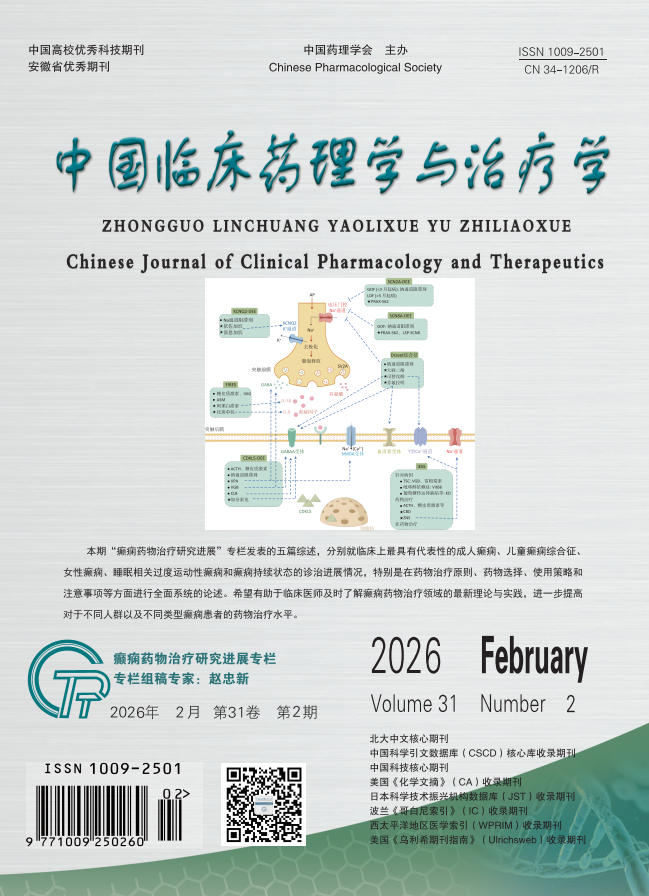
    Epilepsy is one of the most prevalent neurological disorders in children. While pediatric epilepsy is characterized by a diverse range of causes and intricate pathological processes, roughly 30% of affected children exhibit resistance to existing pharmacological treatments. It can be classified into distinct epilepsy syndromes based on characteristic clinical and electroencephalographic (EEG) features. Among these, developmental and epileptic encephalopathy (DEE) represents the most severe subtype. Over recent decades, there have been significant advancements in new anti-seizure medications (ASM), yet the rate of drug-resistant epilepsy cases has not significantly declined. To systematically evaluate therapeutic strategies for pediatric epilepsy syndromes, this review primarily focuses on several relatively common pediatric epilepsy syndromes, including Dravet syndrome, infantile epileptic spasm syndrome (IESS), as well as rare etiology-specific DEEs (e.g. KCNQ2-, SCN2A-, SCN8A-, and CDKL5-related DEE), and febrile infection-related epilepsy syndrome (FIRES). We summarize current pharmacological management and emerging therapeutic advances in these conditions, aiming to support evidence-based clinical decisions.

    Clinical characteristics and medicine treatment progress in female patients with epilepsy
    Zhengqing ZHAO, Yanpeng LI, Zhongxin ZHAO
    2026, 31(2):  162-167.  doi:10.12092/j.issn.1009-2501.2026.02.003
    Asbtract ( 10 )   HTML ( 0)   PDF (447KB) ( 3 )  
    References | Related Articles | Metrics

    Compared with male epilepsy patients, female epilepsy patients have certain clinical characteristics due to factors such as hormone level changes, menstrual cycles, and fertility needs, and the selection of treatment drugs needs to take into account both efficacy and safety, which has certain challenges. This article focuses on the clinical characteristics of female epilepsy patients, especially on the analysis of the different clinical characteristics at different physiological periods. This paper also reviews and prospects the medical treatment options at different periods and new advances in treatment for female patients with epilepsy.

    Diagnosis and management of sleep-related hypermotor epilepsy: an update
    Feifei ZHAI, Yan HUANG
    2026, 31(2):  168-174.  doi:10.12092/j.issn.1009-2501.2026.02.004
    Asbtract ( 11 )   HTML ( 0)   PDF (492KB) ( 3 )  
    Figures and Tables | References | Related Articles | Metrics

    Sleep-related hypermotor epilepsy (SHE), previously termed nocturnal frontal lobe epilepsy (NFLE), is a focal epilepsy syndrome characterized by hypermotor seizures or asymmetric tonic/dystonic posturing occurring predominantly during sleep. SHE has heterogeneous etiologies, including genetic factors, structural brain lesions, and unknown causes. Although seizures in SHE commonly originate from the frontal lobe, extrafrontal seizure onset zones—such as the insular, temporal, or parietal regions—have also been identified. Clinically, diagnosis largely depends on detailed seizure history and typical ictal video-EEG recordings. However, scalp EEG often fails to provide specific findings due to movement artifacts or deeply localized seizure foci, presenting considerable diagnostic challenges. In terms of treatment, carbamazepine remains the first-line medication, but alternative drugs such as oxcarbazepine, topiramate, lacosamide, and perampanel offer additional therapeutic options. Advances in our understanding of nicotinic acetylcholine receptor (nAChR) involvement in SHE pathogenesis have prompted exploration of receptor-modulating treatments, such as nicotine patches and fenofibrate, though robust clinical evidence remains limited. For patients with drug-resistant SHE and clearly defined focal structural lesions, epilepsy surgery is an effective option, often leading to excellent seizure outcomes. Despite recent progress in diagnosis and management, substantial gaps and challenges persist in the understanding and treatment of SHE, underscoring the need for further research to improve patient outcomes and quality of life.

    The current research status of the diagnosis and treatment of status epilepticus
    Youyang QU, Yulan ZHU
    2026, 31(2):  175-184.  doi:10.12092/j.issn.1009-2501.2026.02.005
    Asbtract ( 7 )   HTML ( 0)   PDF (1209KB) ( 6 )  
    Figures and Tables | References | Related Articles | Metrics

    Status epilepticus (SE) is a severe critical condition that poses a great threat to patients. Over the past decade or so, a series of important progress has been made in the research of SE. This article comprehensively refers to the recent domestic and foreign authoritative guidelines, expert consensus, and the latest cutting-edge research results, and describes the latest progress of SE, as well as the current research status of its diagnosis and treatment. It further explores the key challenges faced by SE in current clinical practice and predicts the future development trends, aiming to provide assistance for clinical practice.

    Chinese expert consensus on blood drug monitoring for arsenic trioxide
    Writing team for "Chinese expert consensus on blood drug monitoring for arsenic trioxide"
    2026, 31(2):  185-195.  doi:10.12092/j.issn.1009-2501.2026.02.006
    Asbtract ( 8 )   HTML ( 0)   PDF (587KB) ( 4 )  
    Figures and Tables | References | Related Articles | Metrics

    Arsenic trioxide (ATO) is not only a first-line therapy for acute promyelocytic leukemia (APL) but also a widely accepted treatment in other malignancies. However, ATO therapy may lead to suboptimal efficacy or toxic reactions due to its complex active metabolites and significant interindividual pharmacokinetic variability. Blood concentration monitoring, which employs various analytical techniques to determine drug exposure levels in vivo, serves as both a fundamental technical approach and a core component of personalized medication. This expert consensus systematically discusses the target population for ATO blood drug monitoring, monitoring indicators, optimal sampling times, monitoring recommendations for special populations, and methodological approaches based on current evidence. The primary objectives are to standardize clinical implementation of blood concentration monitoring in ATO treatment and to advance precision medicine practice.

    Study on the effect of ZiYin RunZao (ZYRZ) pill on the inflammation and function of submandibular gland in mice with Sjögren's syndrome
    Wenxia QI, Gang WANG, Yanfeng YAN, Jiexiang TIAN, Hailong LIU, Yong WEI, Jia WANG
    2026, 31(2):  196-203.  doi:10.12092/j.issn.1009-2501.2026.02.007
    Asbtract ( 6 )   HTML ( 0)   PDF (1464KB) ( 4 )  
    Figures and Tables | References | Related Articles | Metrics

    AIM: To investigate the effect of ZiYin RunZao (ZYRZ) pill on the inflammation and function of submandibular gland in mice modeled with Sj?gren's syndrome. METHODS: Forty 8-week-old NOD/Ltj mice were randomly divided into five groups: model group, western medicine group, and the high, middle and low dosage groups of ZYRZ, with eight mice in each group. Another 8 ICR mice were blank group. The intervention was started after 1 week of acclimatization feeding. In the high, medium and low dose groups, 1.78, 0.89 and 0.45 mg/kg of ZYRZ pills were administered by gavage, respectively; in the western medicine group, 60 mg/kg of hydroxychloroquine was administered; and in the blank group and the model group, equal amounts of sterile distilled water were administered by gavage once a day for eight consecutive weeks. The body weight and water intake of the mice were monitored at weeks 0, 2, 4, 6 and 8. At the end of the intervention, mice submandibular gland and serum were taken, and the histopathology of submandibular gland was observed by HE staining; the levels of inflammatory cytokines IFN-γ, IL-10, and TNF-α were detected in serum by ELISA; the levels of AQP5 and M3R mRNA were detected in submandibular gland by RT-qPCR; the levels of AQP5 and M3R mRNA in submandibular gland were detected in submandibular gland by Western blot; and the levels of AQP5 and M3R mRNA in submandibular gland were detected in submandibular gland by RT-qPCR. AQP5, M3R protein expression; immunohistochemistry to detect the level of AQP5 protein expression in the submandibular gland tissue of mice. RESULTS: Compared with the normal group, mice in the model group showed no significant changes in body weight, significantly increased water intake (P<0.05), significantly higher expression of IFN-γ and TNF-α in serum of mice (P<0.05), and significantly lower expression of IL-10 (P<0.05); significantly lower expression of mRNA and protein of AQP5 and M3R (P<0.05); compared with the model group, the western blot and the ZYRZ Pill in high school and the western blot were detected in the submaxillary gland tissues of mice; immunohistochemical method was used to detect the expression level of AQP5 in the submaxillary gland tissues. Compared with the model group, mice in the western medicine group and the high school dose group of ZYRZ consumed significantly less water (P<0.05), the expression of IFN-γ and TNF-α in serum was significantly reduced (P<0.05), the expression of IL-10 was significantly elevated (P<0.05), and the expression of AQP5, M3R mRNA, and protein was significantly elevated (P<0.05). CONCLUSION: ZYRZ pill can reduce the inflammatory reaction of submandibular gland in mice with Sj?gren's syndrome model and improve the secretion function of submandibular gland.

    Therapeutic effect of emodin on cholestatic liver injury in mice based on CYP7A1 / FXR / SHP pathway
    Weichen WANG, Yaping MA, Meng WANG, Qinglin LI, Hui CHENG
    2026, 31(2):  204-212.  doi:10.12092/j.issn.1009-2501.2026.02.008
    Asbtract ( 9 )   HTML ( 0)   PDF (3811KB) ( 7 )  
    Figures and Tables | References | Related Articles | Metrics

    AIM: To investigate the therapeutic effect of emodin on cholestatic liver injury in mice. METHODS: C57BL/6J mice were subcutaneously injected with ethinyl estradiol (EE) for 7 consecutive days to establish a cholestasis model. The changes of body weight and serum levels of alanine aminotransferase (ALT), aspartate aminotransferase (AST), γ-glutamyl transpeptidase (γ-GT) and total bilirubin (TBIL) were detected. HE (hematoxylin-eosin) staining and MASSON staining were used to evaluate the effects on liver and other organs. After the efficacy was determined by animal model administration experiment, the human normal liver cell L02 was induced by lithocholic acid (LCA) to construct a cholestatic cell model. The CCK-8 method was used to detect the median lethal dose (IC50) by LCA intervention for 24 hours to determine the modeling concentration. Through emodin intervention for 24 h, the survival rate of each group was detected to determine the concentration of emodin. The survival rate of emodin on liver cells after LCA modeling was detected and evaluated. By detecting the changes of liver injury index related enzymes ALT, AST levels and oxidative stress related enzymes glutathione (GSH), serum superoxide dismutase (SOD), malondialdehyde (MDA) and reactive oxygen species(ROS) levels in each group of L02 cells, the mechanism of emodin in anti-cholestasis by improving oxidative stress was evaluated. Western blot was used to detect the protein expression of Cholesterol 7α-hydroxylase (CYP7A1), Farnesol X receptor (FXR) and small heterodimer partner (SHP) in the liver of mice. RESULTS: Emodin significantly improved the body weight change and liver index of mice, reduced the levels of ALT, AST, γ-GT and TBIL in serum, improved the trend of liver lesions, and inhibited liver damage. Improving the survival rate of L02 cells improved the survival state of cells, reduced the changes of ALT and AST levels and improved cell damage. It also changed the level of oxidative stress by increasing GSH and SOD levels and reducing MDA and ROS levels. In addition, emodin significantly increased FXR and SHP in the liver of mice and decreased the protein expression level of CYP7A1. CONCLUSION: Emodin can play a protective role in cholestatic liver injury, and its mechanism may be through inhibiting oxidative stress injury and regulating bile acid synthesis and metabolism through FXR / CYP7A1 / SHP pathway.

    The mechanism of action of Yiqi Huoluo formula in regulating the PI3K/Akt/mTOR pathway to suppress synovial inflammation in collagen-induced arthritis rats
    Pengfei WANG, Yuwei WANG, Fangmei JIN, Ping CHEN, Weiqing LI, Xuemei TIAN, Aihua WANG, Haidong WANG
    2026, 31(2):  213-222.  doi:10.12092/j.issn.1009-2501.2026.02.009
    Asbtract ( 6 )   HTML ( 0)   PDF (1910KB) ( 8 )  
    Figures and Tables | References | Related Articles | Metrics

    AIM: To study the therapeutic effect of Yiqi Huoluo formula on collagen-induced arthritis (CIA) rats and its effect on PI3K/Akt/mTOR signaling pathway. METHODS: A total of 60 SD rats were randomly divided into blank group, model group, methotrexate group (1 mg/mL), and Yiqi Huoluo Fang low, medium and high dose groups (9.45 g/kg, 18.9 g/kg, 37.8 g/kg), with 10 rats in each group. Except for the blank group, CIA rat models were established for the rest of the rats. After 28 days of continuous intervention after booster immunization, the samples were collected. During the period, the general condition, ankle swelling and arthritis index score of the rats were observed. Enzyme linked immunosorbent assay (ELISA) was used to detect the levels of TNF-α, IL-1β, IL-6 and IL-10 in the serum of rats. Hematoxylin-eosin staining (HE) was used to observe the histopathological changes of the synovial synovium of the ankle joint in rats. Quantitative Real-time polymerase chain reaction (RT-qPCR) was used to detect the mRNA expressions of PI3K, Akt, mTOR, CD86 and CD206 in the synovial tissue of rat knee. Western blot was used to detect the expression levels of p-PI3K, p-Akt and p-mTOR proteins in the synovial tissue of rat knee. Immunohistochemistry was used to determine the positive expression of CD86 and CD206 in rat ankle joints. RESULTS: Compared with the blank group, the joint swelling and AI index of the model group increased (P<0.01), a large number of inflammatory cell infiltration, fibrous tissue and synovial cell proliferation and disordered arrangement were seen in the pathological sections of the ankle joint, a small number of capillaries were found around the synovial tissue, the serum levels of TNF-α, IL-1β and IL-6 were increased, and the levels of IL-10 were decreased (P<0.05, P<0.01), the expression levels of PI3K, Akt, mTOR, CD86 and mRNA in the synovial tissue of knee joint were increased, while the expression of CD206 mRNA was decreased (P<0.05, P<0.01), the expression levels of p-PI3K, p-Akt and p-mTOR proteins in synovial tissue increased (P<0.05, P<0.01), and the expression of CD86 protein and CD206 protein decreased in synovial membrane of ankle joint (P<0.05, P<0.01). Compared with the model group, the degree of ankle swelling in the methotrexate group, the Yiqi Huoluo formula and the high-dose group decreased (P<0.05, P<0.01), the AI index decreased (P<0.05, P<0.01), the serum levels of TNF-α, IL-1β and IL-6, the levels of IL-10 increased (P<0.05, P<0.01), the expression levels of PI3K, Akt, mTOR, CD86 and mRNA in the synovial tissue of the knee joint decreased, and the expression of CD206 mRNA increased (P<0.05, P<0.01), the expression levels of p-PI3K, p-Akt and p-mTOR proteins in synovial tissue decreased (P<0.05), the expression of CD86 protein decreased in synovial membrane of ankle joint, and the expression of CD206 protein increased (P<0.05) and can improve synovial inflammation. CONCLUSION: The Yiqi Huoluo formula alleviates synovial inflammation in rheumatoid arthritis (RA) and reduces joint pathological damage by down-regulating the PI3K/Akt/mTOR pathway, modulating macrophage polarization, decreasing pro-inflammatory factors, and promoting the expression of anti-inflammatory factors.

    Overview of PBPK modeling method for transdermal patch delivery
    Dake QI, Jinjing CHE
    2026, 31(2):  223-239.  doi:10.12092/j.issn.1009-2501.2026.02.010
    Asbtract ( 7 )   HTML ( 0)   PDF (1242KB) ( 4 )  
    Figures and Tables | References | Related Articles | Metrics

    As a widely used generic dosage form with complex development, transdermal patches pose high challenges in conducting clinical bioequivalence studies. In response, regulatory authorities encourage the adoption of physiologically based pharmacokinetic (PBPK) model-guided development to reduce costs and improve success rates. The key influencing factors for PBPK modeling of transdermal patches include drug properties, formulation systems, and inter-individual variations. Regarding drug factors, quantitative structure-property relationship (QSPR) models predict partition and diffusion coefficients based on parameters like molecular weight and lipophilicity (LogP). Mechanistic models elucidate permeation kinetics by resolving the multilayered skin structure. For formulation systems, release differences between matrix-type and reservoir-type patches can be simulated using the multiphase multilayered mechanistic dermal absorption (MPML MechDermA) model, covering key processes like dissolution, precipitation, and vehicle evaporation. Concerning inter-individual variability, factors like skin thickness, pH, appendage density, and pathological states significantly impact permeation efficiency. Models require calibration using variables such as age, gender, and race. The model integrates drug transport equations between compartments based on Fick's law, supporting in vitro-in vivo extrapolation (IVIVE). This article systematically reviews the PBPK modeling methods and their influencing factors in the development of transdermal patches, promising to reduce animal experiments and accelerate clinical translation.

    Current application of P-value: challenges and optimization strategies
    Zhiwei LIU, Shuqing CHEN, Youjun CHEN, Yiming LI, Fangrong YAN, Yang ZHAO, Hua SUN, Haitang XIE, Ling WANG
    2026, 31(2):  240-246.  doi:10.12092/j.issn.1009-2501.2026.02.011
    Asbtract ( 8 )   HTML ( 0)   PDF (541KB) ( 7 )  
    References | Related Articles | Metrics

    The P-value (based on the frequentist school of thought) is an important tool in statistics for testing the null hypothesis, representing the probability of observing the current or more extreme results when the null hypothesis is true. Although P-values are widely used to determine the statistical significance of research findings (e.g., P<0.05, P<0.01), their abuse and misuse have sparked numerous controversies. This article reviews the importance and limitations of P-values in scientific research and clinical trials, including their sensitivity to sample size, the misleading nature of binary classification, and their inability to objectively reflect clinical significance, among other issues. Additionally, it explores supplementary and optimized methods, such as confidence intervals, effect sizes, and Bayesian statistics. Based on existing consensus and controversies, recommendations for the rational use of P-values are proposed, emphasizing the integration of multiple statistical indicators to enhance the rigor and reproducibility of scientific inferences, while recognizing the core role of P-values in controlling error rates and making group comparisons. Looking ahead, it advocates repositioning P-values as an indicator of the "compatibility" with the null hypothesis and applying them in conjunction with other methods to avoid simplistic binary classification.

    Research progress on the application of extracellular vesicles derived from mesenchymal stem cells for inflammatory bowel disease
    Xuyou YU, Qixiang ZHANG, Jiali LIU, Guangji WANG, Fang ZHOU
    2026, 31(2):  247-256.  doi:10.12092/j.issn.1009-2501.2026.02.012
    Asbtract ( 8 )   HTML ( 0)   PDF (1128KB) ( 6 )  
    Figures and Tables | References | Related Articles | Metrics

    Inflammatory bowel disease (IBD) is a complex disorder characterized by chronic inflammation in the gastrointestinal tract, posing numerous challenges in its clinical management. Although current pharmacological treatment regimens demonstrate certain efficacy in alleviating clinical symptoms, their long-term use is associated with treatment-related risks such as infections, highlighting the urgent need for novel therapeutic strategies. In recent years, extracellular vesicles (EVs) derived from mesenchymal stem cells (MSCs) have emerged as a novel research focus in the treatment of IBD due to their unique advantages in the field of immunoregulation, holding promise as an innovative and effective therapeutic strategy in this area. This article reviews the latest advancements in the use of EVs for IBD treatment, encompassing topics such as EV quality control standards, immunoregulatory mechanisms, and engineering strategies. The objective of this review is to provide guidance for the clinical translational application of MSC-EVs in IBD treatment. Additionally, it explores novel strategies to enhance the therapeutic efficacy of MSC-EVs through engineering approaches, opening up innovative avenues for research in this field.

    Animal model of intrauterine adhesions and its application in the treatment of intrauterine adhesions
    Qing ZHANG, Panwei HU, Hua ZHOU
    2026, 31(2):  257-264.  doi:10.12092/j.issn.1009-2501.2026.02.013
    Asbtract ( 4 )   HTML ( 0)   PDF (503KB) ( 4 )  
    Figures and Tables | References | Related Articles | Metrics

    Intrauterine adhesion (IUA) is the main cause of modern female infertility, which is mainly manifested by endometrial fibrosis. It is very important to establish a suitable animal model for the study of the mechanism of uterine adhesion. In this paper, we summarized the development process and methods of different animal uterine adhesion modeling, including the establishment of IUA models using mechanical injury, 95% ethanol injection, double injury, etc., to provide reference for researchers. At the same time, the current research progress on the treatment of uterine adhesions using IUA animal models is reviewed. Although the current popular stem cell therapy, platelet-rich plasma, and bioengineering technology continue to develop, the treatment of IUA has not been unified. In the future, it is still necessary to explore the pathogenesis of IUA to find the best treatment plan for IUA.

    Research progress on perioperative management of adult patients with obstructive sleep apnea undergoing upper airway surgery
    Jing YAN, Ailin LUO, Shiyong LI
    2026, 31(2):  265-271.  doi:10.12092/j.issn.1009-2501.2026.02.014
    Asbtract ( 7 )   HTML ( 1)   PDF (516KB) ( 4 )  
    References | Related Articles | Metrics

    Obstructive sleep apnea (OSA) is the most common sleep-related breathing disorder, characterized by symptoms related to sleep breathing disturbances, but often comorbid with cardiovascular, respiratory, neurological, metabolic, endocrinic, and other multisystemic conditions. The first-line treatment is continuous positive airway pressure (CPAP) during sleep; for patients who fail CPAP therapy, multilevel's upper airway surgery is an effective alternative treatment option. In the present review, we summarized the progress in preoperative preparation and intraoperative and postoperative management of upper airway surgery based on published literature and expert management experience, especially focusing on the key aspects of perioperative management of upper airway surgery, with the aim of improving perioperative safety and promoting patient recovery.

    Role of endogenous hallucinogens in heart failure comorbid with depression
    Qianyuan SHI, Kai HUANG, Yi ZHANG, Jiahao DUAN, Chun YANG, Ling YANG
    2026, 31(2):  272-280.  doi:10.12092/j.issn.1009-2501.2026.02.015
    Asbtract ( 5 )   HTML ( 0)   PDF (532KB) ( 3 )  
    Figures and Tables | References | Related Articles | Metrics

    With the growing global aging population, the incidence of heart failure complicated with depression is increasing, which causes a heavy health and economic burden. In recent years, endogenous hallucinogens, a class of compounds that can produce hallucinogenic effects in the body, have garnered widespread attention in the academic community, as previous studies have confirmed their effects on nervous system diseases, coronary heart disease, pulmonary fibrosis, and anti-tumor activity. However, the mechanisms of action of endogenous hallucinogens in the context of heart failure with depression remain unclear. This review introduces the potential mechanisms from four aspects: regulating the neuro-endocrine network, altering neuroplasticity, modulating the immune-inflammatory system, and reducing oxidative stress and apoptosis. These insights aim to provide therapeutic targets and basic research directions for patients with heart failure complicated with depression, ultimately improving the prognosis and quality of life of these patients.

    Research progress on postoperative sleep disorders in orthopedic surgery patients
    Wenxin ZHAO, Xingyu XIONG, Wen TAN, Yuanyuan WANG, Zhengxiu SUN, Yongao LIN, He LIU, Junli CAO
    2026, 31(2):  281-288.  doi:10.12092/j.issn.1009-2501.2026.02.016
    Asbtract ( 4 )   HTML ( 0)   PDF (646KB) ( 6 )  
    Figures and Tables | References | Related Articles | Metrics

    Sleep is a natural cyclical physiological phenomenon with profound implications for the human body. Adequate postoperative sleep quality not only promotes bodily repair and maintains physiological balance but also plays an irreplaceable role in improving cognitive function, regulating emotions, and expediting postoperative recovery. However, postoperative patients commonly experience a decline in sleep quality, particularly prevalent among orthopedic surgery patients. This article aims to facilitate the postoperative recovery of orthopedic surgery patients by addressing postoperative sleep quality issues. It provides a comprehensive review of the epidemiology, mechanisms, risk factors, impact on prognosis, and prevention and treatment measures of postoperative sleep disorders in orthopedic surgery patients, offering new insights and clinical practice references for preventing postoperative sleep disorders.